Understand what a 30 minute HIIT workout is
A 30 minute HIIT workout is a short, focused session where you move through intense bursts of exercise followed by brief rest or low-intensity recovery. Most HIIT workouts last 15 to 30 minutes, so half an hour is plenty of time to train your whole body and boost your conditioning.
In that window you typically have:
- 5 minutes to warm up
- About 20 minutes of high-intensity intervals
- 5 minutes to cool down
HIIT is considered anaerobic training, which means you work hard enough that you cannot supply all the oxygen your muscles would like. That effort creates a bigger oxygen debt than steady-state cardio like jogging, which is one reason HIIT can burn more calories in less time and drive a stronger “afterburn” effect, known as excess post-exercise oxygen consumption (EPOC).
Learn why HIIT is worth your 30 minutes
A consistent 30 minute HIIT workout offers several benefits that go beyond simply “getting sweaty.”
Burn more calories in less time
Research published in the Journal of Strength and Conditioning Research found that HIIT can burn 25 to 30 percent more calories than steady-state workouts of the same duration. Because the sessions are intense, you also continue to burn calories for hours after you finish, thanks to EPOC.
Across different sources, a 30 minute HIIT workout typically burns an estimated 200 to 500 calories, depending on your:
- Body weight
- Fitness level
- Exercise choices
- Work-to-rest ratio
Some people notice that their fitness tracker shows higher calorie numbers for continuous running compared with HIIT. One Reddit user, for example, reported around 840 calories for running versus roughly 300 calories for a 30 minute HIIT workout using a Fitbit. This gap is a good reminder that device estimates can vary and that intensity, consistency, and diet matter more than one specific workout style.
Improve your heart and lung health
Regular 30 minute HIIT workouts:
- Raise your heart rate quickly, which helps strengthen your cardiovascular system
- Can reduce blood pressure and improve circulation, especially in people with overweight or obesity
- May improve VO₂ max, which is your body’s ability to use oxygen efficiently
Research has shown that HIIT can reduce heart rate and blood pressure, sometimes more than moderate-intensity exercise, and may improve oxygen consumption as much as traditional endurance training in less time.
Support fat loss and body composition
Studies involving adults with overweight or obesity show that HIIT can reduce body fat and waist circumference. High-intensity intervals help you:
- Burn a high number of calories in a short session
- Maintain or build muscle when you combine HIIT with strength training
- Improve insulin sensitivity and blood sugar control, which supports metabolic health
Some research also suggests that HIIT can significantly increase Human Growth Hormone (HGH) for up to 24 hours after a workout. Higher HGH levels are linked with better fat metabolism, muscle preservation, and some healthy aging processes.
Fit real fitness into a busy schedule
Because you can complete a full 30 minute HIIT workout in the time it takes to watch a TV episode, it is realistic even on hectic days. Shorter, more intense workouts also tend to feel less repetitive than longer, steady sessions, which can help you stay consistent.
You can do HIIT with:
- Just your body weight
- Simple tools like jump ropes and medicine balls
- Full gym setups with dumbbells and kettlebells
That flexibility means you can train at home, outdoors, or in a gym, depending on what your day allows.
Choose the right equipment for total-body conditioning
You do not need a lot of gear to get a great 30 minute HIIT workout. A few basics can add variety and help you train your entire body.
Jump rope
Jump ropes are inexpensive, portable, and perfect for raising your heart rate. They:
- Train coordination, timing, and agility
- Deliver a high calorie burn in a short time
- Fit easily into warm-ups or intense intervals
You can mix in:
- Basic two-foot jumps
- High-knee jumps
- Double unders if you are more advanced
Kettlebells
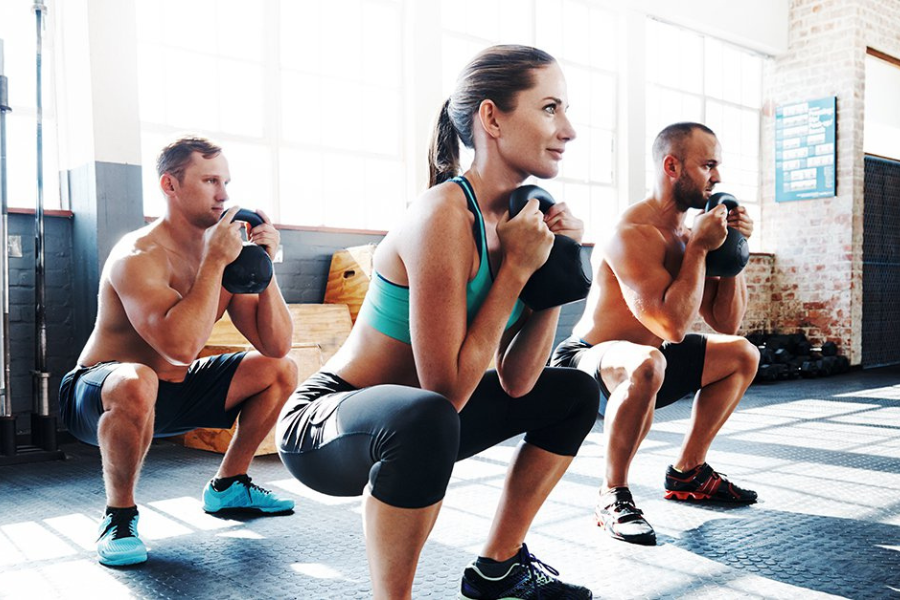
Kettlebells are available in many weights and work well for strength-based intervals. They shine in exercises that hit multiple muscle groups at once, such as:
- Kettlebell swings
- Goblet squats
- Kettlebell snatches or cleans
These moves build strength, power, and endurance at the same time, which is ideal for total-body conditioning.
Medicine balls
A medicine ball lets you add power and core work without complex equipment. With different weights you can easily adjust difficulty. Common HIIT-friendly options include:
- Medicine ball slams
- Russian twists
- Push-ups with one hand on the ball
These help you train your abs, shoulders, and back while keeping your heart rate elevated.
Dumbbells
Dumbbells are staples for strength-focused HIIT. A pair of light to moderate dumbbells is enough for:
- Shoulder presses
- Squats and lunges
- Bent-over rows
- Floor presses
A 30 minute dumbbell HIIT workout, done as a circuit with short rests, can significantly improve strength, power, and muscular endurance.
Warm up before you start intervals
Use the first 5 minutes of your 30 minute HIIT workout to warm up. A proper warm-up prepares your joints, muscles, and heart for intense work and can help reduce injury risk.
Aim for light, rhythmic movement, such as:
- Marching or jogging in place
- Arm circles and shoulder rolls
- Hip circles and leg swings
- Easy bodyweight squats or lunges
You should feel warmer and slightly out of breath, but not tired. Save your real effort for the work intervals.
Try this 30 minute total-body HIIT routine
The sample routine below gives you a balanced, full-body 30 minute HIIT workout using minimal equipment. You can do it at home or in a gym.
Structure at a glance
- 5 minutes: Warm-up
- 20 minutes: Main HIIT circuit
- 5 minutes: Cool-down
For the main circuit:
- Work for 40 seconds
- Rest for 20 seconds
- Move straight to the next exercise
- Complete all 8 moves, then rest 60 seconds
- Repeat the circuit 2 times for a total of 3 rounds
This adds up to about 20 minutes of intervals. Adjust the work and rest times if needed, especially when you are new to HIIT.
Main HIIT circuit (8 moves)
- Jump rope basic or high knees
- Equipment: Jump rope (or imaginary rope)
- Focus: Cardio, calves, coordination
- Tip: Land softly on the balls of your feet and keep your shoulders relaxed.
- Bodyweight or dumbbell squats
- Equipment: Optional pair of dumbbells
- Focus: Quads, glutes, core
- Tip: Sit your hips back as if into a chair and keep your chest lifted.
- Push-ups
- Equipment: None
- Focus: Chest, shoulders, triceps, core
- Options:
- Standard push-up
- Knees on the floor
- Hands elevated on a bench or countertop
- Kettlebell swings
- Equipment: Kettlebell
- Focus: Glutes, hamstrings, lower back, conditioning
- Tip: Hinge at your hips rather than squatting. Use your hips to swing the bell to chest height.
- Reverse lunges
- Equipment: Bodyweight or light dumbbells
- Focus: Legs, glutes, balance
- Tip: Step back far enough that both knees bend to about 90 degrees, then drive through your front heel. Alternate legs.
- Medicine ball slams
- Equipment: Medicine ball
- Focus: Core, shoulders, upper back, power
- Tip: Lift the ball overhead, brace your core, and slam it straight down in front of you while exhaling.
- Plank
- Equipment: None
- Focus: Core, shoulders
- Options:
- Forearm plank
- High plank on hands
- Drop to your knees if needed to maintain form
- Russian twists with medicine ball
- Equipment: Medicine ball or dumbbell
- Focus: Obliques and overall core
- Tip: Sit tall, lean back slightly, and rotate from your ribs, not just your arms. Keep your feet down or hover them for more challenge.
Complete exercises 1 through 8 with the 40 seconds work and 20 seconds rest format. After exercise 8, rest 60 seconds, then start again.
Try an equipment-free 30 minute HIIT option
If you do not have any gear, you can still complete an effective 30 minute HIIT workout using only bodyweight. Here is a simple circuit you can do anywhere.
Structure
- 5 minutes: Warm-up
- 20 minutes: Circuit (45 seconds work, 15 seconds rest)
- 5 minutes: Cool-down
Circuit exercises
- Butt kickers
- Skaters
- Reverse lunges
- Mountain climbers
- High knees
- Plank jacks
Complete all 6 moves, rest 60 seconds, and repeat until you reach 20 minutes of intervals. This type of routine has been shown to be effective for both cardio fitness and calorie burning and works well as a travel or home workout.
Cool down and stretch after HIIT
Finish your 30 minute HIIT workout with 5 minutes of gentle movement and stretching. Your cool-down helps bring your heart rate down gradually and can reduce post-workout soreness.
You can:
- Walk slowly around the room or on a treadmill
- Breathe deeply in through your nose and out through your mouth
- Hold each stretch for 20 to 30 seconds without bouncing
Useful stretches include:
- Quads and hamstrings
- Calves
- Chest and shoulders
- Hip flexors and glutes
Static stretching at the end of the workout can help maintain flexibility and ease stiffness in the hours that follow.
Decide how often to do 30 minute HIIT
Because HIIT is intense, it is not meant for every single day. It places a lot of stress on your:
- Muscles and joints
- Nervous system
- Hormonal system
Most people do well with:
- 2 to 3 HIIT sessions per week
- At least 1 rest or low-intensity day between sessions
Doing a 30 minute HIIT workout every day can lead to:
- Excess fatigue or poor sleep
- Achy joints or nagging injuries
- Increased stress levels and burnout
On non-HIIT days, you can walk, cycle lightly, or do mobility work. That balance helps you recover while staying active.
Adapt your HIIT workout to your fitness level
A 30 minute HIIT workout can be personalized so you get the right level of challenge without feeling overwhelmed. You can adjust:
- Work intervals: Start at 20 seconds work and 40 seconds rest instead of 40/20
- Exercise choices: Swap burpees for step-back lunges, or jump squats for regular squats
- Impact: Choose low-impact options like step jacks instead of jumping jacks
- Speed and weight: Move at a pace where you can maintain good form, and use lighter weights until you feel solid
If you are new to exercise, recovering from injury, or have any medical conditions, talk with your healthcare provider before starting HIIT. You might begin with 1 or 2 intervals in a session and gradually add more as your fitness improves.
Focus on the big picture for results
A 30 minute HIIT workout is powerful, but it is only one piece of the puzzle. For fat loss, improved conditioning, or general health, you will see the best results when you:
- Stay consistent with your workouts from week to week
- Combine HIIT with strength training for major muscle groups
- Eat in a slight calorie deficit if your goal is fat loss
- Get enough sleep and manage stress so your body can recover
HIIT is a tool, not magic. With a realistic routine, rest days, and supportive habits, those 30 minute sessions can have an outsized impact on your strength, stamina, and confidence.
Start by scheduling one 30 minute HIIT workout into your week. Once you see how efficient it feels, it becomes much easier to build it into your regular routine.
About the Author