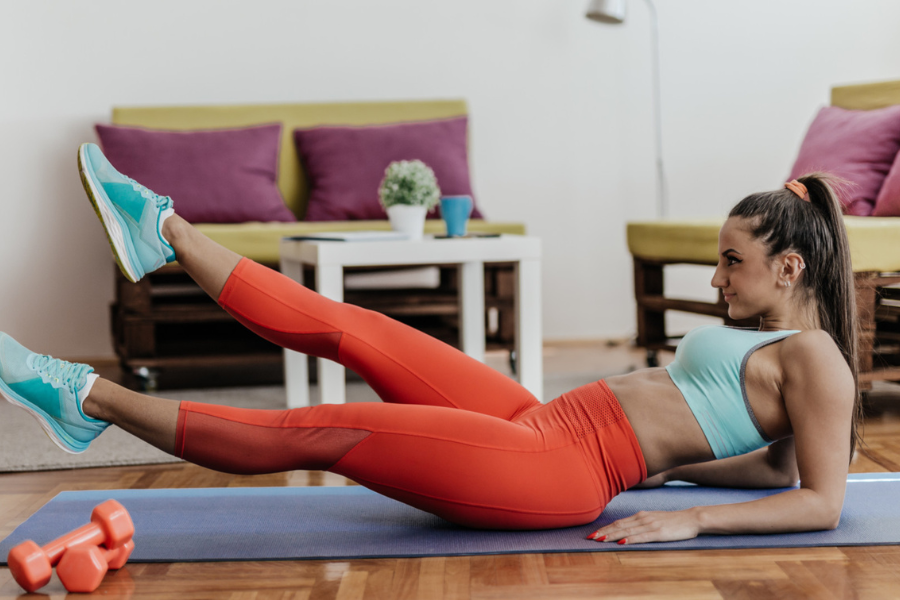
Understand why core strength matters
An effective ab workout for women does much more than work toward a visible six pack. A strong core helps you move comfortably, protect your back, and feel steady in everyday life.
Trainers like Lindsey Benoit O’Connell, CSCS, emphasize that your core is the foundation of overall strength and well-being for women, supporting mobility, posture, and even pelvic floor health, as highlighted in reporting from Good Housekeeping in 2026. When you train your abs, you are training your entire midsection as a 360º support system, not just the front of your stomach.
Benefits of a strong core for women
A balanced core routine can help you:
- Improve posture and reduce slouching
- Decrease risk of lower back pain
- Support pelvic floor function and reduce incontinence risk
- Feel steadier when you walk, run, lift, or carry things
- Perform better in other workouts like strength training, Pilates, or running
- Move through daily tasks, like lifting groceries or picking up kids, with more ease
Instead of thinking about abs as a vanity muscle, it helps to see them as the center of everything you do.
Learn your core muscle groups
To build an ab workout for women that truly works, you need to target your whole core, not just the visible muscles.
The key muscle groups include:
-
Rectus abdominis
The “six pack” muscle that runs down the front of your torso and helps you flex your spine, like in a crunch or sit-up. -
Transverse abdominis
A deep corset-like muscle that wraps around your midsection. It acts like your body’s built-in weightlifting belt and supports spinal stability. -
Internal and external obliques
Muscles on the sides of your waist that help with rotation, side bending, and overall trunk stability. -
Multifidi and erector spinae
Deep back muscles that support, extend, and stabilize the spine. -
Diaphragm and pelvic floor
Often overlooked but essential. These muscles help with breathing, pressure management, and pelvic stability.
Core experts quoted in Women’s Health and other 2024 coverage note that effective core training must work all of these muscles together to improve posture, balance, and spinal health, not only aesthetics.
Set realistic goals for your abs
It is common to start an ab workout with the goal of getting visible abs. That is understandable, but it helps to separate two different goals:
-
Core strength and stability
You can build this at almost any size or body composition with consistent training. -
Visible six pack abs
This depends heavily on body fat levels, genetics, and your overall training and nutrition.
Trainers like Kara Liotta, as cited by Women’s Health in 2024, stress that exercise alone is rarely enough for visible abs. You also need supportive nutrition and overall fat loss. Another expert, Jamie Costello, CPT, explains that many women would need to reach a relatively low body fat range to clearly see a six pack, which may not be realistic, comfortable, or healthy for everyone.
You can still gain all the functional benefits of strong abs, like less back pain and better balance, even if a six pack never shows. Framing your main goal around how you feel and move rather than how your stomach looks can make your routine much more sustainable.
Follow core training basics
Before you dive into specific ab workouts, it helps to understand some simple principles so you get more from every minute.
How often to train your abs
Many experts recommend:
- Aim for 2 to 3 focused core sessions per week
- Allow at least one rest day between challenging ab workouts
Just like any muscle group, your abs need time to recover. Training them hard every day can actually stall progress, increase soreness, and raise your risk of injury.
Keep in mind that compound lifts like squats and deadlifts also work your core, so you might already be training these muscles more than you think.
How long each ab workout should be
Research-backed routines for women often suggest:
- 10 to 20 minute sessions
- Shorter, focused circuits that target your entire midsection from multiple angles
This is enough time to build meaningful strength when you focus on form and keep rest periods short.
Form and tempo
Slow and controlled movement is more effective than rushing through reps. Trainers interviewed in 2024 and 2026 fitness articles consistently recommend:
- Move intentionally, especially on the lowering phase of each exercise
- Keep your ribs stacked over your hips and avoid overarching your lower back
- Breathe steadily, exhaling on exertion, and avoid holding your breath
If your lower back starts to pinch or you feel the exercise more in your neck than your abs, that is a sign to adjust or regress the move.
Try a 10 minute beginner ab circuit
If you are new to core training, this simple ab workout for women is a good place to start. All you need is a mat and a bit of space.
How to do it:
- Perform each exercise for 30 to 40 seconds
- Rest 15 seconds between moves
- Complete all exercises once, rest 1 minute, then repeat for 2 to 3 total rounds
Exercise 1: Tabletop crunch and reach
This move targets your rectus abdominis and teaches you to stabilize your spine while moving your arms.
- Lie on your back with knees bent to 90 degrees in a tabletop position.
- Engage your core by gently drawing your ribcage down and bracing as if preparing for a gentle poke.
- Reach your arms toward the ceiling.
- Exhale, lift your head, neck, and upper shoulders off the mat, reaching your fingertips toward your knees.
- Inhale to slowly lower back down with control.
Make it easier: Keep one foot on the floor and switch sides halfway through.
Make it harder: Extend your legs to a 45 degree angle while you crunch, as long as your lower back stays glued to the mat.
Exercise 2: Heel touches
Heel touches help strengthen the sides of your core and the lower abs. They may also support pelvic floor health, which is especially important for women.
- Lie on your back with knees bent and feet flat, slightly wider than hip distance.
- Engage your core and lift your head and shoulders just off the mat.
- Reach your right hand toward your right heel in a small side crunch.
- Return to center, then reach left hand toward left heel.
- Alternate side to side with slow, controlled movements.
Focus on using your obliques, not just swinging your arms.
Exercise 3: Bird dog
Bird dog is a gentle but powerful move to build core stability, balance, and coordination.
- Start on hands and knees, wrists under shoulders and knees under hips.
- Brace your core and keep your spine neutral, gaze toward the floor.
- Extend your right arm forward and left leg back at the same time.
- Pause for a second, then slowly return to start.
- Switch to left arm and right leg, and continue alternating.
Make it easier: Slide your toes on the floor instead of lifting your leg all the way up.
Make it harder: Hold each extension for 3 breaths.
Exercise 4: Forearm plank
Planks engage your deep core, shoulders, and glutes all at once.
- Start on your forearms and knees.
- Step both feet back so your body forms a straight line from head to heels.
- Keep your elbows under your shoulders and avoid letting your hips sag or pike.
- Hold while breathing steadily.
Make it easier: Stay on your knees and keep the line from head to knees straight.
Make it harder: Alternate tapping one foot out to the side and back while holding your plank.
Slow, steady breathing helps keep your torso braced without gripping through your neck and shoulders.
Exercise 5: Standing knee drive
This move mimics a running or marching motion and challenges your balance, coordination, and core stability.
- Stand tall with feet hip width apart.
- Bring your hands up in front of your chest.
- Shift your weight to your left leg.
- Drive your right knee up toward your chest while lightly pulling your hands down toward your knee.
- Step back to start and repeat on the same side, then switch halfway through.
Focus on staying tall and avoiding leaning too far back as you lift your knee.
Progress to an intermediate 15 minute routine
When the beginner circuit feels comfortable and you can move with good form, try this slightly more challenging routine. It adds rotational work and more dynamic moves to train your core from multiple angles.
How to do it:
- Choose 5 exercises
- Perform each for 40 to 45 seconds, rest 15 seconds
- Repeat for 3 total rounds
You can rotate through these options based on how your body feels.
Option 1: Bicycle crunch
Works your rectus abdominis and obliques.
- Lie on your back with hands lightly behind your head, elbows wide.
- Lift your knees to tabletop and bring your shoulders off the mat.
- Extend your right leg as you rotate your torso, bringing your right elbow toward your left knee.
- Switch sides in a pedaling motion with slow, controlled twists.
Try not to yank on your neck. Think of leading with your shoulder instead of your elbow.
Option 2: Reverse crunch
Targets your lower abs without heavy strain on your neck.
- Lie on your back with hands by your sides.
- Lift your legs so your knees are stacked over hips and shins are parallel to the floor.
- Exhale and use your lower abs to curl your hips slightly off the mat, bringing your knees toward your chest.
- Inhale as you slowly lower your hips back down with control.
Avoid swinging your legs. The movement should be small and precise.
Option 3: Seated rotation (Russian twist style)
Improves rotational strength and challenges your obliques.
- Sit on the floor with knees bent and feet flat.
- Lean back slightly until you feel your core engage, keeping your back long.
- Bring your hands together in front of your chest.
- Rotate your torso to the right, then to the left, keeping your hips steady.
Make it easier: Keep your feet on the floor.
Make it harder: Lift your feet off the ground while maintaining a stable spine.
Option 4: Mountain climbers
This dynamic plank variation raises your heart rate and builds endurance.
- Start in a high plank position with hands under shoulders.
- Brace your core and keep your spine long.
- Drive one knee toward your chest, then switch legs in a running motion.
- Keep your hips level and movement smooth.
Move at a controlled pace instead of sprinting. Quality over speed will protect your joints and maximize core engagement.
Option 5: Side plank
Side planks emphasize your obliques and help with posture and lateral stability.
- Lie on your side with your elbow under your shoulder.
- Stack your legs and press your forearm into the mat.
- Lift your hips so your body forms a straight line from head to feet.
- Hold, then switch sides halfway through.
Make it easier: Bend your bottom knee and keep it on the floor for support.
Make it harder: Raise your top leg slightly while holding the plank.
Incorporate functional core training
Functional core workouts prepare you for real life, not just gym moves. Instead of isolating one muscle, they teach multiple muscles around your spine and pelvis to work together.
Experts in recent fitness coverage highlight that functional core moves help with activities like carrying heavy bags, squatting, twisting, and hip hinging. These workouts train deep muscles such as the transverse abdominis, obliques, multifidi, diaphragm, and pelvic floor to stabilize you while you move.
Here are a few functional-focused ideas you can add to your week:
-
Farmer’s carry
Pick up a pair of moderate weights and walk slowly. Focus on staying tall, ribs stacked over hips, and not leaning to one side. This challenges your grip, shoulders, and core at once. -
Halo with a weight or object
Hold a single weight, like a dumbbell or heavy book, and slowly circle it around your head while standing tall. Keep your torso steady so your core, not just your arms, does the work. -
Plank knee to nose
From a plank, bring one knee toward your nose while rounding your upper back slightly. This blends strength, balance, and core control. -
Rotational moves
Light slam ball twists or controlled standing rotations help build rotational power and stability you can use in everyday life.
Functional training is less about chasing fatigue and more about building a body that feels capable in all directions.
Avoid common ab training mistakes
Core work does not have to be complicated, but a few habits can slow your progress or work against your goals.
1. Training abs too often
It can be tempting to do crunches every day, especially if you are chasing a flat stomach. However, your ab muscles need rest just like your legs or glutes.
Frequent, intense ab training without recovery:
- Increases muscle soreness and fatigue
- Can lead to overuse injuries
- May even limit performance in other lifts
Aim for quality sessions 2 to 3 times a week instead of daily marathons.
2. Overdoing weighted ab exercises
Heavy, weighted ab training can build larger abdominal muscles. For some women this is a goal, but for others it can create a thicker or “blocky” waist, especially if there is still fat covering the area. Expert commentary in 2024 fitness coverage also notes that heavy oblique training can widen the sides of the waist, which may work against an hourglass look if that is important to you.
If your main priority is core strength and a streamlined midsection, you can focus on:
- Bodyweight or lightly weighted core moves
- Higher reps with controlled tempo
- Compound lifts that naturally work the core
3. Focusing only on crunches
Crunches can be part of a solid plan, but they do not cover everything your core needs. You also want:
- Anti-extension work, like planks
- Anti-rotation or rotation, like bird dogs or twists
- Hip flexion and lower ab work, like leg raises or reverse crunches
- Lateral stability work, like side planks or carries
Training your abs from multiple angles will support your spine more effectively and make you stronger overall.
4. Ignoring nutrition
Multiple trainers and women with visible abs interviewed in 2024 emphasize that abs are strongly influenced by your eating patterns. A consistent diet higher in minimally processed foods and quality protein makes it easier to:
- Support muscle recovery
- Reduce overall body fat
- Maintain steady energy for workouts
Some experts suggest aiming for about 25 to 30 grams of protein per meal for muscle repair and body composition changes, as covered by Women’s Health in 2024. This is a general guideline and your ideal amount may vary, but it shows how nutrition and training work together.
Support your abs with overall training and lifestyle
Core exercises are important, but they are just one piece of a bigger fitness picture.
Combine strength, cardio, and core
Fitness experts often recommend a blend like:
- Strength training 2 to 4 times per week to build muscle across your whole body
- Cardio 2 to 3 times per week, including steady state or intervals, to support heart health and help manage body fat
- Core specific sessions 2 to 3 times per week as part of, or separate from, your main workouts
Some trainers interviewed in 2024 highlight that high-intensity interval training, performed several times per week, can help with fat loss, which in turn may make abdominal definition more visible when combined with strength training.
Listen to your body
As you add more ab work:
- Stop any exercise that creates sharp pain in your back, hips, or neck
- Modify or regress moves when your form starts to slip
- Celebrate small signs of progress, like feeling steadier in a plank or being able to hold good posture longer throughout the day
Consistency matters more than the perfect plan. A simple, repeatable routine that you can actually stick with will always beat a complicated program you abandon after a week.
Putting it all together
A thoughtful ab workout for women:
- Trains your core as a 360 degree support system, not just your “six pack”
- Balances front, side, and deep stabilizing muscles
- Uses slow, controlled bodyweight moves you can do at home
- Fits into a broader routine that includes strength, cardio, and rest
- Is supported by realistic goals and daily nutrition habits
You can start today with one 10 minute circuit. As you get stronger, you can add new variations, extend your working time, or move to more challenging progressions. Over time you will feel the difference whenever you stand up straighter, lift something heavy with confidence, or notice everyday movements becoming easier.
About the Author