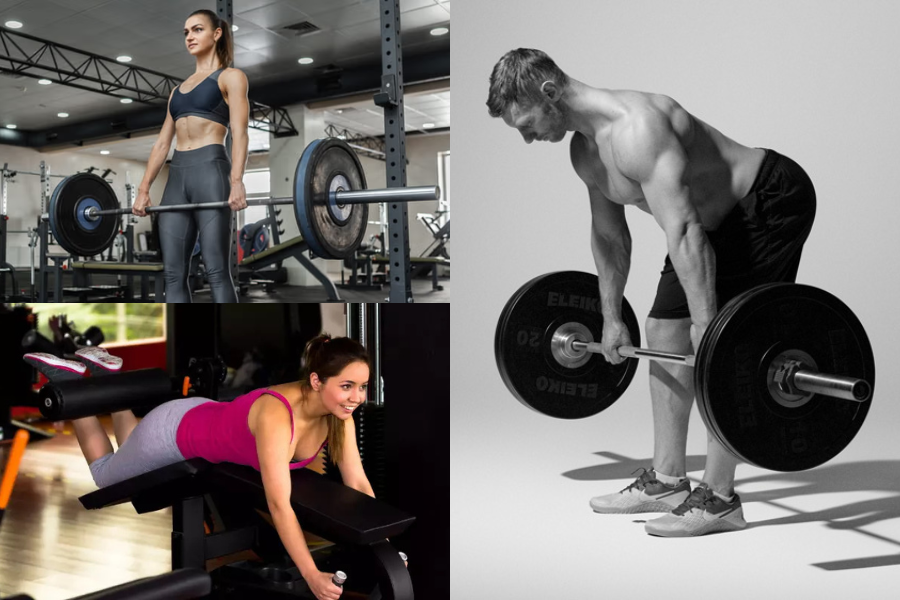
A strong, resilient lower body starts with healthy hamstrings. Single-leg hamstring exercises help you build strength, stability, and balance in one efficient package, and they are especially useful if you sit a lot, run, or have dealt with leg or knee issues in the past.
Below, you will learn why these moves matter and how to perform them safely, even if you are a beginner.
Why single-leg hamstring exercises matter
When you train on one leg at a time, your body has to work harder to balance, stabilize, and control the movement. That extra demand activates your hamstrings, glutes, and core in a more functional way than many machine-based exercises.
Physical therapists note that single-leg hamstring exercises such as the single-leg Romanian deadlift (RDL) and single-leg chair squats help balance the strength between the front and back of your legs, which can reduce knee injury risk by preventing muscle imbalances. Because most hamstring injuries occur when one leg is working on its own, single-leg training also directly matches the way you move in real life and in sports.
You also get the benefit of addressing left-right differences. Unilateral training makes it easy to see if one leg is weaker, then gradually bring it up to speed so both sides share the workload more evenly.
How to get started safely
If you are new to strength training or returning after a break, start simple and focus on form instead of load. Many single-leg hamstring exercises are challenging even without added weight.
Begin with a light warmup, such as 3 to 5 minutes of walking, marching in place, or easy bodyweight squats. Pay attention to three key cues in every exercise: keep a neutral spine, move slowly and with control, and stop if you feel sharp pain instead of muscle effort or stretch.
As you feel more comfortable, you can progress by increasing time under tension, adding light weights, or trying more advanced versions. The research suggests that progressing from two-leg patterns to single-leg versions, such as moving from glute bridges to single-leg bridges, helps you target your hamstrings more effectively while protecting your lower back.
Beginner-friendly single-leg hamstring exercises
Single-leg chair squat
The single-leg chair squat is a great entry point if you want to build strength without worrying too much about balance. You use a chair as a safety net and as a target for depth.
- Stand in front of a sturdy chair, facing away from it.
- Lift one foot slightly off the floor and keep most of your weight on the standing leg.
- Reach your hips back and slowly sit down, lightly touching the chair.
- Press through your heel to stand back up, keeping your knee tracking over your toes.
- Repeat for your reps, then switch legs.
Physical therapists recommend this as an accessible way to train single-leg hip extension while keeping your risk low. If it feels tough, you can briefly tap your other foot on the floor to assist as you stand.
Standing single-leg curl
Standing curls are simple, joint-friendly, and do not require equipment. You can use them to warm up your hamstrings or as part of a home workout.
- Stand tall while holding the back of a chair or wall for support.
- Shift your weight to one leg, then bend the other knee to bring your heel toward your glutes.
- Pause for a moment at the top to feel your hamstring working.
- Lower your foot with control and repeat, then switch sides.
You can add a resistance band or ankle weight to increase the challenge. Using bands gives you progressive resistance that helps strengthen your hamstrings and calves without needing gym machines.
Intermediate moves to build strength
Once you feel comfortable balancing on one leg and controlling your movement, you can move on to more demanding single-leg hamstring exercises that emphasize hip hinging and glute engagement.
Single-leg bridge
Single-leg bridges take a familiar double-leg glute bridge and increase the load on each hamstring. This variation is especially useful if you want to avoid heavy axial loading on your lower back.
- Lie on your back with one heel on the floor or on a low chair, knee bent.
- Extend your other leg straight so it stays in line with your thigh.
- Brace your core, then press through your heel to lift your hips until your body forms a straight line from shoulders to knee.
- Keep your hips level, pause briefly at the top, then lower with control.
- Complete your reps, then switch legs.
Progressing from double-leg to single-leg bridges allows you to build up to about 3 sets of 15 repetitions per leg without provoking hamstring cramps or lower back strain when you move gradually.
Single-leg deadlift (bodyweight)
The single-leg deadlift is a powerful posterior chain exercise that challenges your balance and coordination along with hamstring strength.
- Stand tall with feet hip-width apart.
- Shift your weight to one leg and keep a soft bend in that knee.
- Hinge forward at your hips while lifting your other leg straight behind you.
- Keep your back flat and your hips square to the floor as your torso and back leg form a straight line.
- Lower until you feel a strong stretch in the hamstrings of the standing leg, then return to standing by driving your hips forward.
This move improves balance and position sense and is a solid step before you add weights. You can begin by holding the hinge position for up to 10 seconds, then progress to 10 repetitions per leg.
Advanced single-leg hamstring exercises
When you are ready for a bigger challenge, these options increase the load and demand more precise control. Start with low volume and move slowly.
Single-leg Romanian deadlift (RDL) with weight
The single-leg RDL is one of the most effective single-leg hamstring exercises, especially for targeting the biceps femoris portion of your hamstrings. Studies cited by Gymshark identify it as a top choice for hamstring activation.
- Hold a dumbbell or kettlebell in one or both hands.
- Stand on one leg with a slight bend in the knee.
- Hinge at the hips while extending your other leg behind you, keeping your spine neutral.
- Let the weight travel down in front of your standing leg, staying close to your body.
- Stop when your torso is roughly parallel to the floor or you feel a strong but comfortable stretch.
- Drive your hips forward to return to standing, maintaining square hips and shoulders.
Because this is a unilateral exercise, it emphasizes strength and stability in each leg individually and recruits stabilizing muscles like the gluteus medius to keep your femur aligned and your body steady. For strength, a routine of about 3 sets of 6 to 8 reps per leg is a solid starting point.
Nordic hamstring curl (single-leg focus)
The Nordic curl is a demanding hamstring exercise that trains you to control your body weight in a lengthened position. Some variations shift more load to one leg, making it effectively a single-leg emphasis movement.
- Kneel on a soft surface with your ankles anchored under a heavy object or held by a partner.
- Cross your arms over your chest and brace your core.
- Slowly lean your body forward from the knees while keeping your hips extended and your torso straight.
- Use your hamstrings to resist gravity for as long as possible, then catch yourself with your hands.
- Push lightly off the floor and pull with your hamstrings to return to the starting position.
Research links the Nordic hamstring curl with a reduced risk of hamstring injury, which is why it is frequently recommended for people who are prone to strains or returning from them. When you are strong enough, you can bias one leg more during the lowering phase, which increases unilateral demand.
How often to train your hamstrings
You do not need a long, complicated routine to benefit from single-leg hamstring exercises. Two to three focused sessions per week are enough for most people, especially if you are also doing other lower body work like squats or lunges.
Here is a simple weekly structure you can adapt:
Sample schedule:
Day 1: Chair squats, standing curls, single-leg bridges
Day 2: Rest or light activity
Day 3: Single-leg deadlifts, single-leg RDLs, one or two sets of Nordic curls
Day 5: Repeat Day 1 or Day 3 with small progressions
Runners and field athletes often benefit from combining single-leg and double-leg resistance training. A systematic review found that both approaches improve running speed, and neither is clearly superior, so mixing them gives you the best of both worlds. The key is to adjust based on your current strength, any past injuries, and the equipment you have available.
Tips to get the most out of each rep
A few small adjustments can make your single-leg hamstring exercises more effective and more comfortable.
First, move slowly, especially on the lowering phase. Controlling the eccentric portion of the lift helps you build strength and resilience where many injuries happen. This is one reason exercises like reverse lunges with sliders and deadstop RDLs are so helpful for developing hamstring control and contraction at full stretch.
Second, keep your pelvis level. Letting one side drop or twist reduces hamstring tension and can strain your lower back. Improved lumbo-pelvic control and core stability are major benefits of unilateral training, so it is worth focusing on clean alignment.
Finally, start lighter than you think you need. Because of the bilateral strength deficit, each leg can often handle more load individually than you expect, but your stabilizers and technique need time to adapt. Add weight only when you can complete all reps with steady balance and consistent form.
Bringing it all together
By adding even two or three single-leg hamstring exercises to your weekly routine, you can improve your strength, balance, and overall confidence on your feet. You do not need a lot of equipment, and you can scale almost every move from beginner to advanced as you progress.
Pick one beginner move, one intermediate move, and one advanced move that match your current level, then practice them consistently for a few weeks. As your hamstrings grow stronger and more stable, you will likely notice everyday tasks feeling easier and your workouts feeling more powerful.
About the Author