A strong pair of hamstrings does more than help you lift heavier. When you choose the right hamstring isolation exercises, you support your knees, protect your lower back, and improve how your legs look from the side.
This guide walks you through what your hamstrings actually do, the best isolation moves to target them, and how to put it all together into a simple, effective routine.
Understand what hamstring isolation exercises do
Your hamstrings are the three muscles that run down the back of your thigh: the biceps femoris, semitendinosus, and semimembranosus. They bend your knee and help extend your hip, which means you use them every time you walk, run, jump, or get up from a chair.
Hamstring isolation exercises focus almost all of the work on those muscles. Instead of sharing the load with your glutes, quads, and lower back, you move primarily at one joint, usually the knee. This is especially helpful if:
- Your hamstrings are underdeveloped compared with your quads
- Your lower back gets tired before your hamstrings during big lifts
- You want to rehab or train around certain injuries
- You want more shape and definition in the back of your legs
Because the loads are usually lighter and the movements are simpler, isolation work is often safer to take close to muscle failure than big compound lifts like deadlifts or squats (Gymshark, 2023).
Key benefits of training your hamstrings directly
When you program hamstring isolation exercises on purpose, you get a few clear advantages.
You improve strength and size where you need it most. By placing most of the training volume directly on the hamstrings, you can drive hypertrophy in a muscle group that might be stubborn or lagging behind other areas (Gymshark, 2023).
You balance out quad-dominant training. Many daily activities and common exercises like cycling, leg extensions, and traditional squats emphasize the front of your thighs. Direct hamstring work helps correct that imbalance, which reduces injury risk around the knee and improves joint stability.
You support performance and injury prevention. Strong hamstrings play a key role in sprinting, jumping, decelerating, and changing direction. Nordic curls, for example, are highly effective for preventing hamstring strains and can help boost sprint speed and lower body power.
You get more targeted rehab options. If you cannot tolerate heavy standing exercises, seated or lying curls let you maintain hamstring strength while sparing other joints or your lower back.
Best machine-based hamstring isolation exercises
If you have access to a gym, certain machines make it easy to isolate your hamstrings and adjust the load precisely.
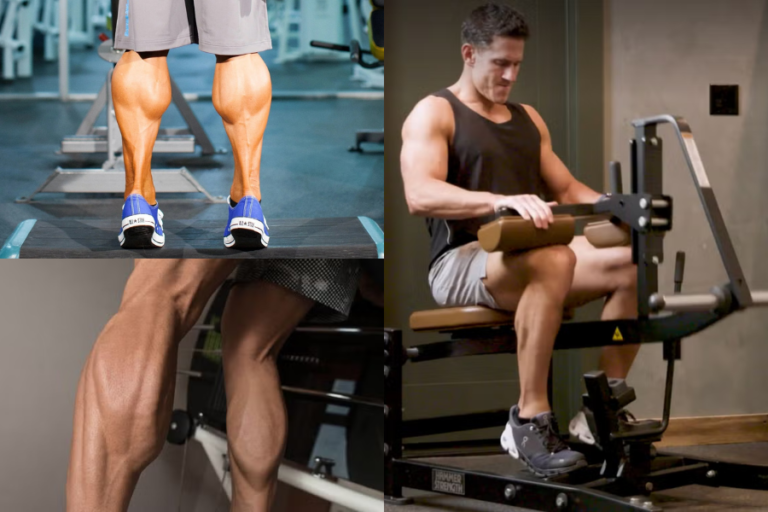
Seated leg curl
The seated leg curl is one of the best hamstring isolation exercises if you have underdeveloped hamstrings or a big imbalance between your quads and hamstrings. Because you are seated with your hips flexed, you minimize involvement from your glutes and lower back and can really focus on knee flexion.
How to do it:
Sit with your back firmly against the pad, knees aligned with the machine’s pivot point, and ankles against the lower pad. Start with your legs almost straight but not locked. Curl your heels down and back as far as the machine allows, pause and squeeze your hamstrings, then slowly return to the start.
Why it works:
The seated curl is particularly good for targeting the inner hamstring (semitendinosus). It is excellent for building muscle size and correcting imbalances between your hamstrings and quads, which can lower your risk of knee issues.
Programming tip:
Aim for 3 to 4 sets of 8 to 12 controlled reps, focusing on a smooth squeeze and slow return.
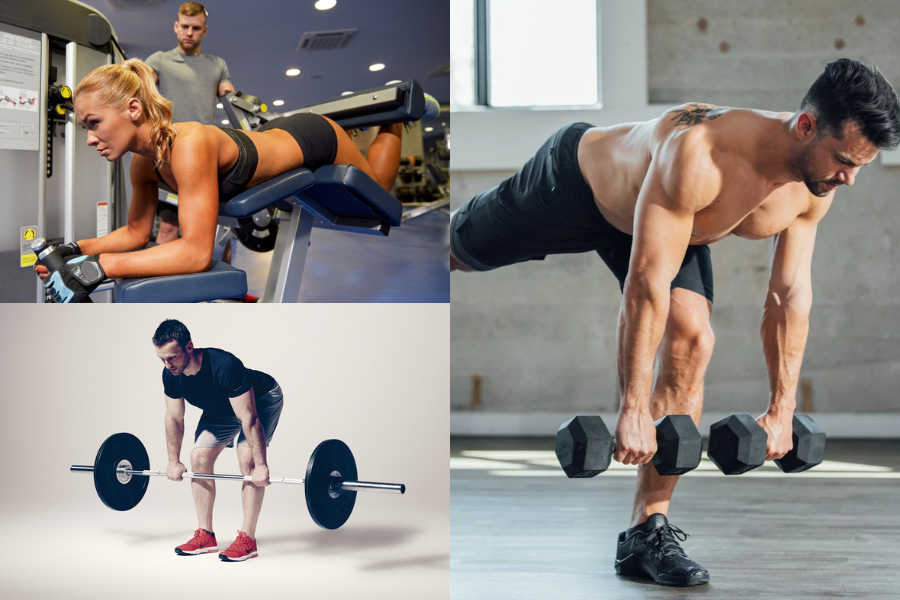
Prone (lying) leg curl
Prone leg curls are another classic hamstring isolation move. You lie face down, which locks your body in place and lets you focus entirely on bending your knees against resistance.
How to do it:
Lie flat on the machine with your knees just off the edge of the pad, legs straight but not locked, and the pad positioned just above your heels. Curl your legs toward your glutes, pause for a strong contraction, then lower under control until your legs are nearly straight again.
Why it works:
This variation emphasizes the outer hamstring, mainly the biceps femoris, and is very effective for both strength and hypertrophy. Because you are supported by the bench, it is also safe to use higher reps and push close to failure without worrying about losing your balance.
Programming tip:
Use 3 to 4 sets of 8 to 12 reps, adjusting weight so you can control the full range without swinging.
Hamstring curl machines in context
Hamstring curl machines isolate the knee flexion function of the hamstrings, which is basically the opposite motion of a leg extension machine that targets your quads. Since your hamstrings are often less powerful than your quads, it makes sense to start with lighter weights and slow, controlled repetitions until you master the form.
Hamstring curls pair well with quad-focused moves like leg extensions, squats, or lunges to keep your thigh development balanced and your knees happier over time.
Effective free weight and bodyweight options
You can still train your hamstrings effectively without machines. Free weight and bodyweight hamstring isolation exercises are versatile and often challenge your balance and core at the same time.
Romanian deadlift (RDL)
The Romanian deadlift is often considered one of the best hamstring-focused exercises. It is technically more of a hip hinge compound movement, but when you keep the knees slightly bent and stable, your hamstrings do most of the work.
How to do it:
Hold a barbell, dumbbells, or kettlebell in front of your thighs. Stand tall with a soft bend in your knees. Hinge at your hips by pushing them back, keeping your back neutral and the weight close to your body, until you feel a deep stretch in the back of your legs. Drive your hips forward to return to standing.
Why it works:
The RDL strengthens your hamstrings in a lengthened position, which is powerful for both muscle growth and resilience. You can perform it with almost any kind of weight and progress over time.
Programming tip:
Do 3 to 4 sets of 8 to 12 reps. Start light to master the hip hinge, then gradually increase load.
Single-leg deadlift
Single-leg deadlifts target one leg at a time and add a balance component. This makes them great for finding and fixing side-to-side weaknesses.
How to do it:
Stand on one leg with a slight bend in the knee. Hinge at the hip while extending your free leg behind you, keeping your torso and back leg in a straight line. Reach both hands or a dumbbell toward the floor, then reverse the motion to stand tall again.
Why it works:
You load your hamstrings and glutes on the working side while also training balance and core stability. This can translate well to running and change-of-direction sports.
Programming tip:
Try 3 to 4 sets of 8 to 12 reps per side. Focus on control over how low you can go.
Nordic hamstring curl
Nordic hamstring curls are a bodyweight movement that has become popular for injury prevention, especially in sports that involve sprinting. They place a big emphasis on eccentric strength, or the lengthening phase of the muscle.
How to do it:
Anchor your feet under something sturdy or have a partner hold your ankles. Start in a tall, upright kneeling position with your body in a straight line from your head to your knees. Keeping your hips extended, slowly lower your body toward the ground by straightening your knees, resisting with your hamstrings. Catch yourself with your hands at the bottom if needed, then push lightly off the floor and use your hamstrings to return to the start.
Why it works:
This move isolates knee flexion without needing a machine and places a big demand on the hamstrings as they lengthen, which research links to fewer hamstring strains and improved sprint performance.
Programming tip:
Begin with low volume, such as 2 to 3 sets of 4 to 6 slow reps, and use your hands a lot at first. Over time, rely more on your hamstrings.
Swiss ball leg curl
Swiss ball leg curls are another effective bodyweight hamstring exercise, and they add an extra challenge to your core and hip stability.
How to do it:
Lie on your back with your heels on top of a stability ball. Lift your hips so your body forms a straight line from your shoulders to your ankles. Curl the ball toward you by bending your knees and pulling your heels in, then slowly roll the ball back out while keeping your hips lifted.
Why it works:
You train knee flexion and hip extension together, and the unstable surface makes your hamstrings, glutes, and core all work in coordination. This can help improve balance and may even reduce lower back discomfort by encouraging better muscle activation patterns.
Programming tip:
Start with 2 to 3 sets of 10 to 15 reps. If it is too challenging, practice holding the hips-up bridge position first.
How to program hamstring isolation into your routine
To get the most from hamstring isolation exercises, you will want to think about frequency, exercise order, and how hard you are working.
Training frequency and intensity
For most people, training your hamstrings 2 to 3 times per week is a good sweet spot for growth and strength. You can mix heavier sets and moderate sets within those sessions.
A practical way to structure your sets is:
- Strength focus: 4 to 6 reps per set at roughly 70 to 85 percent of your one-rep max
- Hypertrophy focus: 8 to 12 reps per set at roughly 50 to 70 percent of your one-rep max
You do not need to measure percentages exactly. Just choose weights that feel challenging in those rep ranges while allowing clean form.
Exercise order within a workout
Since big compound moves like deadlifts and squats are more demanding, it usually works best to perform them first. Then you can follow with isolation exercises like leg curls, Nordics, or Swiss ball curls.
This approach lets you:
- Use maximum strength and coordination on heavy lifts
- Finish the session by fatiguing your hamstrings directly
- Limit how much your lower back or other muscles hold you back (Gymshark, 2023)
If your hamstrings are a top priority, you can sometimes start with a light isolation exercise to “wake them up” before a heavy hinge, then come back to isolation work again at the end.
Example hamstring-focused workout
Here is a simple lower body day that emphasizes hamstrings:
- Romanian deadlift, 4 sets of 8 reps
- Bulgarian split squat or lunge, 3 sets of 10 reps per leg
- Seated or prone leg curl, 3 sets of 10 to 12 reps
- Swiss ball leg curl or single-leg deadlift, 2 to 3 sets of 10 reps
Rest 60 to 90 seconds between lighter sets and up to 2 minutes after heavy RDL sets. Focus on smooth, controlled movement and a strong squeeze at the hardest point of each rep.
Progress safely and avoid common mistakes
Hamstrings respond well to progressive overload, which just means gradually asking them to do more over time. You can do this by adding a little weight, doing an extra rep or two, or pausing for a longer squeeze at the top of each curl every few weeks.
A few guidelines keep your progress safe and steady:
- Keep your lower back neutral, especially on RDLs and single-leg deadlifts
- Do not snap or jerk the weight up on curl machines
- Control the lowering phase instead of letting the weight drop
- Stop or adjust if you feel sharp pain around the knee or hip
Because isolation moves use lighter weights and fewer joints, they tend to be safer to push close to failure than heavy barbell lifts (Gymshark, 2023). That said, staying honest with your form is more important than chasing the heaviest weight on the stack.
If you consistently train your hamstrings 2 to 3 times per week and slowly progress the difficulty every 4 to 8 weeks, you will build stronger, more defined hamstrings that support everything from your favorite sport to your day-to-day movement.
About the Author