Why a dumbbell shoulder workout works
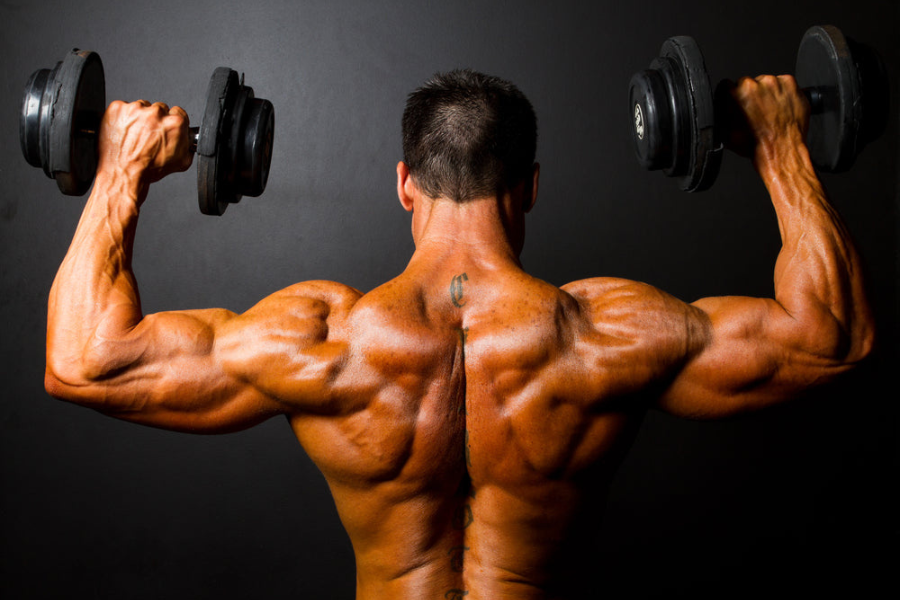
If you want broader, stronger shoulders without a complicated gym setup, a simple dumbbell shoulder workout is one of your best tools. Dumbbells let each arm move independently, so you can correct strength imbalances, use a greater range of motion, and reduce strain on your wrists, elbows, and shoulders compared with some barbell and machine exercises. Studies have also found that dumbbells generally create more muscle activation through that extra range of motion than barbells do, while unilateral work helps you spot and fix asymmetries.
In this guide, you will learn a straightforward shoulder routine that targets all three heads of the deltoid, plus the supporting muscles that keep your shoulders healthy and strong.
Understand your shoulder muscles
Before you start pressing and raising, it helps to know what you are training.
The three heads of the deltoid
Your main shoulder muscle, the deltoid, has three parts:
- Anterior (front) deltoid: Lifts your arm forward and helps with pressing.
- Lateral (middle) deltoid: Lifts your arm out to the side and creates that “capped” shoulder look.
- Posterior (rear) deltoid: Pulls your arm back and supports posture.
A well‑rounded dumbbell shoulder workout includes movements for all three so you build balanced strength and shape and reduce your risk of injury.
Supporting muscles you also train
Good shoulder exercises also work muscles that stabilize and support the joint, including:
- Trapezius (traps)
- Rotator cuff muscles
- Rhomboids
- Triceps
- Upper back and even glutes and core during standing presses
This is one reason overhead dumbbell pressing is so effective for overall upper body strength and stability.
Key safety tips before you start
Your shoulders are powerful but delicate. A few form rules go a long way toward staying pain free and getting better results.
Use a thumbs‑up position when possible
Experts at the Jacksonville Orthopaedic Institute note that lateral raises with palms down or thumbs down can increase compression on your rotator cuff under the bony part of the shoulder, which can raise your injury risk. A “thumbs up” or slightly rotated position tends to be safer and more comfortable.
Apply this idea to:
- Lateral raises: Think “pouring out slightly” at most, not aggressively turning the thumbs down.
- Overhead presses: Keep your elbows slightly in front of your body and your thumbs more forward than back.
Know when to avoid overhead pressing
Overhead presses, including dumbbell shoulder presses, are not recommended if:
- You currently have a rotator cuff injury.
- You recently had a rotator cuff repair or shoulder surgery.
Physical therapy specialists caution that pressing overhead in these cases can aggravate or delay healing. If that applies to you, check with your doctor or physical therapist before doing any overhead work.
Prioritize control over weight
Common mistakes in shoulder training include:
- Pressing one arm higher than the other.
- Swinging weights during raises.
- Using momentum in Arnold presses.
- Going too heavy in bent‑over raises so your back starts helping.
To avoid these issues:
- Choose weights you can control through the full range of motion.
- Move with a steady tempo, especially on the way down.
- Stop a set if your form starts to break down.
Build a simple dumbbell shoulder workout
You can transform your shoulders with a focused routine using just a handful of exercises. Here is a balanced template that targets every part of the delts.
Sample workout structure
Aim for this structure 1 to 2 times per week, with at least 48 hours between sessions:
- Heavy press (overall size and strength)
- Arnold press or variation (full‑range challenge)
- Lateral raise (side delts)
- Rear delt move (upper back and rear delts)
- Optional finisher or second raise (extra volume)
A 2015 study cited in a 2023 shoulder training guide suggests 3 to 5 sets of 8 to 12 reps per exercise for strength, muscle endurance, and hypertrophy in upper body muscles. You can use that as your default rep range.
Example dumbbell shoulder workout
| Exercise | Sets | Reps | Rest | Focus |
|---|---|---|---|---|
| Seated dumbbell shoulder press | 3–4 | 8–12 | 60–90 sec | Size & strength |
| Dumbbell Arnold press | 3 | 10–12 | 60–90 sec | All‑around delts |
| Lean‑away lateral raise | 3 | 12–15 | 45–60 sec | Side delts |
| Rear delt dumbbell row | 3 | 10–15 | 45–60 sec | Rear delts |
| Incline dumbbell face pull | 2–3 | 12–15 | 45–60 sec | Rotator cuff |
You can shorten this to 3 exercises if you are pressed for time: one press, one lateral raise, one rear delt move.
Master the main dumbbell shoulder exercises
Below are detailed cues you can use to get the most from each movement while protecting your shoulders.
1. Dumbbell shoulder press
The dumbbell shoulder press is a cornerstone of any dumbbell shoulder workout. It primarily targets your front deltoids and triceps and it also works your upper traps, core, and even glutes when done standing.
How to do the seated dumbbell shoulder press
- Sit on a bench with back support. Plant your feet flat on the floor.
- Hold a dumbbell in each hand at shoulder height, palms facing forward or slightly inward.
- Position your elbows at about a 45‑degree angle in front of your body, not flared straight out to the sides. Keep your shoulders down away from your ears.
- Brace your core by gently pushing your stomach out as if you are bracing for a body check, and lightly squeeze your glutes to protect your lower back.
- Press the dumbbells up until your arms are almost straight but not locked. Keep a slight bend at the elbows.
- Lower the dumbbells slowly over 1 to 3 seconds until they return to shoulder height. Maintain that core and glute tension throughout.
Form tips
- Use a strict press. Do not use your legs to help.
- Keep both hands moving at the same speed to avoid one arm doing more work.
- Stop the set if you feel pinching in the top of the shoulder.
Experts at Jacksonville Orthopaedic Institute point out that dumbbell shoulder presses encourage more natural shoulder movement and more balanced right‑to‑left loading than behind‑the‑neck barbell presses, which can create abnormal shoulder forces and higher injury risk.
Standing vs seated presses
Both versions work well. Research has found:
- Standing presses increase front delt activation by about 8 percent, lateral delt by 15 percent, and rear delt by 24 percent compared with seated versions.
- Seated presses let you lift roughly 10 percent more weight, which can support long‑term muscle growth.
You can alternate between them over time, or stick to seated if you prefer more stability and slightly heavier loads.
2. Dumbbell Arnold press
The Arnold press is a rotating press named after Arnold Schwarzenegger. It challenges your shoulders through a long range of motion and places extra emphasis on the front delts and upper arms.
How to do the Arnold press
- Sit or stand tall with a dumbbell in each hand.
- Start with your palms facing you at about chest height, elbows bent, like the top of a biceps curl.
- As you press the dumbbells upward, rotate your palms to face forward and finish in a standard overhead press position.
- Reverse the movement as you lower the weights, rotating your palms back toward your face and bringing the dumbbells to the starting position.
Form tips
- Use a controlled, smooth rotation. Avoid jerking the weights.
- Choose lighter weight than a regular overhead press, especially while learning the movement, to avoid using momentum.
- Keep your ribs down and core braced so you do not lean back.
This exercise increases time under tension across all three heads of the delts, which makes it very effective for muscle development when used with higher reps.
3. Dumbbell lateral raises
Lateral raises isolate your middle deltoids, which are critical for shoulder width and roundness. They work best with lighter weights and strict form.
How to do lateral raises safely
- Stand tall with a dumbbell in each hand at your sides. Slightly bend your elbows.
- Turn your thumbs slightly up so your palms are not totally down. This helps reduce compression on the rotator cuff.
- Raise your arms out to the sides until they are around shoulder level, not much higher.
- Pause briefly at the top, then lower them slowly back to your sides.
Form tips
- Do not swing your torso or bounce the weights.
- Keep your shoulders down. If you are shrugging toward your ears, the weight is probably too heavy.
- If you feel pinching at the top, reduce the range of motion slightly or use lighter weights.
Try the lean‑away lateral raise
The lean‑away lateral raise keeps tension on the side delts through more of the range of motion and reduces the early involvement of the supraspinatus, one of your rotator cuff muscles. To do it, lightly hold a stable support with your free hand and lean your body slightly away from it, then raise the dumbbell with the other arm. Use light weights and controlled movement.
4. Rear delt dumbbell row
Your rear delts are often undertrained, which can lead to rounded shoulders and imbalances. Rear delt rows let you use more load than isolation moves like reverse flyes while still targeting the back of the shoulders.
How to do rear delt rows
- Stand with a dumbbell in each hand, hinge at your hips, and keep your back flat. Your torso should be roughly 30 to 45 degrees above parallel to the floor.
- Let the dumbbells hang under your shoulders with palms facing each other.
- Row the dumbbells up by driving your elbows out and away from your body rather than close to your sides.
- Squeeze at the top, then lower the weights under control.
Pulling with elbows away from your torso increases rear delt activation and decreases lat involvement, which is exactly what you want for this exercise.
5. Incline dumbbell face pulls
Face pulls are usually done with a cable, but you can mimic a similar motion with dumbbells on an incline bench. This move strengthens your rear delts, rotator cuff, and mid and lower traps, all of which support healthy shoulders and posture.
How to do incline dumbbell face pulls
- Set an incline bench at a medium angle and lie chest‑down on it.
- Hold a light dumbbell in each hand with your arms hanging straight down, palms facing each other.
- Pull the dumbbells up toward your face, leading with your elbows and rotating your hands so your thumbs move slightly up and back.
- Pause briefly when your upper arms are in line with your body, then lower slowly.
Form tips
- Keep the weights light. This is a precision exercise, not a heavy lift.
- Avoid arching your lower back off the bench.
- Aim for 10 to 15 controlled reps.
Choose weights, sets, and reps
You do not need extreme loads to transform your shoulders, but you do need enough challenge.
How to pick the right weight
For each exercise:
- Start with a weight you can lift for at least 10 solid reps with perfect form.
- Adjust so that the last 2 or 3 reps of each set feel challenging but still controlled.
- When you can hit the top of your rep range for all sets without your form breaking down, increase the weight slightly at your next workout.
Proven set and rep guidelines
Research summarized in a 2023 shoulder guide suggests:
- 3 to 5 sets
- 8 to 12 reps
- For each dumbbell shoulder exercise for the best blend of strength, endurance, and growth
You can use:
- 8 to 10 reps for presses and rows.
- 10 to 15 reps for raises and face pulls.
Warm up and cool down for shoulder health
A few extra minutes before and after your dumbbell shoulder workout can keep your joints happy and your training consistent.
Quick warm‑up (5 to 8 minutes)
- 2 to 3 minutes of light cardio like walking or cycling.
- Shoulder circles: 10 to 15 forward, 10 to 15 backward.
- Arm swings: Gentle front‑to‑back and across‑the‑body swings.
- 1 light warm‑up set of each main exercise before your working sets.
Simple cool‑down (3 to 5 minutes)
- Slow arm circles and shoulder rolls.
- Light chest and shoulder stretches within a comfortable range.
- A few deep breaths with your shoulders relaxed away from your ears.
Progress your dumbbell shoulder workout over time
You transform your muscles by steadily asking them to do a little more.
Each week, try one of the following:
- Add 1 or 2 reps per set.
- Add a small amount of weight while keeping your rep range similar.
- Add 1 extra set for one or two key exercises.
- Improve your tempo, such as taking 2 to 3 seconds on the lowering phase.
Stick with your routine for at least 6 to 8 weeks before making big changes. Take notes on weights, sets, and how the exercises feel so you can see your progress.
When to back off or modify
Pay attention to your shoulders during and after training.
You should:
- Feel muscle fatigue and “burn” in the delts.
- Not feel sharp pain, catching, or pinching deep in the joint.
If you do:
- Reduce the range of motion.
- Drop the weight and focus on slower, more controlled reps.
- Swap overhead presses for more horizontal movements like rear delt rows and raises until things feel better.
- Talk to a medical or rehab professional if pain persists, especially if you have a history of shoulder or rotator cuff injury.
Key takeaways
- A smart dumbbell shoulder workout can build strength, shape, and balance using just a few exercises.
- Dumbbells offer a greater range of motion and more natural shoulder mechanics than many barbell variations, especially behind‑the‑neck presses.
- Focus on all three heads of the deltoid, plus the rear delts and rotator cuff, for strength and long‑term shoulder health.
- Use a thumbs‑up or neutral hand position and moderate loads to reduce rotator cuff stress.
- Progress gradually by adding reps, weight, or sets while keeping form and control as your top priorities.
Pick two or three of these exercises, start light, and try one round of the sample workout this week. With consistent practice and careful form, you will feel your shoulders grow stronger and more stable from one session to the next.
About the Author