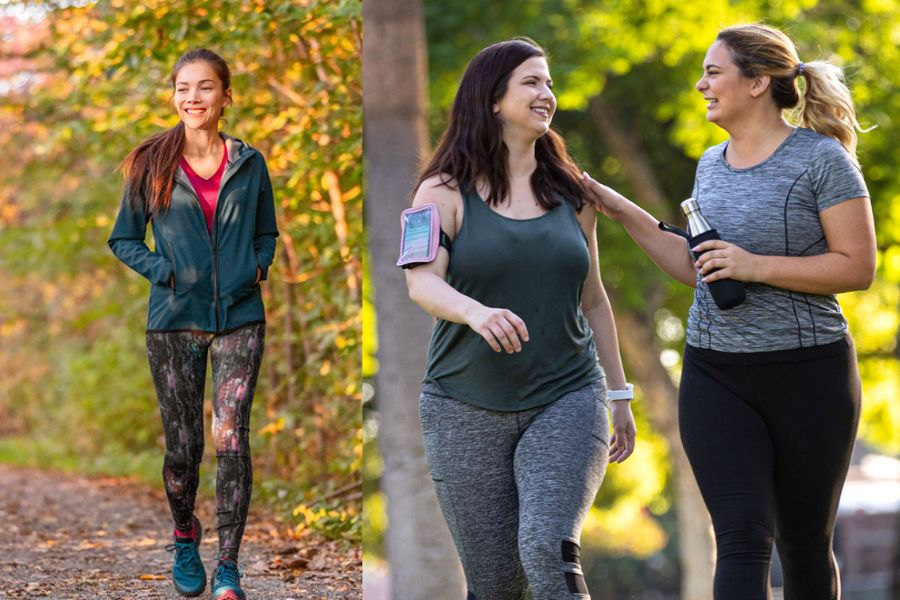
Understand what an interval walking workout is
An interval walking workout is simply walking with planned changes in speed. Instead of staying at one steady pace, you alternate between faster, more challenging bursts and easier recovery periods.
This style of walking has been studied for more than 20 years, especially in Japan, where researchers developed Interval Walking Training (IWT). Their basic formula is:
- 3 minutes of brisk, high‑intensity walking
- 3 minutes of slower, low‑intensity walking
- Repeat this cycle 5 times for a 30‑minute workout
You can think of it as a structured walk that gently pushes you out of your comfort zone, then gives you time to recover before the next effort.
See why interval walking is so effective
Interval walking workouts are popular because they offer more results in roughly the same amount of time as a regular walk. Research has found several key benefits.
Boost calorie burn and support weight loss
The alternating pace in an interval walking workout helps you burn more calories than a steady stroll. When you add faster bursts, your body works harder, and you may also experience a mild “afterburn effect,” where you continue to burn extra calories for a short time after you stop walking (Ohio State Health & Discovery).
For weight loss, interval walking can be helpful because:
- You can do it in 30 minutes or less
- It feels more engaging than a long, slow walk
- The higher intensity can make your walk more time efficient
Consistency still matters most, so pairing interval walking with a balanced, energy‑appropriate diet is important if your main goal is fat loss (Verywell Fit).
Improve heart and lung health
Interval walking training has been shown to:
- Improve aerobic capacity and VO₂ max, which is how well your body uses oxygen during exercise (Ohio State Health & Discovery)
- Lower blood pressure and improve resting heart rate
- Support healthier cholesterol and blood sugar levels
In one program developed in Japan, people who did interval walking several times a week saw about a 20% increase in maximal aerobic power and thigh muscle strength, along with notable improvements in symptoms of lifestyle‑related conditions like hypertension, high blood sugar, and obesity (Art of Manliness).
Protect long‑term health and aging
Regular interval walking is linked with wide‑ranging health benefits over time. Studies of thousands of middle‑aged and older adults found that a few months of IWT led to improvements in:
- Lifestyle‑related and age‑associated diseases
- Cognitive function
- Sleep quality
- Symptoms of depression (TODAY)
Because it is low impact and does not require running, interval walking can be an accessible way to support healthy aging and reduce risks for conditions like heart disease, diabetes, and osteoporosis (Ohio State Health & Discovery).
Be kinder to your joints than running
If high‑impact workouts like jogging or jumping do not feel good, interval walking gives you many of the same cardiovascular benefits with less stress on your joints.
Certified personal trainer Chrissy Carroll notes that interval walking can:
- Boost cardiovascular fitness
- Improve mood
- Reduce risks of chronic conditions
- Increase endurance
All without the pounding that comes from running, which makes it a helpful option if you have joint issues or simply prefer low‑impact exercise (EatingWell).
Make workouts feel shorter and more engaging
With an interval walking workout, you are always focusing on the next 2 or 3 minutes, not the full 30. The planned bursts and breaks can make time pass more quickly and distract you from the effort (Verywell Fit).
That can be especially helpful if you:
- Get bored easily
- Struggle to stay consistent with long workouts
- Prefer clear, simple structure when you exercise
Decide if interval walking is right for you
Most people can safely try interval walking, but it is worth checking a few things first.
Who benefits most
Interval walking workouts can be a strong fit if you:
- Want to lose weight without running
- Have a mostly sedentary routine and want an efficient way to move more
- Are an older adult looking for a safe way to improve fitness
- Already walk regularly and want extra challenge without adding time
- Prefer outdoor or at‑home workouts with little or no equipment
Studies suggest that beginners, people who are overweight, older adults, and experienced exercisers can all benefit from IWT because it is low impact and adaptable (Ohio State Health & Discovery).
When to talk with your doctor
Before you start a new interval walking program, consider getting medical clearance if you:
- Have heart disease or a history of heart problems
- Take medications that affect heart rate
- Have uncontrolled high blood pressure, diabetes, or other chronic conditions
- Experience chest pain, dizziness, or unusual shortness of breath with activity
A quick conversation with your health care provider can help you confirm what level of intensity is safe for you. This step is especially important if you plan to walk at higher efforts or if you have been mostly inactive for a long time (Verywell Fit).
Get set up for your first workout
You do not need much to start an interval walking workout, but a few basics will make it more comfortable and safe.
Choose the right gear
-
Supportive walking shoes
Look for shoes that feel comfortable, fit well, and offer cushioning and support. Good shoes can reduce your risk of blisters, joint discomfort, and overuse injuries (Verywell Fit). -
Comfortable clothing
Pick breathable layers that let you move freely. Moisture‑wicking fabrics help keep you dry. -
Optional extras
-
A simple watch or interval timer app
-
A fitness tracker or phone that can buzz at set intervals
-
A light jacket or hat if you are walking outdoors in changing weather
Plan your route
You can do interval walking:
- Outside on sidewalks, trails, or tracks
- Indoors on a treadmill
- In a hallway or around a large room if space is limited
For your first few sessions, choose a relatively flat route with minimal traffic and obstacles. That way you can focus on your pace, not dodging hazards.
Use a simple way to track intervals
You do not need high‑tech equipment to follow intervals, but a timer helps. Options include:
- A timer app that lets you set repeating work and rest periods
- The interval feature on a smartwatch or fitness tracker
- The stopwatch on your phone, with you checking the time every few minutes
Many people find that having a timer that beeps or vibrates at each change lets them relax and focus on their walk.
Learn how hard you should walk
The exact speed in an interval walking workout is less important than how it feels to you. Two easy tools can help you judge intensity.
Use the talk test
You can gauge your effort by how easy it is to speak:
-
Easy / low intensity
You can talk in full sentences without pausing for breath. -
Moderate intensity
You can speak in short phrases, but you are clearly working. -
High intensity for walking
You can only say a few words at a time before needing a breath. You feel challenged, but you can still maintain this pace for a couple of minutes.
Most interval walking programs alternate between a brisk, challenging pace and a slower, comfortable recovery pace.
Understand intensity in simple terms
Researchers often describe IWT as switching between:
- About 70% or more of your aerobic capacity during the fast intervals
- Around 40% of your capacity during the slower intervals (Art of Manliness)
You do not have to calculate exact percentages. Instead, aim for:
- Fast segments that feel “hard, but doable”
- Recovery segments that help you catch your breath and feel ready for the next push
If you are new to exercise entirely, your “fast” pace might be what currently feels like a strong, steady walk, and that is perfectly fine.
Try a beginner‑friendly interval walking plan
If you want to test an interval walking workout this week, you can use the structure below as a starting point. Adjust the timing based on how you feel and any guidance from your health care provider.
Step 1: Warm up
Start every session with 5 minutes of easy walking. This gradually raises your heart rate and warms your muscles.
Aim for a pace where you can easily hold a conversation and feel like you are just getting moving.
Step 2: Pick your interval structure
Here are a few beginner options you can choose from.
Option A: Gentle 1‑minute intervals
Ideal if you are new to exercise or returning after a break.
- 1 minute brisk walking
- 1 to 2 minutes easy walking
- Repeat the cycle 8 to 10 times
With your warm‑up and a short cool‑down, this gives you about 20 to 30 minutes total.
Option B: Classic 3‑minute Japanese method
Once you feel ready, you can try the pattern used in many Japanese interval walking studies:
- 3 minutes brisk, high‑intensity walking
- 3 minutes slower, low‑intensity walking
- Repeat 5 times for a total of 30 minutes (Brown University Health)
Including a 5‑minute warm‑up and 5‑minute cool‑down will bring your total session to about 40 minutes.
Option C: Ladder‑style intervals
Another beginner‑friendly approach is to use “ladder” intervals that gradually increase and then decrease the length of your faster segments. A sample ladder might look like this on a flat route or treadmill (EatingWell):
- 1 minute brisk, 2 minutes easy
- 2 minutes brisk, 2 minutes easy
- 3 minutes brisk, 3 minutes easy
- 2 minutes brisk, 2 minutes easy
- 1 minute brisk, 2 minutes easy
This style builds your confidence and endurance without asking you to hold a long fast interval right away.
Step 3: Cool down and stretch
Finish every workout with:
- 3 to 5 minutes of very easy walking to lower your heart rate gradually
- Gentle stretching for your calves, hamstrings, hips, and lower back
This helps your body transition out of exercise and may reduce stiffness later in the day.
Progress your interval walking safely
As you get used to interval walking workouts, you can increase the challenge in small steps.
Increase intensity slowly
Experts suggest starting with shorter high‑intensity bouts and gradually working up to the full 3 minutes of brisk walking and 3 minutes of moderate walking (Brown University Health). You can:
- Add 15 to 30 seconds to your fast intervals every couple of weeks
- Shorten your easy intervals slightly once the workout feels manageable
- Introduce small hills for a natural intensity boost
Pay attention to how your body responds. Mild breathlessness and muscle fatigue during the fast parts are normal. Sharp pain, dizziness, or chest discomfort are signs to slow down or stop.
Aim for a weekly routine you can keep
Research on Interval Walking Training often uses a schedule of:
- About 30 minutes per day
- At least 4 days a week (Ohio State Health & Discovery)
However, you can modify that to fit your life. For example:
- 2 or 3 interval walking days per week
- 2 or 3 days of easier, steady walking or other low‑impact movement
- 1 or 2 full rest or very light activity days
Some experts recommend sticking to only two or three interval sessions weekly and doing moderate, steady walks on other days to lower the risk of injury and burnout (Verywell Fit).
The right schedule is the one you can follow consistently without feeling wiped out.
Use interval walking to support weight loss
If you are starting interval walking to help lose weight, small supportive habits can make a big difference.
Focus on consistency first
Short and regular sessions are more effective than one very hard workout you only do once. You might:
- Schedule your interval walks on specific days and times
- Keep your walking shoes by the door as a visual reminder
- Track your walks in a notebook or app to see your progress over time
Remember that even adding 10 minutes of extra movement a day can have meaningful health benefits. One recent study estimated that this small increase in daily activity could prevent a large number of deaths among adults, which shows how powerful even modest changes can be (EatingWell).
Pair your walks with a balanced diet
Interval walking on its own boosts your energy use. For weight loss, it pairs best with:
- Regular meals that include lean protein, fiber, and healthy fats
- Plenty of vegetables and whole grains
- A calorie intake that matches your goals and activity level
Research points out that following an interval walking program consistently, together with a nutritious and energy‑balanced diet, is key for real weight loss results over time (Verywell Fit).
Watch for non‑scale wins
While you may be interested in the number on the scale, interval walking can deliver benefits that show up in other ways first, such as:
- Climbing stairs without getting as winded
- Sleeping more soundly
- Feeling less stressed or moody
- Noticing your clothes fit differently
These changes are signs that your body is adapting, even before major changes show up on the scale.
Keep your interval walking habit enjoyable
The more you enjoy your interval walking workout, the easier it is to stick with it. A few simple tweaks can help.
Change your environment
- Alternate between outdoor routes and indoor treadmill sessions when possible
- Try walking in a park or around a track to break up your routine
- Use gentle hills as “built‑in” intervals, walking briskly uphill and easier downhill or on flat sections
Add something you look forward to
Consider pairing your walk with:
- A favorite playlist or podcast
- An audiobook that you only listen to during your workouts
- A walking buddy, in person or by phone, for accountability and company
Listen to your body
Interval walking is adjustable. On days when you feel strong, you might increase your brisk segments slightly. On days when you feel tired or stiff, keep everything easier.
Experts often recommend that beginners focus less on perfection and more on showing up regularly and listening to how their body responds (EatingWell).
Take your first step this week
An interval walking workout does not require a gym, special gear, or complicated planning. You are simply layering structure and variety onto something you already know how to do.
To get started this week, you might:
- Choose two days for interval walks and add them to your calendar.
- Pick one of the simple interval patterns above.
- Commit to just 20 to 30 minutes, including your warm‑up and cool‑down.
After a few sessions, notice how your body and energy feel. If you like the structure, you can gradually build up toward the more classic 3‑minute fast and 3‑minute easy pattern that has been so well studied in Japan.
Your walk is already a powerful tool for health. Intervals simply help you get more from every step.
About the Author