Why combine chest, shoulders, and triceps
If you want more upper body strength without spending hours in the gym, chest exercises for shoulders and triceps give you the most return on your effort. These three muscle groups work together any time you push, whether you are doing a push up, placing something on a shelf, or pressing weight overhead.
Training them in the same session helps you:
- Build pressing strength more efficiently
- Use fewer exercises to target more muscle
- Recover well between workouts, since they rest on your back, biceps, and leg days
Most strength programs group these muscles in a push workout. Chest comes first, shoulders next, and triceps last. You start with the biggest muscles when you are freshest so you can lift heavier with good form.
How to structure your push workout
Before you jump into specific moves, it helps to know how to organize a chest, shoulder, and tricep workout so you get results without burning out.
Follow an effective exercise order
Use this sequence for most sessions:
-
Chest compound exercises
Bench variations and push ups challenge chest, front shoulders, and triceps at once. -
Shoulder pressing and stability work
Overhead and landmine presses, plus moves that improve shoulder control. -
Tricep isolation exercises
Extensions and pushdowns finish the smaller muscles without limiting your big lifts.
This order works because your shoulders and triceps already assist in chest presses. By the time you reach isolation work, those smaller muscles are warm and ready for higher reps.
Aim for the right amount of sets
For muscle growth, research suggests about 12 to 20 weekly sets per muscle group. A single push day with around 29 total sets, such as:
- 10 sets for chest
- 10 sets for shoulders
- 9 sets for triceps
puts you in a solid weekly range when you train each push muscle group at least twice per week. Adjust up or down based on your schedule and experience.
Use a mix of rep ranges
You do not need ultra heavy weights to see progress. A popular structure for chest, shoulders, and triceps is the 6-12-25 method:
- 6 reps with a heavy compound lift for strength
- 12 reps with a moderate load for muscle growth
- 25 reps with a light load for endurance and a strong pump
You move quickly between the three exercises, rest longer, then repeat. This approach saves time and covers multiple goals in one round.
Chest exercises that support shoulders
Some chest exercises are kinder to your shoulders while still building strength. These options keep your joints in a comfortable position and encourage better upper back engagement.
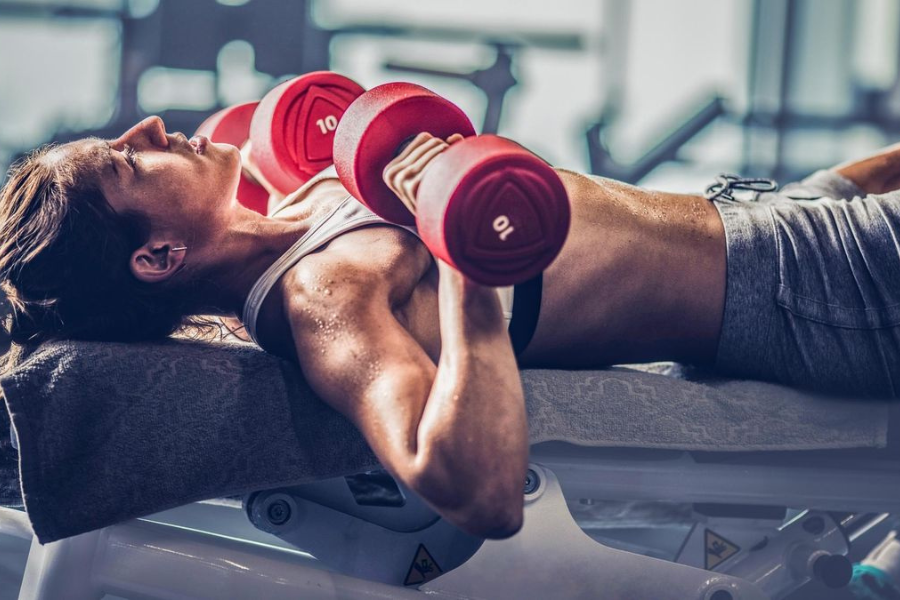
Dumbbell floor press
The dumbbell floor press is a chest pressing exercise that also trains your shoulders and triceps while limiting shoulder stress.
Why it helps
- The floor stops your elbows from drifting too far below your body, which can reduce strain on the front of the shoulder
- You get feedback from the ground to keep your shoulder blades set and stable
- You still build pressing strength in a safe range of motion
How to do it
- Lie on your back on the floor with knees bent and feet flat.
- Hold a dumbbell in each hand, arms straight above your chest, palms facing in or forward.
- Pull your shoulder blades down and into the floor to create a stable base.
- Slowly lower the weights until your upper arms touch the floor.
- Pause briefly, then press the weights back up over your chest.
Move with control and stop if you feel sharp pain in your shoulders.
Neutral grip dumbbell bench press
The neutral grip dumbbell bench press keeps your hands facing each other. This position brings your upper arms closer to your sides, which can ease shoulder discomfort.
Why it helps
- Uses a lower degree of horizontal abduction, which can limit shoulder stress and strain
- Works your chest, front shoulders, and triceps together
- Encourages a strong back setup and slower, more controlled lowering of the weight
How to do it
- Lie on a flat bench with a dumbbell in each hand, palms facing each other.
- Pull your shoulder blades together and slightly down toward your hips.
- Start with arms extended above your chest.
- Lower the dumbbells in a straight line down toward your ribs, keeping elbows tucked about 30 to 45 degrees from your sides.
- Press back up, keeping the same path.
Choose a weight that lets you move smoothly without your shoulders shifting or shrugging.
Landmine press
The landmine press is a modified overhead pressing exercise that hits the upper chest, shoulders, and triceps. It is helpful if traditional overhead presses feel rough on your joints.
Why it helps
- The bar path is at an angle, not straight overhead, which can feel more comfortable
- Builds strength and stability in your shoulder and shoulder blade muscles
- Useful for re-acclimating to pressing after shoulder pain or time off
How to do it
- Secure one end of a barbell in a landmine attachment or wedge it firmly into a corner.
- Stand facing the bar with a staggered stance, holding the free end at chest level with one or both hands.
- Brace your core and keep your ribs down.
- Press the bar up and slightly forward until your arm is almost straight.
- Lower with control to your chest.
Start with light weight to learn the movement, then progress as it feels comfortable.
Use tempo to protect your shoulders
No matter which chest exercise you choose, adding a controlled tempo can increase muscle gain without needing very heavy loads. A simple guideline is:
- Lower the weight over 3 seconds
- Pause 1 second at the bottom
- Press up and briefly pause at the lockout
This slower pace promotes stability, keeps tension on the muscles, and can reduce shoulder stress.
Chest exercises that hit triceps hard
Chest exercises for shoulders and triceps often center around pressing variations that already recruit your triceps. A few small changes can increase tricep involvement without separate moves.
Flat barbell bench press
The flat barbell bench press is a fundamental compound lift that targets your chest, front shoulders, and triceps. It remains a classic for building upper body strength and size.
How to emphasize triceps
- Use a slightly narrower grip than usual, but not so close that your wrists and elbows feel strained
- Keep your elbows at about a 45 degree angle rather than flared wide
- Focus on driving through the base of your palm and locking out fully at the top
A pyramid progression works well here. Start with lighter sets to warm up, then increase the weight gradually over several sets while lowering the reps. This strategy lets you handle heavier loads early in the workout when you are strongest.
Close grip push up
The close grip push up shifts more of the effort into your triceps compared to a standard push up, while still working your chest and shoulders.
Why it works
- Bringing your hands closer together reduces chest contribution and increases triceps activation
- You still get the benefit of a full body movement with core and shoulder stability
How to do it
- Start in a high plank position with your hands directly under your shoulders or slightly closer.
- Keep your body in a straight line from head to heels.
- Lower your chest toward your hands, keeping elbows close to your sides.
- Press back up to the starting position.
If this is too challenging, drop to your knees or elevate your hands on a bench or sturdy surface.
Dips with chest and tricep focus
Bar dips are a bodyweight staple that target your chest, front shoulders, and triceps. The angle of your torso changes which muscle group works harder.
- Leaning slightly forward tends to emphasize the chest
- Staying more upright places more load on the triceps
You can use both positions in your routine. Start with a chest focused lean and finish with a more upright posture to fully fatigue your triceps. If full bodyweight dips are too intense, use an assisted dip machine or loop a band around the bars for support.
Shoulder friendly push variations
Some days your shoulders might feel sensitive, especially if you are returning from injury or you spend long hours at a desk. These variations keep you pressing to maintain strength while encouraging healthier shoulder mechanics.
Reverse grip push up
The reverse grip push up changes your hand position so your fingers point toward your feet instead of forward. This small adjustment encourages shoulder external rotation, which can improve posture and stability.
Benefits
- Increases posterior shoulder strength and stability
- Promotes better mid back positioning during pressing movements
- Helps counteract the rounded shoulder posture that comes from sitting
Start with your hands slightly turned out rather than fully reversed, then gradually increase the rotation if it feels comfortable.
Landmine press for shoulder stability
As mentioned earlier, the landmine press does more than work your chest. It also trains your shoulder blade to move smoothly, which is critical for pain free overhead motion.
If strict overhead presses feel uncomfortable, you can use landmine pressing as your main shoulder move for a few training blocks. Over time, the improved strength and control in your upper chest, shoulders, and triceps often carries over to other pressing patterns.
Tricep exercises to finish your workout
Once you have completed your main chest and shoulder work, a few focused tricep exercises round out your push session.
Barbell lying triceps extension
The barbell lying triceps extension challenges all three heads of the triceps and lets you use relatively heavy weight compared to many cable moves.
Basic setup
- Lie on a flat bench holding a barbell or EZ bar with hands about shoulder width apart.
- Start with arms extended above your shoulders.
- Keeping your upper arms still, bend your elbows to lower the bar toward your forehead or just behind your head.
- Press back to the starting position, focusing on squeezing the back of your arms.
Move slowly in both directions and avoid letting your elbows flare too far outward.
Overhead cable triceps extension
The overhead cable triceps extension emphasizes the long head of the triceps and keeps constant tension on the muscle.
How to do it
- Attach a rope or straight bar to a low cable setting.
- Turn away from the machine, step forward, and bring the handle overhead so your elbows point up.
- With your upper arms steady, extend your elbows until your arms are straight.
- Slowly return to the starting position.
Keep your ribs down and your core braced so the motion stays in the elbows, not the lower back.
High rep tricep pushdowns
Tricep pushdowns are ideal as a finishing exercise. High rep sets can give you a strong pump and help reinforce proper elbow tracking.
Try 2 to 3 sets of 15 to 25 reps with short rest. Focus on:
- Locking your elbows at your sides
- Pressing the bar or rope straight down
- Controlling the return, rather than letting the weight pull you up
Sample chest, shoulder, and tricep session
Here is how you might put these chest exercises for shoulders and triceps into a single workout.
Warm up
- 5 to 10 minutes of light cardio
- 1 to 2 sets of easy push ups or band presses
- Gentle shoulder circles and band pull aparts
Main lifts
- Flat barbell bench press
- 4 sets of 6 to 8 reps
- Pyramid the weight up each working set
- Neutral grip dumbbell bench press or dumbbell floor press
- 3 sets of 8 to 10 reps
- Use a controlled 3 second lowering tempo
- Landmine press
- 3 sets of 8 to 12 reps per side or with two hands
- Reverse grip or standard push ups
- 3 sets to comfortable fatigue, leaving 1 or 2 reps in the tank
Tricep finisher
- Barbell lying triceps extension
- 3 sets of 8 to 10 reps
- Cable tricep pushdown or overhead cable extension
- 2 to 3 sets of 15 to 20 reps
Adjust sets and reps based on your experience, but keep at least one compound chest move and one isolation tricep move in each push workout.
How often to train push muscles
Because your chest and triceps recover at a similar rate after bench press work, studies suggest they are generally ready again about 48 hours later. In practice, that means you can often train chest and triceps effectively every third day.
Many lifters do well with:
- 2 push days per week, for example Monday and Thursday
- 2 pull days per week
- 1 to 2 leg days per week
This layout lets you hit your chest, shoulders, and triceps multiple times per week while still getting enough rest between sessions.
Putting it all together
When you choose chest exercises that also strengthen your shoulders and triceps, you make your workouts more efficient and your upper body stronger as a whole. Focus on:
- Starting with big compound presses
- Using shoulder friendly variations when needed
- Adding a few isolation moves to fully train your triceps
- Moving with control rather than racing through reps
Begin by adding one or two of these moves to your next workout. Pay attention to how your shoulders and elbows feel during and after each session, then adjust weight, tempo, or exercise choice to keep making steady progress.
About the Author