Understand intermittent fasting and insulin resistance
If you are curious about intermittent fasting insulin resistance and whether changing when you eat can actually improve your health, you are not alone. Intermittent fasting has grown popular for weight loss, and you might be wondering if it can also help with insulin resistance, prediabetes, or type 2 diabetes.
In this guide, you will learn what insulin resistance is, how intermittent fasting works inside your body, and what current research really says about the link between the two.
What insulin resistance actually means
Insulin is a hormone that helps move glucose from your blood into your cells, where it is used for energy.
When you have insulin resistance:
- Your cells do not respond as well to insulin
- Your pancreas has to make more insulin to keep blood sugar normal
- Over time, this can lead to higher blood sugar, prediabetes, and type 2 diabetes
Insulin resistance is also tied to:
- Weight gain, especially around your waist
- Higher blood pressure
- Abnormal cholesterol and triglycerides
- Higher risk of heart disease
Because insulin resistance sits at the center of many health issues, anything that helps your body respond better to insulin can support your long term health. That is where intermittent fasting comes in.
How intermittent fasting works
Intermittent fasting is not one specific diet. It is an eating pattern that cycles between periods of eating and fasting. Instead of focusing only on what you eat, you also pay attention to when you eat.
Common intermittent fasting patterns include:
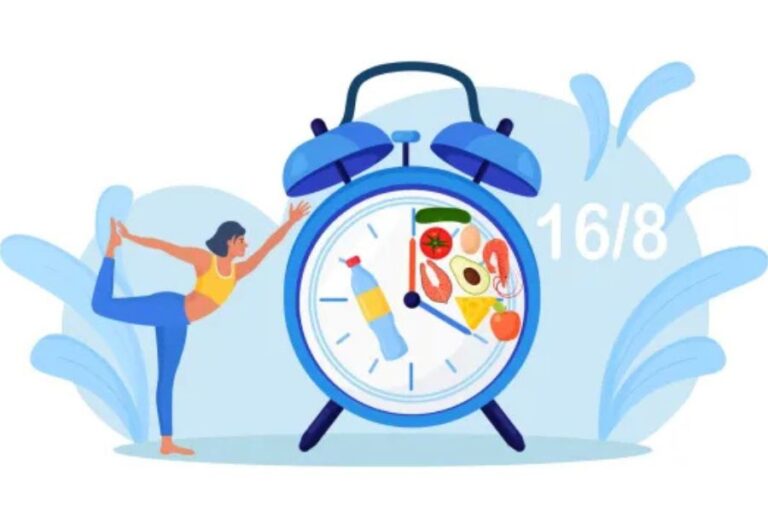
- 16:8 time restricted eating, you fast for 16 hours and eat within an 8 hour window
- 14:10, a slightly shorter fasting period that many people find easier to maintain
- Early time restricted eating, for example eating all meals between about 8 am and 2 pm or 9 am and 3 pm
- Alternate day or modified fasting, eating very little on some days and normally on others
Researchers describe a key idea behind intermittent fasting as a “metabolic switch.” After about 10 to 12 hours without food, your body starts shifting from using glucose for fuel to burning stored fat and fatty acids instead, which may support better metabolic health and insulin sensitivity (Mass General Brigham, Johns Hopkins Medicine).
How intermittent fasting may reduce insulin resistance
There are several ways intermittent fasting can influence insulin resistance. Some are direct, others are indirect.
1. Giving insulin a regular break
When you eat frequently, especially refined carbohydrates or sugary foods, your insulin levels spike throughout the day. Over time, constant high insulin can contribute to insulin resistance.
Intermittent fasting spaces your meals so that:
- Insulin rises when you eat
- Then has time to fall back down while you are fasting
- Your body spends more time in a low insulin state
A review of multiple intermittent fasting studies found that fasting diets significantly lowered fasting insulin levels and improved HOMA IR, a common measure of insulin resistance, in people with impaired glucose and lipid metabolism (International Journal of Endocrinology). The improvements in insulin resistance were comparable to the effect seen with an insulin sensitizing medication.
2. Supporting weight loss and waist reduction
Extra weight, especially around your midsection, is closely linked to insulin resistance. Intermittent fasting often makes it easier for you to eat fewer calories without tracking every bite.
A meta analysis of 10 randomized controlled trials found that people following intermittent fasting diets:
- Lost on average about 1.87 kg in body weight
- Reduced BMI by 0.82 kg/m²
- Reduced waist circumference by about 2.08 cm
All of these changes support better insulin sensitivity and metabolic health (International Journal of Endocrinology).
In a 2023 NIH funded trial in people with type 2 diabetes, participants who ate only between noon and 8 pm lost around 3.6% of their body weight over six months, while a traditional calorie restriction group did not lose a significant amount of weight compared with controls. Both groups, however, saw similar improvements in average blood glucose and waist circumference, which suggests that weight loss and overall calorie balance remain important drivers of insulin resistance improvements (NIH Research Matters).
3. Improving how your body handles blood sugar
Several studies show that intermittent fasting can directly improve how your body responds to insulin.
A meta analysis found that intermittent fasting diets:
- Reduced fasting blood glucose by 0.15 mmol/L
- Slightly lowered HbA1c, although that reduction was not statistically significant overall
- Significantly improved insulin resistance, with average insulin levels dropping by over 13 mU/L and HOMA IR scores decreasing by 0.31 (International Journal of Endocrinology)
These shifts suggest your body is using insulin more efficiently, even before dramatic changes in long term blood sugar markers appear.
4. Changing the timing of eating to match your body clock
Your body follows a daily rhythm, called your circadian clock. Insulin sensitivity tends to be higher earlier in the day. This is one reason early time restricted eating has attracted attention.
In a controlled feeding trial at Pennington Biomedical Research Center, men with prediabetes followed an early time restricted feeding (eTRF) pattern, eating all meals within 6 hours and finishing by 3 pm. Compared with a control schedule where the same calories were spread over 12 hours, the eTRF schedule:
- Improved insulin sensitivity and beta cell responsiveness
- Reduced fasting insulin by about 3.4 mU/L
- Lowered mean and peak post meal insulin by 26 and 35 mU/L, respectively
- Did all of this without any weight loss, since calorie intake remained matched (Pennington trial, PMC)
This suggests that, at least in some cases, simply shifting food earlier in the day can support insulin resistance independent of weight loss.
The same trial also found that early time restricted eating substantially lowered systolic and diastolic blood pressure, by 11 and 10 mmHg, and reduced oxidative stress markers, which further supports overall cardiometabolic health (Pennington trial, PMC).
5. Triggering cellular cleanup and fat burning
During fasting, your body moves into a state where it uses stored fuels more efficiently. Research summarized by Johns Hopkins notes that after the metabolic switch to burning fat instead of glucose, intermittent fasting can help reverse trends linked to excess calories, low activity, obesity, and type 2 diabetes risk (Johns Hopkins Medicine).
The International Diabetes Federation explains that as fasting continues, glucagon levels rise and your body begins breaking down fat in the liver, pancreas, and visceral areas to create ketones. This process mobilizes stored fat and supports more stable glucose levels, which helps improve insulin sensitivity (IDF).
Animal and cellular studies also suggest that intermittent fasting may trigger autophagy, a cellular clean up process, and reduce inflammation, both of which can indirectly support better insulin sensitivity (Mass General Brigham).
What recent studies say, and where results conflict
If you read headlines, you might see very enthusiastic claims about intermittent fasting insulin resistance, followed by skeptical stories saying it does not work. The truth sits somewhere in between.
When fasting shows clear benefits
Across many trials and reviews, intermittent fasting has shown:
- Reduced fasting insulin and improved insulin resistance measures in people with impaired glucose and lipid metabolism (International Journal of Endocrinology)
- Potential for type 2 diabetes remission, by improving glucose and fat metabolism in some people (IDF)
- Decreased blood pressure and improved cholesterol and triglycerides, all of which relate to metabolic health and insulin resistance (International Journal of Endocrinology)
- Improved insulin sensitivity even without weight loss in specific schedules like early time restricted feeding (Pennington trial, PMC)
Studies summarized by Mass General Brigham note that intermittent fasting can reduce insulin resistance and fasting insulin, particularly when weight loss occurs. This can benefit conditions related to insulin resistance such as type 2 diabetes, PCOS, and fatty liver disease (Mass General Brigham).
When the benefits are less clear
Recent research also shows that not every fasting pattern automatically improves insulin resistance.
The ChronoFast study, for example, looked at an eight hour time restricted eating window in overweight or obese women. Participants kept their calorie intake constant over two week periods. The researchers found that this form of time restricted eating:
- Did not improve insulin sensitivity
- Did not change blood sugar, blood fats, or inflammatory markers in a clinically meaningful way
- Likely showed fewer benefits because calorie intake did not decrease (ScienceDaily, ChronoFast)
This study suggests that some of the metabolic benefits you may hear about are driven by unintentional calorie reduction, not just the eating window itself. It also showed that shifting meal timing could move participants’ internal clocks by about 40 minutes and change sleep timing, without automatically improving metabolic health.
What you can realistically expect
Putting these findings together, you can expect:
- Intermittent fasting is not a magic fix, but it can be a powerful tool for improving insulin resistance, especially if it helps you eat fewer calories overall and lose weight
- Some approaches, like early time restricted eating, may provide additional benefits even without weight loss, at least for certain groups such as men with prediabetes
- Results vary from person to person, depending on your baseline health, medications, age, sex, genetics, and lifestyle
Mass General Brigham and Johns Hopkins both emphasize that intermittent fasting is not a cure. It can help reduce insulin resistance and support metabolic health, but it works best as part of a larger plan that includes a balanced diet, physical activity, sleep, and medical care when needed (Mass General Brigham, Johns Hopkins Medicine).
Intermittent fasting schedules to consider
If you are thinking about trying intermittent fasting to improve insulin resistance, it helps to understand the main patterns and how they fit into daily life.
Time restricted eating (16:8 or 14:10)
Many people start with a 16:8 schedule, where you fast for 16 hours and eat within an 8 hour window. For example:
- Fast from 8 pm to 12 pm
- Eat between 12 pm and 8 pm
The International Diabetes Federation notes that fasting for 16 hours and eating in an 8 hour window can lower blood glucose and support short term weight loss, which is helpful for insulin resistance and type 2 diabetes management when done safely (IDF).
If 16 hours feels too long initially, a 14:10 schedule can be more approachable.
Early time restricted eating
This approach puts your meals earlier in the day to align with your natural circadian rhythm. For instance:
- Eat between 7 am and 1 pm
- Or between 8 am and 2 pm
As the Pennington study showed, an early 6 hour eating window ending by 3 pm improved insulin sensitivity in men with prediabetes even without weight loss (Pennington trial, PMC).
You might find this schedule helpful if you:
- Naturally prefer a bigger breakfast and lighter dinner
- Notice heartburn or poor sleep when you eat late
- Want to experiment with an approach that has been tested in controlled settings
Intermittent fasting for type 2 diabetes
If you have type 2 diabetes, research shows that both intermittent fasting and traditional calorie restriction can improve blood glucose and waist circumference.
In the NIH funded six month trial:
- The intermittent fasting group ate from noon to 8 pm and lost more weight than the calorie restriction group
- Both groups experienced similar improvements in average blood sugar levels
- Participants reported intermittent fasting was easier to follow, which matters for long term success (NIH Research Matters)
However, because fasting changes your blood sugar and how your medications work, this approach should only be tried under medical supervision. The study authors specifically noted that type 2 diabetes medications might need adjustment when following intermittent fasting (NIH Research Matters).
Safety considerations before you start
Intermittent fasting is not appropriate for everyone, and even if it is right for you, it should be done thoughtfully.
People who should talk to their doctor first
You should always speak with a healthcare provider before trying intermittent fasting if you:
- Have type 1 or type 2 diabetes
- Take insulin or other blood sugar lowering medications
- Have a history of eating disorders
- Are pregnant or breastfeeding
- Have chronic kidney disease or another complex medical condition
- Are under 18 or older with fragile health
The International Diabetes Federation stresses that people with diabetes need to be cautious with fasting because large shifts in food and fluid intake can cause complications. Proper planning and medical monitoring are essential (IDF).
Avoid extreme fasting periods
Research highlighted by Johns Hopkins warns that very long fasts, such as 24 to 72 hours, may be risky. Instead of improving metabolism, extremely long fasting periods can:
- Lead to dizziness, weakness, or nausea
- Stress your body enough that it may increase fat storage rather than fat burning
- Potentially worsen metabolic health and insulin resistance, especially if you then overeat when you break the fast (Johns Hopkins Medicine)
Structured, shorter intermittent fasting schedules, like 16:8 or early time restricted eating, are generally safer and better studied.
Watch for warning signs
If you try intermittent fasting and notice any of the following, it is important to pause and seek advice:
- Persistent dizziness or lightheadedness
- Intense anxiety or irritability
- Nausea or vomiting
- Trouble concentrating that does not improve after a few days of adjustment
- Signs of disordered eating, such as obsessive thoughts about food or guilt around eating
Johns Hopkins notes that some people may experience negative symptoms like anxiety or nausea with intermittent fasting, which is why checking in with your body and your doctor is so important (Johns Hopkins Medicine).
How to make intermittent fasting work for you
If you decide to use intermittent fasting to help with insulin resistance, a few practical habits can make the process more sustainable.
Start gradually
Instead of jumping straight to 16:8, you might:
- Stop evening snacks so your overnight fast naturally lengthens
- Aim for a 12 hour overnight fast for a week or two
- Extend the fast by 1 hour every few days until you reach your target window
This stepwise approach lets your body adjust with fewer energy crashes or cravings.
Prioritize what you eat, not just when
Intermittent fasting does not erase the impact of your food choices. To support insulin sensitivity:
- Build meals around vegetables, lean protein, whole grains, and healthy fats
- Limit sugary drinks, refined snacks, and heavily processed foods
- Include fiber rich foods like beans, lentils, and whole fruits to stabilize blood sugar
- Stay hydrated with water, herbal tea, or black coffee during fasting periods if your doctor approves
Experts at Mass General Brigham point out that pairing time restricted eating with a healthy pattern, rather than using it as a pass for poor quality foods, is more likely to deliver metabolic benefits (Mass General Brigham).
Align your eating window with your lifestyle
Pick an eating window that fits your real day, not an idealized schedule you might only follow for a week. For example:
- If you like social dinners, a 12 pm to 8 pm window might work better than early time restricted eating
- If you wake up early and sleep early, an 8 am to 4 pm or 9 am to 5 pm window could feel more natural
What matters most is consistency and sustainability. The best intermittent fasting plan for insulin resistance is the one you can stick with.
Combine fasting with other healthy habits
Intermittent fasting works best alongside:
- Regular movement, such as walking, resistance training, or low impact exercise
- Quality sleep, since poor sleep itself increases insulin resistance
- Stress management techniques like breathing exercises, stretching, or mindfulness
None of these have to be extreme. Small, steady changes in movement, sleep, and stress all reinforce the effects of your eating pattern.
Key takeaways
If you are exploring intermittent fasting to improve insulin resistance, here is what current evidence suggests:
- Intermittent fasting can reduce fasting insulin, improve insulin resistance measures, and support weight loss in many people with impaired glucose and lipid metabolism (International Journal of Endocrinology).
- Early time restricted eating may improve insulin sensitivity and blood pressure even without weight loss in some groups, by aligning eating with your circadian rhythm (Pennington trial, PMC).
- Some benefits appear to come from calorie reduction and weight loss rather than timing alone, as seen in the ChronoFast study where keeping calories constant erased many expected metabolic improvements (ScienceDaily, ChronoFast).
- Intermittent fasting is not a cure, but it can be a practical and, for many, easier to follow strategy to help manage weight, blood sugar, and long term risk related to insulin resistance (Mass General Brigham, Johns Hopkins Medicine).
- If you live with diabetes or take medications that affect blood sugar, you should always work with your healthcare provider before changing your eating schedule, since doses may need adjustment (NIH Research Matters, IDF).
You do not have to overhaul your entire life to begin. You might start by simply lengthening your overnight fast by an hour or two and noticing how you feel. From there, you can gradually shape an intermittent fasting routine that fits your body, your routine, and your long term health goals.
About the Author