Understand what intermittent fasting is
If you are wondering, “is intermittent fasting safe for my weight loss journey,” it helps to start with the basics. Intermittent fasting is an eating pattern where you cycle between periods of eating and periods of eating very little or nothing at all. Instead of focusing on which foods to eat, you focus on when you eat.
Common approaches include:
-
Time restricted eating (TRE)
-
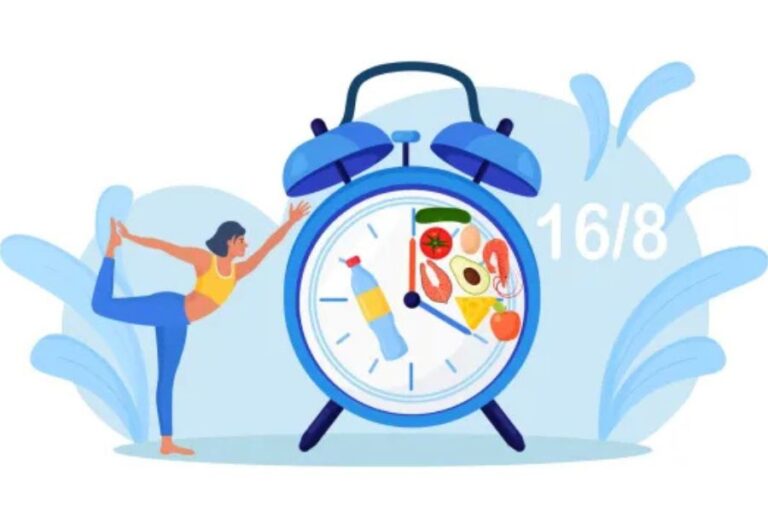
Example: 16/8 schedule, where you fast for 16 hours and eat within an 8 hour window.
-
Another example: eating only between 8 a.m. and 2 p.m.
-
Alternate day fasting
-
You alternate between days of normal eating and days of very low calorie intake.
-
Periodic fasting
-
You fast for 24 hours or longer, but only on certain days.
The Mayo Clinic describes intermittent fasting as alternating between typical eating and fasting periods that can last hours or even a full day, depending on the plan you choose (Mayo Clinic).
Explore how intermittent fasting affects your body
Intermittent fasting changes more than just your schedule. It shifts how your body uses and stores energy.
When you fast for several hours, your body:
- Uses up stored sugar in your liver
- Begins tapping into fat stores for energy
- Shifts cells toward repair and maintenance
Research suggests that this shift may:
- Improve blood sugar control and insulin sensitivity
- Lower blood pressure and cholesterol
- Reduce inflammation and support cell repair
According to Johns Hopkins Medicine, intermittent fasting can help manage weight and may even help prevent or reverse some diseases by aligning with how your metabolism evolved to function during periods without food (Johns Hopkins Medicine).
The National Institutes of Health notes that time restricted eating and other fasting patterns can improve blood sugar control and blood pressure, and may reduce inflammation in the short term (NIH News in Health).
So from a metabolic perspective, intermittent fasting can be a useful tool. The key question is whether it is safe for you personally and how you choose to use it.
Look at the potential benefits for weight loss
Many people are drawn to intermittent fasting for weight loss. You might find it appealing because it simplifies decision making. Instead of tracking every bite, you limit eating to a set window.
Short term research highlights several possible benefits:
-
Calorie reduction without strict counting
By eating within a smaller window, you may naturally take in fewer calories. -
Weight loss and waist reduction
A 2023 NIH funded trial in adults with obesity and type 2 diabetes used a schedule of eating between noon and 8 p.m. without strict calorie limits. On average, participants lost 3.6 percent of their body weight over six months and reduced their waist size (NIH Research Matters). -
Improvements similar to calorie restriction
In that same study, intermittent fasting and traditional calorie restriction both produced healthy drops in average blood glucose and waist circumference, which suggests intermittent fasting can be as effective as more conventional approaches for some people (NIH Research Matters). -
Better blood sugar and blood pressure even without weight loss
In prediabetic men, eating only between 8 a.m. and 2 p.m. improved blood sugar and lowered blood pressure without any weight loss. This suggests some benefits of intermittent fasting may come from metabolic changes rather than just fewer calories (NIH News in Health). -
Support for diabetes management
The International Diabetes Federation notes that fasting and intermittent fasting can improve insulin sensitivity, reduce blood pressure, and may help lower type 2 diabetes risk. In some cases, intermittent fasting may even contribute to diabetes remission under medical supervision (IDF).
Taken together, these findings suggest that intermittent fasting can be an effective weight loss tool for some people, especially when combined with nutritious food choices.
Be aware of known risks and side effects
Even though intermittent fasting can offer benefits, it is not risk free. You might notice side effects, especially in the early weeks.
Harvard Health Publishing describes several common issues (Harvard Health Publishing):
- Headaches
- Fatigue and lethargy
- Irritability or mood swings
- Constipation
- Difficulty concentrating
The Mayo Clinic also notes that intermittent fasting may cause:
- Dizziness
- Nausea
- Menstrual cycle changes
- Challenges with blood sugar control, especially if you have diabetes (Mayo Clinic)
Another concern is what happens when your fasting window ends. Harvard highlights a strong biological drive to overeat after fasting. Your appetite hormones and hunger centers in your brain can push you toward overeating or choosing less healthy foods during your eating window (Harvard Health Publishing). That pattern can undermine your weight loss goals.
For some people, especially older adults near a lower body weight, too much weight loss can lead to:
- Reduced bone strength
- Weakened immune function
- Lower energy levels (Harvard Health Publishing)
Fasting more than 16 to 18 hours per day on a regular basis has also been linked with a higher risk of gallstones and a greater likelihood of needing gallbladder surgery (NIH News in Health).
If you decide to try intermittent fasting, it is important to watch how you feel, especially during the adjustment period. Many people notice more hunger, crankiness, anxiety, headaches, or nausea in the first two to four weeks. Johns Hopkins Medicine notes that those who continue often feel better over time and may be able to use intermittent fasting as a long term lifestyle change (Johns Hopkins Medicine).
Understand what we know about heart health and safety
One of the biggest questions around “is intermittent fasting safe” has to do with your heart. Recent research has raised important concerns, especially about very short daily eating windows.
A preliminary analysis presented at an American Heart Association conference in 2024 looked at over 20,000 U.S. adults. People who limited their eating to less than 8 hours per day had a 91 percent higher risk of dying from cardiovascular disease compared with those who ate over 12 to 16 hours per day (American Heart Association).
A few key points to keep in mind about this study:
- It focused on very short eating windows, under 8 hours per day.
- The data relied on self reported food intake from only two days, which may not fully reflect long term habits.
- Researchers did not have detailed information about the quality of the foods people ate.
- Some confounding factors may not have been fully accounted for.
Because of these limitations, the American Heart Association emphasizes that the findings show an association, not proof that an 8 hour eating window causes heart problems (American Heart Association).
Other sources provide a more cautious but balanced view:
-
The Mayo Clinic notes that while intermittent fasting can improve some short term cardiometabolic markers like blood pressure and cholesterol, long term safety is still unclear. Some evidence suggests a 16/8 pattern may be associated with higher heart disease risk compared with other time restricted schedules (Mayo Clinic).
-
The American Heart Association recommends a personalized and cautious approach, especially if you already have heart disease or cancer, and stresses that more research is needed before very short eating windows can be considered safe over many years (American Heart Association).
If heart health is a concern for you, it may be wise to avoid extreme versions of time restricted eating, such as eating in only a 6 or 8 hour window, until more long term evidence is available.
See who should avoid or be cautious with fasting
Intermittent fasting is not suitable for everyone. In some situations, it can be risky or require close medical supervision.
You should talk with a healthcare professional and probably avoid intermittent fasting if you:
- Are pregnant or breastfeeding
- Have a history of eating disorders
- Are underweight or have unexplained weight loss
- Are a child or teenager still growing
You should absolutely consult your doctor before trying intermittent fasting if you:
- Have type 1 or type 2 diabetes
- Take insulin or other blood sugar medications
- Take medications for blood pressure or heart disease
- Have chronic kidney disease, liver disease, or another serious condition
Harvard Health Publishing points out that intermittent fasting can be dangerous if you take certain medications. Skipping meals may change how your body absorbs drugs or affect mineral balance, especially with diabetes or blood pressure medicines (Harvard Health Publishing).
The International Diabetes Federation also warns that fasting is not recommended for everyone with diabetes. Large changes in food and fluid intake can trigger complications, so you should only fast under guidance that includes medication adjustments and careful glucose monitoring (IDF).
Johns Hopkins Medicine stresses that you should talk to your primary care doctor before starting any fasting plan, especially if you have medical conditions or are taking multiple medications (Johns Hopkins Medicine).
Compare different fasting schedules and safety
Not all intermittent fasting plans carry the same potential risks. Some are gentler and closer to typical eating patterns. Others are more extreme and may be harder on your body.
Here is a general comparison based on current research:
| Fasting pattern | Typical schedule | Potential pros | Potential concerns |
|---|---|---|---|
| 12/12 time restricted eating | 12 hours eating, 12 hours fasting | Aligns with common daily rhythm, likely safe for most people, may support healthy weight and metabolic markers (NIH News in Health) | Benefits may be modest if other habits are not healthy |
| Early time restricted eating | Eat between 8 a.m. and 2 p.m., fast 18 hours | Improved blood sugar and blood pressure even without weight loss in prediabetic men (NIH News in Health) | Tough socially, longer daily fast, may not suit everyone |
| 16/8 time restricted eating | 16 hours fasting, 8 hour eating window | Popular and simple, can support weight loss and blood sugar control, useful for type 2 diabetes under supervision (NIH Research Matters) | Some evidence suggests increased heart disease risk compared with other schedules, stronger drive to overeat during eating window, possible gallstone risk with longer fasting (Mayo Clinic, NIH News in Health) |
| Under 8 hour eating window | Example, 18 or more hours fasting daily | May lead to short term weight loss and metabolic benefits | Linked to a higher risk of cardiovascular death in a large observational study, long term safety not established, should be approached with caution (American Heart Association) |
| 24 to 72 hour fasts and beyond | Full day or multi day fasts at intervals | Might appeal to people who prefer occasional strict fasting | Johns Hopkins notes that longer fasts are not necessarily better and may trigger a starvation response that encourages fat storage, and may be dangerous for some people (Johns Hopkins Medicine) |
If you are curious about intermittent fasting but worried about safety, a more moderate pattern like 12/12 is usually a gentler place to start, after getting medical advice.
Focus on food quality, not just timing
Even if you choose a safe intermittent fasting schedule, what you eat still matters. Fasting does not cancel out the effects of highly processed foods, excessive sugar, or lack of vegetables.
Across the research, experts repeatedly emphasize that healthy food choices are critical, whether or not you are fasting (NIH News in Health). To support weight loss and overall health, try to:
- Build meals around vegetables, fruits, whole grains, beans, nuts, and seeds
- Include lean proteins such as fish, poultry, tofu, eggs, or legumes
- Choose healthy fats from sources like olive oil, avocados, and nuts
- Limit sugary drinks, sweets, and refined grains
- Watch alcohol intake, which can affect blood sugar and appetite
Intermittent fasting can make it easier for you to eat less, but it works best when you pair it with satisfying and nutrient dense foods that keep you full.
Decide if intermittent fasting fits your life
Beyond the science, you also need to ask whether intermittent fasting fits into your real daily life. A plan that looks great on paper will not help you if it adds stress or makes you more likely to binge.
Consider questions like:
- Do your work hours or family routines allow for consistent eating windows?
- Does a long morning fast leave you too distracted or irritable?
- Are many of your social activities centered around evening meals?
- Do you have a history of restrictive dieting or feeling out of control with food?
The Mayo Clinic points out that intermittent fasting may not be a healthy choice if shared meals are a key part of your social or family life, or if it creates emotional strain (Mayo Clinic).
If counting hours makes you anxious, a more flexible approach like mindful eating or modest calorie reduction might suit you better.
Start safely if you decide to try it
If, after checking with your doctor, you decide intermittent fasting could work for you, you can take a slow and thoughtful approach.
Here is a simple way to ease in:
- Begin with a 12 hour overnight fast
- For example, finish dinner by 7 p.m. and eat breakfast at 7 a.m.
- Give yourself a week or two to see how you feel.
- Gradually lengthen your fasting window if it feels comfortable
- Move breakfast later by 30 to 60 minutes every few days.
- Aim for a 14/10 or 16/8 schedule only if your energy and mood remain stable.
- Stay hydrated
- Drink water regularly during your fasting window.
- Black coffee or unsweetened tea may be acceptable for many plans, but check with your healthcare provider if you have any conditions that limit caffeine or fluid intake.
- Plan balanced meals in your eating window
- Include protein, fiber, and healthy fats in every meal to keep you full.
- Avoid the urge to treat your eating window as a “free for all.”
- Watch for warning signs
Stop or adjust your plan and talk with your doctor if you notice:
- Frequent dizziness or faintness
- Very low energy that does not improve
- Trouble concentrating that affects daily tasks
- Worsening mood or anxiety
- Unintended rapid weight loss
- Review medications with your doctor
- If you take medicine for blood pressure, heart disease, or diabetes, you may need dose changes or careful monitoring (Harvard Health Publishing, NIH Research Matters).
Remember that the long term effectiveness and safety of intermittent fasting are still being studied. Harvard Health Publishing strongly advises medical consultation before starting, especially if you have any underlying conditions (Harvard Health Publishing).
Use intermittent fasting as one tool, not the whole plan
Intermittent fasting can be one helpful piece of your weight loss and health journey, but it is not the only factor. To support your body, consider pairing your eating schedule with:
- Regular movement that you enjoy, such as walking, dancing, or cycling
- Consistent sleep routines
- Stress management practices, like deep breathing, journaling, or spending time outdoors
- Support from friends, family, or a healthcare professional
When you look at the question “is intermittent fasting safe,” the most accurate answer is: it depends on your health, your lifestyle, and the specific fasting approach you choose.
A moderate schedule, thoughtful food choices, and guidance from your healthcare team can help you explore whether intermittent fasting is a safe and sustainable option for you.
About the Author