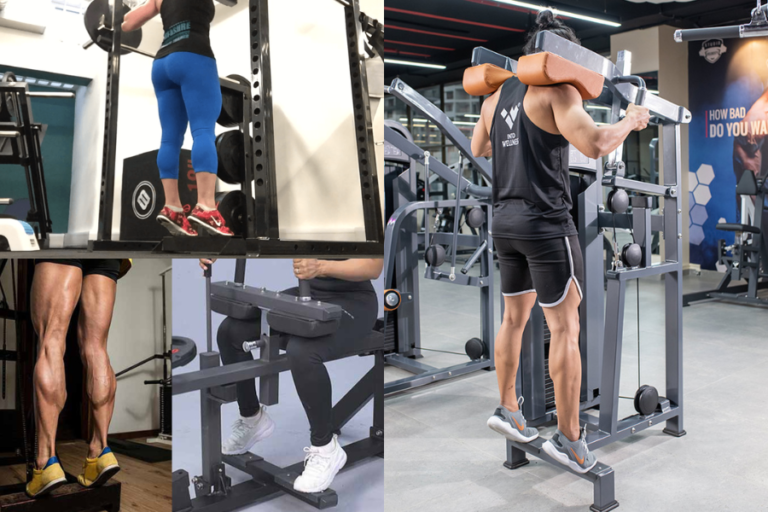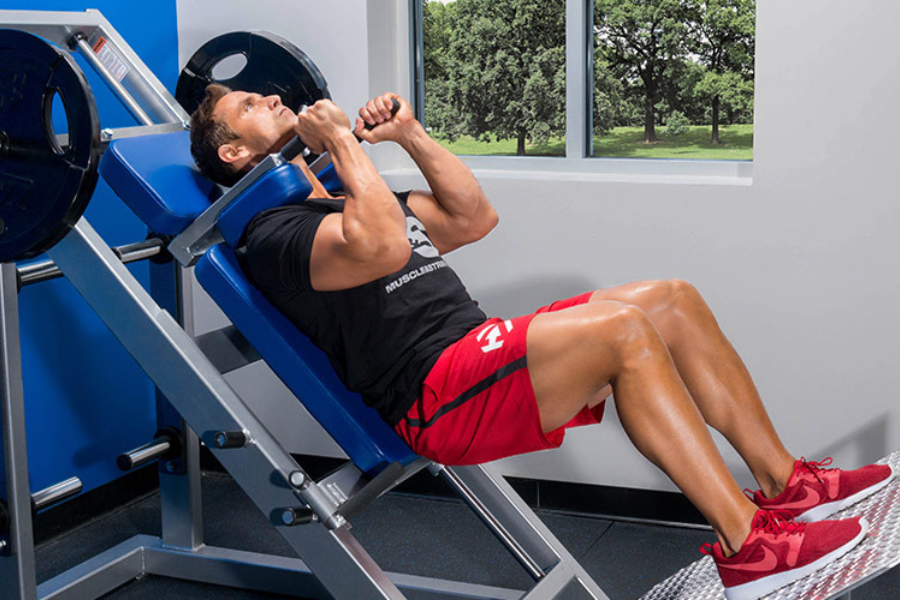
A strong advanced quad workout does more than build bigger legs. It supports healthy knees, improves sprinting and jumping, and helps you stay injury free so you can keep training hard. When you understand how your quads work and how to program them, you can turn every session into real progress instead of random leg day punishment.
Below, you will find how to structure an advanced quad workout, which exercises to prioritize, and how to stay safe while you push for new PRs.
Understand your quad muscles
Your quadriceps are a group of four muscles on the front of your thigh: the vastus lateralis, vastus medialis, vastus intermedius, and rectus femoris. Together, they straighten your knee, stabilize your kneecap, and help you run, jump, and change direction quickly.
The rectus femoris is often the troublemaker. It crosses both your hip and knee, and it is the one most likely to get strained during sprinting or kicking. Knowing this helps you appreciate why smart warm ups, mobility, and progressive loading matter so much in an advanced quad workout.
Set clear training goals
Before you load the bar, decide what you want from your advanced quad training. Your goal shapes your exercise selection, sets, and reps.
If your main goal is hypertrophy, you will focus on high tension, full range of motion work with enough weekly sets to drive growth. If your priority is performance, such as sprinting or field sports, you will still chase size and strength, but you will also think about power and return to play if you are rehabbing an old quad issue.
Having a clear goal keeps your workouts focused so you are not jumping between random exercises that all feel hard but do not add up to long term progress.
Plan your weekly quad training
Advanced lifters usually need more than a single weekly leg day to keep growing. For an effective advanced quad workout plan, aim to train your quads 2 to 5 times per week, depending on your recovery and overall program.
A simple starting point is training quads twice a week with at least two quad focused exercises per session. Perform around 8 to 12 reps for 3 to 4 sets per exercise, and make sure you leave at least 48 hours between heavy quad sessions so your muscles and joints can recover.
As you get more advanced and your recovery improves, you can increase frequency up to 3 or 4 quad sessions per week, then use a lighter or deload week after 3 to 12 weeks of hard training. This type of periodization helps you accumulate volume without running yourself into the ground.
As a ballpark, aim for about 10 to 20 hard working sets for quads per week. More than that quickly leads to fatigue without extra benefit.
Warm up properly and protect your knees
Skipping your warm up is one of the fastest ways to strain a quad during an advanced workout. Heavy loads, deep ranges of motion, and fatigue demand that your muscles and joints are ready to move.
Start with 5 to 10 minutes of light cardio like brisk walking, cycling, or an easy row. Follow that with dynamic leg swings, bodyweight squats, and lunges to wake up your hips, knees, and ankles. Finish with 1 or 2 lighter sets of your first exercise so you can groove the movement pattern before you push the weight.
If you have a history of knee pain or quad strains, you may benefit from external support. A supportive knee brace that unloads force from the joint can help you train harder with less discomfort. For example, the Ascender is reported to weigh under 1 lb and can unload up to 40 lbs of force from the knee, which can be helpful during high stress training or later stage rehab when you are rebuilding strength.
Use full range of motion and smart rep ranges
One of the key differences between a basic and advanced quad workout is how you use range of motion. Deep knee bend positions, like butt to calves squats or leg press with your knees near your chest, place a big stretch on your quads under load, which is a powerful driver of hypertrophy.
You do not need to train in only one rep range. For best results, mix heavy, moderate, and lighter sets through the week:
- Heavy sets: 5 to 10 reps for strength and dense muscle
- Moderate sets: 10 to 20 reps for a strong growth stimulus
- Light sets: 20 to 30 reps for extra volume and metabolic stress
A good rule of thumb is to keep about half of your weekly working sets in that moderate 10 to 20 rep range. This balances stimulus, fatigue, and muscle fiber recruitment nicely.
Choose key advanced quad exercises
Once your warm up and structure are in place, you can plug in the heavy hitters. An effective advanced quad workout only needs 1 to 3 different quad exercises per session and usually 2 to 5 different movements across the whole week so you are not spreading your effort too thin.
Front squats
Barbell front squats are one of the most effective quad builders because the weight sits on the front of your shoulders. This front loaded position forces you to stay more upright, which reduces hip involvement and increases the demand on your quads.
Start with lighter loads than your back squat, keep your elbows lifted, and keep your chest tall throughout the movement. Think about sitting straight down and allowing your knees to track over your toes, then driving up hard through the middle of your foot.
Heel elevated goblet squats
Heels elevated goblet squats, sometimes called cyclist squats, are a fantastic way to load your quads even if your ankle mobility is limited. Standing on a 3 to 4 inch block, weight plate, or slant board lets your knees travel further forward so you can squat deeper.
Holding a dumbbell or kettlebell in front of your chest helps you stay upright and target the vastus medialis, the teardrop shaped inner thigh muscle that supports the knee. Focus on slow, controlled descents and strong pushes out of the bottom.
Hack squats
Machine hack squats support your upper body and lock you into an upright position, which isolates your quads and reduces the demand on your lower back. Foot placement changes the emphasis. Placing your feet lower on the platform challenges your quads more, while stance width shifts emphasis between inner and outer thighs.
Whatever stance you choose, avoid letting your lower back tuck under at the bottom, sometimes called a butt wink, because this can strain your spine. Only go as deep as you can maintain a neutral back and then add depth gradually as your mobility improves.
Bulgarian split squats and lunges
Unilateral exercises like Bulgarian split squats are excellent in an advanced quad workout because they expose and correct side to side imbalances. You can make them more quad focused by elevating your front foot on a small plate or wedge, keeping your torso more upright, and allowing your front knee to travel over your toes.
Front foot elevated reverse lunges or split squats challenge your stability and knee control, and they are especially useful in later stage rehab when you are rebuilding single leg strength for running and jumping.
Sissy squats
The sissy squat is a true advanced movement that places almost all the load on your quads. You rise onto your tiptoes, drive your knees fully over your toes, and lean your torso back so your hips contribute very little. This creates intense tension on the front of your thighs.
Because balance can be tricky at first, you can loop a resistance band around a sturdy post and hold it for support, or use a dedicated sissy squat bench. Start with short ranges and build gradually. Over time, you can progress to full bodyweight or smith machine sissy squats.
Leg extensions
Leg extensions are a classic isolation exercise for the quads, particularly for the rectus femoris. They are especially useful if you have trouble feeling your quads in compound movements or if you are pre exhausting your legs before heavy squats.
Leaning back slightly and using controlled, lower rep sets with higher intensity can make them even more effective in an advanced routine. Just avoid jerking the weight or locking out your knees aggressively at the top.
Sample advanced quad workout
Use this session as a template for your own advanced quad workout. Adjust sets or load to match your current level, and always keep at least one or two reps in reserve until you are confident with your technique.
- Warm up
- 5 to 10 minutes of light cardio
- Dynamic leg swings, bodyweight squats, and lunges
- 2 warm up sets of front squats
- Front squats
- 4 sets of 6 to 8 reps
- Rest 2 to 3 minutes between sets
- Heel elevated goblet squats
- 3 sets of 10 to 15 reps
- Rest 90 to 120 seconds
- Bulgarian split squats, front foot on a plate
- 3 sets of 10 to 12 reps per leg
- Rest 60 to 90 seconds between legs
- Leg extensions
- 3 sets of 12 to 15 reps
- 1 to 2 second squeeze at the top of each rep
On another day that week, you might swap front squats for hack squats, use sissy squats for isolation, and include a unilateral exercise like step downs or walking lunges to round things out.
Try a mechanical dropset finisher
If you want a brutal but effective quad finisher, you can use a mechanical dropset at the end of your session. In this structure, you move from a more challenging mechanical position to slightly easier ones without changing the weight.
A sample advanced dropset might look like this, repeated for up to five rounds with two minute rests:
- 10 dumbbell or kettlebell front squats
- 20 front foot elevated reverse lunges, 10 per leg
- 30 heels elevated goblet squats
Because the exercises get mechanically easier as you fatigue, you can keep pushing your quads safely while using a single weight. This style of training is intense, so use it sparingly, for example once per week, and monitor your recovery.
Prevent quad strains and stay mobile
Tight, stiff quads are more prone to pulls and strains, especially when you are doing heavy or repetitive work like squats, sprints, or plyometrics. Keeping up with mobility work is as important as chasing heavier loads.
Regularly include gentle quad stretching, hip flexor stretches, and soft tissue work with a foam roller. On light days, use easy bodyweight squats or step ups through a comfortable range of motion to keep blood flowing without fatiguing the muscles.
If you are doing high impact or high volume quad training, pay extra attention to your landing mechanics during jumps and your stride during sprints. Clean, controlled technique spreads the load across your muscles instead of overloading a single area.
Rehab considerations for quad strains
If you do experience a quad strain, your instinct might be to rest completely until you are pain free. Current evidence suggests a more active approach works better. Beginning rehab as soon as possible, around two days after injury rather than over a week later, has been associated with athletes returning to sport about three weeks earlier without a higher risk of reinjury.
Rehab for a quad strain usually starts with simple isometric exercises like quad sets that you can tolerate at pain levels under 4 out of 10. Over time, you progress to heavier isolation work and then compound movements like squats and step downs. Interestingly, allowing mild discomfort, again up to about 4 out of 10, during rehab has been linked with greater strength at return to play and two months later compared to completely pain free rehab.
If you are returning from a more serious strain, especially of the rectus femoris, work closely with a medical or rehab professional. They can help you rebuild explosive function for running and jumping and decide when you are ready for fully loaded advanced quad workouts again.
Put it all together
An effective advanced quad workout is not about throwing in every leg exercise you know. It is about smart structure, full range of motion, and consistent progressive overload, all built on a foundation of good warm ups, mobility, and technique.
Choose a few high quality quad movements, train them hard across a mix of rep ranges, and respect your recovery. With that approach, you give your quads the stimulus they need to grow stronger and more powerful without sacrificing your knees in the process.
About the Author