Understand your chest muscles
If you are brand new to strength training, a simple, safe beginner chest workout can help you build strength without beating up your shoulders or elbows. Before you pick up a weight, it helps to know what you are actually training.
Your main chest muscles are:
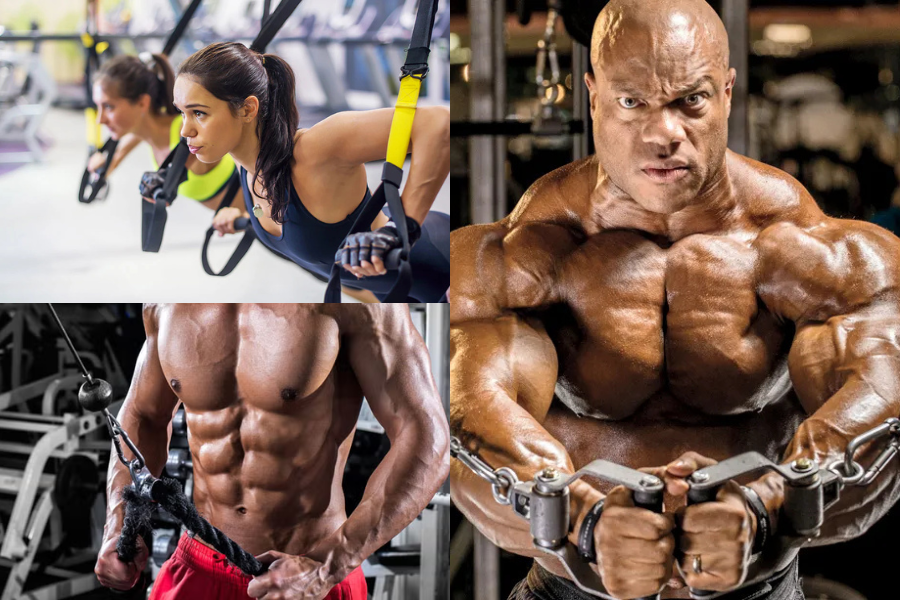
- Pectoralis major: The big fan-shaped muscle you see across the front of your chest. It helps you push, press, and bring your arms toward the center of your body.
- Pectoralis minor: A smaller muscle that sits underneath the pec major. It helps stabilize your shoulder blade.
- Serratus anterior: The muscles along your ribcage that help your shoulder blade move smoothly when you push.
A good beginner chest workout targets all of these with simple presses and push-ups, rather than lots of fancy variations. This balanced approach makes everyday tasks, like pushing open a heavy door or lifting a box onto a shelf, feel easier over time.
Set smart expectations as a beginner
You do not need extreme weights or complicated routines to make progress. In fact, trying to do too much too soon is one of the fastest ways to get hurt or discouraged.
Most beginners do well if you:
- Train your chest 1 to 2 times per week as part of a full strength plan
- Use 1 to 3 sets of 8 to 12 repetitions per exercise, with a weight that feels challenging but controlled
- Finish each set with a few reps left in the tank, around 2 to 4 reps short of all-out failure
Guidelines like the 2018 Physical Activity Guidelines for Americans and coaching insights from Barbell Medicine suggest that working within 1 to 4 reps of failure is effective for building strength and muscle without unnecessary fatigue. You do not have to grind yourself into the ground to get results.
Avoid common beginner mistakes
When you are learning chest exercises, form matters much more than the number of plates on the bar. A few beginner habits can quickly lead to shoulder pain or stalled progress.
Letting elbows flare out
On presses with dumbbells or a bar, many beginners let their elbows shoot out to a 90 degree angle from the body. This position tends to:
- Put extra stress on your shoulder joints
- Make the lift feel uncomfortable or painful
- Reduce help from your lats, which support your chest
A safer setup is to keep your upper arms at about a 45 degree angle to your torso. This position still hits your chest hard but is friendlier to your shoulders.
Turning incline work into a shoulder exercise
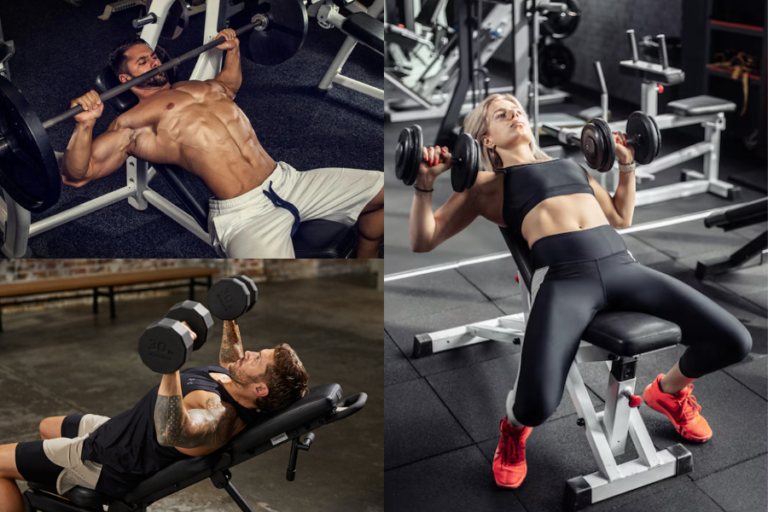
Incline presses are great for your upper chest, but only if your body position is right. One common mistake is pushing the weights almost straight up at a 90 degree angle to your torso. That turns the move into more of a shoulder press and can strain the joint.
A better cue is:
- Aim to keep your forearms vertical and perpendicular to the floor during the press
- Let the angle of your arms decide the pressing path instead of chasing the incline bench
This keeps tension on your chest across different bench angles.
Training only chest and ignoring your back
If you only push and never pull, your shoulders can roll forward and your posture may suffer. Over time, that imbalance can lead to cranky shoulders and a tight chest.
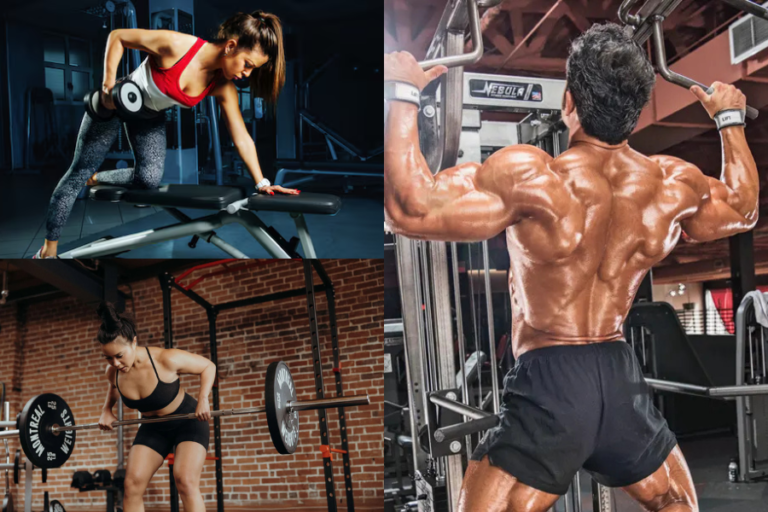
Include some back work, such as rows, in your weekly routine. Exercises like barbell rows help open your chest and support healthy posture, which in turn makes your beginner chest workout feel better and more stable.
Chasing big weights and speed
Moving a heavy weight quickly might look impressive, but it often means you are using momentum instead of your chest muscles. For beginners this can lead to:
- Poor technique
- Missed muscle activation
- Higher chance of nagging injuries
Slow down just enough to feel the muscle work. You should be in control of the weight the whole way up and down.
Choose the right tools and exercises
A simple beginner chest workout does not require a fully stocked gym. You can build a strong foundation with:
- Bodyweight movements, such as push-ups and their variations
- Dumbbells, which let each arm work independently and can correct strength imbalances
- A barbell, once your form and control improve
Machines have their place, but relying on them too early can limit how well you learn to stabilize and control weight. Historically, many lifters built impressive chests using mostly free weights. You can follow the same idea with a few basic movements done well.
Follow a safe warm-up routine
Before you jump into your working sets, give your joints and muscles a chance to wake up.
You can use this simple warm-up:
- General warm-up, 3 to 5 minutes
- Light cardio like brisk walking, cycling, or easy jumping jacks
- Goal: raise your heart rate slightly and get blood flowing
- Movement prep, 1 to 2 sets per move
- 10 to 15 wall push-ups or incline push-ups
- Light shoulder circles and arm swings
- Specific warm-up sets for your first chest exercise
- 2 lighter sets of the same movement, for example:
- Set 1: very light weight, 10 to 12 controlled reps
- Set 2: slightly heavier, 6 to 8 reps
Barbell Medicine encourages warm-up sets to prepare the muscles and joints for the range of motion you are about to use. You should feel loose and ready, not tired, before your first real working set.
Try this beginner chest workout (no equipment)
If you are training at home with no weights, you can still run a solid beginner chest workout using push-up variations. Mastering the push-up is one of the best ways to build a strong chest early on.
At-home bodyweight chest routine
Perform 3 rounds of the following. Rest 60 to 90 seconds between rounds if you need it.
- Regular push-ups, 10 reps
- Hands slightly wider than shoulder width
- Body in a straight line from head to heels
- Lower your chest toward the floor, pause briefly, then press back up
- Incline push-ups, 10 reps
- Hands on a bench, sturdy chair, or countertop
- Easier than floor push-ups and kind on your shoulders
- Great if standard push-ups are still challenging
- Decline push-ups, 10 reps
- Feet on a low step or platform, hands on the floor
- Shifts a bit more focus to your upper chest and shoulders
- Lower the platform height if it feels too difficult
- Time under tension push-ups, 5 slow reps
- Take 3 to 4 seconds to lower, pause for 1 second at the bottom
- Press up in 1 to 2 seconds
- Focus on feeling your chest work throughout the movement
If push-ups on your toes are too tough right now, you can:
- Drop to your knees
- Use a higher incline, like a wall or countertop
- Reduce the total number of reps and build up over a few weeks
Try this beginner chest workout (with dumbbells)
Dumbbells are ideal for beginners because each arm works independently, which helps you notice and correct side-to-side differences. They also let you safely stop a rep if something feels off.
Below is a simple beginner chest workout that uses dumbbells and a bench or sturdy surface. Aim for 1 to 3 sets of 8 to 12 reps per exercise depending on your time and fitness level.
Exercise 1: Dumbbell bench press
- Lie on a flat bench with a dumbbell in each hand
- Start with the weights at chest level, palms facing forward
- Keep your elbows about 45 degrees from your torso
- Press the weights up until your arms are almost straight, then lower under control
Form tips:
- Keep your feet flat on the floor and your lower back in a natural arch
- Do not slam the weights together at the top
- Use a weight that allows you to keep steady control
Exercise 2: Incline dumbbell press
- Set your bench to a low or moderate incline, around 30 to 45 degrees
- Use the same pressing motion as the flat press
- Keep forearms mostly vertical throughout to keep tension on your upper chest
Incline work helps develop your upper chest, which is often undertrained and can make your torso look taller and more balanced.
Exercise 3: Dumbbell floor press (shoulder friendly)
If traditional bench presses bother your shoulders or lower back, the floor press is a useful alternative.
- Lie on your back on the floor with knees bent and feet flat
- Hold dumbbells at chest level with elbows resting lightly on the floor
- Press the dumbbells up until your arms are nearly straight
- Lower until your upper arms gently touch the floor, then press again
The floor limits range of motion slightly, which can reduce shoulder stress while still hitting your chest, triceps, and stabilizing shoulder muscles.
Optional: Dumbbell flyes, used carefully
Dumbbell flyes can stretch and challenge your chest, but they are not essential when you are just starting. If you choose to include them:
- Use light weights and high control
- Start with a small range of motion until you feel confident
- Stop if you feel sharp pain or excessive stretch in your shoulders
Some trainers prefer beginners to build base strength with presses before adding flyes. Others allow them early with careful form. Let your comfort and control guide you.
Add push-ups to finish strong
A simple way to round out a beginner chest workout is to finish with a set of push-ups to near failure. This means:
- Pick a push-up variation you can do safely
- Perform reps until you feel you could do only 1 or 2 more with good form
- Stop before your form breaks completely
You can use:
- Standard push-ups
- Kneeling push-ups
- Incline push-ups on a bench or wall
This final set helps you fully fatigue the chest muscles you just trained and can support muscle growth.
Balance chest training with back work
For your shoulders to feel good long term, you need balance between the muscles that push and those that pull. If you only do chest presses and push-ups, your front side can become dominant and tight.
Try to include back exercises in your weekly routine, such as:
- Bent-over rows with dumbbells or a barbell
- Seated cable rows if you have gym access
- Bodyweight inverted rows under a sturdy table or bar
Back training helps keep your shoulders in a healthy position, supports better posture, and can even improve your pressing strength by providing a solid base to push from.
Plan your weekly training frequency
You have a few options for how to fit chest training into your week. Two common structures that fit Barbell Medicine style guidance are:
-
Full-body days
-
2 or 3 sessions per week
-
Include 1 chest exercise in each session, such as dumbbell presses or push-ups
-
Upper and lower split
-
Alternate upper body and lower body days
-
Place your beginner chest workout on your upper days
Many programs suggest doing 1 to 3 sets of 8 to 12 reps per chest exercise with a weight that brings you near, but not quite to, failure. Other options include slightly heavier sets, such as 3 sets of 4 to 6 reps, at a moderate difficulty rating (often described as RPE 7 to 8), where you could still do 2 or 3 more reps if you had to.
The key is consistency. You will see more progress from a simple plan you can follow every week than from a perfect plan you only stick with for a few days.
Choose the right weight and effort level
As a beginner, it is tempting to grab the heaviest weights you can lift once or twice. That approach, often called ego lifting, rarely ends well. You are better off starting lighter and focusing on form.
Use these simple guidelines:
- Pick a weight that lets you do your planned number of reps with solid control
- You should feel you could do 2 to 4 more reps if you absolutely had to
- If you finish a set and could do 6 or more extra reps, increase the weight slightly next time
- If your form falls apart or you cannot hit your target reps, reduce the weight
Recent research discussed by Barbell Medicine suggests that training even 4 or 5 reps short of failure can still produce similar strength and muscle gains compared to going all the way to failure, especially for beginners. This means you can build strength without pushing to your absolute limit every session.
Know when to adjust or skip an exercise
Not every exercise will feel good for every body, especially when you are new. Pay attention to how your shoulders and wrists feel.
Consider modifying or replacing a movement if you notice:
- Sharp or pinching pain in your shoulder during presses
- Persistent soreness that does not ease up between sessions
- Discomfort that gets worse each week
Options you can use:
- Swap barbell bench presses for dumbbell presses if your shoulders feel cramped
- Use a floor press instead of full range presses if your shoulders are sensitive
- Adjust your bench angle for incline presses to find a more comfortable position
- Take an extra rest day if soreness feels more like pain than typical workout fatigue
If pain continues or increases, it is wise to ask a qualified professional for guidance before pushing further.
Give your muscles time to recover
Your body gets stronger between workouts, not during them. Recovery is especially important when you are practicing new movements.
General recovery tips:
- Allow at least 48 hours between hard chest sessions
- Sleep enough so you wake up feeling reasonably rested
- Keep moving lightly on rest days rather than sitting still all day
- Eat enough protein and overall calories to support muscle repair
Barbell Medicine notes that complete muscle recovery can take up to 72 hours, but you do not need to feel 100 percent fresh to train again, as long as soreness is mild and improving. Listen to your body and err on the side of patience early on.
Put it all together
To recap your beginner chest workout approach:
- Learn basic chest anatomy so you know what you are training
- Start with simple bodyweight and dumbbell movements
- Keep elbows at roughly 45 degrees and avoid rushing your reps
- Include incline work and back training for balanced development
- Train chest 1 to 2 times per week with 1 to 3 sets of 8 to 12 reps
- Leave 2 to 4 reps in the tank instead of pushing to complete failure
- Choose variations that feel comfortable and shoulder friendly
- Allow time for recovery so strength and size can actually build
Pick one version of the beginner chest workout, either bodyweight or dumbbell based, and follow it for four to six weeks. As the exercises start to feel easier, gradually add reps or a little weight. Steady, controlled progress will take you much further than any quick fix.
About the Author