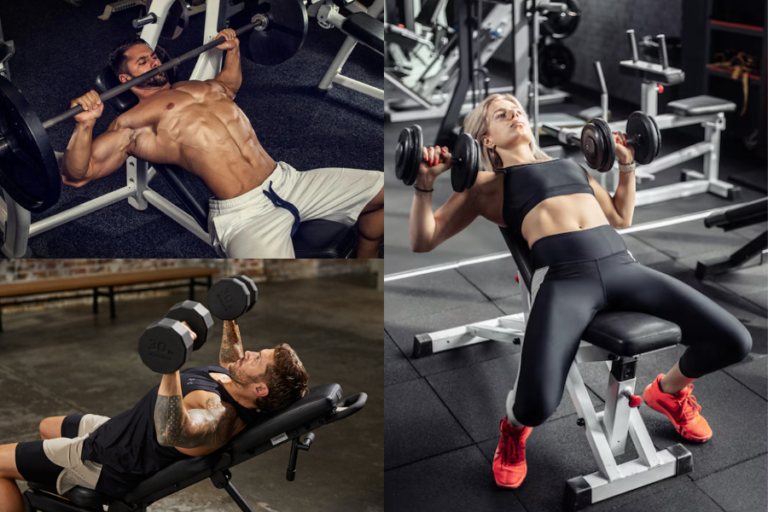
Understand why bench press variations matter
If you want a stronger, fuller chest, relying on one movement is rarely enough. Different bench press variations for chest development let you shift emphasis across your upper, middle, and lower pecs while still training your triceps and shoulders for pressing strength.
Adjusting your grip, bench angle, or equipment changes which fibers work hardest. Some variations let you move the most weight for strength and size. Others increase range of motion, improve stability, or help you fix weak points. When you combine them in a plan, you give your chest a chance to grow evenly instead of leaving certain areas behind.
Below, you will see how each variation works, which part of your chest it targets, and how to use it in your own workouts.
Main muscle groups involved
Every bench press you do will involve these muscles to some degree:
- Pectoralis major, especially the sternal (middle) and clavicular (upper) portions
- Triceps brachii
- Anterior deltoids
- Lats and upper back for stability
You will shift emphasis between them by changing setup and technique, not by changing the muscle groups entirely.
Use barbell variations for strength and mass
Barbell bench presses are some of the most efficient exercises for building upper body mass and strength. The bar path is fixed, so you can load more weight and focus on pushing hard without worrying as much about balance.
According to an Ativafit guide in 2024, the barbell bench press lets you move around 20 percent more weight than the dumbbell version, which makes it a clear winner for progressive overload and overall chest training capacity.
Flat barbell bench press
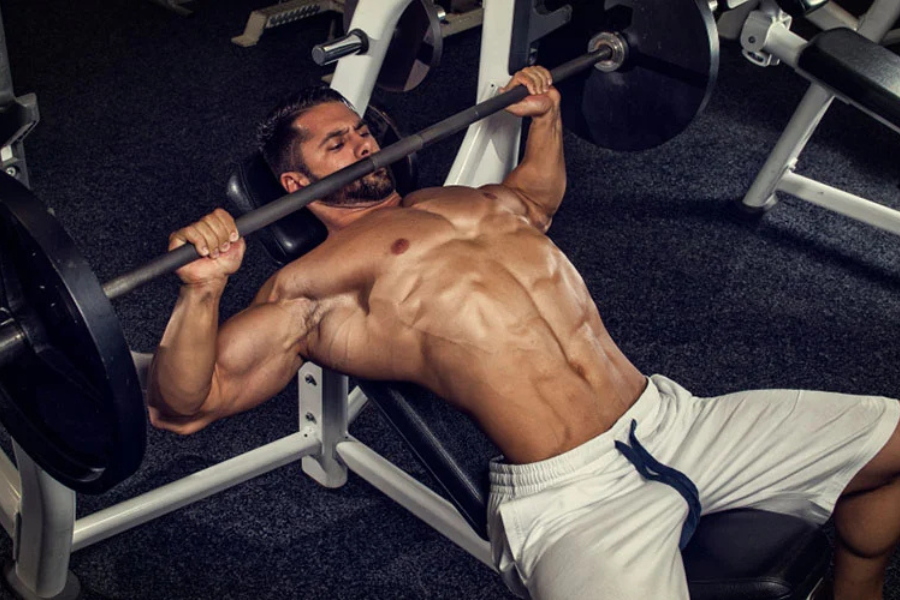
The flat barbell bench press is the foundation of most chest programs.
What it targets
- Overall chest development, with a focus on the middle portion
- Triceps and front delts as secondary movers
- Lats, upper back, and core as stabilizers
How to do it
- Lie flat on the bench with your eyes under the bar.
- Grip the bar just outside shoulder width.
- Pull your shoulders down and back, keep your feet planted.
- Unrack, then lower the bar to mid chest with elbows tucked in, not flared out.
- Pause briefly, then press the bar back up over your shoulders.
When to use it
- As your main heavy press of the day
- In low to moderate rep ranges for strength and muscle, for example 4 to 8 reps
Close grip bench press
A close grip bench press uses a grip around shoulder width or slightly inside, instead of the wider grip you might use in a powerlifting style press.
Benefits
Research with lifters as of April 2022 shows that using a close grip as your main style can match or even exceed your wide grip 1 rep max. The closer grip:
- Increases the range of motion, so you do more work per rep
- Forces you to keep your elbows under the bar, which improves mechanics and safety
- Challenges your ability to stay tight through your back, lats, and shoulder blades
- Heavily loads your triceps, making it one of the most loadable triceps exercises you can do
Compared with dips, pushdowns, or extensions, you can usually use much more weight on the close grip bench, which is ideal for triceps strength and size.
How to do it
- Lie as you would for a flat bench.
- Place your hands at or just inside shoulder width.
- Pin your shoulder blades together and keep your chest up.
- Lower the bar to your lower to mid chest, keeping elbows close to your body.
- Press straight up, keeping your wrists stacked over your elbows.
When to use it
- As a secondary press after your main bench
- As a primary press when you want extra triceps focus without losing overall pressing strength
Reverse grip bench press
The reverse grip bench press uses a supinated grip, so your palms face toward your head and your knuckles point toward your feet.
What it targets
This variation has been shown to significantly increase upper chest activation, by about 30 percent more than a traditional flat pronated grip bench press. That makes it a strong option if your upper chest lags.
Key technique points
- Use a spotter when possible, since the grip feels less stable at first.
- Grip the bar firmly with your thumbs around it, not thumbless.
- Keep elbows tucked and aim the bar toward your lower chest like a standard bench.
When to use it
- As an occasional variation when you want extra upper chest focus on a flat bench
- In moderate reps, such as 6 to 10, since stability is more demanding
Dead bench press
The dead bench press starts from a dead stop, usually using safety pins or blocks so the bar rests at chest level.
Benefits
- Removes the eccentric or negative phase, so every rep starts from zero momentum
- Builds power and strength out of the bottom of the lift
- Targets the middle chest and your sticking point off the chest
How to do it
- Set pins so the bar rests around mid chest height when you lie down.
- Get tight under the bar, pull your shoulder blades back and down.
- Drive your feet into the floor.
- Press the bar explosively from the pins to lockout.
- Lower back to the pins and fully reset between reps.
When to use it
- As a strength accessory for lifters who tend to stall at the bottom of the bench
- In low reps, such as 2 to 5 per set
Adjust bench angle for upper and lower chest
Changing the bench angle lets you shift stress along the length of your chest without needing completely new exercises.
Incline bench press for upper chest
When you perform an incline bench press, you elevate the bench between about 10 and 70 degrees. A 30 to 45 degree incline is common for targeting the upper chest.
An Ativafit resource from 2024 notes that an incline bench set to 30 degrees produces about 14.5 percent higher activation of the pectoralis major than a flat bench press. That is why incline pressing is often recommended for lifters with a lagging upper chest.
What it targets
- Upper chest (clavicular fibers)
- Front delts and triceps
- Still involves shoulders and triceps enough to support overall pressing strength
Form tips
- Use a 30 to 45 degree incline.
- Drop your shoulders down and back to keep strain off the front of the joint.
- Aim the bar to touch around your lower chest or upper ribs, not your neck.
- Press slightly up and back, finishing with the bar over your shoulders.
Beginner guidance
If you are new to incline bench:
- Start with lighter weights you can handle for 12 to 20 reps.
- Practice the movement with just the bar or no weight at all to feel it in your chest rather than only your shoulders or arms.
- Increase weight gradually once your sets feel comfortable and stable.
Using dumbbells for incline
Using dumbbells instead of a barbell can be safer if you train alone because you can lower the weights to the floor if you get stuck rather than being pinned under a bar. Dumbbells also allow each arm to find a more natural path for your shoulders.
Decline bench press for lower chest
The decline bench press elevates your feet and places your body at a slight downward angle.
What it targets
- Lower chest fibers
- Triceps and front delts, similar to flat pressing
Technique overview
- Secure your feet in the pads at the top of the bench.
- Grip the bar a bit wider than shoulder width.
- Lower the bar to the lower chest or upper abdomen.
- Press up until your arms are straight, keeping your shoulders pinned to the bench.
When to use it
- To add more work for the lower chest without increasing shoulder stress
- As a variation if flat pressing bothers your shoulders but decline feels more comfortable
Add dumbbell presses for range of motion and balance
While barbell bench presses shine for heavy loading, dumbbell bench presses shine for range of motion and muscular balance.
An article from ATHLEAN-X in June 2023 explains that dumbbells allow a greater range of motion because your hands are not fixed on a bar. You can bring them closer together at the top of the press, which adds more control, time under tension, and chest activation through adduction.
Ativafit also highlights that dumbbells:
- Provide a deeper stretch on the way down
- Force each arm to work independently, which helps correct left to right imbalances
- Demand more core and shoulder stability, which can carry over well to sports and daily activities
Flat dumbbell bench press
Benefits
- Greater range of motion at the bottom
- Ability to bring weights toward each other at the top
- More shoulder stabilizer and core activation
How to do it
- Sit with dumbbells on your thighs, then lie back and kick them into position.
- Start with dumbbells over your chest, palms facing slightly in.
- Lower slowly until your elbows are roughly level with the bench or slightly below, based on comfort.
- Press up while bringing the dumbbells a bit closer together without banging them.
When to use it
- After your main barbell press for added hypertrophy
- On days you want to train chest but use slightly lighter total loads
Incline dumbbell bench press
The incline dumbbell bench press combines the upper chest focus of incline work with the extra motion and stability challenge of dumbbells.
Why it is useful
- Targets the upper chest in a joint friendly way
- Can be easier on your shoulders than a barbell for some lifters
- Lets you adjust your hand angle for comfort
Form tips
- Choose a 30 degree incline to start.
- Keep your shoulders down and back against the bench.
- Lower until you feel a stretch across the upper chest, not pain in the shoulder.
- Press up and slightly together at the top for a strong contraction.
When to pick dumbbells over barbells
Dumbbells can be a better choice when:
- You train alone and want an easier bailout option
- You notice one arm always dominates the barbell press
- Your shoulders feel better with more natural hand positions
Barbells can still be your main strength tool, but adding dumbbells gives your chest more complete development.
Use machine and specialty presses to target weak points
Free weights are not your only option. Strategic machine or specialty presses can help you overload specific parts of the movement or muscle.
Smith machine overload press
The Smith machine moves along a fixed track and can be used to overload the eccentric, or lowering phase, of the press.
Lifters can often handle up to 60 percent more weight during the negative portion compared with their regular pressing strength. This eccentric overload can be very effective for muscle growth in the middle chest.
How to use it
- Load the bar heavier than your normal bench weight.
- Use spotters or safety stops.
- Focus on a slow 3 to 5 second lower, then use assistance or lighter weight to get the bar back up.
- Keep your form tight and shoulders stable throughout.
Standing machine press
The standing machine press requires your core to work hard to resist the pushing forces, but that same demand can limit how much you press if your core is the weak link.
Pros
- Great for functional strength and core engagement
- Can be useful as an accessory press or finisher
Cons
- Total pressing strength may be limited by your core stability
- Not the best choice for your heaviest sets if your main goal is pure chest overload
Consider using standing machine presses for moderate loads and higher reps, while keeping your heavier work on benches where you can brace more effectively.
Target triceps to boost your bench
Since your triceps are heavily involved in every pressing movement, building them up will help you lock out heavier loads and improve your bench performance.
Close grip bench for triceps
As mentioned earlier, the close grip bench press is arguably the most loadable triceps exercise available. You can typically overload your triceps far more with it than with isolation exercises.
Use it:
- For 3 to 4 sets of 5 to 8 reps as a heavy triceps builder
- After your main bench press on chest or push days
Board presses and JM presses
Two other useful variations for triceps are board presses and JM presses.
Board press
- You place a wooden board or pad on your chest to shorten the range of motion.
- This reduces stress on your shoulders and pecs.
- It shifts more work to your triceps, especially near lockout.
JM press
- A hybrid between a close grip bench and a skull crusher.
- You keep your elbows forward and lower the bar toward your upper chest or throat, then press back up.
- It hits the triceps hard while using relatively heavy loads.
Both exercises help increase your pressing max by strengthening the muscles that finish each rep.
Try a sample bench press chest workout
Here is one way you can combine different bench press variations for chest development across the entire muscle:
Day 1, strength focused
- Flat barbell bench press, 4 sets of 4 to 6 reps
- Close grip bench press, 3 sets of 5 to 8 reps
- Incline dumbbell press, 3 sets of 8 to 12 reps
- Board press or JM press, 2 to 3 sets of 6 to 10 reps
Day 2, hypertrophy and balance
- Incline barbell or dumbbell bench, 4 sets of 8 to 10 reps
- Flat dumbbell bench press, 3 sets of 10 to 12 reps
- Reverse grip bench press, 3 sets of 8 to 10 reps
- Machine or Smith press with slow negatives, 2 to 3 sets of 10 to 12 reps
You can adjust reps, sets, and exercises to match your level, but the idea is to hit upper, middle, and lower chest, plus triceps, across the week.
Key takeaways for your chest training
- Use barbell bench press variations for chest strength and overall mass.
- Add a close grip bench to build powerful triceps and better technique.
- Include incline presses to target your upper chest, especially around a 30 degree angle.
- Rotate dumbbell presses to gain range of motion, stability, and balance between sides.
- Experiment with reverse grip, dead bench, and machine overload work to attack weak points.
Pick one or two new variations to add to your current routine rather than changing everything at once. Over a few weeks, you will feel which movements give your chest the best combination of size, strength, and control.
About the Author