A strong pair of calves does much more than fill out the back of your legs. With the right bodyweight calf exercises, you can improve your walking and running power, protect your knees and ankles, and boost your balance, all without equipment or a gym membership.
This guide walks you through how your calves work, the best bodyweight moves to train them, and how to turn those moves into an effective at‑home routine.
Understand why calf training matters
Your calves are more than cosmetic muscles at the bottom of your legs. They help you walk, run, jump, and maintain good posture every time your feet hit the ground.
The two main muscles that most bodyweight calf exercises target are the gastrocnemius and the soleus, which run down the backs of your lower legs and form the familiar calf shape, as described by the University of Colorado School of Medicine. The gastrocnemius is the larger, more visible muscle that fires when you lift your heels. The deeper soleus helps stabilize the ankle and supports you when you stand or walk for long periods.
When these muscles are strong, they help you:
- Support the load of your body through your lower legs
- Push off the ground efficiently when you walk or run
- Jump and land with more control
- Reduce your risk of issues like knee instability and Achilles strains
Even if you feel active because you get 3,000 to 10,000 steps a day, that movement is low intensity and uses only a short range of motion. Your calves are already very adapted to regular walking, so you need targeted bodyweight calf exercises that challenge them more if you want strength or noticeable growth.
Key muscles worked during bodyweight calf exercises
Most effective bodyweight calf exercises work more than just a single muscle. When you perform a solid calf raise or a jumping movement, you recruit a network of muscles in the lower leg and core.
The primary muscles activated include:
- Gastrocnemius
- Soleus
- Peroneus longus and brevis along the outer lower leg
- Tibialis posterior deep in the lower leg
Your core also pitches in for balance and control, including the rectus abdominis, obliques, and transversus abdominis. When these muscles work together, you get better lower body stability, which is especially useful for running, field sports, and any activity that involves rapid direction changes.
To fully develop your lower legs, you eventually want to address not only the gastrocnemius but also the soleus and the muscles on the front of the shin such as the tibialis anterior. That is where exercise variety becomes important.
Simple standing bodyweight calf raises
If you choose only one bodyweight move for your calves, make it the standing calf raise. You can do it almost anywhere and it directly targets the gastrocnemius and soleus.
How to do a basic calf raise
- Stand tall with your feet hip width apart and toes pointing forward.
- Hold on lightly to a wall, chair, or counter if you need balance support.
- Press through the balls of your feet and lift your heels as high as you comfortably can.
- Pause briefly at the top, then lower your heels back down under control.
- Repeat for your desired number of reps.
You can perform calf raises on flat ground or on an elevated surface like a stair, curb, or a sturdy step. An elevated surface lets your heels drop below the level of your toes for a deeper stretch. Calf raises are very flexible and can be done with toes pointed outward or inward to put a slightly different emphasis on different parts of the calf muscles.
Effective dynamic bodyweight calf raises
Dynamic Bodyweight Calf Raises add a bit more motion and intensity than the basic version. Instead of moving slowly up and down, you introduce a more rhythmic tempo or small bounces that keep the muscles under continuous tension.
These are particularly helpful if you are a runner or athlete who needs both strength and endurance in your lower legs. When you perform Dynamic Bodyweight Calf Raises, you still raise your heels off the ground while keeping your toes planted, but you can vary:
- Speed of each repetition
- Range of motion, such as focusing on the bottom or top half
- Foot position, like staggered stance or single leg
The primary muscles activated include the gastrocnemius, soleus, peroneus longus and brevis, tibialis posterior, and your core. The variations let you adapt the move to different fitness levels and goals.
Although this exercise is generally safe, approach it with common sense. If you have existing ankle, Achilles, or foot issues, or if you experience sharp pain, you should speak with a medical professional before pushing intensity.
Single leg and angled calf variations
Once basic double leg raises feel easy, you can progress to single leg work. This type of bodyweight calf exercise challenges your balance and forces each side to carry its own load, which can reveal and correct strength imbalances.
Single leg calf raises
To perform a single leg calf raise:
- Stand on one foot, holding a wall or chair for balance if needed.
- Keep your weight over the ball of your foot.
- Lift your heel as high as possible, then lower it slowly.
- Complete all reps on one leg before switching.
Because you are supporting your full body weight on one leg, you will likely need fewer reps than you do with both feet on the floor. Take your time and keep your ankle aligned, rather than letting it roll inward or outward.
Outward and inward calf raises
Changing the angle of your toes is a simple way to target your calves from different directions.
- Toes pointed outward slightly, like a small V shape, will emphasize different fibers of the gastrocnemius.
- Toes pointed inward will shift the stress to another part of the calf.
You can combine these with single leg work or keep both feet down. Rotate through foot positions across your sets to get more complete coverage of the lower leg.
Everyday moves that double as calf work
You do not have to carve out a separate workout just for your calves. With a few tweaks, you can turn everyday movements and simple drills into effective bodyweight calf exercises.
Tiptoe walking
Walking on your tiptoes is a straightforward way to improve balance and strengthen your calves. You can do this in your living room, hallway, or even while brushing your teeth.
Start with 20 to 30 seconds of controlled tiptoe walking and build up to longer bouts as your endurance improves. Keep your core engaged and your steps light.
Small changes to squats and lunges
You can increase calf activation during common leg exercises by lifting your heels.
- Heels lifted in lunges: When you pulse gently at the bottom of a lunge with your back heel slightly lifted, your calf must work to stabilize the ankle.
- Heels elevated in squats: Placing your heels on a small wedge, book, or rolled towel and then squatting helps bring the calves and ankles into the movement.
These are subtle changes but they make your lower legs contribute more without needing extra equipment.
Walking or running on an incline
If you use a treadmill, setting a moderate incline increases the challenge to the calves because they need to work harder with every step. Outdoors, think hills, ramps, or even a long driveway.
Increase incline or hill volume gradually. A sudden jump in uphill walking or running can overload your Achilles and calf muscles.
Plyometric bodyweight calf exercises
Explosive or plyometric movements are highly effective for engaging your calves because they require quick, powerful contractions. You do not need to be an advanced athlete to use them, but you should be comfortable with basic impact first.
Some useful options include:
- Jump squats
- Jumping jacks
- Butt kickers
- Fast feet drills where you rapidly tap your feet on the ground
These exercises train your calves to handle high impact and quick force production, which carries over well to running and field sports. Mountain climbers, highlighted by the American Council on Exercise, also provide an all over leg workout with explosive elements that benefit calf development.
Remember to land softly and bend your knees to help distribute impact. If you feel any sharp pain in your ankles or shins, reduce the height of your jumps or take a break.
Jump rope for strength and cardio
Jump rope may be one of the most time efficient bodyweight calf exercises you can do. Each small hop requires your calves to contract rapidly, and the quick rhythm elevates your heart rate for a strong cardiovascular effect.
If you are new to jump rope:
- Start by jumping in place with both feet for about one minute.
- Rest, then repeat for a total of two to three rounds.
- Slowly progress toward three minutes of continuous jumping as your calves and lungs adapt.
You can even mimic the motion without a physical rope at first to practice the timing with less risk of tripping. Over time you can add variations like alternating feet or running in place with the rope for an extra challenge.
Stretching for calf health and recovery
Strong calves are useful, but so are flexible ones. Tight calf muscles can contribute to discomfort in your feet, ankles, or knees and can make explosive movements feel restricted.
Regular calf stretches help elongate the muscles, improve flexibility, and protect against injury. The American Academy of Orthopaedic Surgeons recommends stretching both the gastrocnemius and soleus muscles, ideally twice a week. Hold each stretch for about 30 seconds and repeat it three times per leg.
Simple options include:
- Straight leg wall stretch for the gastrocnemius
- Bent knee wall stretch to target the deeper soleus
You can also include gentle stretching between sets of calf raises. This not only feels good but also supports mobility as your training volume increases.
How to build an effective bodyweight calf routine
Because your calves contain both slow twitch and fast twitch muscle fibers, they respond better to a mix of high and low reps rather than one fixed rep range. They also adapt quickly to repetitive movements, so variety and progression matter.
Here is one way to structure a simple routine at home:
- Start with 2 to 3 sets of basic standing calf raises for higher reps, around 15 to 25 per set.
- Add 2 sets of single leg calf raises for lower reps, perhaps 8 to 12 per leg.
- Include one plyometric move such as jumping jacks or fast feet for 20 to 30 seconds.
- Finish with a minute of tiptoe walking and a few minutes of calf stretching.
You can perform a routine like this two or three times per week, leaving at least one rest day between intense sessions. As you get stronger, focus on doing your reps more slowly, using a deeper range of motion, or adding more single leg work and more challenging variations.
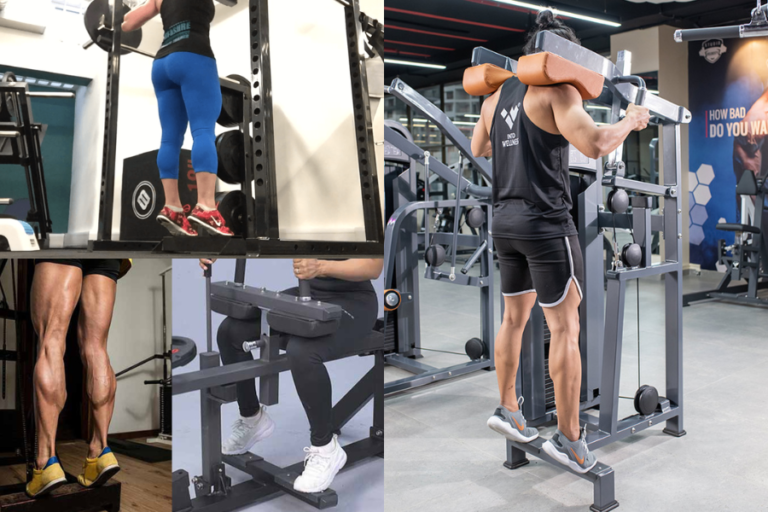
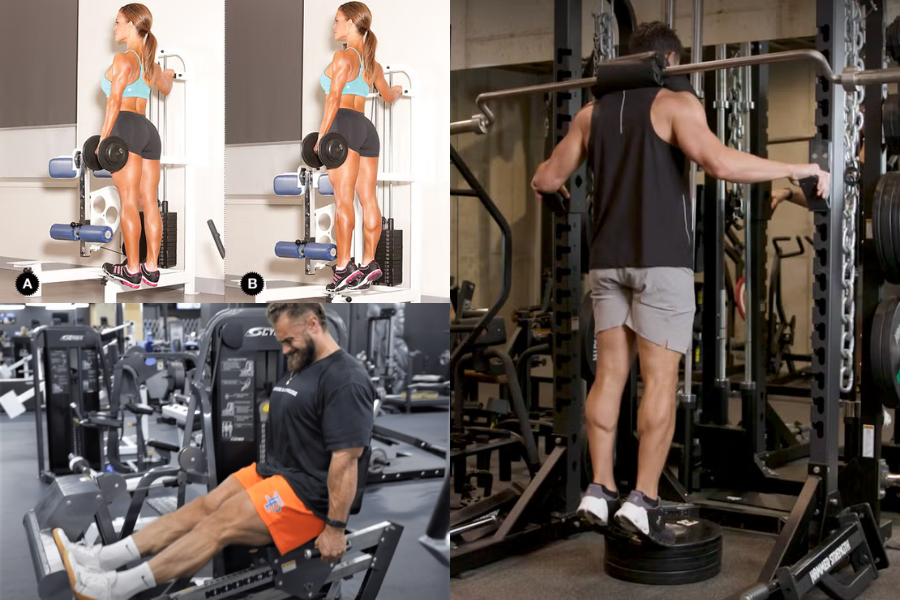
If your goals shift toward visible muscle growth rather than general strength, remember that load and effort matter. It is easy to under challenge your calves with only bodyweight and a comfortable range of motion. When you are ready, you can progress to heavier options like weighted calf raises or machine work, which allow you to push the muscles harder and continue making gains.
Begin with the variations that feel approachable today, such as basic standing raises or tiptoe walking around your home. As these become easier, layer in single leg work, plyometrics, and incline walking. Over time, these bodyweight calf exercises will build a stronger, more resilient foundation for every step you take.
About the Author