Understand why communication matters for mental health
When you think about improving your mental health, you might picture therapy, medication, or meditation. Communication skills for mental health often feel less obvious, yet they quietly shape how you cope, connect, and make sense of your experiences every day.
Research shows that communication is central to how you handle stress, anxiety, and sadness. When you can clearly express what you feel and need, you are more likely to get understanding, support, and practical help, which in turn eases emotional strain (Methodist Health). On the flip side, ongoing miscommunication can fuel frustration, loneliness, and anxiety, and may contribute to depression or chronic stress over time (Talking Spaces UK).
You use communication in three key directions, often all at once:
- With your support system
- With romantic or close relationships
- With yourself, through your own inner dialogue
When you improve your skills in each of these areas, you are not just “talking better.” You are actively transforming your mindset and how you experience your mental health.
Notice how communication affects your wellbeing
Before you change anything, it helps to see the patterns you already have. Small shifts in communication can change the way you feel day to day.
How poor communication impacts you
If you often feel misunderstood, brushed off, or unsure how to ask for what you need, you are not alone. Common effects of communication problems include:
- A sense of isolation, even when you are not physically alone
- Resentment that quietly builds when your needs go unmet
- Frequent conflicts that start from small misunderstandings
- Doubts about your worth, because you feel unheard or invalidated
When this continues, it can strain relationships and erode trust and intimacy, especially in close partnerships (Talking Spaces UK). Over time that strain can deepen stress, anxiety, and low mood.
How effective communication supports mental health
Health and psychology experts highlight several ways good communication skills protect your mental health:
- You can share your feelings and experiences, which leads to validation and understanding. This reduces stress and supports resilience (Access Psych).
- You are better able to clarify what is going on, which makes problems feel more manageable instead of overwhelming.
- You receive more of the kind of support you actually need, rather than help that misses the mark.
- You handle conflict with less emotional “fallout,” which protects your long-term wellbeing (Modern Recovery Services).
Communication works like a release valve for stress. When you let the pressure out regularly, issues are less likely to explode later on (Modern Recovery Services).
Strengthen communication with your support system
Your support system might include friends, family, coworkers, or a faith community. Each person in your life often plays a different role, such as listener, guide, or someone who helps you take a break and laugh (Methodist Health).
Be specific about the support you need
Instead of hoping people “just know” what you want, try naming it clearly. For example:
- “I do not need advice right now, I just need you to listen.”
- “Could you help me brainstorm options? I feel stuck.”
- “Can we talk about something light for a while? I need a distraction.”
Methodist Health notes that telling people whether you want a listener, guidance, or distraction can prevent misunderstandings and emotional letdowns (Methodist Health).
Use “I” statements to reduce conflict
“I” statements are a simple form of assertive communication. They help you share how you feel without blaming the other person. This approach supports both your self-esteem and your relationships (Access Psych).
You can follow this pattern:
- “I feel…
- when…
- because…
- and I would like…”
For example:
“I feel anxious when plans change at the last minute because I need time to adjust. I would like more advance notice when possible.”
This keeps the focus on your experience while still being honest and clear.
Improve communication in romantic relationships
Communication skills for mental health are especially important in close partnerships. These are often the relationships where you most want to feel understood and supported.
Say what you do want, not only what you do not want
Telling your partner what you do not like is only half of the message. Methodist Health suggests that clearly stating what you do want can prevent misinterpretations and make the relationship feel more like a team effort (Methodist Health).
Compare:
- “You never listen to me.”
- “I do not want you to ignore me when you are on your phone.”
with:
- “I feel cared for when you put your phone down while I am talking. Could we try that more often?”
The second example gives your partner something concrete to do, and it creates a path toward change instead of a dead end.
Watch nonverbal communication
Your words are only part of the message. Your tone of voice, facial expressions, and body language can either support or contradict what you are saying. When your nonverbal cues match your words, you build more trust and empathy (Access Psych).
In practice, you might:
- Uncross your arms and sit facing the other person when conversations feel tense
- Keep your tone calm and steady, even when you are upset
- Notice if your facial expression looks harsher than what you mean
If you are not sure how you come across, you can gently ask, “How does what I am saying land with you right now?”
Use self‑communication to shift your mindset
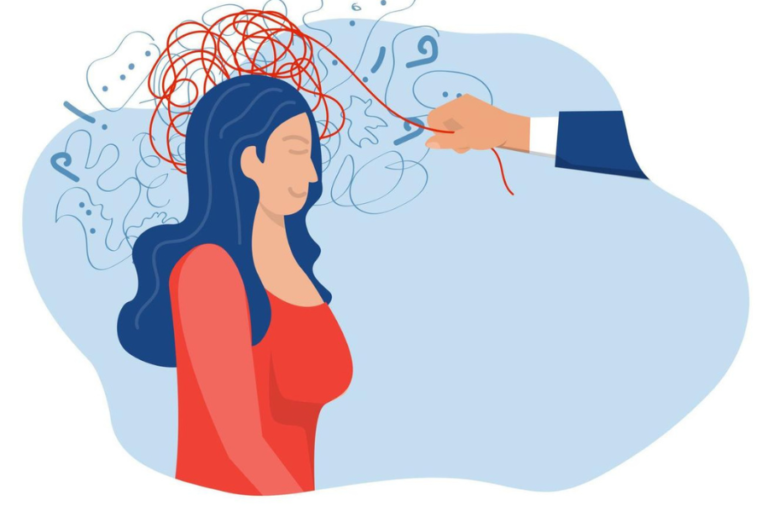
The way you talk to yourself quietly shapes your mood, your choices, and how you react to stress. Self-communication, or self-talk, is a powerful mental health tool.
Listen to what your feelings are saying
Uncomfortable emotions are not just “problems” to get rid of. They can also be messages about needs that are not being met. Methodist Health encourages you to ask what your feelings might be trying to communicate (Methodist Health).
You can experiment with questions like:
- “What is this sadness asking for right now?”
- “Is this anxiety warning me about something real, or repeating an old fear?”
- “What would this anger say if it had words?”
This turns your inner critic into more of an inner translator. Instead of fighting your feelings, you start learning from them.
Shift from self-criticism to supportive talk
Self-critical thoughts tend to be harsh and absolute, such as “I always mess things up” or “I am too sensitive.” Over time they can deepen anxiety and depression.
You can practice a different inner script:
- Notice the critical thought.
- Pause and label it: “I am having the thought that…”
- Gently rephrase it in a more balanced or compassionate way.
For example:
- “I am having the thought that I always fail. The truth is I have struggled before, but I am actively learning and improving.”
Licensed counselors highlight that learning to communicate with yourself in this healthier way can reduce symptoms of stress and depression, and it can also make it easier to reach out for professional help when you need it (Methodist Health).
Practice active listening to deepen connection
Good communication is not only about speaking clearly. Listening well is just as important for your mental health and relationships.
What active listening looks like
Active listening is the skill of listening to understand, rather than listening only to respond. It is a core communication skill that supports emotional safety in all kinds of relationships (Modern Recovery Services).
You can try:
- Giving your full attention, so you are not scrolling, typing, or half watching a screen
- Reflecting what you heard: “So you are feeling overwhelmed at work and worried you will burn out. Did I get that right?”
- Asking open-ended questions like “How did that feel for you?” instead of “Are you mad?”
- Resisting the urge to immediately fix the problem, unless the other person asks for solutions
When people feel truly heard, they tend to open up more. That deeper connection supports both their mental health and yours.
Communicate effectively during stressful moments
Stressful conversations can trigger a “fight or flight” response. Your heart races, your muscles tense, and your thoughts speed up. This can make it hard to think clearly or speak calmly.
Modern Recovery Services suggests calming your body first, then responding (Modern Recovery Services).
Use a simple three-step pause
You can try this process in the middle of a tough conversation:
- Pause and notice your body
- Are your shoulders tight? Is your jaw clenched? Is your voice getting louder?
- Ground yourself
- Take a slow breath in through your nose and a longer breath out through your mouth.
- Feel your feet on the floor or your back against the chair.
- Choose your next sentence
- Aim for one clear sentence that reflects either your feeling or your need.
- For example: “I want to talk about this, but I need a minute to calm down so I do not say something hurtful.”
This small pause helps you respond intentionally instead of reacting automatically, which protects both your mental health and your relationships.
Recognize and work with communication barriers
Sometimes communication difficulties are not just about “trying harder.” Real barriers can get in the way, and naming them helps you find better solutions.
Common barriers you might face
Access Psych highlights several obstacles that can disrupt healthy communication (Access Psych):
- Cultural differences, including unspoken rules about directness, emotional expression, or eye contact
- Language barriers, such as speaking different first languages or using different meanings for the same words
- Emotional barriers, like fear of rejection, shame, or past trauma
- Defense mechanisms, such as shutting down, joking, or changing the subject when topics feel too vulnerable
Understanding that these are normal challenges can reduce self-blame. You can then look for specific ways to bridge the gap, such as learning about cultural norms, slowing down conversations, or working through deeper emotional blocks in therapy.
Use communication skills with mental health professionals
If you are working with a therapist, counselor, or psychiatrist, communication is the foundation of your treatment.
Why communication matters in therapy
Research shows that the quality of communication and the therapeutic alliance between you and your clinician has a strong impact on outcomes, sometimes as much as the specific method being used (PositivePsychology.com).
Helpful communication elements in therapy include:
- Empathy, which encourages you to be open and vulnerable and supports emotional change (PositivePsychology.com)
- Active listening and feedback, which allow your therapist to adjust their approach so it fits you better and may reduce dropout (PositivePsychology.com)
- Attention to nonverbal cues and tone, which can either deepen trust or create distance (PositivePsychology.com)
Therapists also benefit when communication is healthy. It helps them avoid burnout by setting clear boundaries and avoiding overly draining patterns of interaction (PositivePsychology.com).
Advocate for a patient‑centered approach
Patient-centered communication in psychotherapy treats you as an active partner rather than a passive recipient of treatment. This approach grew out of humanistic psychology and Carl Rogers’ client-centered model, which emphasizes empathy, unconditional positive regard, and genuineness (NCBI PMC).
Studies show that patient-centered communication can:
- Strengthen the therapeutic alliance
- Improve engagement and adherence to treatment
- Increase satisfaction with care
- Support better mental health outcomes across different therapy types and even in telehealth formats (NCBI PMC)
You can support a more patient-centered relationship by:
- Asking questions about your treatment options
- Sharing what does and does not feel helpful in sessions
- Letting your therapist know about preferences, such as pacing, topics, or homework
- Mentioning cultural or personal values that are important to you
This kind of collaboration helps tailor therapy to you, which makes it more effective and sustainable.
Understand communication and mental health across the lifespan
Communication does not only matter in adulthood. It plays a powerful role in children’s and young people’s mental health too.
Social communication and young people’s wellbeing
A large review of 27 studies found that social communication skills, which include both verbal and nonverbal communication, are closely linked with mental health in children and young adults. These skills influence:
- Internalizing problems like anxiety and depression
- Externalizing problems like conduct difficulties
- Peer relationship challenges (PMC)
Research from the Netherlands found that pragmatic language difficulties in 4-year-olds were strongly associated with emotional and behavioral problems, more than structural language skills were (PMC). Long-term data from the Avon Longitudinal Study of Parents and Children also found that poor social communication skills at age 7 predicted higher risks of depressive symptoms in adolescence (PMC).
If you are a parent or caregiver, this suggests that supporting a child’s communication skills, especially practical social language, can be a meaningful way to protect their mental health over time.
Special considerations for ADHD and behavioral difficulties
Children with ADHD or social, emotional, and behavioral difficulties often have more severe pragmatic language and social communication deficits. These difficulties can explain a significant part of their externalizing behavior and challenges with everyday skills, even when you account for IQ and social understanding (PMC).
If this sounds familiar for someone in your life, it may be helpful to:
- Focus on clear, simple instructions
- Practice social situations through role-play
- Work with professionals who understand both communication and behavioral needs
Supporting communication in these cases is not just about politeness. It is a way of easing emotional load and improving long-term outcomes.
Know when to seek extra support
Improving communication skills for mental health is very possible with self-practice. At the same time, there are moments when professional guidance can make a big difference.
How counseling can help
Counseling services often focus directly on communication. Therapists can help you:
- Identify patterns that are causing conflict or isolation
- Practice clearer expression and more effective listening
- Learn constructive ways to handle disagreements
- Build communication habits that support rather than undermine your mental health (Talking Spaces UK)
For couples, counseling offers a neutral space to:
- Explore communication difficulties without blame
- Share feelings and needs more openly
- Understand each other’s communication styles
- Learn tools to resolve conflicts and strengthen the relationship over time (Talking Spaces UK)
If communication issues are affecting your wellbeing, your relationships, or your ability to function at work or school, reaching out is a sign of strength, not failure.
Put your communication skills into daily practice
You do not need to transform everything at once. Small, consistent changes add up and can gently shift your mindset toward more connection and self-compassion.
You might start with one of the following today:
- Tell a friend or partner exactly what kind of support you need in a specific situation.
- Use one “I” statement in a conversation where you would normally stay silent or lash out.
- Take a two-breath pause before answering when you feel triggered, and then choose a single clear sentence to say.
- Notice one self-critical thought and rewrite it in kinder, more accurate language.
- In your next therapy or medical appointment, ask one question about your treatment or share one preference.
As you practice, pay attention to how your body feels after clearer conversations, how your relationships respond to more honest but respectful communication, and how your inner world softens when your self-talk becomes less punishing.
Communication skills for mental health are not about speaking perfectly. They are about building relationships, inside and out, that make it easier for you to cope, heal, and grow. Every time you choose a more thoughtful word, a deeper breath, or a kinder inner voice, you are reshaping your mindset in a healthier direction.
About the Author