Why choose a dumbbell chest workout for mass
If you want a dumbbell chest workout for mass that also builds real-world strength, dumbbells are one of your best options. They let each arm work independently, increase your range of motion, and are often easier on your shoulders and wrists than a barbell.
According to Edward R. Laskowski, M.D. of the Mayo Clinic, the dumbbell chest press strengthens the muscles on the front of your chest and can help improve sports performance. When you use dumbbells, you can also correct strength imbalances and adjust your wrist and elbow position to reduce joint discomfort, as highlighted in a 2024 guide from Gymreapers.
In the sections below, you will find a complete dumbbell chest routine for mass and strength, with clear exercise instructions and rep ranges so you can start confidently.
Key benefits of dumbbell chest training
Dumbbell chest workouts are not just a substitute for barbell bench press. They offer several unique advantages that make them ideal for building chest mass.
Increased range of motion
Dumbbells allow your hands to travel lower than a bar would, which gives you:
- A deeper stretch at the bottom of presses and flyes
- Greater muscle tension across the pecs
- The potential for more muscle fiber recruitment and growth
The Gymreapers 2024 guide notes that this increased range of motion enhances muscle tension and growth potential.
Better balance and symmetry
Because each arm must control its own weight, dumbbells help you:
- Correct muscular asymmetries
- Prevent your dominant side from taking over every rep
- Build a more balanced chest and upper body
Unilateral variations, such as the half-bench single arm press, are especially useful for correcting imbalances and engaging your core for a stable base.
Joint-friendly mechanics
Dumbbells let you rotate your wrists and adjust your elbows into a comfortable path. This can:
- Reduce stress on your shoulders and elbows
- Make heavy pressing more comfortable if barbell benching bothers you
- Help you keep training consistently with fewer aches
Exercises like the reverse grip dumbbell press and hex press also reduce shoulder pressure, which can be helpful if you are prone to shoulder irritation.
How to structure your dumbbell chest workout
You do not need a long list of exercises to build chest size. A well-designed dumbbell chest workout for mass usually includes 2 to 4 movements per session:
- Start with 1 to 2 compound pressing exercises
- Finish with 1 to 2 isolation movements like flyes or pullovers
Sets, reps, and progression
Based on the 2024 Gymreapers guidance, here is a simple framework:
- Strength focus: 5 to 10 reps per set, heavier weights
- Hypertrophy (size) focus: 10 to 30 reps per set, moderate weights
- Sets per exercise: 2 to 5 total sets
Weekly progression is key. You can progress by:
- Adding 1 to 2 reps with the same weight
- Increasing the weight slightly
- Adding an extra set when you can complete all prescribed reps with good form
Training frequency and results timeline
For chest mass and strength, training your chest twice per week with dumbbells is recommended. With consistent effort and proper nutrition:
- Performance improvements often show up within 3 to 4 weeks
- Visible physical changes in chest size are more common after 8 to 12 weeks
These time frames come from the 2024 Gymreapers guide on dumbbell chest training.
Warm up before you lift
Before you start pushing heavy dumbbells, prepare your body. A quick warm up can improve performance and reduce injury risk.
Simple warm up routine
Spend 5 to 10 minutes on:
- Light cardio: brisk walking, cycling, or a few minutes on a rower
- Dynamic upper body movements: arm circles, band pull-aparts, scapular wall slides
- 1 to 2 light sets of your first chest exercise with very light dumbbells
You should feel warm, not tired, when you begin your working sets.
Foundational dumbbell chest exercises
These are the core movements that should anchor your dumbbell chest workout for mass. They cover your entire chest and build both size and strength.
Dumbbell bench press
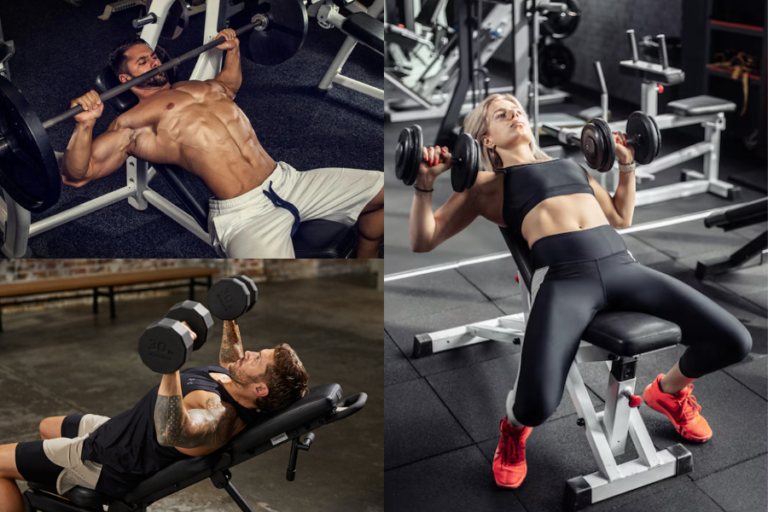
The dumbbell bench press is one of the best chest exercises for building muscle and strength and is commonly recommended at 3 to 4 sets of 6 to 8 reps for mass.
How to do it
- Lie on a flat bench with a dumbbell in each hand, feet planted on the floor.
- Hold the dumbbells at chest level, palms facing forward, elbows bent at about 75 to 90 degrees.
- Brace your core, keep your shoulder blades pulled gently back and down.
- Press the dumbbells upward until your elbows are almost straight, but do not lock them.
- Lower the weights slowly until your upper arms are just below parallel to the floor or until you feel a comfortable stretch.
Form tips
- Do not push through your feet to bounce the weights up.
- Keep your wrists straight and stacked over your elbows.
- Avoid flaring your elbows excessively to protect your shoulders.
Dumbbell incline press
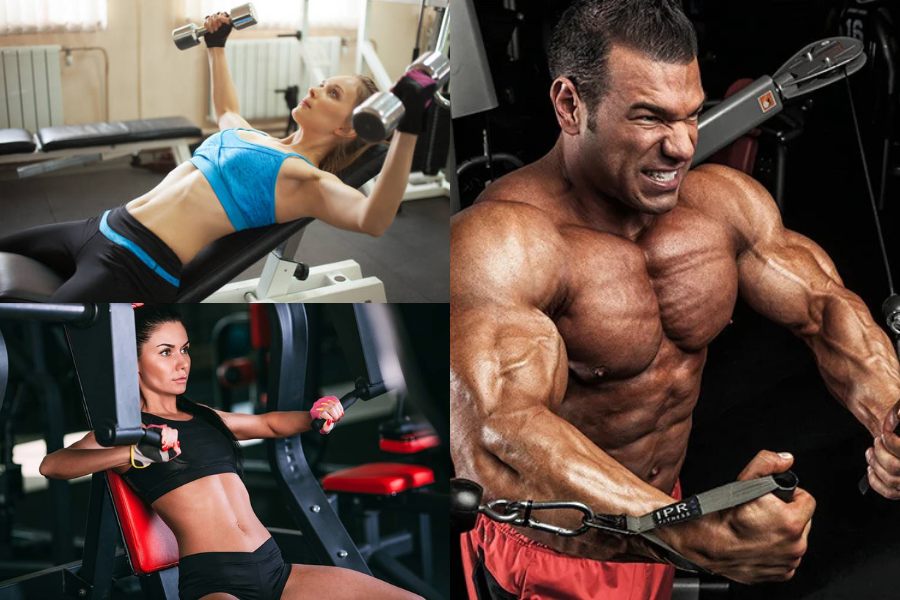
The incline dumbbell press targets your upper chest and front shoulders. It is typically performed with the bench at 15 to 30 degrees and recommended at 3 to 4 sets of 8 to 10 reps for upper chest mass.
How to do it
- Set an adjustable bench to a low incline, around 15 to 30 degrees.
- Sit back with a dumbbell in each hand at upper chest level, palms facing forward.
- Press the weights up and slightly back over your upper chest.
- Lower them under control until you feel a strong stretch in the upper chest.
Form tips
- Keep your lower back lightly arched but do not overextend.
- Aim the dumbbells toward the top of your chest, not your mid chest.
- If your shoulders feel stressed, lower the incline or reduce the weight.
Dumbbell floor press
The dumbbell floor press is a joint-friendly chest exercise that also works your triceps and shoulders. It can be especially useful if bench pressing bothers your wrists or elbows.
How to do it
- Lie on your back on the floor with knees bent, feet flat.
- Hold a dumbbell in each hand at chest level, upper arms resting lightly on the floor.
- Press the dumbbells up until your elbows are nearly locked.
- Lower them until your upper arms touch the floor again.
Why use it
- The floor stops your elbow from dropping too low, which can reduce shoulder stress.
- It encourages you to rely on your chest and triceps rather than leg drive.
Isolation movements to maximize chest growth
After your main presses, add 1 to 2 isolation exercises to emphasize different parts of the chest and increase time under tension.
Dumbbell chest fly
The dumbbell chest fly targets chest adduction in a way presses do not, making it a classic hypertrophy exercise. A common recommendation is 3 sets of 10 to 12 reps.
How to do it
- Lie on a flat bench holding dumbbells directly above your chest, palms facing each other.
- With a slight bend in your elbows, open your arms out to the sides in a wide arc.
- Lower until you feel a deep but comfortable stretch in your chest.
- Squeeze your chest to bring the weights back together over your chest.
Form tips
- Keep the bend in your elbows the same through the movement.
- Do not let your elbows drop far below the bench to protect your shoulders.
- Use a weight that allows full control, especially at the bottom.
Incline dumbbell fly
Incline flyes emphasize the upper chest. They use the same motion as flat flyes but on an incline bench.
How to do it
- Set a bench to a 15 to 30 degree incline.
- Start with dumbbells above your upper chest, palms facing each other.
- Lower the dumbbells in an arc until you feel a stretch across the upper chest.
- Bring the dumbbells back together by squeezing your pecs.
Dumbbell pullover
The dumbbell pullover can hit your chest and lats while giving your ribcage area a strong stretch. It often appears in chest programs as a finishing movement.
How to do it
- Lie on a bench with your upper back supported and feet on the floor.
- Hold one dumbbell with both hands above your chest, arms slightly bent.
- Slowly lower the dumbbell behind your head in an arc.
- Pull the weight back to the starting position using your chest and lats.
Advanced dumbbell variations for mass and strength
Once you are comfortable with the basics, you can add variety to challenge your muscles in new ways and keep progress moving.
Neutral grip dumbbell press
A neutral grip press is performed with palms facing each other. This grip:
- Is often more shoulder friendly
- Emphasizes the triceps and inner chest
- Can feel more stable for some lifters
You can do it on a flat, incline, or floor press.
Reverse grip dumbbell press
The reverse grip press uses an underhand grip, which increases activation of the upper chest and can reduce shoulder pressure. This makes it a useful option if traditional grips irritate your shoulders.
How to do it
- Set up as you would for a flat dumbbell bench press.
- Rotate your hands so your palms face you, knuckles toward your feet.
- Press the dumbbells up while keeping your elbows close to your body.
Start light while you learn the movement, since the grip can feel unfamiliar at first.
Crush grip or hex press
Sometimes called the hex press, this movement involves pressing two dumbbells together throughout the lift. It is especially effective for the inner chest.
How to do it
- Lie on a flat bench holding two dumbbells together over your chest, palms facing each other.
- Squeeze the dumbbells into each other as hard as you can.
- Lower them toward your chest while keeping constant inward pressure.
- Press back up while still crushing the dumbbells together.
Hexagonal dumbbells work best because they sit neatly against each other.
Single arm and half-bench presses
Unilateral dumbbell presses, such as a single-arm dumbbell press or half-bench single arm press, help correct imbalances and challenge your core.
Benefits include:
- Each side working independently, which reduces compensation from your stronger side
- Extra core engagement to prevent you from twisting or tipping
- Improved stabilization strength in your shoulders and trunk
A common guideline is 3 sets of 10 to 12 reps per side.
Sample dumbbell chest workouts for mass
Here are two example sessions. You can alternate them across the week or choose one and stick with it for 4 to 6 weeks, gradually increasing the difficulty.
Beginner dumbbell chest workout
If you are new to chest training with dumbbells, start with lighter weights and focus on form.
- Dumbbell bench press
- 3 sets of 8 to 10 reps
- Dumbbell incline press
- 3 sets of 8 to 10 reps
- Dumbbell chest fly
- 2 to 3 sets of 10 to 12 reps
Rest 60 to 90 seconds between sets. Aim to train this workout 1 to 2 times per week.
Intermediate mass and strength workout
When you are comfortable with the basics, you can add volume and variation.
- Dumbbell bench press
- 4 sets of 6 to 8 reps
- Incline dumbbell press
- 3 to 4 sets of 8 to 10 reps
- Dumbbell floor press or neutral grip press
- 3 sets of 8 to 10 reps
- Dumbbell flat or incline fly
- 3 sets of 10 to 12 reps
Rest 90 to 120 seconds on the heavier presses and about 60 seconds on flyes.
Safety tips and common mistakes
A smart dumbbell chest workout for mass should also keep your shoulders and elbows healthy so you can train consistently.
Protect your shoulders
- Avoid dropping your elbows far below the horizontal line of your body on presses.
- Do not bounce the dumbbells off your chest or the floor.
- If you feel sharp pain in your shoulders, reduce the range of motion, lower the weight, or change the angle.
The Mayo Clinic guidance for the dumbbell chest press also emphasizes avoiding elbow lockout, keeping your head neutral and relaxed, and not pushing through your feet to move the weight.
Choose the right weights
- Pick a weight that lets you complete all reps with control.
- The last 2 to 3 reps should feel challenging but not sloppy.
- If your form breaks down, reduce the load and build up gradually.
Stay consistent
For muscle mass, consistency over weeks and months matters more than any single workout. Following the rep and set ranges recommended by sources like Gymreapers and training your chest twice per week will give you the best chance of seeing progress.
Putting it all together
To build a bigger, stronger chest with dumbbells, you only need a clear plan and time to follow it:
- Use 2 to 4 exercises per workout. Start with presses, finish with isolation.
- Work mostly in the 6 to 15 rep range, with 2 to 5 sets per exercise.
- Train your chest twice per week and progress weights or reps over time.
- Focus on good form, stable shoulders, and a full but comfortable range of motion.
Pick one of the sample routines, commit to it for the next 8 to 12 weeks, and track your weights and reps. With steady effort, you will feel your chest get stronger and see your physique change as your dumbbell chest workout for mass starts to pay off.
About the Author