A smart hamstring workout for beginners does not need to be complicated or intimidating. With a few key exercises and a simple plan, you can strengthen the back of your legs, protect your knees, and move with more confidence in everyday life.
This guide walks you through what your hamstrings do, why they matter, and an easy, effective hamstring routine you can start this week.
Understand your hamstrings
Your hamstrings are a group of three muscles on the back of each thigh: the biceps femoris, semitendinosus, and semimembranosus. They work together to bend your knees and extend your hips so you can walk, run, squat, and hinge forward. Peloton instructor Matty Maggiacomo explains that these muscles are primarily responsible for hip extension and knee flexion, which means they support almost every lower body movement you do daily.
When your hamstrings are weak or tight, they can cause problems in other areas. Muscle imbalances where the quadriceps overpower the hamstrings are linked to knee pain and a higher risk of hamstring strains. This imbalance is often more pronounced in women, so it is especially important to train your quads, hamstrings, and glutes evenly for better form and running mechanics.
Common signs your hamstrings need attention include:
- A dull ache at the back of your thigh
- Tightness or pulling when you bend forward
- A low-grade ache just under your buttocks, especially after sitting
A normal hamstring length lets you lie on your back, keep your knee straight, and lift your leg until your hip is at about a 90 degree angle, a benchmark noted by physical therapist Dr. Julie Ann Aueron.
Why beginners should train hamstrings
If you are new to strength training, a hamstring workout for beginners gives you several benefits in a short amount of time.
Stronger hamstrings can help you:
- Reduce the risk of pulled hamstrings, which are often caused by long hours of sitting, tight hip flexors, and underused hamstrings, as described in the 2026 Muscle & Fitness guide for beginners
- Support your lower back by sharing the workload during bending and lifting
- Improve your balance and stability for walking, running, and climbing stairs
- Feel more powerful in squats, deadlifts, and athletic movements
Because many of us sit for long stretches, the hip flexors in the front of the hips get short and tight while the hamstrings are kept in a lengthened, weaker position. Over time, that mismatch can change how you move and contribute to both hamstring strains and back discomfort.
By adding a focused hamstring session 2 or 3 times per week, you give these muscles the chance to catch up and work in harmony with the rest of your lower body.
Key principles for hamstring beginners
Before you jump into your first workout, it helps to understand a few basic training rules. These will keep your hamstring work effective and joint friendly.
Train both main movement patterns
Your hamstrings perform two primary jobs:
- Hip extension, where they help your glutes drive your hips forward or up
- Knee flexion, where they bend your knee to bring your heel toward your glutes
To develop them fully, your hamstring workout for beginners should include both:
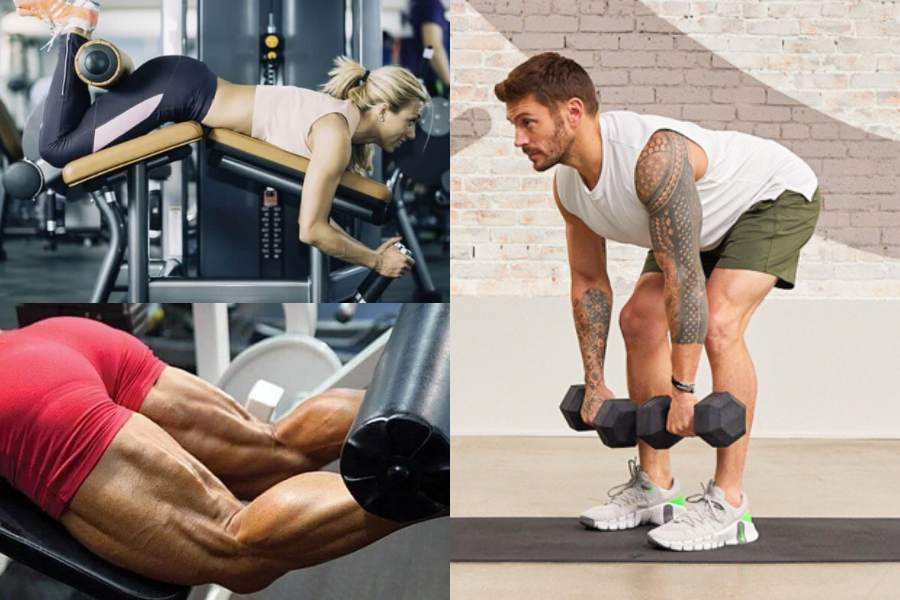
- A hip hinge movement, such as Romanian deadlifts, stiff leg deadlifts, or good mornings
- A knee flexion movement, such as a leg curl or banded curl
Including both patterns across your week gives you more complete results than repeating one exercise over and over.
Start with modest volume
The hamstrings have a relatively low tolerance for high training volume, especially when you are just starting. For beginners, it usually works best to:
- Perform only one direct hamstring exercise per session
- Rotate through 2 or 3 different hamstring exercises per week, with at least one hip hinge and one curl variation
Aim for 2 or 3 hamstring sessions each week. This frequency is typically enough to see progress while staying between your minimum effective volume and your maximum recoverable volume. Pay attention to how sore you feel 24 to 48 hours later and adjust the number of sets up or down if soreness is extreme or lingers too long.
Use a full range of motion
Technique matters as much as the exercise you choose. A full, controlled range of motion helps your muscles grow and protects against injury.
For hip hinges:
- Soften your knees, do not lock them
- Push your hips back and fold forward until you feel a clear stretch in your hamstrings, while keeping your back flat
- Return to standing by driving your hips forward, not by yanking with your lower back
For leg curls:
- Start with your knees straight, not partially bent
- Curl the weight or band slowly until your heel is as close to your glutes as you can comfortably manage
- Lower back with control, resisting the pull rather than letting it drop
Slow, intentional reps give you far more benefit than quick, short movements.
Choose beginner friendly loads and rep ranges
You do not need heavy weights to start. Research suggests beginners can train hamstrings effectively with loads between 30 percent and 85 percent of their one rep max.
A practical guideline:
- Hip hinge exercises: 5 to 10 reps per set, since your posture muscles fatigue quickly
- Leg curl variations: 10 to 30 reps per set, with a sweet spot around 10 to 20 for most beginners
Select a weight where you could maybe do one or two more reps at the end of the set, but no more. Over time, aim to add a bit of weight, an extra rep, or an additional set to keep progressing.
Warm up your hamstrings the right way
A good warm up for your hamstring workout for beginners will loosen tight tissue, activate the muscles, and prepare your nervous system for harder work. That means more than a few quick toe touches.
Focus on three pieces: dynamic mobility, light activation, and gentle nervous system priming.
Dynamic mobility
Use dynamic, moving stretches before you train:
- Hamstring sweeps, where you straighten one leg in front of you with the heel on the ground and sweep your hands toward your toes as you step
- Alternating high kicks, keeping your leg straight and kicking up in front of you to a comfortable height
- Single leg Romanian deadlift walk, hinging forward on one leg while reaching your opposite hand toward the floor, then stepping forward
These moves lengthen your hamstrings while they are moving, which better reflects what happens when you lift or run.
Activation and band work
To wake up the hamstrings, try eccentric and concentric band exercises:
- Anchor a resistance band behind you at ankle height
- Loop it around one ankle and face away from the anchor
- Curl your heel toward your glutes for 2 sets of 6 to 10 slow and controlled reps per leg
This full range band curl is a gentle way to remind your hamstrings how to contract and lengthen.
Foam rolling as a complement
Foam rolling your hamstrings for 3 to 5 minutes can increase blood flow and flexibility. Focus on tight or tender spots for about 30 seconds each and keep breathing steadily.
Rolling works best when you pair it with the dynamic stretches and activation above, rather than relying on it alone. You can also repeat a shorter foam rolling session after your workout to reduce soreness.
Simple hamstring workout for beginners
You can build an effective beginner routine with just a few moves. Here is a sample 2 day plan you can repeat each week. Rest at least one day between these sessions.
Check with your doctor or a qualified professional before starting any new exercise program, especially if you have a history of lower back, hip, or knee injuries.
Day 1: Hinge plus curl
-
Warm up
5 to 8 minutes of light cardio, such as brisk walking or cycling, followed by dynamic hamstring sweeps and alternating high kicks. -
Single leg Romanian deadlift
The Single leg Romanian deadlift is a beginner friendly way to strengthen your hamstrings and challenge your balance at the same time.
-
Hold a light dumbbell in the hand opposite the working leg, or use just your bodyweight
-
Stand tall, then hinge at the hips while lifting your back leg behind you
-
Lower until you feel a stretch in the hamstrings of the standing leg, keeping your back straight
-
Return to standing by driving your hips forward
Start with 2 sets of 10 reps per leg, resting 30 seconds between sets, as recommended for beginners in the 2026 Muscle & Fitness guide.
- Physio ball leg curl
This exercise targets the knee flexion role of the hamstrings and also engages your glutes and core.
-
Lie on your back with your heels on top of a physio ball
-
Lift your hips so your body forms a straight line from shoulders to heels
-
Bend your knees and roll the ball toward your hips, squeezing your hamstrings
-
Slowly extend your legs to roll the ball back out
Perform 2 sets of 10 reps with 30 seconds rest between sets.
- Cool down and stretch
Finish with 3 to 5 minutes of gentle walking and static stretches such as the supine hamstring stretch or a seated hamstring stretch, holding each position for 20 to 30 seconds.
Day 2: Bridge plus curl
-
Warm up
Repeat the same warm up as Day 1 or swap in single leg Romanian deadlift walks and hamstring sweeps. -
Physio ball bridge
This move strengthens your hamstrings and glutes together.
-
Lie on your back with your heels on a physio ball, knees slightly bent
-
Press your heels into the ball and lift your hips until your body is in a straight line
-
Pause for 1 or 2 seconds while squeezing your glutes and hamstrings
-
Lower your hips with control
Do 2 sets of 10 reps, resting 30 seconds between sets.
- Banded hamstring curl or slider curl
If you do not have a ball, you can use a resistance band or furniture sliders. Banded curls mimic a leg curl machine and add resistance as you bend your knees, which increases time under tension.
-
For a band curl, lie face down with a band looped around your ankles and anchored behind you
-
Start with knees straight, then curl your heels toward your glutes
-
Pause briefly, then lower slowly
Aim for 2 to 3 sets of 12 to 20 slow reps. If you use sliders, lie on your back with your heels on the sliders, lift your hips, then pull your heels toward your hips and slowly slide them back out.
- Cool down and stretch
Include static stretches such as a single leg standing hamstring stretch or a standing wide leg hamstring stretch to gradually increase flexibility.
Extra exercises you can rotate in
As your confidence grows, you can rotate other beginner friendly hamstring exercises into your routine. The American Council on Exercise studied hamstring activation in several moves and highlighted kettlebell swings, Romanian deadlifts, and leg curls as some of the most effective choices for quick strengthening in young adults aged 20 to 25.
You do not need to add them all at once. Instead, think of them as options you can swap into your hinge or curl slot:
- Good mornings with a light bar or dowel for a deep hip hinge
- Glute bridges or hip thrusts to train hip extension from a shortened hamstring position
- Stability ball or prone leg curls to keep challenging knee flexion
- Bulgarian split squats and walking lunges, which target the whole posterior chain, including your hamstrings
Always keep your weekly structure simple: 1 hinge and 1 curl, each trained hard but not to the point of sloppy form.
How to avoid hamstring injuries
A careful hamstring workout for beginners should help you stay healthy, not set you up for strains. These habits will help protect your muscles as you get stronger.
Give special attention to:
- Warming up thoroughly with dynamic stretches and light activation instead of going straight into heavy sets
- Keeping your core engaged and your spine neutral during hip hinges to avoid overloading your lower back
- Progressing gradually by adjusting one variable at a time, such as weight, sets, or reps
- Resting 48 hours between hard hamstring sessions so the tissue can recover
If you notice sharp pain, a sudden pull, or a popping sensation in the back of your thigh, stop immediately. Pulled hamstrings are painful and often stem from the same imbalance between tight, short hip flexors and weaker hamstrings that is common in desk workers, as noted in Muscle & Fitness. Seek professional guidance if you suspect a strain rather than trying to train through it.
Putting it all together
To recap your beginner plan:
- Train hamstrings 2 or 3 times per week, with one direct exercise per session
- Use both hip hinge and knee flexion movements across the week
- Warm up with dynamic stretches, band activation, and optional foam rolling
- Choose controlled rep ranges, 5 to 10 for hinges and 10 to 20 for curls, using a weight you can move with good form
- Progress slowly and listen to your body, especially your knees, hips, and lower back
You do not need a full gym or complex routine to build stronger hamstrings. Start with the two day plan outlined here, stay consistent for a few weeks, and notice how walking up stairs, standing from a chair, or going for a jog begins to feel smoother and more stable.
About the Author