A strong hamstring workout with dumbbells does more than build the back of your legs. It supports your knees, protects your lower back, and improves how you walk, run, and jump. With just a pair of dumbbells and a bit of floor space, you can train your hamstrings as effectively as you would with big gym machines.
Below, you will learn how your hamstrings work, the key dumbbell exercises to target them, and sample routines you can follow today, whether you are a beginner or more advanced.
Understand your hamstrings first
Your hamstrings are a group of three muscles at the back of your upper leg: the biceps femoris, semitendinosus, and semimembranosus. Together, they bend your knees and extend your hips, which means they help you walk, run, squat, and hinge forward according to a 2021 guide from Born Tough.
When your hamstrings are weak or tight, you are more likely to deal with:
- Knee pain or instability
- Lower back discomfort
- Poor posture and weak hip drive in sports
Training them with dumbbells is an efficient way to build strength in these muscles while also engaging your glutes, quads, calves, and lower back for full lower body development.
Why choose a hamstring workout with dumbbells
A hamstring workout with dumbbells offers three big advantages: accessibility, balance, and real-world strength.
You can train almost anywhere with a set of dumbbells. You do not need a leg curl machine or full gym setup. Dumbbell movements give you more freedom of movement so you can find joint-friendly positions and adjust your stance or range of motion easily. This can reduce stress on your knees and lower back while still placing plenty of tension on the target muscles.
Dumbbells also make it easy to train one leg at a time. This unilateral work helps correct muscle imbalances, improves balance and stability, and can lower your risk of injury, especially when you include single-leg Romanian deadlifts and Bulgarian split squats.
Key form tips for safe hamstring training
Your hamstrings respond best to slow, controlled movements. Fast, jerky reps shift the load away from the muscles you are trying to work and put more stress on your joints.
Keep these cues in mind for almost every dumbbell hamstring exercise:
- Move with control, especially on the way down.
- Feel a deep, steady burn, not sharp or sudden pain.
- Start with lighter weights and gradually increase as you master technique.
If you feel discomfort in your lower back instead of your hamstrings, shorten your range of motion, reduce the weight, or check your posture in a mirror.
Dumbbell Romanian deadlift
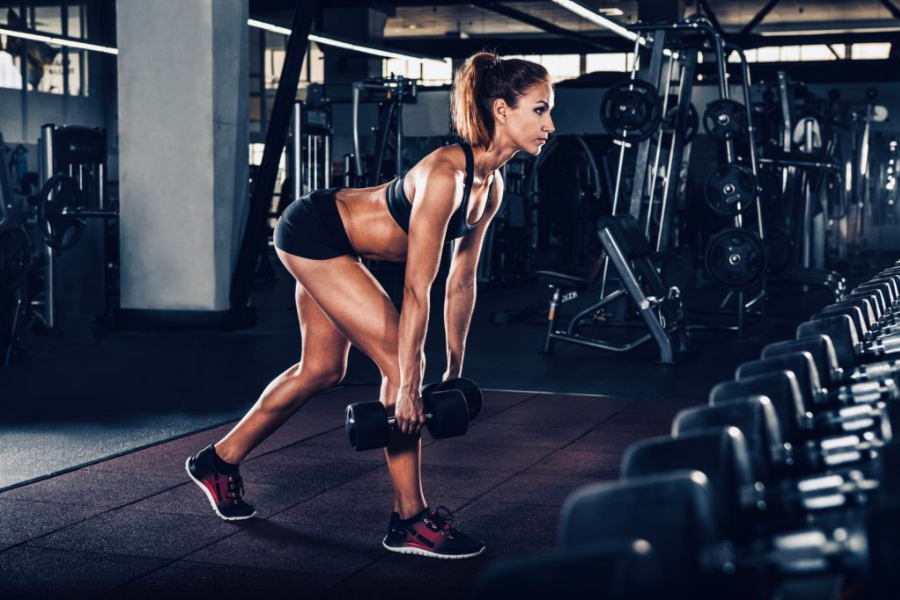
The dumbbell Romanian deadlift (RDL) is one of the best moves you can add to your hamstring workout with dumbbells. It targets the hamstrings through a hip hinge pattern and also hits your glutes and lower back.
How to do the dumbbell RDL
- Stand tall with a dumbbell in each hand, arms straight, palms facing your legs.
- Soften your knees slightly and keep them in that position.
- Push your hips back, as if you are closing a car door with your glutes.
- Keep your spine long and neutral as you slide the dumbbells down the front of your legs.
- Stop when you feel a strong stretch in your hamstrings, usually just below the knees or mid shin.
- Drive through your heels and extend your hips to stand back up, keeping the dumbbells close to your legs.
Common mistakes include rounding your back, bending your knees too much like a squat, or letting the dumbbells drift far from your legs. A slight knee bend with a strong hip hinge keeps tension where you want it and reduces pressure on the spine.
Using this pattern can achieve high activation in the hamstrings and glutes while reducing spinal loading compared to stiff-leg deadlifts.
For strength, you can perform 4 sets of 6 to 8 reps as recommended in several training guides, and consider wrist straps if your grip gives out before your hamstrings do. This lets you go heavier without sacrificing technique.
Dumbbell leg curl on the floor or bench
You can mimic a machine leg curl at home by holding a dumbbell between your feet. This exercise isolates your hamstrings and also challenges your calves and knee stabilizers.
How to do the lying dumbbell leg curl
- Lie face down on a bench or on a mat on the floor.
- Place a dumbbell upright on the floor near your feet.
- Secure the handle between the arches of your feet. Squeeze your feet together so the dumbbell does not slip.
- Start with your legs straight and your toes pointed slightly down.
- Bend your knees and curl the dumbbell toward your glutes with control.
- Pause briefly at the top without letting your lower back arch.
- Slowly lower the dumbbell until your legs are almost straight again.
This move targets all three hamstring heads and also helps improve knee stability by strengthening the tendons and ligaments around the joint. Because you are holding a loose weight with your feet, move slowly and focus on control at all times.
If you feel the dumbbell slipping, reduce the weight and practice the motion until your coordination improves.
Single-leg Romanian deadlift
The single-leg RDL builds the back of each leg individually, which is ideal if you tend to favor one side when you run, jump, or climb stairs.
How to do the single-leg RDL
- Hold one dumbbell in the hand opposite the working leg.
- Stand tall with your feet hip width apart, then shift your weight onto one leg.
- Soften the standing knee.
- Hinge at the hips as you extend the free leg behind you like a counterbalance.
- Keep your back flat and let the dumbbell travel down close to your shin.
- Stop when your torso is roughly parallel to the floor or you feel a strong hamstring stretch.
- Drive through the heel of your standing leg to return to the starting position.
This exercise improves balance, coordination, and hamstring strength in the biceps femoris especially. Move slowly and use a light dumbbell until you feel stable. You can hold onto a wall or chair with your free hand if your balance needs support at first.
Bulgarian split squat for the posterior chain
While the Bulgarian split squat is often thought of as a quad exercise, a small change in your torso angle and shin position can make it a powerful hamstring and glute builder.
How to do the Bulgarian split squat with dumbbells
- Stand about two feet in front of a bench or sturdy chair.
- Place the top of one foot on the bench behind you.
- Hold a dumbbell in each hand at your sides.
- Lean your torso slightly forward and keep most of your weight in the front heel.
- Bend your front knee and lower your body straight down, keeping the front shin fairly vertical.
- Stop when your back knee is just above the floor or you feel a deep stretch in the front leg.
- Push through your front heel to return to standing.
This movement challenges the entire posterior chain, including your hamstrings and glutes, while also improving hip stability and single leg strength.
Other effective hamstring exercises with dumbbells
You can round out your hamstring workout with dumbbells using a few more staple moves that are easy to learn and scale.
Some of the most useful options include:
- Dumbbell deadlift
- Dumbbell stiff-leg deadlift
- Weighted glute bridge
- Dumbbell elevated hip thrust
- Dumbbell good morning
- Dumbbell sumo squat
- Reverse dumbbell lunge
Dumbbell stiff-leg deadlifts place your hamstrings under a large stretch and increase time under tension, which is great for muscle growth, but they may put more load on your lower back. Romanian deadlifts, which allow more knee bend, are usually a safer choice if you have a long torso or a history of back issues.
Weighted glute bridges and hip thrusts shift more of the focus to your glutes, but your hamstrings assist strongly, especially if you keep your feet slightly farther from your hips.
As a simple rule, any exercise that bends your hips while keeping a soft knee bend and that lets you feel a stretch in the back of your thigh is probably training your hamstrings.
Sample hamstring workouts with dumbbells
Once you know the movements, you can plug them into structured workouts. Here are examples for different experience levels.
Beginner routine
Use light weights that let you complete every rep with good form. Rest 60 to 90 seconds between sets.
- Dumbbell Romanian deadlift, 3 sets of 10 to 12 reps
- Lying dumbbell leg curl, 3 sets of 12 reps
- Weighted glute bridge, 3 sets of 10 reps
Focus on learning the hip hinge pattern and getting comfortable feeling tension in your hamstrings rather than your lower back.
Intermediate routine
Increase the load gradually and rest 60 to 120 seconds between sets.
- Dumbbell Romanian deadlift, 4 sets of 6 to 8 reps
- Single-leg Romanian deadlift, 3 sets of 8 reps per leg
- Bulgarian split squat, 3 sets of 8 to 10 reps per leg
- Dumbbell elevated hip thrust, 3 sets of 10 to 12 reps
This progression adds unilateral work and more volume for both your hamstrings and glutes, which is ideal for strength and muscle gain.
Advanced ideas
As you become more experienced, you can introduce tempo work and complex sets, for example:
- Slow eccentrics, such as 3 or 4 seconds on the way down in RDLs or leg curls
- Single-leg curls or single-leg RDLs to address stubborn imbalances
- Supersets, such as a set of RDLs followed directly by a glute bridge
You can also cycle between phases that focus on heavier weights and lower reps, and phases that emphasize moderate weights with higher reps and more time under tension.
Recovery, flexibility, and safety tips
Hamstrings can be slow to recover, so patience is key. A careful, controlled motion in every rep helps you avoid strains, and you should increase the weight only when the current load feels solid across all sets.
To keep your hamstrings flexible and healthy alongside strength work, you can include simple stretches like:
- Hamstring scoop drills
- Hamstring flossing movements
- Standing hamstring stretch with a flat foot
These strategies help prevent mobility limitations and support long term performance in your training.
Aim to train your hamstrings 1 to 3 times per week, depending on your overall routine and recovery. If you notice a lingering, sharp pain, reduce your training volume and check your form, or consult a professional.
Start by choosing two or three of the exercises above and build a short hamstring workout with dumbbells that you can repeat each week. As your strength and confidence grow, you can expand into the full routines and experiment with new variations.
About the Author