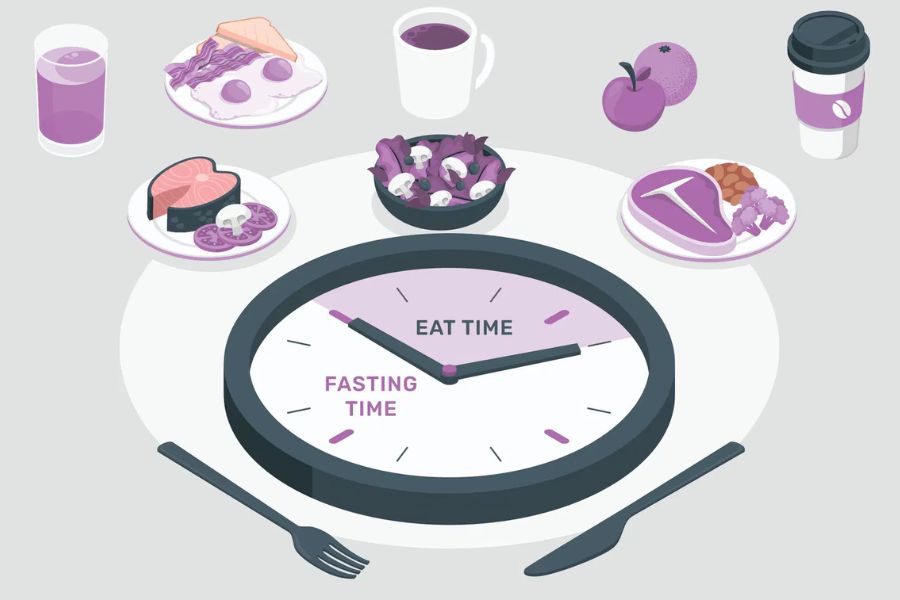
Understand intermittent fasting and your gut
If you care about both weight loss and gut health, intermittent fasting can feel appealing but also a bit mysterious. You might hear that it supports your microbiome, helps digestion, and reduces inflammation, all while making it easier to lose weight. The reality is more nuanced. Research suggests that intermittent fasting and gut health are connected, but the results are not the same for everyone and not every study finds clear benefits.
Intermittent fasting usually means you fast for a set number of hours, then eat all your meals within a shorter window. Common patterns include 16 hours of fasting with an 8 hour eating window, or fasting on some days and eating normally on others. During fasting, you generally avoid calories and stick to water, black coffee, and plain tea. Your caloric and macronutrient needs are then met in your eating window without necessarily restricting calories overall (News-Medical).
As you decide whether to try intermittent fasting for gut health, it helps to understand what is known, what is still uncertain, and how to approach it in a way that feels gentle and sustainable for your body.
How your gut microbiome responds
Your gut microbiome is the community of bacteria, fungi, and other microbes that live in your digestive tract. These microbes help digest food, make vitamins, and interact with your immune system. When you adjust your eating pattern with intermittent fasting, you also change the environment your gut microbes live in.
Microbiome diversity and fasting
Several studies have looked at how intermittent fasting affects gut microbiota diversity. A 2024 systematic review of human studies found that different types of intermittent fasting, such as time restricted eating, alternate day fasting, and the 5:2 diet, can influence the richness and diversity of your gut bacteria, although the results are not consistent across all studies (PMC).
Some key points from the review:
- In several studies, intermittent fasting increased gut microbiota richness and diversity, as measured by indices like Shannon and Simpson.
- This effect was not universal and in some groups it was small or not statistically significant.
- Changes often depended on the specific fasting approach, the population studied, and how long the intervention lasted.
Other summaries of the research note a similar pattern. Some studies show that intermittent fasting can increase microbial diversity, which is generally seen as a sign of a healthier gut, while others do not find clear benefits (Gastrointestinal Society). So if you try intermittent fasting, you may be improving gut diversity, but this is not guaranteed.
Shifts in microbial community structure
Scientists often talk about alpha diversity, which refers to how many types of microbes you have, and beta diversity, which refers to how different one community is from another. The 2024 review found that intermittent fasting significantly altered beta diversity in multiple studies, which means the overall structure of the gut microbial community shifted during fasting periods (PMC).
Interestingly, during Ramadan style fasting, where eating is limited to night hours, the gut microbiome tended to shift during the fasting month and then move back toward the original baseline after fasting ended (PMC). This suggests that your gut microbes are adaptable and that some changes from fasting may be reversible if you return to your previous eating pattern.
Specific bacteria that may change
When you fast, you change the timing and sometimes the type of food reaching your gut microbes. This can favor some bacteria over others. The 2024 review reported that certain groups of bacteria often increased with intermittent fasting, including:
- Proteobacteria at the phylum level
- Gammaproteobacteria at the class level
- Clostridiales at the order level
- Faecalibacterium at the genus level
At the same time, other groups such as Negativicutes, Selenomonadales, and Veillonellaceae often decreased (PMC).
Beyond this review, other sources note that intermittent fasting may promote beneficial anaerobic bacteria like the Lachnospiraceae family, which participate in butyrygenesis, a process that produces butyrate, a short chain fatty acid linked with positive metabolic and potential anti aging effects (News-Medical).
While these shifts sound promising, it is important to remember that the findings are not identical in every study, and you cannot predict exactly how your own microbiome will respond.
Gut rest, digestion, and the MMC
Beyond microbiome diversity, intermittent fasting can also influence how your gut moves and rests between meals, which may affect how you feel day to day.
What the migrating motor complex does
When you are not eating, your gut activates a pattern called the migrating motor complex, or MMC. The MMC is a series of electrical waves that move through your small intestine during fasting. Its job is to sweep leftover food and bacteria along the digestive tract. This helps prevent constipation and reduces bacterial overgrowth in the small intestine by limiting the movement of bacteria from the large intestine upward (Gastrointestinal Society).
If you snack frequently throughout the day and evening, the MMC has less chance to do this housekeeping work. With intermittent fasting, longer breaks between meals give this pattern more time to operate, which may help you:
- Feel less bloated between meals
- Experience more regular bowel movements
- Reduce the risk of small intestinal bacterial overgrowth in some cases
How fasting can improve digestive comfort
For some people, intermittent fasting can improve digestive symptoms. Part of this effect may not be from fasting itself, but from the habits that often come with it. When you narrow your eating window, you may:
- Eat more structured meals instead of constant grazing
- Reduce late night snacking on ultra processed foods
- Pay more attention to how certain foods make you feel
The Gastrointestinal Society notes that intermittent fasting may improve digestive function and reduce symptoms in some individuals, in part by promoting satiety with more balanced meals, reducing snacking on gut irritants, and allowing the MMC to function more effectively (Gastrointestinal Society).
You may notice that when your meals are more intentional and less rushed, your digestion feels calmer overall.
Weight loss, diet quality, and your microbiome
If you are exploring intermittent fasting gut health benefits, you are likely also interested in weight loss or metabolic health. Many studies find that intermittent fasting can lead to weight and BMI reductions, but those same changes also influence your gut microbiota, which makes it harder to separate the effect of fasting itself from the effect of eating differently.
How weight loss and food choices matter
The 2024 systematic review highlighted that in many intermittent fasting studies, weight loss occurred and dietary intake was not always tracked in detail. This makes it difficult for researchers to say how much of the microbiome shift was caused by fasting as a pattern versus reduced energy intake and different foods (PMC).
This is important for you, because it suggests that:
- Improving your diet quality may benefit your microbiome even without fasting
- Fasting that leads to better food choices could be especially helpful
- Extreme fasting without attention to nutrition may not support your gut in the long run
Some experts suggest that intermittent fasting may decrease the absorption of bacterial endotoxins that contribute to insulin resistance and metabolic issues. There are also reports that fasting can improve energy metabolism through gut related pathways (Dr. Will Cole). These findings are encouraging, but more high quality research is needed before you can rely on fasting as a stand alone metabolic fix.
Appetite, snacking, and late night eating
Intermittent fasting often reduces the window when you are likely to snack on calorie dense, low nutrient foods at night. Registered dietitians note that the 16/8 method, where you fast for 16 hours and eat for 8, can be especially practical. It naturally limits nighttime snacking that tends to spike blood sugar and can upset digestion (Cleveland Clinic).
If your eating window ends earlier in the evening, you also give your gut more time to digest before sleep. Combining that with a higher protein, higher fiber dinner can help you feel satisfied, keep blood sugar steadier overnight, and potentially support better gut comfort (Cleveland Clinic).
Potential anti inflammatory effects in the gut
Chronic, low grade inflammation often involves the gut, and it is closely tied to metabolic health and immune balance. Intermittent fasting may play a role in calming some of that inflammation for certain people.
Inflammatory markers and gut conditions
According to functional medicine discussions that summarize existing studies, intermittent fasting may lower inflammatory markers such as IL 6 and CRP and may reduce gut specific inflammation in conditions like Crohn disease and ulcerative colitis, though the evidence is not uniform and more research is needed (Dr. Will Cole).
There are also reports that intermittent fasting can reduce inflammation and improve conditions like irritable bowel syndrome in some individuals (Cleveland Clinic). This could be related to:
- Better blood sugar control and less oxidative stress
- Reduced intake of processed trigger foods
- Microbiome shifts that favor bacteria associated with a lower inflammatory profile
However, these improvements are not guaranteed, and not everyone with IBS or inflammatory bowel disease will respond positively to fasting.
Autophagy and gut cell health
When you fast for long enough, your body increases a process called autophagy. Autophagy is like cellular housekeeping. It helps clear out damaged cell components, including in your gut lining. Some practitioners argue that giving your gut a break via intermittent fasting supports this cellular cleanup, which in turn may improve the health of your intestinal barrier (Dr. Will Cole).
Although the concept is compelling, autophagy is complex and difficult to measure directly in humans. You can think of fasting as one possible tool that may support cellular resilience, not as a cure all that replaces other aspects of a gut friendly lifestyle.
Who should be careful with fasting for gut health
While intermittent fasting can support gut health for some, it can also trigger or worsen symptoms for others, especially if you already have a sensitive digestive system or a chronic gut condition.
IBS and large meal discomfort
If you live with irritable bowel syndrome, a common problem with intermittent fasting is the size of meals. When you go many hours without eating, you are more likely to eat larger meals in your eating window. This sudden intake of a bigger volume of food can provoke IBS symptoms like:
- Abdominal pain
- Bloating
- Gas
- Urgency
The Gastrointestinal Society notes that intermittent fasting may pose risks for people with IBS for exactly this reason (Gastrointestinal Society). If you find that large meals are a personal trigger, a strict 16/8 or 5:2 approach might not be the best fit. A gentler pattern that emphasizes smaller, regular meals and less snacking at night could work better.
IBD and risk of malnutrition
If you have inflammatory bowel disease, such as Crohn disease or ulcerative colitis, your path is more complex. Research on intermittent fasting and IBD is mixed. Some studies suggest that fasting might worsen symptoms, while others hint at possible improvement (Gastrointestinal Society).
Key priorities with IBD are:
- Meeting your nutrition needs
- Preventing or addressing malnutrition
- Reducing inflammation
- Supporting mucosal healing
If fasting makes it difficult to get enough calories, protein, vitamins, and minerals, or if it aggravates your symptoms, then it may not be appropriate. In remission, any fasting plan should be designed very carefully with your care team. During a flare, it is especially important not to restrict intake without clear medical guidance.
When to talk with a professional first
You should talk with a healthcare professional before starting intermittent fasting if you:
- Have a history of an eating disorder or disordered eating
- Have significant IBS or IBD symptoms
- Are underweight or have trouble maintaining your weight
- Take medications that must be taken with food at specific times
- Have chronic conditions like diabetes that involve blood sugar management
A dietitian or clinician familiar with intermittent fasting can help tailor an approach that respects both your gut and overall health.
How to try intermittent fasting gently
If you feel curious about intermittent fasting for gut health and your medical team has not identified any clear reasons to avoid it, you can experiment gradually. The goal is to find a pattern that feels sustainable and kind to your body instead of forcing a rigid schedule.
Step 1: Start with your nighttime fast
Instead of jumping directly into a 16/8 schedule, begin by looking at your current overnight fast. You might already go 10 to 12 hours without eating from after dinner until breakfast.
To extend your overnight fast gently, you could:
- Stop eating 2 to 3 hours before bed
- Avoid late night snacks that keep digestion active
- Aim for a consistent overnight fast of 12 hours at first
This simple change gives your gut more time for the MMC and may already help with digestion and sleep.
Step 2: Move slowly toward a 14 to 16 hour fast
Some practitioners suggest that at least 12 hours of fasting per day is a good starting point for gut rest, and that 14 to 16 hours can offer more noticeable benefits in many people (Dr. Will Cole). If you feel comfortable with 12 hours, you can try extending by 30 to 60 minutes at a time, once or twice a week.
For example:
- Week 1: 12 hours, such as 8 pm to 8 am
- Week 2: 12.5 to 13 hours, such as 8 pm to 8:30 or 9 am on some days
- Week 3: 13.5 to 14 hours, adjusting your breakfast and dinner timing gradually
Pay attention to your energy, mood, bowel movements, and any digestive symptoms as you go. If you feel worse, pause and consider whether a shorter fast works better for you.
Step 3: Structure your eating window
Once you reach a pattern like 14/10 or 16/8, how you eat during the eating window becomes critical for gut health.
You can support your microbiome and digestion by:
- Including fiber rich plant foods like vegetables, fruits that you tolerate, legumes, nuts, seeds, and whole grains
- Eating sufficient protein at each meal to maintain muscle and support satiety
- Choosing healthy fats from sources like olive oil, avocado, nuts, and seeds
- Limiting ultra processed foods that are high in sugar and low in fiber
Since your eating window is shorter, focus on two or three balanced meals rather than one very large meal. This can be easier on your gut, especially if you are prone to bloating.
Step 4: Protect hydration and electrolytes
During your fasting hours, you can and should drink fluids. Sipping water throughout the day supports digestion and helps prevent constipation. You can usually include:
- Water
- Herbal tea
- Black coffee or plain tea without sugar or cream
If you are fasting for longer periods or live in a hot climate, consider talking with your healthcare provider about whether an electrolyte drink without sugar or calories is appropriate, so that you stay hydrated while respecting your fasting schedule.
Step 5: Adjust around movement and stress
Your gut is sensitive not just to food, but also to stress and physical activity. To make intermittent fasting easier on your system:
- Try to schedule intense workouts in your eating window or close to a meal
- Use lighter movement like walking or stretching during fasting hours if you feel low energy
- Weave in stress reducing practices like deep breathing, gentle yoga, or time outside
Remember that intermittent fasting works best as part of a broader gut healthy lifestyle that includes supportive nutrition, sleep, and stress management, not in isolation (News-Medical).
Signs your gut might like intermittent fasting
As you experiment, it helps to track how you feel instead of just focusing on the clock. Keeping a simple journal for a few weeks can reveal whether intermittent fasting is working for you.
You can note:
- Bowel habits: Are you more regular, or do you notice constipation or loose stools
- Bloating: Does it improve on fasting days, or do larger meals increase discomfort
- Energy and focus: Do you feel more clearheaded, or do you feel lightheaded and irritable
- Cravings and appetite: Do you snack less mindlessly, or do you feel overly restricted
- Sleep quality: Does ending eating earlier help you sleep more deeply
If you see gradual improvements in digestion, appetite control, and energy, intermittent fasting may be a helpful tool for you. If you feel consistently worse, you may do better with a more traditional eating pattern that still emphasizes gut friendly foods and regular meal timing.
Putting it all together
Intermittent fasting and gut health are connected in many ways, from microbiome diversity to the way your gut moves and rests between meals. Research to date suggests that:
- Intermittent fasting can change the composition and diversity of your gut microbiota, although results vary and are sometimes inconsistent (PMC).
- Periods without food allow the migrating motor complex to sweep your gut, which may reduce bloating and support regularity (Gastrointestinal Society).
- Fasting patterns that reduce late night eating and encourage more intentional meals can indirectly support gut and metabolic health (Cleveland Clinic).
- Inflammation and metabolic markers may improve in some people, and mechanisms like autophagy and changes in gut barrier health might play a role, although more research is needed (Dr. Will Cole).
At the same time, intermittent fasting is not right for everyone, especially if you have IBS, IBD, a history of disordered eating, or complex medical needs. The most important thing is to listen closely to your body and to treat intermittent fasting as one possible tool among many for supporting your weight and gut health.
You can begin simply by extending your overnight fast to 12 hours, noticing how your gut responds, and then deciding whether you want to go further. With a gradual approach, supportive nutrition, and guidance from your healthcare team when needed, you can explore intermittent fasting in a way that feels aligned with your health and your life.
About the Author