Start with the basics
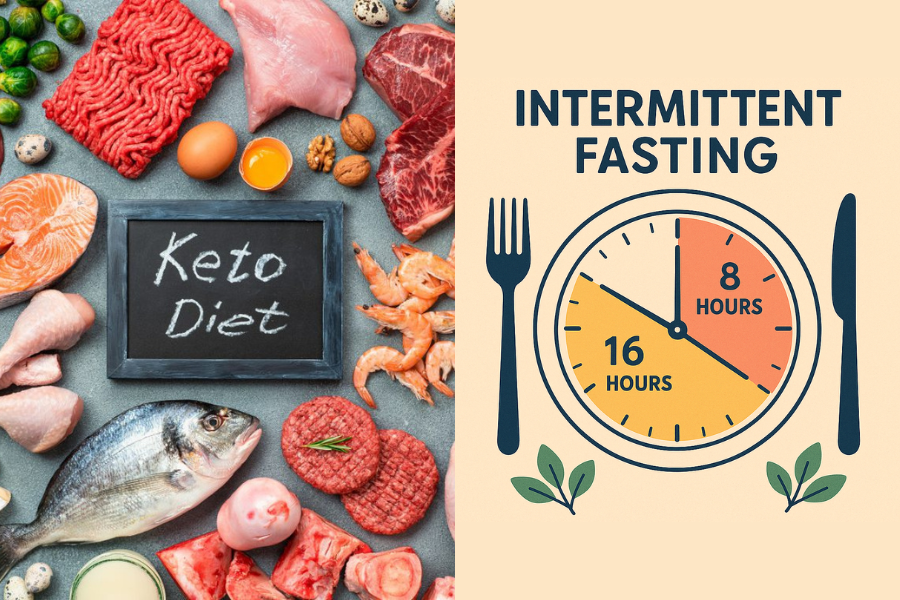
When you compare keto vs intermittent fasting, you are really asking two questions: how do you want to lose weight, and what kind of eating pattern can you actually live with? Both approaches can help you change your body composition and metabolic health, but they work in very different ways.
Before you decide, it helps to understand what each one is, what the research actually says, and what daily life might look like for you on each plan.
What keto is and how it works
The ketogenic diet is a very low carbohydrate, high fat way of eating. You keep carbs so low that your body shifts from using glucose for fuel to using fat and ketones instead.
Key features of keto
On a typical keto diet:
- Carbs are usually limited to about 20 to 50 grams per day
- Fat becomes your primary calorie source
- Protein is moderate, not high
When carbs are this low, your body enters ketosis, a state where it burns fat for energy instead of glucose (Healthline). This shift is what attracts many people who want faster fat loss or better blood sugar control.
What the research says about keto
Research up to 2020 has found that ketogenic or very low carbohydrate diets can lead to short term improvements in:
- Body weight and BMI
- Blood pressure
- HDL cholesterol and triglycerides
- Blood sugar and insulin markers
These changes are most noticeable in the first 3 to 12 months (Cureus). After about a year, the benefits often start to fade, likely because it is hard for many people to stay strict long term.
Other findings:
- In women with PCOS, keto-style diets have improved fasting insulin, hormone balance, body weight and BMI over 6 months, although the studies are small (Cureus)
- In people with diabetes, very low carbohydrate diets have improved blood sugar control and allowed some to reduce medication, but this needs close medical supervision to avoid low blood sugar (Cureus)
Animal studies from UC Davis suggest ketogenic diets can improve muscle function, endurance, brain learning and memory, and longevity compared with low carbohydrate diets, with ketones playing a central role (UC Davis Health). These results are promising, but animal data does not always translate directly to humans.
Potential downsides of keto
Keto has real trade-offs that you should think about before you start:
- Cholesterol changes: While HDL often rises and triglycerides drop, LDL and total cholesterol can increase compared with low fat diets, which may raise cardiovascular risk for some people (Cureus)
- Nutrient gaps: Limiting fruits, whole grains and legumes can lead to vitamin, mineral and fiber deficiencies (Northwestern Medicine)
- Side effects: You may experience fatigue, irritability, constipation or “keto flu” in the early weeks (Northwestern Medicine)
- Bone and heart concerns: There is concern about weaker bones and increased blood lipids in some people, especially with high saturated fat intake (UC Davis Health, Northwestern Medicine)
Keto is also not recommended for everyone. People who are pregnant, have certain health conditions, or have a history of disordered eating should consult a doctor, and in some cases avoid keto altogether (Everyday Health, Culina Health).
What keto feels like day to day
On keto you spend more time planning your actual foods than your timing. A typical day might include:
- Eggs cooked in oil with avocado for breakfast
- A salad with chicken, cheese and olive oil for lunch
- Salmon with non starchy vegetables for dinner
- Nuts or cheese as snacks
You are watching every source of carbohydrate, including fruit, grains, starchy vegetables and most sweets. Eating out or at social events can be challenging, especially where high carb foods dominate.
What intermittent fasting is and how it works
Intermittent fasting focuses on when you eat rather than what you eat. You alternate between periods of eating and not eating.
Common intermittent fasting methods
Popular approaches include:
- 16/8 method: Eat within an 8 hour window and fast for 16 hours each day
- Time restricted eating: Any schedule where you fast at least 12 hours daily
- 5:2 diet: Eat normally 5 days a week and eat very few calories on 2 non consecutive days
- Alternate day fasting: Rotate between fasting and eating days (Healthline, Mass General Brigham)
Scientific fasting periods usually last at least 12 hours, which is long enough for your body to shift from burning glucose to burning fatty acids for energy (Mass General Brigham).
What the research says about intermittent fasting
Intermittent fasting can:
- Produce similar weight loss to continuous calorie restriction
- Help trigger metabolic changes like increased fat burning
- Potentially induce autophagy, a cellular clean up process seen mostly in animal and cell studies, which may reduce inflammation and protect healthy cells (Mass General Brigham)
However, several reviews show that intermittent fasting is not more effective than just eating fewer calories on a regular schedule. A 2019 review found that intermittent fasting led to equivalent weight loss compared with continuous calorie restriction (Culina Health). A JAMA Internal Medicine study with 100 participants also found no advantage of intermittent fasting over traditional calorie restriction after 12 months (Harvard Health).
Some shorter term studies show that intermittent fasting can help with fat loss. For example, one 8 week study in resistance trained men using a 16/8 method found about 14 percent greater fat loss compared with normal eating patterns (Healthline). Results like this are encouraging but do not guarantee the same effect for everyone.
Potential downsides of intermittent fasting
Intermittent fasting is not automatically easier or safer than other diets. Concerns include:
- Blood sugar swings: Fasting can negatively affect blood sugar regulation in some people, especially those with diabetes (Culina Health, Harvard Health)
- Adherence challenges: Some studies show high dropout rates, around 38 percent, because people find it hard to stick with fasting schedules and may overeat on non fasting days (Harvard Health)
- Unclear long term benefits: So far, intermittent fasting has not been shown to offer extra long term health benefits beyond those from losing weight in other ways (Harvard Health)
There are also safety concerns for specific groups. Experts advise that those under 18, people who are pregnant or breastfeeding, anyone with a history of disordered eating, and people with certain medical conditions should not try intermittent fasting without medical guidance (Mass General Brigham, Everyday Health).
One recent analysis presented at the American Heart Association’s 2024 sessions found that people who limited eating to an 8 hour window had a 91 percent higher risk of death from cardiovascular disease than those eating over 12 to 16 hours (Everyday Health). This is preliminary research, but it is a reminder that dramatic fasting schedules are not risk free.
What intermittent fasting feels like day to day
On intermittent fasting you spend more time thinking about the clock than the carb count. A simple 16/8 day might look like:
- Skip breakfast, or just have water, black coffee or tea
- Eat your first meal at 11 am or 12 pm
- Finish your last meal by 7 pm or 8 pm
- Fast again until the next eating window
Within your eating window, you can include fruits, vegetables, whole grains, lean proteins and healthy fats. That flexibility is part of why some people find intermittent fasting easier than restrictive diets.
Keto vs intermittent fasting: head to head
When you put keto and intermittent fasting side by side, you can see how they differ in focus and fit.
| Factor | Keto diet | Intermittent fasting |
|---|---|---|
| Main focus | What you eat, very low carb, high fat | When you eat, timed windows |
| Typical goal | Deep ketosis, faster fat burning, blood sugar control | Calorie reduction, mild ketosis during fasts, metabolic flexibility |
| What you restrict | Carbohydrates, especially grains, sugar, most fruits and starchy veggies | Eating time, not specific foods |
| Meal planning load | High, you track carbs in almost everything | Moderate, you plan around fasting windows |
| Evidence on weight loss | Good short term results, similar fat loss to other diets over time | Similar weight loss to continuous calorie restriction |
| Flexibility with social life | Lower, restaurant and party options can be limited | Higher, you can shift eating windows, but timing can still be tricky |
| Key risks | Nutrient gaps, cholesterol changes, side effects, ketoacidosis in rare cases | Blood sugar issues, over eating after fasts, possible heart risk with tight windows |
| Best suited for | People who prefer structured food rules and can limit carbs strictly | People who prefer flexible food choices but can handle longer gaps between meals |
Both approaches can raise ketone levels. Keto keeps you in nutritional ketosis more continuously. Intermittent fasting usually produces milder and more temporary ketone increases during fasting windows.
Combining keto and intermittent fasting
You might also be wondering if you should use keto and intermittent fasting together.
Why some people combine them
When you combine intermittent fasting with keto, you potentially:
- Reach ketosis faster, since fasting lowers insulin and depletes glycogen, which encourages your body to burn fat sooner (Healthline)
- Maintain higher ketone levels overall, because both diets increase ketones during different parts of the day (Everyday Health)
For some, this combination can feel more effective for fat loss and appetite control, especially in the early stages.
What the evidence says about combining them
At this point, research on the combined keto and intermittent fasting approach is limited. Experts point out that:
- The combo does not erase the known risks of either diet
- The same at risk groups largely apply to both, including people who are pregnant or have heart disease, type 2 diabetes or a history of disordered eating (Everyday Health)
- Medical supervision is strongly recommended before you attempt the combination, even if you consider yourself healthy (Everyday Health)
Experts at UC Davis note that both time restricted eating and ketogenic diets lower baseline mTOR activity and trigger ketone production, but only ketogenic diets consistently reach therapeutic ketosis levels. Fasting with a typical mixed diet tends to produce a milder effect (UC Davis Health).
How to decide what fits you
There is no universal winner in the keto vs intermittent fasting debate. The “best” choice is the one that moves you toward your goals while keeping you physically and mentally well.
Use these questions to narrow it down.
1. What is your health situation?
You should talk with your healthcare provider before starting keto, intermittent fasting, or both if you:
- Are pregnant or breastfeeding
- Have type 1 or type 2 diabetes
- Have heart disease or significant cholesterol issues
- Have a history of disordered eating
- Take medications that affect blood sugar or blood pressure
Some organizations strongly advise against these diets for certain groups without close medical support (Everyday Health, Culina Health, Mass General Brigham).
2. How do you like to eat?
Think honestly about your food preferences and routines:
- If you love fruit, whole grains and legumes, strict keto may feel frustrating
- If you dislike skipping breakfast and get shaky when you go too long without food, time restricted eating might be stressful
- If you like clear, simple rules, keto’s food lists may feel straightforward
- If you prefer flexibility, intermittent fasting might fit better, especially if you choose a gentler schedule like 12 to 14 hours of fasting
Northwestern Medicine experts note that intermittent fasting can be easier to maintain than keto for some people, because you can still eat nutrient dense foods like fruits, vegetables, whole grains and legumes (Northwestern Medicine).
3. What kind of structure can you maintain?
Ask yourself:
- Can you realistically track carbs and skip bread, pasta, sweets and many snacks most days?
- Can you handle stopping eating by a certain time and not snacking late at night?
- Do your work shifts, family meals or social life clash with strict meal timing or very low carb eating?
Studies show that adherence is a major issue. In some intermittent fasting research, more than a third of participants dropped out (Harvard Health). Keto has its own adherence problems, especially past the first year (Cureus).
If you already know that you struggle with tight rules, a very strict form of either plan is unlikely to be your best long term match.
4. Are you focusing only on speed of weight loss?
It is tempting to choose whatever promises the fastest results, but most of the evidence points to a more basic truth:
- Weight loss comes from a calorie deficit, regardless of diet label
- Keto and intermittent fasting mostly work because they make it easier for some people to eat fewer calories
Experts at Culina Health emphasize that the most effective weight loss approach is a sustainable, enjoyable way of eating that creates a calorie deficit and fits your preferences and medical needs (Culina Health).
Doctors at Northwestern Medicine and UC Davis also stress that long term lifestyle changes, including balanced nutrition and exercise, usually matter more for your health and longevity than short bursts of strict dieting (UC Davis Health, Northwestern Medicine).
Practical options you can try
If you have discussed your plans with a healthcare professional and are cleared to experiment, you have several ways to proceed.
Option 1: Gentle time restricted eating
If you are curious about intermittent fasting but want a softer start, you might:
- Begin with a 12 hour overnight fast, for example, eating from 7 am to 7 pm
- After a few weeks, if you feel well, consider shifting to 10 or 8 hour eating windows
- Focus on balanced meals that include vegetables, lean protein, healthy fats and high fiber carbs
This approach can help you reduce late night snacking and overall calories without rigid food rules. It is similar to the time restricted eating patterns that have helped lower baseline mTOR activity and improve metabolic health when combined with modest calorie restriction (UC Davis Health).
Option 2: Moderate, nutrient conscious low carb
If you like the idea of lower carbs but are not ready for full keto, you might:
- Reduce obvious sugars and refined carbs like soda, pastries and white bread
- Build meals around vegetables, lean proteins, healthy fats and some whole grains
- Aim for slow, steady progress rather than deep ketosis
This type of pattern, combined with around 10 percent calorie reduction, can support weight loss and metabolic health without the strictness of classic keto (UC Davis Health).
Option 3: Structured keto with professional support
If you and your doctor decide keto is appropriate, you can increase your chances of success by:
- Working with a registered dietitian to build nutrient dense keto meals
- Monitoring blood lipids, kidney function and other labs regularly
- Planning how and when you might transition off strict keto in the future
Remember that early rapid weight loss on keto is often water weight, not pure fat loss (Culina Health). Setting realistic expectations can help you stay grounded.
Option 4: Combining keto and intermittent fasting carefully
If both approaches appeal to you, and your healthcare team supports it, you can:
- Start with keto alone and allow your body to adapt
- Add a modest fasting window later, such as 12 to 14 hours overnight
- Check in regularly with your provider about how you feel and how your labs look
Given the higher risk profile and lack of long term data on the combo, this is not usually a first step, and it should not be something you do on your own without guidance (Everyday Health).
Bringing it all together
When you look at keto vs intermittent fasting with the research in mind, a few points stand out:
- Both can help you lose weight mainly by helping you eat fewer calories
- Neither one is clearly superior to a well planned, calorie controlled eating pattern in the long run
- Each comes with its own risks, especially for people with underlying health conditions
- Sustainability, safety and your personal preferences matter more than the name of the diet
You do not have to rush your decision. You can start with small, manageable changes, like tightening your eating window slightly or cutting back on refined carbs, and see how your body responds. If you choose to try keto, intermittent fasting or both, do it with medical input, pay attention to how you feel, and be willing to adjust.
Your best choice is the one you can imagine following not just for a few intense weeks, but as part of a calmer, healthier way of eating over time.
About the Author