Understand your lower chest
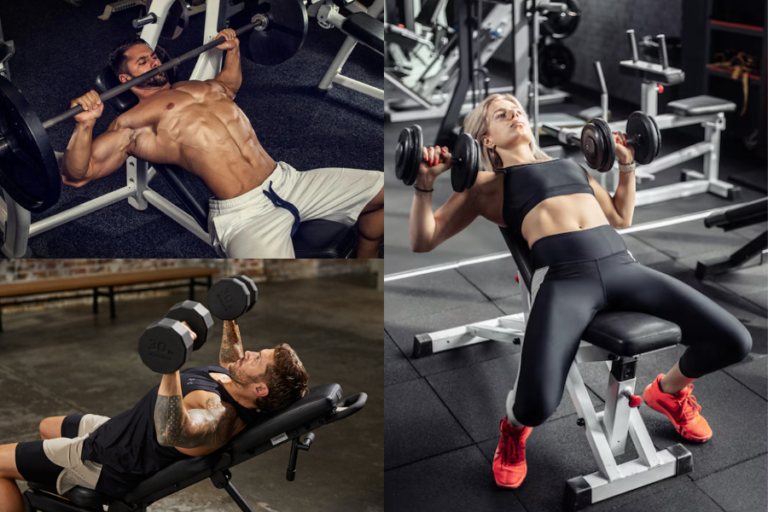
If you want better chest definition, lower chest exercises deserve a place in your routine. Your chest is not one flat slab of muscle. It has distinct regions that respond differently based on angle and movement.
The pectoralis major has two main heads:
- The sternal head, which covers the middle and lower chest
- The clavicular head, which covers the upper chest
Within the sternal head, the lower chest fibers run from the bottom of your sternum up toward your upper arm. To emphasize this area, you need exercises where your arms move down and across your body or where you push away from a decline angle.
You cannot fully isolate the lower chest, but you can shift more of the workload there with smart exercise choices and body position.
Why train your lower chest
Many lifters hammer flat and incline bench, then wonder why their chest looks flat or unbalanced. Lower chest exercises help you avoid that.
You benefit in a few key ways:
-
Better overall definition
When the lower chest is underdeveloped, your chest can look soft or incomplete, even if you have decent strength. Targeted lower chest work fills out the bottom portion and sharpens the line where your chest meets your ribcage. -
Improved symmetry and aesthetics
Focusing only on flat bench can sometimes overdevelop the mid and lower chest relative to the upper chest, which can create a sagging look sometimes called “droopy boobs.” A balanced approach, where you also pay attention to lower chest specifically, helps you control how your chest develops from top to bottom. -
More pressing strength
The lower chest supports horizontal and slightly downward pressing. A stronger lower chest can improve your performance on barbell bench, push ups, and other compound movements. -
Better shoulder health and posture
Balanced chest development supports your shoulders and may help reduce strain in pressing patterns. Training all regions, including the lower chest, reduces the odds that a weak area is forcing other muscles to compensate.
Key principles for lower chest exercises
Before you pick specific lower chest exercises, it helps to understand what makes them effective.
Train the right movement pattern
Because your lower chest fibers run from bottom to top, they work hardest when you:
- Press from a decline angle
- Drive your arms down and in across your torso
- Lean slightly forward on dips so your torso is angled and your elbows flare a bit
Decline presses, dips, and high to low cable fly variations all fit this pattern.
Use the right frequency and volume
Research and expert recommendations suggest you get good results when you:
- Train your lower chest twice per week
- Aim for 4 to 12 total sets per week focused on lower chest work
- Spread those sets over 2 to 4 exercises
This is usually enough volume to stimulate growth without overwhelming your recovery, as long as your effort is high and your form is solid.
Focus on quality of reps
For lower chest development, how you lift matters as much as what you lift.
Prioritize:
-
Full range of motion
Lower the weight until you feel a controlled stretch in the chest, not the shoulder joint, then press or pull through to a strong contraction. -
Controlled tempo
Especially on the way down, move slowly and under control. This eccentric stress is powerful for muscle growth. -
Mind muscle connection
Concentrate on your lower chest doing the work, not just moving the weight by any means possible. -
Close to failure
Most sets should end with 1 to 2 reps left in the tank. You can occasionally use advanced techniques like drop sets or rest pause, but always keep form tight.
Best lower chest exercises with weights
If you have access to a gym or a decent home setup, these lower chest exercises deserve a spot in your plan.
Decline dumbbell bench press
Decline dumbbell press is often ranked as one of the best lower chest exercises. A modest decline, usually 15 to 30 degrees, lines up the press with the direction of your lower chest fibers and reduces shoulder involvement.
How to do it
- Set a bench to a slight decline.
- Lie back with a dumbbell in each hand, palms facing forward.
- Start with arms extended above your chest.
- Lower the dumbbells in a controlled arc until they are level with, or slightly below, your chest.
- Press back up while squeezing your lower chest, not just your triceps.
Why it works
- The decline angle shifts emphasis from shoulders and upper chest to the lower chest region.
- Dumbbells allow for a greater range of motion and can help correct side to side imbalances.
- You can focus on a deep stretch and powerful contraction, which is ideal for hypertrophy.
Decline barbell bench press
If you prefer barbells, the decline barbell bench is another strong lower chest builder.
How to do it
- Lie on a decline bench and grip the bar slightly wider than shoulder width.
- Unrack the bar and hold it above your lower chest.
- Lower the bar under control to the lower part of your chest.
- Press back up to the starting position, keeping your elbows at about a 45 degree angle from your body.
Tips
- Choose a load that allows you to control the bar path.
- Avoid bouncing the bar off your chest.
- Keep your eyes fixed on a spot on the ceiling to maintain a consistent bar path.
High to low cable fly
The high to low cable fly is an isolation style movement that keeps constant tension on the chest and makes it easier to really “feel” the lower fibers working.
How to do it
- Set two cable pulleys above shoulder height.
- Stand in the middle, take a handle in each hand, and step forward into a staggered stance.
- Start with arms slightly bent and hands out to the sides at chest height.
- Sweep your hands downward and together until they meet near hip level.
- Squeeze the lower chest, then slowly return to the start position.
Why it works
- Cables provide constant tension through the entire range of motion.
- The downward sweep directly follows the line of the lower chest fibers.
- Shoulder involvement is minimized, letting you focus on the chest.
Jackhammer pushdown
The jackhammer pushdown looks similar to a triceps pushdown, but your body position shifts more load to the lower chest.
How to do it
- Attach a straight bar or rope to a high pulley.
- Stand about a step back and lean forward at roughly a 30 to 45 degree angle.
- Grip the bar with hands about shoulder width.
- Start with your elbows bent and hands near your upper chest.
- Push the bar down and slightly out, ending around your lower chest or upper abdomen.
- Control the bar back up while keeping your torso angle steady.
Why it works
- The forward lean and downward push mimic a decline press.
- This angle engages the lower chest fibers while still involving the triceps.
- It is a joint friendly option if pressing movements bother your shoulders.
Machine chest press with low grip
A chest press machine can also emphasize your lower chest if you adjust your grip and seat properly.
How to do it
- Set the seat height so the handles are level with or slightly above your chest.
- Use a low grip, with your hands closer to the lower part of the handle if possible.
- Press forward and slightly downward, not straight ahead.
- Pause briefly at full extension and focus on squeezing the chest.
- Return with a slow, controlled motion.
Benefits
- Stable path lets you focus on the muscle, not balance.
- Easier to train close to failure safely.
- The low grip and slightly downward push help direct more effort into the lower chest.
Best lower chest exercises without weights
You can still target your lower chest with minimal equipment. Push up variations and dips, when set up correctly, are very effective lower chest exercises.
Incline push up
With incline push ups, your hands are on a raised surface and your feet are on the floor. This reduces how much of your bodyweight you lift and changes the angle to favor the lower chest.
How to do it
- Place your hands on a stable surface like a bench, box, or sturdy table.
- Walk your feet back until your body forms a straight line from head to heels.
- Lower your chest toward the edge in a controlled motion.
- Push back up while focusing on squeezing your chest, especially the lower portion.
Why it helps the lower chest
- Compared to standard push ups, the incline position decreases the arm and torso angle, which better targets the lower chest fibers.
- You can usually do more reps, which is helpful if you are building endurance and muscle tone.
Pseudo planche push up
Pseudo push ups, often called planche style push ups, are more advanced and heavily engage the lower chest and front shoulders.
How to do it
- Start in a push up position.
- Walk your hands back so they are closer to your hips, below your lower chest.
- Turn your fingers slightly outward for comfort and stability.
- Lean your shoulders forward over your hands.
- Bend your elbows and lower yourself under control.
- Press back up to the start position.
Benefits
- Placing your hands near your hips shifts a lot of work to the lower chest.
- You need significant core and shoulder strength, so start with a small hand shift and progress slowly.
Dips between chairs or parallel bars
Dips are classic lower chest exercises, especially if you angle your body correctly.
How to do it
- Use parallel bars or two sturdy surfaces like chairs or dip stands.
- Support your weight on straight arms.
- Lean your torso slightly forward and allow your elbows to flare a bit.
- Lower yourself until you feel a stretch across your chest.
- Press back up while thinking about driving from your chest, not just your triceps.
Form tips
- A slight forward lean brings the lower chest into play.
- Leaning too far forward can shift emphasis back to the mid chest.
- The deeper the dip, the greater the stretch and muscle activation, but only go as deep as your shoulders tolerate comfortably.
Single bar dips with backward hands
If you have access to a straight bar, single bar dips with your hands turned backward increase internal shoulder rotation and can ramp up lower chest tension.
How to do it
- Grip the bar with your hands behind you and fingers pointing backward.
- Support your body with locked elbows and legs extended or slightly bent.
- Lean a bit forward from the hips, keeping your chest up.
- Lower down under control until you feel a strong stretch.
- Press back up, keeping your elbows flared slightly outward.
Why it is effective
- The backward hand position encourages internal rotation at the shoulder.
- Combined with a slight forward lean, this increases activation of the lower chest fibers.
Sample lower chest focused workouts
You do not need an entire day just for lower chest exercises. Instead, fold a few focused movements into your existing chest or push sessions.
Below are two sample structures, one for gym training and one for at home.
Gym based lower chest workout
Perform this twice a week with at least one rest day between sessions.
- Decline dumbbell bench press
- 3 to 4 sets of 6 to 10 reps
- High to low cable fly
- 3 sets of 10 to 15 reps
- Dips (weighted if possible)
- 3 sets of 8 to 12 reps
- Jackhammer pushdown
- 2 to 3 sets of 12 to 15 reps
Adjust weights so you reach near failure on the last 1 or 2 reps of each set while keeping form solid.
Home or minimal equipment lower chest workout
If you only have your bodyweight and basic furniture, try:
- Incline push ups
- 3 sets of 12 to 20 reps
- Dips between chairs
- 3 sets of 8 to 15 reps
- Pseudo planche push ups
- 3 sets of 6 to 10 reps (or as many as you can with good form)
- Straight bar or edge dips with backward hands (if equipment allows)
- 2 sets of 8 to 12 reps
To progress, you can slow down the lowering phase, shorten rest periods, or add a backpack with a bit of weight.
Common mistakes when training your lower chest
Even solid lower chest exercises will not work well if you fall into these traps.
Letting weight and ego lead
If you load up heavy but rely on momentum, you reduce tension on the target muscle and increase injury risk.
Try:
- Reducing weight
- Pausing briefly at the bottom of each rep
- Keeping a deliberate, even tempo
Neglecting full range of motion
Half reps might inflate numbers but not your chest. If you stop short at the bottom or top, you miss out on both the stretch and the contraction that drive growth.
Focus on:
- A gentle but noticeable stretch at the bottom
- Bringing your arms together or close enough at the top to really squeeze the lower chest
Poor mind muscle connection
If you are only thinking about getting the bar up, your shoulders and triceps can take over.
Instead:
- Visualize your lower chest fibers shortening as you press or pull.
- On fly movements, imagine hugging something wide and heavy toward your hips.
- On dips, think about pushing your body away by “closing” your chest, not just straightening your elbows.
Over focusing on one chest area
Trying to fix a weak lower chest by hammering only decline movements can backfire and create new imbalances. Your best chest definition comes from training:
- Upper chest
- Mid chest
- Lower chest
in the same overall plan, with a bit of extra attention to whichever area is lagging.
Nutrition and body fat for lower chest definition
You can do all the right lower chest exercises and still not see sharp lines if your body fat is too high. Muscle definition depends on both building muscle and reducing the fat layer that covers it.
To help your lower chest show:
- Maintain a slight calorie deficit if fat loss is your goal.
- Keep protein intake high enough to support muscle retention and growth.
- Stay consistent with training, sleep, and stress management.
You do not need to be extremely lean to notice better shape, but as body fat drops, the separation between upper, middle, and lower chest becomes more visible.
Putting it all together
To bring up your lower chest:
- Include 2 to 4 targeted lower chest exercises in your weekly plan.
- Train the area twice per week with 4 to 12 total sets focused on decline style pressing, dips, and high to low fly movements.
- Use full range of motion, a controlled tempo, and good form instead of chasing numbers.
- Support your training with nutrition that matches your goals, whether that is muscle gain, fat loss, or recomposition.
Start by adding just one or two of these lower chest exercises to your next chest day, pay close attention to how they feel, and gradually refine your routine until your lower chest looks and performs the way you want.
About the Author