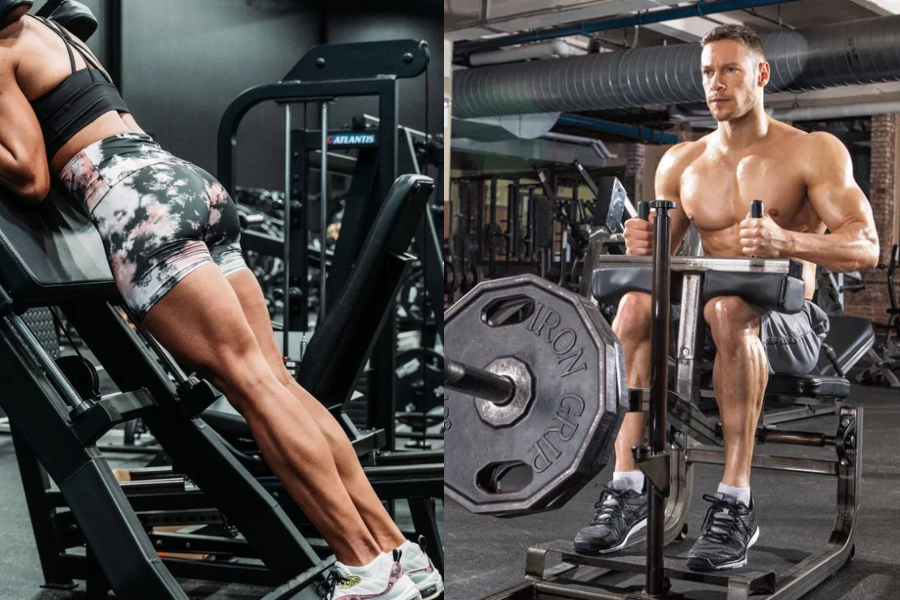
A strong lower body is about more than quads and glutes. If you want stable ankles, smoother walks, and more powerful jumps, seated calf raises should be in your routine. This simple exercise targets your soleus muscle, a deep calf muscle that supports every step you take.
You can perform seated calf raises with a machine, dumbbells, or just a sturdy chair at home. With good form and a few smart tweaks, you can build stronger, more resilient calves without needing a full gym setup.
What seated calf raises work
Seated calf raises primarily target your soleus, the smaller calf muscle that sits underneath the more visible gastrocnemius. When your knees are bent, like they are in a seated position, your gastrocnemius cannot contract as effectively. This is called active insufficiency, and it shifts more of the workload to your soleus.
The soleus might not be the showiest muscle, but it is essential. During running, it can absorb between 6.5 and 8 times your bodyweight in force, which highlights how much it contributes to walking and running performance as of 2024 in Albury, Australia. Strong soleus muscles help you:
- Maintain better posture when standing
- Reduce strain on your Achilles tendon
- Improve walking and running efficiency
- Support balance and ankle stability
Standing calf raises are great for the gastrocnemius. Seated calf raises focus on the soleus. Together, they give you more complete calf development.
How to do seated calf raises with correct form
You can perform seated calf raises at a gym machine or with a chair and weights. The basic movement is the same in both cases, and the details of your form are what make the exercise effective and safe.
Step by step with a chair or bench
- Sit tall on a sturdy chair or bench with your feet flat on the floor, hip width apart.
- Place the balls of your feet on a low block, step, or thick book so your heels can drop below your toes.
- Rest your hands or weights on your thighs, just above the knees.
- Press through the balls of your feet and lift your heels as high as possible. Focus on keeping even pressure from your big toe joint through to your little toe joint.
- Pause briefly at the top, then lower your heels slowly until you feel a stretch in your calves.
- Repeat for your desired number of repetitions.
A controlled tempo is key. A good guideline is 2 seconds to lower your heels, a 1 second pause at the bottom, 2 seconds to lift, and a 2 second stretch at the top. This reduces bouncing and keeps the tension on your calves.
Breathing and posture tips
Stay upright instead of slumping, and keep your core lightly engaged. Look straight ahead rather than down at your feet. As you lift your heels, breathe out. As you lower, breathe in. This breathing pattern helps you control the movement and avoids unnecessary strain.
If you are new to the exercise, you can start without added weight, simply pressing your hands gently into your thighs to create resistance.
Equipment options at the gym and at home
You do not need a specialized machine to benefit from seated calf raises. You have several options depending on your space and equipment.
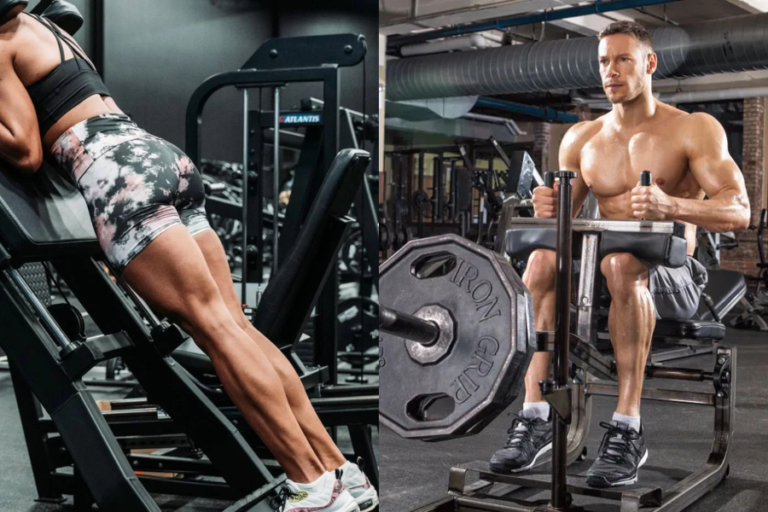
At the gym, you can use a dedicated seated calf raise machine. This usually has a padded lever that rests on your thighs and a platform for the balls of your feet. Adjust the thigh pad so it sits snugly above your knees and allows a full range of motion in your ankles.
At home, you can use:
- Dumbbells resting on your thighs
- Resistance bands looped under your feet and over your knees
- Water jugs, books, or other heavy household items placed on your thighs
The goal is simple. You want enough resistance that your calves work hard while you still control each rep.
Making the most of minimal gear
If you only have a chair and no weights, start with bodyweight and higher repetitions. You can increase difficulty by:
- Holding at the top of each rep for 2 to 3 seconds
- Slowing your tempo even more on the way down
- Performing single leg raises instead of using both legs together
As you get stronger, add external resistance so you keep progressing.
Common form mistakes to avoid
Because seated calf raises look simple, it is easy to rush through them or load too much weight. Paying attention to a few common errors will help you get better results and protect your ankles and Achilles tendons.
One frequent mistake is using too much weight. If you cannot lift your heels fully or you lose the stretch at the bottom, the load is probably too heavy. This shortens your range of motion and reduces how much your calves actually work.
Another issue is bouncing. If you drop your heels quickly and then spring back up using momentum, your tendons absorb a lot of force while your muscles do less. Over time, this can increase the risk of irritation or injury. Slow and controlled repetitions are better for both growth and safety.
Toe clawing is also common. If you find your toes curling into the floor as you lift your heels, your long toe flexors may be compensating for weak calves. Positioning your toes slightly over the edge of your step or plate can encourage more work from your calf muscles instead.
Finally, watch your heel height. If you notice your heels are not rising as high as they were at the start of the set, you are likely getting fatigued. When that happens, it is better to end the set than to keep doing partial, sloppy reps.
If you cannot control the entire movement from a deep stretch to a full heel raise, reduce the weight, slow down, and rebuild from there.
How often to do seated calf raises
Calf muscles are full of slow twitch fibers, which respond well to frequent, controlled work. For most people, performing seated calf raises two to three times per week works well, as long as you leave at least one rest day between sessions for recovery.
A balanced approach is to vary your repetition ranges across the week. You might use:
- Higher reps, around 12 to 20, for endurance and circulation
- Moderate reps, around 8 to 12, for muscle growth
- Lower reps, around 6 to 8, with slightly heavier weight for strength
Changing the rep ranges over time can help you recruit more motor units and keep your calves progressing without overloading your joints.
If your calves are very sore after a session, especially near your Achilles, give them an extra day before training them again. Mild muscle soreness is normal, but sharp pain or persistent tendon discomfort is a sign to ease back.
Progressions and variations for better results
Once you are confident with basic seated calf raises, you can adjust the exercise to keep challenging your muscles and avoid plateaus.
A simple first step is to add a pause at the top of each rep. Hold for 2 or 3 seconds while squeezing your calves. This increases time under tension and teaches you to control the end range of motion.
You can also experiment with single leg seated calf raises. In this variation, one foot is on the block while the other rests lightly on the floor for balance. You then perform your reps using only one leg at a time. This helps correct strength imbalances and makes lighter weights feel more challenging.
Toe position tweaks can slightly change how the exercise feels. Turning your toes slightly in or out shifts the emphasis across different parts of the calf. Keep the changes modest and always maintain even pressure across the forefoot.
Finally, consider pairing seated and standing calf raises within the same workout. Performing a few sets of each lets you train both the soleus and the gastrocnemius. This combination supports more complete calf strength and size, which many lifters and runners find helpful.
Seated calf raises for older adults
Seated calf raises are especially useful if you are older or dealing with balance issues. Since you are sitting, you do not have to worry about stabilizing your entire body. You can focus on the movement at your ankles and calves.
For older adults, this exercise can:
- Improve walking ability and endurance
- Boost circulation in the lower legs
- Reduce stiffness and swelling in feet and ankles
- Support better balance and stability for daily tasks
Start with both feet flat on the floor rather than on a step. Lift your heels only a small amount at first, keeping your hands resting firmly on your thighs for support. As you gain confidence, you can increase your range of motion, add a pause at the top, or gently press your hands into your thighs to add light resistance.
Progressions might include adding small dumbbells or water bottles on your thighs, or performing single leg raises when you feel steady. Combining these with standing calf raises as you get stronger can further improve your functional strength for climbing stairs, getting up from chairs, and walking longer distances.
If you have any existing foot, ankle, or lower leg conditions, consider speaking with a healthcare professional or physical therapist before increasing intensity.
Bringing it all together
Seated calf raises are a simple, versatile way to build powerful, reliable lower legs. They target your soleus, support your walking and running, and fit easily into both gym and home routines.
Start with a comfortable range of motion, move slowly, and focus on full stretches and strong squeezes rather than piling on weight. From there, you can progress by adding resistance, experimenting with single leg work, and pairing seated and standing calf raises for complete development.
With a few consistent sessions each week, you will notice stronger calves, steadier steps, and more confidence in everything from daily errands to intense workouts.
About the Author