Why a shoulder workout at home works
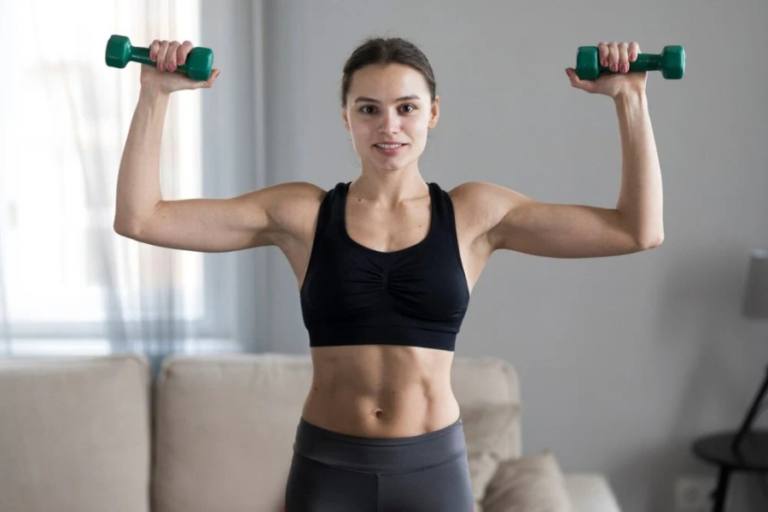
You do not need a gym full of machines to build impressive shoulders. A smart shoulder workout at home can target all three parts of your shoulder muscles, help you create a stronger looking upper body, and support better posture and daily movement.
Your shoulders are made up of three main heads:
- Anterior deltoid (front)
- Medial deltoid (side)
- Posterior deltoid (rear)
When you train all three, you work toward that rounded, 3D look and a more pronounced V taper. At the same time, stronger shoulders help with everyday tasks, from lifting groceries to reaching overhead, and can reduce your risk of injury by improving joint stability and mobility, as explained by the International Sports Sciences Association in 2023.
Below, you will find simple bodyweight options, dumbbell variations, and a beginner friendly plan you can follow at home without complicated equipment.
Understand shoulder training basics
Before you jump into a new shoulder workout at home, it helps to understand a few fundamentals: volume, rest, and progression.
Key training principles
-
Frequency
Training your shoulders about twice per week with at least 48 hours between sessions is widely recommended so your muscles have enough time to recover and grow. -
Exercise selection
For shoulder growth at home, aim for 3 to 5 exercises per workout that collectively hit the front, side, and rear delts. Combining compound presses with isolation moves, like raises and flies, creates more balanced development. -
Sets and reps
A common guideline is 3 to 4 sets of 6 to 12 reps per exercise. This rep range is often used for both strength and muscle size and is supported by research in the Journal of Strength and Conditioning Research. -
Rest between sets
Resting about 90 to 120 seconds between sets helps you recover enough to keep your performance high across the workout. -
Progressive overload
As you get stronger, you need to challenge your shoulders with either more reps, more sets, or more resistance. Multiple sources in the research emphasized gradually adding weight or difficulty once you can hit the recommended reps with solid form.
Choose your setup: no equipment or dumbbells
You can build a shoulder workout at home using only bodyweight, just dumbbells, or a mix of both. Each option has benefits, so you can choose what fits your space and current fitness level.
Option 1: Bodyweight shoulder training
Bodyweight shoulder exercises are convenient, flexible, and travel friendly. They help you improve joint stability, functional strength, and core engagement without needing any equipment. Common movements include Pike Push ups, Handstand Push ups, Wall Walks, and variations of planks and crawls.
Because your shoulders are relatively small muscles, bodyweight work can be surprisingly challenging if you use the right angles and progressions.
Option 2: Dumbbell focused shoulder training
If you have a pair of dumbbells, your options open up even more. Research cited from journals like Medicine & Science in Sports & Exercise suggests that dumbbells:
- Allow a greater range of motion than many machines or barbells
- Require more stabilization
- Make unilateral training easier, so you can address left right imbalances
Classic dumbbell shoulder exercises include the overhead press, front raise, lateral raise, reverse fly, upright row, and more. With just one or two pairs of dumbbells, you can put together a complete shoulder routine at home.
Warm up before your shoulder session
Shoulders are involved in many upper body moves, and they can be prone to irritation if you skip your warm up. A simple warm up increases blood flow, activates the small stabilizing muscles, and improves your range of motion so your main sets feel smoother.
Try 5 to 8 minutes of:
- Gentle arm circles, both forward and backward
- Dynamic stretches like arm swings across your chest
- Light internal and external shoulder rotations with a very light band if you have one
- A few slow, easy push ups or incline push ups
Some resources such as Fitbod recommend warm up moves like straight arm circles and prone Y’s and T’s before you start your working sets. The exact exercises matter less than getting your shoulders warm, mobile, and ready to work.
Try this bodyweight shoulder workout at home
If you have no equipment, you can still target all three heads of your shoulders using smart body positions and leverage. Below is a simple but effective routine built largely from moves highlighted in the research.
Aim to complete this workout 1 to 2 times per week with at least 48 hours between shoulder sessions.
1. Pike push ups
Targets: Front and side delts, triceps, upper back, core
The Pike Push up is a key bodyweight exercise that mimics the overhead pressing movement you would do with weights.
How to do it:
- Start in a downward dog or upside down V shape, hands on the floor, hips lifted high.
- Keep your legs straight or slightly bent and your back flat.
- Bend your elbows, lowering the top of your head toward the floor between your hands.
- Press back up, focusing on pushing through your shoulders, not just your arms.
Sets and reps:
- 3 to 4 sets of 8 to 12 reps
- Rest 90 seconds between sets
Easier variations:
- Bend your knees and shift some weight back toward your feet
- Elevate your hands on a sturdy bench or low table
Harder variations:
- Elevate your feet on a chair or couch
- Progress toward Handstand Push ups over time, which are also recommended in many bodyweight shoulder routines.
2. Bodyweight lateral raises against a wall
Targets: Side delts
You can simulate lateral raises without dumbbells by using gravity and your body position.
How to do it:
- Stand sideways to a wall, arm closest to the wall straight at your side.
- Lean your body toward the wall and place your forearm or hand against it.
- Use your shoulder to push your body away from the wall, as if lifting your arm out to the side.
- Control the movement back toward the wall.
Sets and reps:
- 3 to 4 sets of 10 to 15 reps each side
- Rest 60 to 90 seconds between sets
Progressions:
- Start with a slight lean.
- Gradually increase the lean over time to load your side delts with more bodyweight.
3. Rear delt rows using a doorway or sheet
Targets: Rear delts, upper back
Rear delt rows help balance all the pressing in many shoulder workouts by strengthening the back of your shoulders. Some guides suggest using a bedsheet anchored in a closed door.
How to do it:
- Anchor a sturdy sheet or strap in a door that fully closes, or grab both sides of a narrow doorway.
- Lean back with your arms straight and your body in a straight line from head to heels.
- Pull your chest toward the door, keeping your elbows at about shoulder height so you emphasize the rear delts rather than the lats.
- Lower back to the starting position under control.
Sets and reps:
- 3 sets of 10 to 15 reps
- Rest 60 to 90 seconds between sets
To make it harder:
- Move your feet closer to the door so your body is more horizontal.
4. Rear delt holds or reverse flies
Targets: Rear delts, upper back stabilizers
If you do not have weights, you can still challenge your rear delts with isometric holds and small, controlled movements.
Option A: Rear delt hold with external rotation
- Hinge forward slightly at the hips, arms bent 90 degrees by your sides.
- Pull your elbows up to shoulder height.
- Rotate your forearms outward, as if opening up your chest.
- Hold this position for 15 to 30 seconds.
Option B: Reverse fly style movement
- Hinge forward until your torso is at about 45 degrees.
- With straight or slightly bent arms, lift your arms out to the side, squeezing your shoulder blades together.
- Lower slowly.
Sets and reps or time:
- 3 sets of 12 to 15 reps or 20 to 30 second holds
- Rest 60 seconds between sets
Sample bodyweight shoulder workout structure
Here is how you could put those moves together in one shoulder workout at home:
- Pike Push ups: 3 to 4 sets of 8 to 12 reps
- Bodyweight lateral raises: 3 to 4 sets of 10 to 15 reps per side
- Rear delt rows: 3 sets of 10 to 15 reps
- Rear delt holds or reverse flies: 3 sets of 12 to 15 reps or 20 to 30 seconds
Take about 60 to 120 seconds rest between sets, and focus on moving with control rather than rushing.
Build a dumbbell shoulder workout at home
If you have a pair of dumbbells, you can create even more variety. Many sources in the research note that dumbbells are ideal for home shoulder training because they:
- Offer a greater range of motion
- Encourage stabilization
- Allow you to train one side at a time
Below is a sample dumbbell based shoulder routine that you can adapt to your strength level.
1. Dumbbell overhead press
Targets: Front and side delts, triceps, upper traps, core
The standing shoulder press is a fundamental movement for building strength and size.
How to do it:
- Stand tall with feet about shoulder width apart.
- Hold dumbbells at shoulder height, palms facing forward or slightly inward.
- Brace your core.
- Press the dumbbells straight up until your arms are almost fully extended.
- Lower back down with control.
Sets and reps:
- 3 to 4 sets of 8 to 12 reps
- Rest 90 to 120 seconds between sets
2. Dumbbell lateral raise
Targets: Side delts
Lateral raises add width to your shoulders and are a staple in almost every shoulder workout.
How to do it:
- Stand with a dumbbell in each hand, arms at your sides, palms facing in.
- With a slight bend in your elbows, lift the dumbbells out to the sides until they are about shoulder height.
- Pause briefly, then lower slowly.
Sets and reps:
- 3 sets of 10 to 15 reps
- Rest 60 to 90 seconds between sets
Use lighter weight so your traps do not take over. If you find yourself shrugging, reduce the load.
3. Dumbbell front raise
Targets: Front delts
Front raises focus the work on the front of your shoulders.
How to do it:
- Stand with dumbbells in front of your thighs, palms facing your legs.
- Raise one or both dumbbells to shoulder height in front of you.
- Lower under control.
Sets and reps:
- 3 sets of 10 to 12 reps
- Rest 60 to 90 seconds
You can alternate arms or lift both at once, depending on your comfort and control.
4. Dumbbell reverse fly
Targets: Rear delts, upper back
Reverse flies help strengthen the commonly neglected back of the shoulder.
How to do it:
- Hinge forward at the hips until your torso is almost parallel to the floor, keeping a flat back.
- With dumbbells hanging down and a slight bend in your elbows, raise your arms out to the sides.
- Squeeze your shoulder blades together at the top, then lower slowly.
Sets and reps:
- 3 sets of 10 to 15 reps
- Rest 60 to 90 seconds
5. Optional: Dumbbell upright row
Targets: Traps and side delts
If your shoulders feel healthy with this movement, you can include it occasionally.
How to do it:
- Stand with dumbbells in front of your thighs, palms facing your body.
- Pull the dumbbells up along your torso, keeping them close to your body, until your elbows are around chest height.
- Lower under control.
Sets and reps:
- 2 to 3 sets of 8 to 12 reps
- Rest 60 to 90 seconds
Skip upright rows if you notice any pinching or discomfort at the front of your shoulders.
Sample dumbbell shoulder workout
Here is one way to structure a dumbbell shoulder workout at home:
- Dumbbell Overhead Press: 3 to 4 sets of 8 to 12 reps
- Dumbbell Lateral Raise: 3 sets of 10 to 15 reps
- Dumbbell Front Raise: 3 sets of 10 to 12 reps
- Dumbbell Reverse Fly: 3 sets of 10 to 15 reps
- Optional Dumbbell Upright Row: 2 to 3 sets of 8 to 12 reps
Start on the lower end of sets and volume if you are a beginner, and build up as your shoulders adapt.
Progress your at home shoulder workouts safely
Whichever version of a shoulder workout at home you choose, progression is what drives results. At the same time, shoulders respond best to steady, controlled increases, not sudden jumps in volume or intensity.
Ways to progress
You can progress your at home shoulder training by adjusting:
- Reps: Add 1 or 2 reps per set when you can complete all your sets with solid form.
- Sets: Increase from 2 to 3 sets, then 3 to 4 as you get stronger.
- Load: If you are using dumbbells, move up to the next weight once you can do the top end of your rep range easily.
- Leverage: For bodyweight moves, shift from easier angles to harder ones, for example, from regular Pike Push ups to feet elevated Pike Push ups.
- Tempo: Slow down the lowering portion of each rep to increase time under tension.
Many beginner oriented plans, such as those shared by Muscle & Strength and ONNIT Foundations coaches, emphasize starting with manageable loads, mastering form, and then slowly adding weight or difficulty to avoid injury.
Signs your shoulders need more recovery
More is not always better. Since the shoulder joint is involved in many upper body and even some lower body movements, it is easy to overwork it without realizing.
Scale back or add extra rest if you notice:
- Persistent soreness that does not fade after a few days
- Sharp or pinching pain during or after exercises
- Reduced strength or range of motion from session to session
- Trouble sleeping due to shoulder discomfort
Most research suggests waiting at least 48 hours between intense shoulder workouts to give the muscles and connective tissues enough time to recover, which lines up with guidelines published in Muscle & Nerve in 2017.
Adjust your shoulder workout to your level
You can tailor your shoulder workout at home to your experience, comfort, and available time.
If you are a beginner
- Start with 2 to 3 exercises per session, for example:
- Pike Push ups
- Bodyweight lateral raises or light dumbbell lateral raises
- Rear delt rows or reverse flies
- Use 2 to 3 sets per exercise.
- Focus on slower, controlled reps and learning proper form.
- Give yourself at least 2 to 3 days between shoulder focused workouts.
If you are intermediate
- Use 3 to 5 exercises in each shoulder workout, mixing presses and raises.
- Increase to 3 to 4 sets per exercise.
- Start to experiment with more challenging progressions like elevated Pike Push ups or heavier dumbbells.
- Train shoulders up to twice per week, spacing sessions 48 to 72 hours apart.
If you are more advanced
- Use a mix of compound lifts, isolation work, and advanced bodyweight variations like Handstand Push ups or Wall Walks.
- Consider splitting your shoulder work across your week, for example:
- Day 1: Focus on front and side delts with presses and lateral raises
- Day 2: Focus on rear delts and upper back with reverse flies and rows
- Pay extra attention to warm ups and technique to protect your joints.
Key takeaways for building shoulders at home
You can absolutely build impressive shoulders with a shoulder workout at home, whether you have no equipment or just a single pair of dumbbells. The essentials are:
- Train all three heads of your shoulders: front, side, and rear delts.
- Combine a few compound movements, like Pike Push ups or overhead presses, with isolation moves such as lateral raises and reverse flies.
- Aim for 3 to 4 sets of 6 to 12 reps, and rest 90 to 120 seconds between most sets.
- Progress gradually by adding reps, sets, load, or using harder leverage positions.
- Give your shoulders at least 48 hours to recover before working them hard again.
If you are just getting started, pick one of the sample routines above and try it once this week. Once you feel confident with the movements and your recovery, you can build from there and shape your own home shoulder program around the exercises you enjoy most.
About the Author