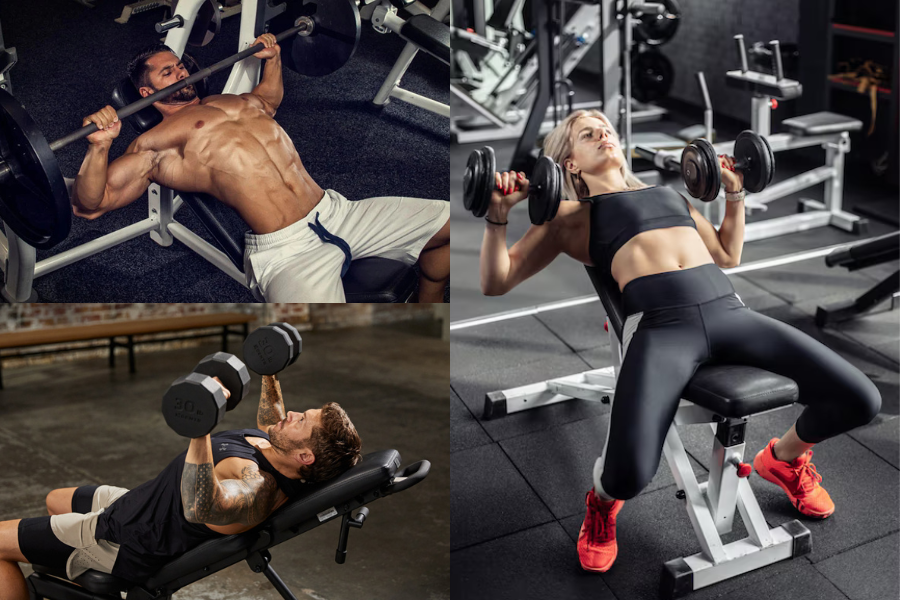
Why focus on upper chest dumbbell exercises
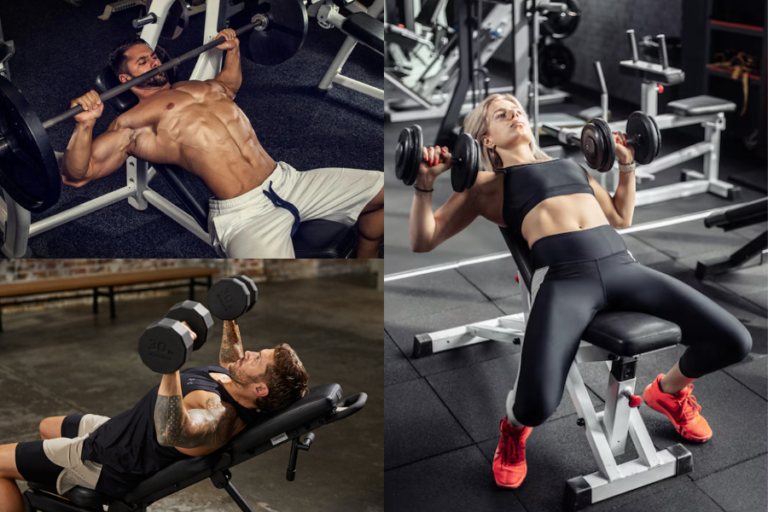
If your chest looks flat near the collarbone, upper chest dumbbell exercises can help fill out that area and give you better definition. These moves target the clavicular head of your pectoralis major, the section of chest muscle that sits high on your torso, close to the collarbone, and is often underworked in standard flat bench routines.
Using dumbbells instead of a barbell forces each arm to work on its own. This increases muscle activation, engages stabilizer muscles, and helps fix left and right strength imbalances. It also lets you move through a slightly larger range of motion, which can improve hypertrophy and definition in that hard to grow upper chest region.
In this guide, you will learn why your upper chest might be lagging and how to use simple upper chest dumbbell exercises to build a stronger, more defined chest line.
Understand your upper chest muscles
Your chest is not just one flat slab of muscle. It has different regions that respond to different angles.
The clavicular head explained
The main chest muscle, the pectoralis major, has two key parts:
- Clavicular head, the upper chest fibers that attach near your collarbone
- Sternal head, the mid to lower chest fibers that attach along your breastbone
When you do only flat bench presses or push-ups, you mainly hit the middle of your chest. The upper chest, especially the fibers near the collarbone, often needs extra attention to grow.
Why the bench angle matters
To better target the clavicular head, you need a slight incline. Research cited in a 2020 study and explained by trainer Jeremy Ethier suggests that a bench angle of about 15 to 30 degrees is optimal for upper chest activation. Higher inclines shift more of the work onto your front deltoids and away from your chest.
Benefits of training with dumbbells
Upper chest dumbbell exercises offer more than just variety. They bring specific advantages that help with growth and symmetry.
Greater muscle activation and control
Compared with barbells or machines, dumbbells often lead to greater muscle activation because each arm must stabilize and control its own weight. This:
- Engages more stabilizer muscles
- Improves coordination and control
- Encourages a stronger mind muscle connection, which is valuable for hypertrophy
Dumbbells also let you lower the weights slightly past chest level for a deeper stretch, which increases fiber engagement in the upper chest.
Better symmetry and fewer imbalances
With a barbell, your stronger side can quietly take over. With dumbbells, each side has to pull its own weight. According to guidance from Born Tough, this reduces imbalances because the stronger arm cannot compensate for the weaker one.
Over time, this helps:
- Correct uneven chest development
- Reduce injury risk
- Create a more balanced, aesthetic look
Convenience and versatility
You can do most upper chest dumbbell exercises in a small home setup or at the gym. You only need:
- An adjustable bench
- A light to moderate set of dumbbells
Dumbbells also make it easy to change intensity using techniques like drop sets or slow negatives, often without needing a spotter.
Key form tips for upper chest exercises
Before you jump into specific upper chest dumbbell exercises, it helps to understand a few technical cues that will protect your shoulders and keep tension on the chest.
Set the right bench incline
For incline presses and flyes:
- Aim for 15 to 30 degrees
- Avoid very steep angles that turn the move into more of a shoulder press
This small change in angle keeps the focus on your upper pecs instead of your front delts.
Align your arms with chest fibers
Jeremy Ethier recommends a specific arm path to improve chest stimulation:
- Keep elbows tucked about 45 to 60 degrees from your body
- Use a slightly turned in grip instead of palms straight out
- On the way down, let the dumbbells travel slightly forward toward mid chest
- On the way up, press them back over your shoulders
This path follows the direction of your chest fibers and limits extra shoulder strain.
Keep forearms vertical and chest engaged
During presses:
- Keep your forearms vertical over your elbows
- Do not let your forearms cave inward, which shifts work into your triceps
- Stop each rep with the dumbbells over your shoulders, not banging together above your chest
This keeps constant tension on the chest and maintains a safe joint position.
Shoulder and breathing safety
To protect your shoulders and avoid shifting tension away from the chest:
- Do not round your shoulders forward at the top
- Keep your shoulder blades gently pulled back and down into the bench
- Exhale as you press the dumbbells up
- Inhale as you lower them with control
If you lift heavy, a spotter should assist at the wrists, not the elbows, to prevent the weights from tipping toward your face.
Foundational upper chest dumbbell exercises
These core movements will make up the bulk of your upper chest work. Start with one or two of them per workout.
Incline dumbbell press
The incline dumbbell press is one of the best overall upper chest dumbbell exercises. It opens up the angle of tension on your clavicular head and mimics everyday pushing motions.
How to do it:
- Set a bench to 15 to 30 degrees.
- Sit with a dumbbell resting on each thigh, then lean back and bring them to chest level.
- Plant your feet flat, keep your lower back slightly arched, and retract your shoulder blades.
- With elbows about 45 to 60 degrees from your sides, press the dumbbells up over your shoulders.
- Lower them slowly until your elbows are just below bench level or until you feel a comfortable stretch.
- Press back up, stopping when the weights are directly above your shoulders, not touching together.
Suggested starting structure:
- 3 to 4 sets
- 8 to 10 reps
- Rest 60 to 90 seconds
Focus on smooth control rather than bouncing the weights.
Dumbbell incline chest fly
Incline dumbbell flyes open up the chest muscles and can improve both development and upper body mobility. They are especially helpful for reducing tightness that can contribute to back issues.
How to do it:
- Set your bench to a slight incline, again around 15 to 30 degrees.
- Start with the dumbbells above your chest, palms facing each other, slight bend in your elbows.
- Lower the dumbbells in a wide arc to the sides, keeping your elbows fixed in that slightly bent position.
- Stop when you feel a deep but comfortable stretch in your chest, not your shoulders.
- Squeeze your chest to bring the dumbbells back up, maintaining the same elbow angle.
Suggested starting structure:
- 3 sets
- 10 to 12 reps
- Light to moderate weight
Move slowly, especially in the lowering phase, to keep pressure in the chest instead of swinging through your joints.
Targeted moves for inner upper chest and definition
If you want a sharper chest line near the center of your chest and collarbone, these upper chest dumbbell exercises can help.
Upright dumbbell raise
The Upright Dumbbell Raise targets the inner upper chest and is beginner friendly. It is especially good for defining the chest line, that cut between your pecs that shows in a V neck shirt.
How to do it:
- Stand tall with feet hip width apart, holding light dumbbells by your sides.
- Turn your palms slightly inward toward your body.
- Raise the dumbbells up and slightly inward toward your upper chest or collarbone level.
- Pause briefly, then slowly lower the weights back down with control.
Form tips:
- Use light weights and focus on slow negatives.
- Do not shrug your shoulders up toward your ears.
- Keep your core tight so you do not swing your body to lift the weight.
Recommended scheme from Born Tough:
- 4 sets
- 15 reps, 12 reps, 10 reps, 10 reps
- Increase weight slightly as reps go down
Squeeze press on an incline bench
The Squeeze Press is a powerful move for both upper and mid chest, and works especially well at the start or middle of your workout.
How to do it:
- Set your bench at roughly 45 degrees.
- Hold a dumbbell in each hand and lie back on the bench.
- Press the dumbbells together so they are touching over your chest.
- Keeping them pressed together, lower them toward your upper chest.
- Press them back up without letting them separate, squeezing your chest the whole time.
Form tips:
- Think about trying to crush the dumbbells together.
- Move in a slow, controlled path.
- Keep your shoulder blades back against the bench.
Suggested scheme from Born Tough:
- 4 sets
- 12 reps, 12 reps, 10 reps, 10 reps
- Increase weight slightly if you can keep good form
This constant inward pressure increases time under tension in your chest, which helps with hypertrophy and definition.
Dumbbell crossover variations
If you do not have cables, you can still mimic a crossover feeling with dumbbells to target the inner upper chest:
- Lie on a slight incline.
- Start as you would for a fly, but at the top of the movement let one arm slightly cross over the other.
- Alternate which arm crosses over with each rep.
Keep the crossover subtle. The goal is to add a bit more squeeze to the inner pecs, not twist your shoulders.
Finisher exercises for complete upper chest work
After your main pressing and fly work, you can use a finisher or two to fully fatigue the upper chest.
Incline dumbbell pullover
Incline dumbbell pullovers are often used as a finishing movement. They target your chest through upper arm extension and can help create a denser, more complete look across the upper chest.
How to do it:
- Set a bench to about 45 degrees.
- Sit, then lie back so your head and upper back are supported.
- Hold one dumbbell with both hands above your chest, arms almost straight.
- Keeping a slight bend in your elbows, lower the weight behind your head in an arc.
- Stop when you feel a strong stretch in your chest and lats, not pain.
- Pull the dumbbell back up over your chest using your chest muscles.
Safety notes:
- Do not lower too far, especially with heavy weight, to avoid muscle tears.
- Consider using a spotter for heavier sets.
- Maintain tight wrists so the dumbbell does not tip.
Suggested structure:
- 3 sets
- 10 to 12 reps
- Light to moderate weight, deep controlled breathing
Standing dumbbell upward fly or kneeling high fly
These variations use dumbbells to simulate a high to low cable fly. They emphasize the upper chest as you bring your arms up and in.
Basic setup:
- Stand or kneel, holding light dumbbells down by your sides.
- With elbows slightly bent, raise the dumbbells forward and upward in an arc toward your upper chest or face level.
- Think about hugging a big tree, bringing your hands together in front of you.
- Pause and squeeze your chest, then slowly return to the start.
Use light weights for higher reps and strict control. These are best as finishing moves, not your heaviest lift of the day.
Example upper chest dumbbell workout
Use this as a starting point and adjust weight, sets, and reps based on your experience and recovery.
Beginner friendly routine
You can do this 1 or 2 times per week, allowing at least 48 hours between chest sessions.
- Upright Dumbbell Raise
- 4 sets, 15/12/10/10 reps
- Light weight, slow negatives
- Incline Dumbbell Press
- 3 sets, 8 to 10 reps
- Moderate weight you can control
- Incline Dumbbell Fly
- 3 sets, 10 to 12 reps
- Light to moderate weight
- Incline Dumbbell Pullover
- 2 to 3 sets, 10 to 12 reps
- Light weight, focus on stretch and control
Intermediate routine for more intensity
If you already have some lifting experience and good form, you can add a bit more volume and intensity.
- Squeeze Press on 45 degree incline
- 4 sets, 12/12/10/10 reps
- Incline Dumbbell Press
- 3 to 4 sets, 8 to 10 reps
- Incline Dumbbell Fly or Dumbbell Crossover
- 3 sets, 10 to 12 reps
- Standing or Kneeling High Fly
- 3 sets, 12 to 15 reps, light weight
- Incline Dumbbell Pullover
- 2 sets, 10 to 12 reps as a finisher
If your progress stalls, you can occasionally use techniques like:
- Drop sets, reduce weight and continue after you reach failure
- Eccentric focus, 3 to 4 second lowering phase
These are best used sparingly so you can recover between workouts.
Common mistakes to avoid
Even effective upper chest dumbbell exercises lose impact if your form slips. Watch out for these habits.
Using too steep an incline
Very steep benches can feel harder, but they shift most of the work onto your shoulders. Stay with a slight incline, especially for your heavier sets.
Letting shoulders take over
If you constantly feel presses in your shoulders instead of your chest:
- Reset your shoulder blades back and down
- Tuck elbows to about 45 to 60 degrees
- Avoid locking out and rounding at the top
You should feel most of the effort through the upper chest, not just the front of your shoulders.
Swinging or bouncing the weights
Momentum takes work away from your muscles. Keep your reps smooth:
- No bouncing off the bottom.
- No jerking at the top.
- Choose a weight that you can fully control.
Ignoring weaker side imbalances
One of the key advantages of dumbbells is fixing imbalances. If one side is noticeably weaker, you can:
- Start sets with the weaker arm for unilateral moves.
- Match reps to your weaker side, not your stronger.
Over time, this helps your chest look and perform more evenly.
Putting it all together
By including focused upper chest dumbbell exercises in your routine, you give attention to a part of the chest that many workouts skip. The result can be:
- Fuller muscle near the collarbone
- A more defined chest line in T shirts or V necks
- Better overall upper body strength and symmetry
Start by adding one or two of these exercises to your next chest session. Pay close attention to your bench angle, arm path, and shoulder position. With consistent practice and gradual progression, you will feel your upper chest working harder and see more definition over time.
About the Author