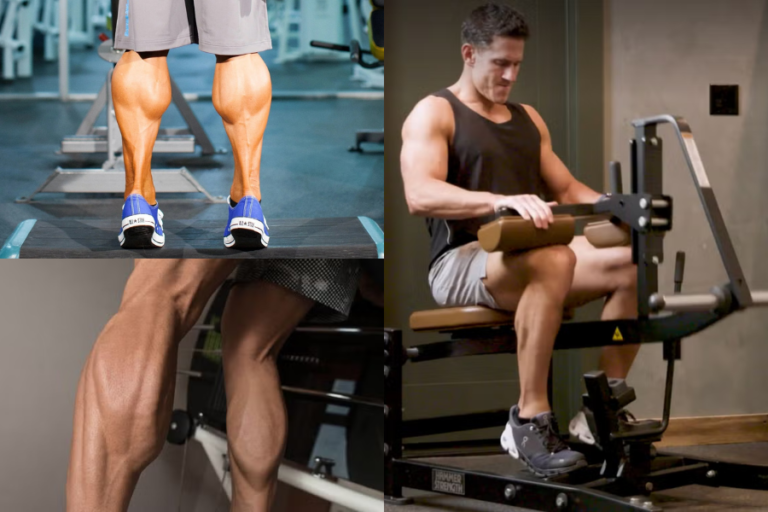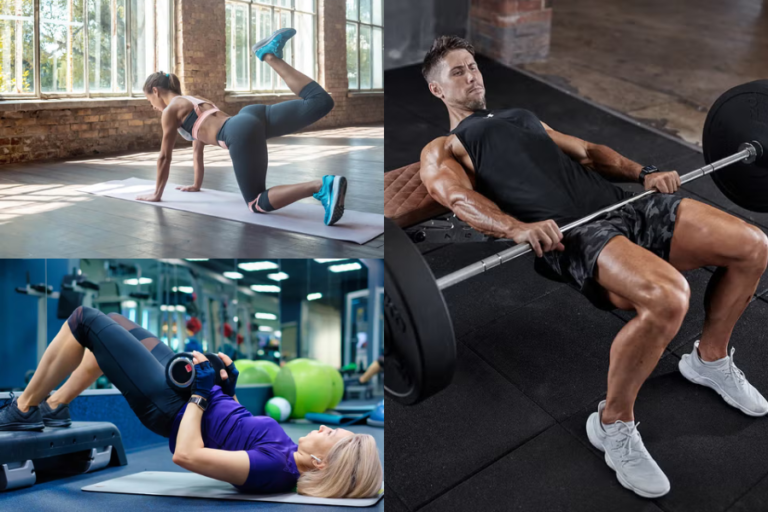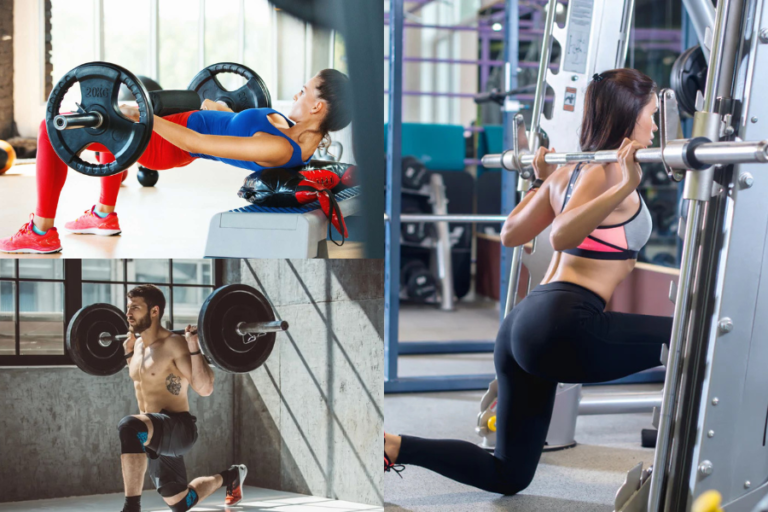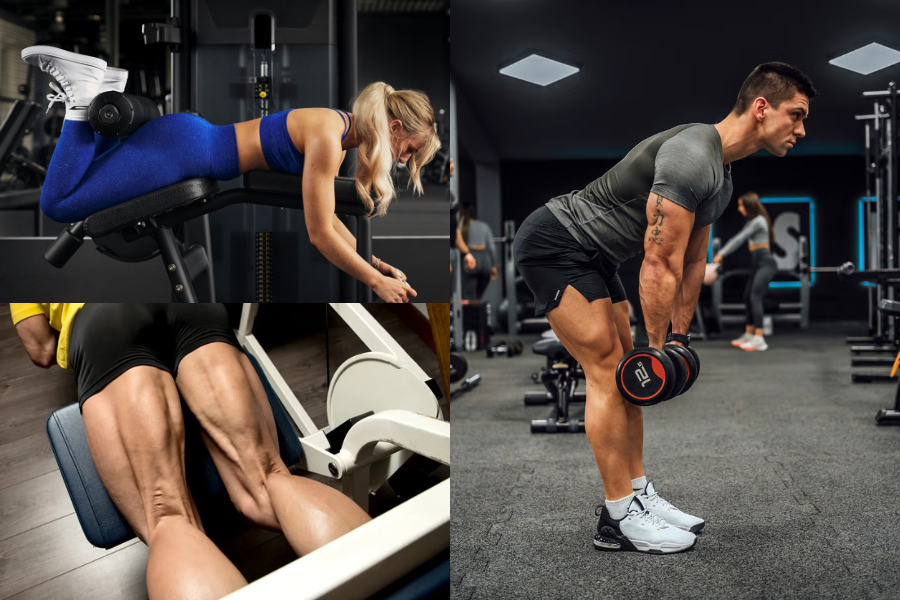
A good hamstring workout with resistance bands can build strong, stable legs without needing machines or heavy weights. If you are a beginner, bands give you just enough challenge to feel your muscles work while still being joint friendly and easy to use at home or at the gym.
Below, you will learn how your hamstrings work, why resistance bands are so effective, and a complete beginner hamstring workout with resistance bands that you can start today.
Understand your hamstrings and why they matter
Your hamstrings run along the back of your thighs. They help you bend your knees, straighten your hips, and control your leg with every step, jump, and squat. When your hamstrings are weak or tight, you are more likely to deal with low back discomfort, knee pain, or pulled muscles during sports.
A focused hamstring workout with resistance bands trains these muscles to be stronger and more stable. Over time you will notice everyday movements like climbing stairs, standing up from the couch, or carrying groceries feel steadier and more controlled.
Why use resistance bands for hamstrings
If you do not have access to a leg curl machine or heavy weights, resistance bands are one of the most practical tools you can use.
Key benefits of band training
Resistance bands provide constant tension through the entire range of motion. As the band stretches, the resistance increases, so your muscles have to contract harder to complete each rep. This variable tension boosts muscle activation and makes even simple movements feel surprisingly effective, according to a July 12, 2023 guide by Roc Pilon on Gymreapers.
Bands also make it easy to apply progressive overload, which is essential for muscle growth and strength. You can:
- Start with lighter bands, around 20 to 35 pounds of resistance
- Gradually move to heavier bands, such as 30 to 60 pounds, as you get stronger
Unlike bulky machines, resistance bands are portable and convenient. You can train your hamstrings at home, in a small apartment, outdoors, or while traveling without carrying heavy gear. That makes it much easier to stay consistent.
Best hamstring band exercises for beginners
You do not need a long list of movements. A few effective exercises that you perform with solid form are enough to build strength. The research highlights several hamstring exercises with resistance bands that work well for beginners, including curls, hip hinge movements, and glute bridges.
1. Banded lying hamstring curl
Banded hamstring curls are an isolation exercise that directly targets the back of your thighs. Instead of using a leg curl machine, you use a band anchored to a sturdy object.
How to do it:
- Anchor a resistance band low to the floor behind you.
- Lie face down with your hips pressed to the ground and legs straight.
- Loop the band around your ankles or one ankle for single leg curls.
- Flex the foot of your working leg.
- Curl your heel toward your glutes in a controlled motion, then slowly lower it back.
Keep your upper body flat, avoid lifting your hips, and maintain a steady tempo on the way up and down. You can increase resistance by choosing a heavier band or using a single leg instead of both.
Banded curls are great as a warmup, a finisher at the end of your workout, or a gentle rehab option when you do not have access to gym machines.
2. Loop band Romanian deadlift
The Loop Band Romanian Deadlift is ranked as one of the most effective hamstring exercises with resistance bands. It works your hamstrings, glutes, and lower back while also helping your flexibility and posture.
How to do it:
- Stand on the middle of a loop band with your feet hip width apart.
- Hold the top of the band with both hands so it is taut.
- Soften your knees slightly.
- Hinge at your hips, pushing them back as your torso leans forward and your back stays flat.
- Lower until you feel a stretch in the back of your thighs, then drive your hips forward to stand tall again.
Because the band gets tighter as you stand up, you get more resistance at the top of the movement, where your hips fully extend. Compared with heavy weights, this version is easier on your lower back while still building strength.
3. Loop band good morning
The Loop Band Good Morning is similar to the Romanian deadlift but places the band higher on your body and emphasizes your back and hamstrings together.
How to do it:
- Stand on the band with your feet hip width apart.
- Bring the other end of the band over your upper back, like where a barbell would rest.
- Hold the band lightly at your shoulders for stability.
- Keep a slight bend in your knees.
- Hinge at your hips, lower your torso forward with a neutral spine, then return to standing.
The band provides extra resistance at the top, which encourages you to finish each rep by fully extending your hips and squeezing your glutes.
4. Mini loop band glute bridge
The Mini Loop Band Glute Bridge targets your glutes and hamstrings. A small band above your knees increases hip muscle activation so your entire posterior chain has to work harder.
How to do it:
- Lie on your back with knees bent and feet flat on the floor, hip width apart.
- Place a mini loop band just above your knees.
- Press your lower back gently into the floor.
- Drive through your heels and lift your hips until your body forms a straight line from shoulders to knees.
- Push your knees slightly out against the band as you hold the top position, then slowly lower.
This is an excellent beginner exercise if traditional deadlifts feel too advanced. You can move to single leg glute bridges later for even more hamstring engagement.
5. Bodyweight kneeling banded deadlift
The Bodyweight Kneeling Banded Deadlift is a modified deadlift that works well if you are new to training or have mobility limits.
How to do it:
- Kneel on a soft surface with the band anchored below or under your knees.
- Hold the free end of the band at hip level.
- Start with your hips sitting back toward your heels.
- Drive your hips forward against the band until your body is tall and upright.
- Slowly sit back to the starting position.
By removing your ankles and feet from the equation, you reduce balance demands and can focus on your hips, glutes, and hamstrings.
6. Standing loop band hamstring curl
The Standing Loop Band Hamstring Curl lets you train your hamstrings while also improving your balance and core stability.
How to do it:
- Anchor a band low to a sturdy object behind you.
- Loop the band around one ankle.
- Stand tall, holding onto a wall or chair for support if needed.
- Keep your knees close together.
- Bend the working knee, curling your heel toward your butt, then lower slowly.
This is a good option if lying on the floor is uncomfortable or you want a quick hamstring move that fits into a standing circuit.
Sample beginner hamstring workout with bands
You can combine these exercises into a simple hamstring workout with resistance bands that fits into 20 to 30 minutes. Research suggests performing hamstring sessions twice per week, with at least 48 hours of rest between them, and using up to ten sets across three exercises to build endurance, strength, and muscle mass.
Here is a beginner friendly routine you can follow:
- Loop Band Romanian Deadlift
- 3 to 4 sets of 8 to 15 reps
- Mini Loop Band Glute Bridge (or single leg once you are ready)
- 3 sets of 12 to 20 reps
- Banded Hamstring Marches or Good Mornings
- 3 sets of 8 to 10 reps
- Lying Hamstring Curl
- 2 to 3 sets to near failure
Rest 90 to 150 seconds between sets. Choose a band that makes the last 2 or 3 reps of each set challenging but still allows you to keep good form.
If you feel sharp pain in your knees, hips, or lower back, stop the exercise and lower the resistance or adjust your position before continuing.
Tips to progress your banded hamstring training
You do not have to overhaul your entire routine to keep making progress. Small adjustments in resistance, volume, and technique go a long way.
Start with lighter resistance bands in the 20 to 35 pound range if you are new or returning from a break. As the sets begin to feel comfortable, move to thicker bands that provide 30 to 60 pounds of resistance. This gradual progression helps your hamstrings adapt and grow stronger without sudden jumps in difficulty.
You can also progress by:
- Adding 1 or 2 reps per set each week
- Pausing for one second at the hardest part of the movement
- Slowing down the lowering phase to 3 or 4 seconds
Over time, these small tweaks ensure that your hamstrings continue to be challenged so you keep building strength and stability.
Choosing and using your resistance bands
To get the most from your hamstring workout with resistance bands, it helps to have bands that are durable and come in multiple resistance levels. The Gymreapers Hip Bands and Military Resistance Band Set are recommended for hamstring training, because they cover a wide range of resistances from 20 to 150 pounds and hold up well during lower body exercises like deadlifts and donkey kicks.
Hip bands are especially useful for glute bridges and banded marches, while longer loop bands work best for Romanian deadlifts, good mornings, and standing curls. With just a small set of bands, you can create countless effective hamstring workouts without ever needing a machine.
Start with the basic routine above, focus on clean, controlled movement, and add resistance gradually. In a few weeks you will feel your hamstrings working harder when you walk, run, and lift, and you will have built a strong foundation for more advanced strength training.
About the Author