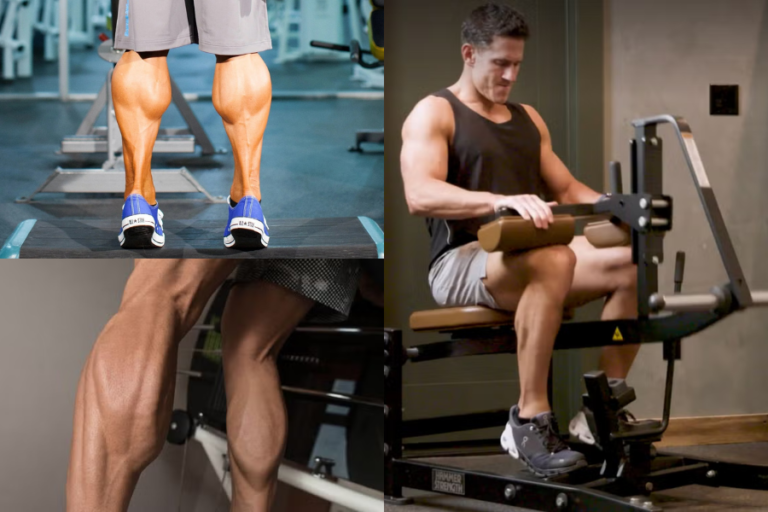
A focused calf routine can do more than just help your legs look better in shorts. Smart, targeted calf workouts for men build strength for sprinting, jumping, and quick changes of direction, and they also support healthy ankles and knees. If your calves have always been stubborn, a more strategic approach can finally move the needle.
Below, you will learn how your calf muscles work, which exercises give you the most return, and how to structure a weekly plan that fits your goals and schedule.
Understand your calf muscles
To get more from your calf workouts, it helps to know what you are training and why.
Your calves are not just one muscle. They are a group that crosses both the knee and ankle and helps you walk, run, and jump.
The main players are:
-
Gastrocnemius
This is the visible, diamond-shaped muscle on the back of your lower leg. It crosses the knee and ankle and is heavily involved when you straighten your knee and push off the ground, for example in jumping or sprinting. -
Soleus
This flatter muscle sits underneath the gastrocnemius. It does most of the work when your knees are bent and is essential for standing and walking. Research has shown that training with bent knees selectively targets the soleus more than the gastrocnemius. -
Plantaris
A smaller muscle that assists with movement and helps with posture and balance in the lower leg.
Most calf fibers are slow twitch, which means they respond very well to higher training volume and lighter to moderate loads, as long as you push sets close to fatigue. This is one reason your usual casual sets of bodyweight calf raises may not be enough.
Why calf workouts matter for men
Calves are often an afterthought, especially if you already squat and deadlift. However, general leg training does not always build enough calf size or strength on its own, which is why dedicated calf workouts for men are recommended.
When you invest time in your calves, you:
-
Improve sports performance
Strong calves help with sprint speed, quick direction changes, and jump height. Studies on athletes have linked better calf strength to higher vertical jumps and faster sprint times. -
Protect against injuries
Calves stabilize your ankle and knee with every step. Improving their strength and endurance can lower the risk of strains and overuse injuries, as highlighted in research on sports performance and injury prevention. -
Balance your physique
Targeted calf exercises help avoid the “top-heavy” look. Well developed calves make your quads and hamstrings look more proportional and give your legs a more athletic shape, especially when you are in shorts in summer. -
Support everyday movement
Strong, mobile calves make walking, climbing stairs, and carrying loads feel easier. They also contribute to better posture and balance.
Genetics do play a role in how easily your calves grow, but you are not stuck with your current size. Experts like Jeff Cavaliere emphasize that, with a high quality approach, even “hard gainer” calves can improve. The key is focused, consistent overload.
Core principles for effective calf workouts
You do not need an endless list of exercises. You do need to train your calves with enough frequency, intensity, and variety.
Train both straight and bent knee
Because the gastrocnemius and soleus respond differently to knee position, include:
- At least one straight leg movement, like standing or leg press calf raises, to bias the gastrocnemius.
- At least one bent leg movement, like seated calf raises, to target the soleus.
This combination ensures complete development and better carryover to sports and daily life.
Use more than one rep range
Calves respond well to a variety of repetitions:
- Heavy: 5 to 10 reps
- Moderate: 10 to 20 reps
- Light: 20 to 30 reps
A good rule of thumb is to spend around half your weekly sets in the moderate range and split the rest between heavy and lighter high rep work, as suggested by strength coaches at RP Strength in 2024.
Emphasize the stretch and the lowering phase
A deep stretch at the bottom of each rep, held for up to 2 seconds, is a powerful growth driver and may lower injury risk. A slow, controlled lowering phase (the eccentric) is especially important for hypertrophy, and calves seem to respond very well to this style of training when done regularly.
Because this can be intense and cause significant soreness, start with fewer sets and gradually build up over several weeks.
Train calves often enough
Your calves can recover quickly and they are not limited by large, fatigue prone muscles. This allows higher frequency training:
- Aim for 3 to 6 sessions per week of calf work, depending on your total leg training and recovery.
- Within each session, include 1 to 3 calf exercises.
- Across the week, include 2 to 4 different calf exercises for enough variety without overcomplicating your routine.
Rest periods do not need to be long. Many people find 1 to 3 minutes, or even shorter rests on lighter sets, enough to feel ready for the next set.
Best calf exercises for men
These exercises cover the main movement patterns and can be mixed and matched to build an effective program.
1. Standing calf raise
This classic hits both the gastrocnemius and soleus and can be done almost anywhere.
How to do it:
- Stand on a step or sturdy platform with the balls of your feet on the edge and your heels hanging off.
- Keep your knees straight but not locked.
- Lower your heels slowly to feel a deep stretch. Pause for up to 2 seconds.
- Push through the balls of your feet to rise as high as possible.
- Squeeze at the top briefly, then repeat.
You can use a machine, hold dumbbells, or simply use your bodyweight. Reddit users frequently rate full range standing calf raises, with a strong stretch and powerful push, as one of the most reliable builders for calf size.
2. Seated calf raise
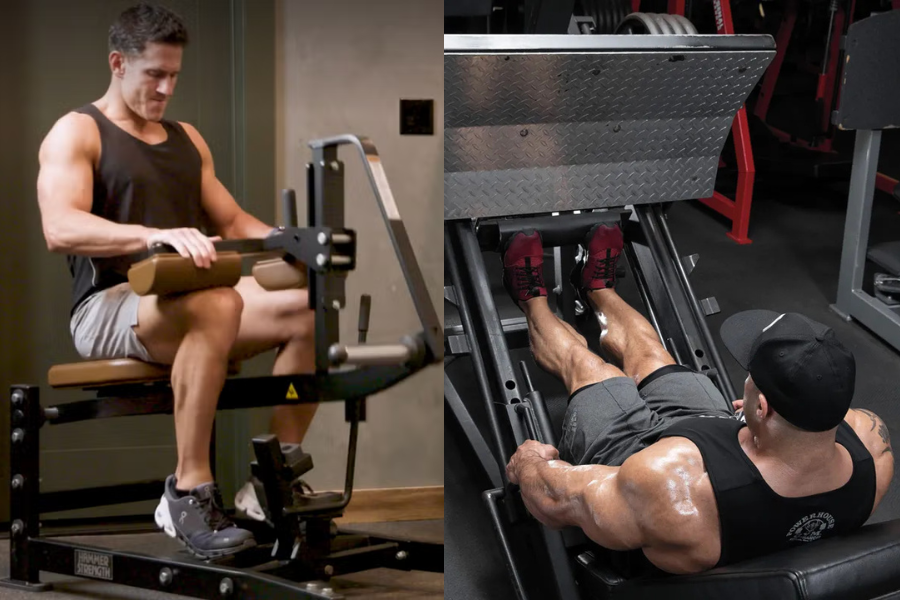
Seated calf raises shift emphasis toward the soleus because your knees are bent. You can use a gym machine or improvise at home using a chair and weights on your knees.
Key points:
- Sit with your knees at roughly 90 degrees and the balls of your feet on a block or step.
- Let your heels drop to achieve a full stretch.
- Lift your heels as high as possible and hold briefly at the top.
- Focus on a slow, controlled descent.
A common, effective setup is 3 sets of 8 to 15 reps, with a 2 second pause at both the bottom and top to maximize tension.
3. Single leg calf raise
Single leg work increases intensity and reveals side to side imbalances that might be hiding in your double leg movements.
To perform it:
- Stand on one foot on a step or flat floor while holding a wall or rail for balance.
- Lower into a stretch, then push up until you are on the ball of your foot.
- Add dumbbells as you get stronger.
You can also use a leg press machine and work one leg at a time. Single leg calf raises on the leg press are especially useful for athletes who want to improve ankle mobility and pinpoint imbalances. Lighter weight, full range of motion, and 3 sets of 12 to 20 reps work well for many men.
4. Eccentric calf raise
Eccentric variations emphasize the lowering phase, which helps build strength and resilience.
An easy setup is:
- Use two legs to raise up onto your toes.
- Shift your weight onto one leg.
- Slowly lower on that leg for 3 to 5 seconds.
This is helpful if you struggle to control the descent under heavier loads or if you are rehabbing from an injury with professional guidance.
5. Leg press calf raise
Using the leg press allows you to load your calves heavily without stressing your spine.
How to do it:
- Sit in the leg press machine and place only the balls of your feet on the platform, with legs mostly straight.
- Slowly lower your heels to feel a stretch through the calves.
- Push the platform away using your calves, not your quads, and rise onto your toes.
This variation is useful for heavy sets in the 8 to 12 rep range.
6. Tip toe farmers carry
This exercise blends strength and stability work.
- Grab a pair of dumbbells and rise onto your toes.
- Walk forward while keeping your heels off the ground.
- Focus on staying tall and maintaining control.
It challenges the calves differently than pure up and down raises and carries over well to everyday movement.
7. Jump rope and plyometrics
Jump rope is more than cardio. It builds explosive lower body power and calf conditioning at the same time. You can:
- Warm up or finish your workout with intervals of 30 seconds on and 30 seconds off for 3 to 4 rounds.
- Use different jump patterns such as single leg hops or side to side jumps to challenge your calves from multiple angles.
Plyometric drills like short sprints, hill runs, and simple jumping patterns help you mimic the high tension, spontaneous contractions that professional athletes experience in their sport. This style of work is a strong driver of calf development and power, as long as you progress volume gradually.
Sample calf workouts for your week
Here is a simple way to plug calf training into your routine. Adjust sets and exercises based on your equipment and experience.
Start on the lower end of the volume range, then add 1 to 2 sets per week only if your joints feel good and soreness is manageable.
Strength focused day
Ideal after a heavier leg or full body workout.
- Standing calf raise: 4 sets of 6 to 10 reps, 2 second stretch at the bottom
- Leg press calf raise: 3 sets of 8 to 12 reps
- Rest 1 to 2 minutes between sets
Volume and endurance day
Use lighter loads and higher reps to tap into those slow twitch fibers.
- Seated calf raise: 3 sets of 15 to 20 reps
- Single leg calf raise: 3 sets of 12 to 15 reps per side
- Jump rope: 4 rounds of 30 seconds on and 30 seconds off
- Rest 45 to 90 seconds between sets
If you train legs 2 to 3 times per week, you can finish two of those sessions with one of the calf blocks above. Aim for around 18 to 24 total sets for calves per week, spread across multiple days, which works well for many men who want growth and better performance.
Stretching and mobility for healthier calves
Stronger is better, but so is more mobile. Tight calves can limit ankle motion, which affects your squats, lunges, and even your walking pattern.
Useful options include:
-
Wall calf stretch
Stand facing a wall, step one foot back, and gently press your heel down while bending the front knee. You should feel the stretch in the calf of your back leg. -
Bent knee calf and ankle stretch
From a similar position, bend the back knee slightly while keeping the heel down. This shifts the stretch toward the soleus and ankle.
Short daily sessions improve flexibility, help you access a deeper range of motion in your calf exercises, and support better everyday movement.
Progression, safety, and realistic expectations
Calves are used constantly in daily life, so they often need more stimulus to grow than other muscle groups. At the same time, it is easy to overdo it and end up with intense soreness.
A few guidelines will help you stay on track:
-
Train 2 to 3 times per week at first
If you are new to dedicated calf work, begin with 2 sessions per week and build toward 3 or even more as your recovery improves. -
Move slowly and stay aligned
Keep your feet straight or use only small angle changes, control every rep, and avoid bouncing at the bottom. This protects your Achilles tendon and encourages your calves to do the work. -
Increase load gradually
Bump weight by about 10 to 15 percent every couple of weeks or once your sets feel noticeably easier. Sudden big jumps in load or volume increase your injury risk. -
Consult a professional if needed
If you are brand new to strength training or have a history of lower leg issues, check in with a coach or healthcare professional before you start pushing heavy loads.
Finally, give your calves time. They are notorious for slow progress, especially if you have naturally slimmer lower legs or a bow legged structure, which can make development trickier. The combination of smart exercise selection, sufficient volume, and consistency will pay off if you stick with it.
Choose one or two of the exercises above to add to your next workout this week. Pay attention to the deep stretch, control every rep, and track your progress. Over the next months you will not only see more shape in your calves, you will also feel stronger and more explosive every time your feet hit the ground.
About the Author