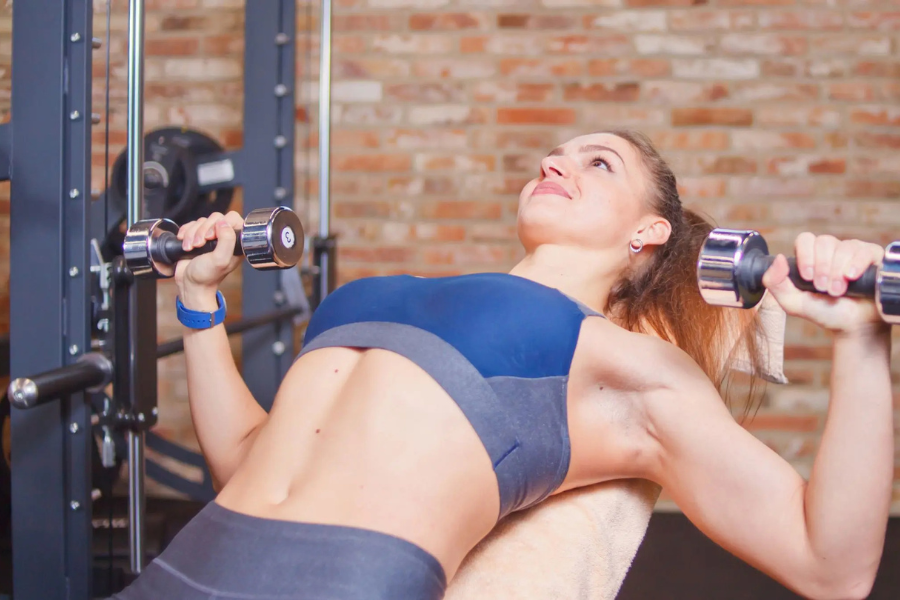
Why a 30 minute chest workout works
If you think you need an hour in the gym to build your chest, a well planned 30 minute chest workout can surprise you. By focusing on a few key movements, using smart intensity techniques, and limiting distractions, you can stimulate serious muscle growth in a short window.
Your chest muscles, the pectoralis major and pectoralis minor, respond best to focused effort, not endless exercises. Research-backed routines that use supersets, trisets, and rest-pause sets let you pack quality work into less time while still building strength and size.
In this guide, you will get:
- A simple structure for a 30 minute chest workout
- A gym-based routine for muscle growth
- A bodyweight-only option you can do at home
- Tips to warm up, cool down, and track your progress safely
Use the version that fits your schedule and equipment, and stick with it consistently for best results.
Understand your chest muscles
Before you press a single weight, it helps to know what you are training and why.
Key chest muscles
-
Pectoralis major
This is the large, fan-shaped muscle you see on the front of your chest. It drives most arm movements that bring your arm across your body, push away from you, or press overhead. A well developed pec major is what gives your chest its overall size and shape. -
Pectoralis minor
This smaller muscle sits under the pec major and helps move and stabilize your shoulder blade. Training it supports shoulder health and posture, which lets you press more weight safely.
Effective 30 minute chest workouts focus mainly on heavy pressing for the pec major, with some angles and volume that also challenge the pec minor and supporting muscles around your shoulders.
Structure your 30 minute chest workout
You can think of your 30 minute chest workout in three parts:
-
5 minutes: Warm up
Raise your heart rate and loosen your shoulders and upper back. -
20 minutes: Main chest workout
Perform 2 to 4 chest exercises with purpose. Keep rest short, focus on controlled reps, and work close to muscular fatigue. -
5 minutes: Cool down
Light stretching helps circulation and recovery so your next session feels better.
This simple structure, used by programs like Nonstop Fitness, keeps you moving with enough intensity for growth without dragging the session out.
Warm up in 5 minutes
Use these five minutes to get your joints ready and your chest activated.
-
1 minute: Light cardio
Brisk walking, light cycling, or a quick row to increase blood flow. -
2 minutes: Dynamic upper body movements
- Arm circles (forward and backward)
- Shoulder rolls
- Gentle band pull-aparts or bodyweight “hug and open” motions
- 2 minutes: Movement specific warm up
- 2 sets of 10 to 15 push-ups, or
- 2 light sets of bench press or dumbbell press (about half your working weight)
Keep everything smooth and pain free. You are just preparing your body, not trying to get tired yet.
Gym routine: 30 minute chest workout for muscle growth
If you have access to dumbbells, a barbell, or machines, this routine focuses on hypertrophy (muscle growth) using 3 main exercises. It is inspired by short, high-efficiency plans that use supersets, trisets, and drop sets to get more work done in less time.
Aim to work in the 8 to 15 rep range on most sets, stopping 1 or 2 reps shy of failure, and rest briefly so your total work fits into 20 minutes.
Exercise 1: Incline dumbbell press
Targets your upper chest, which is often underdeveloped.
- Sets: 3
- Reps: 8 to 12
- Angle: Low incline, about 15 to 30 degrees, to emphasize upper pecs without shifting everything to your shoulders
- Rest: 45 to 60 seconds between sets
On your final set, you can use a drop set as suggested by Primeval Labs. When you reach near failure, immediately lower the weight by about 20 to 30 percent and continue pressing to near failure again. This extends the set and adds more time under tension without adding extra time to your workout.
Exercise 2: Flat barbell or dumbbell bench press
This is your primary strength and mass builder.
- Sets: 3
- Reps: 6 to 10
- Rest: About 60 seconds
Guidelines from strength experts like Barbell Medicine recommend moderate to heavy loads in the 5 to 10 rep range for strength and size. Choose a weight that challenges you but still allows solid form.
Form reminders:
- Plant your feet firmly on the floor
- Keep a slight arch in your lower back, with shoulder blades pulled gently together
- Lower the bar or dumbbells slowly to your mid-chest
- Press up in a controlled, straight path without bouncing
If you want to increase intensity without lengthening the workout, use a rest-pause approach on the last set. For example:
- Perform as many good reps as you can
- Rest 15 to 20 seconds
- Do more reps
- Repeat until you reach your target total reps, such as 20 to 25
This rest-pause style is similar to the “mini set” approach described in the Rest-Pause Rampage workout on Primeval Labs.
Exercise 3: Machine chest press or cable fly
Now you finish with a more controlled movement that isolates your chest and lets you really feel the muscle working.
Pick one:
- Machine chest press for a stable pressing pattern, or
- Cable or dumbbell fly for a big stretch and squeeze
Basic structure:
- Sets: 3
- Reps: 12 to 15
- Rest: 30 to 45 seconds
Focus on:
- Slow lowering phase to feel the stretch (2 to 3 seconds down)
- Brief pause at the bottom without relaxing
- Strong but controlled squeeze as you bring your arms together
Isolation moves like flyes are especially useful for pre-exhausting or finishing the chest as noted in hypertrophy guidelines. They work best with moderate to higher reps and excellent form.
Optional finisher: Push-up burnout (1 to 2 minutes)
If you have a minute or two left, finish with push-ups to near failure:
- Set a timer for 60 to 90 seconds
- Perform as many quality push-ups as you can
- Rest only when you must, then jump back in
This pumps extra blood into the chest and gives you a clear, simple benchmark to track over time.
At home option: Bodyweight 30 minute chest workout
No equipment, no problem. You can still grow your chest with a short, intense bodyweight routine. The “Bodyweight Bonanza” style described by Primeval Labs is a great model.
You will use a triset, three exercises back to back, for 3 to 4 rounds:
- Dips (on parallel bars, sturdy chairs, or a low counter)
- Feet elevated push-ups
- Regular push-ups
How to run the triset
- Work: 40 seconds on each exercise
- Rest between moves: 20 seconds
- After all three, rest 2 minutes
- Repeat 3 to 4 times
Your goal is as many quality reps as possible (AMRAP) during each 40 second work period.
Form tips:
- Lower your body slowly and under control
- Press up with power
- Keep your core tight and body in a straight line during push-ups
By adjusting angles and leverage rather than adding weight, you create a “mechanical drop set” that challenges your chest from multiple positions, just as described in the bodyweight routines shared by Primeval Labs.
Choose exercises and volume wisely
You do not need every chest machine in the gym to make progress in 30 minutes. In fact, doing too many different moves can reduce the quality of your sets.
Guidance from strength coaches like Barbell Medicine suggests:
-
For strength focused days:
2 to 3 main chest exercises are enough when loads are heavier and reps are lower. -
For hypertrophy focused days:
3 to 4 chest exercises can be effective, especially in the 8 to 15 rep range, as long as you keep form tight and rest short.
In short:
- Beginners can start with 1 to 2 chest exercises per session.
- Intermediate lifters can use 2 to 3 for strength or 3 to 4 for size.
- More is not always better, especially when you are limited to 30 minutes.
Train safely and avoid injuries
Short workouts only help if you stay healthy enough to repeat them consistently. Nonstop Fitness and other coaches emphasize proper technique over ego lifting.
Keep these safety pointers in mind:
-
Prioritize form over weight
If your technique breaks down, reduce the load. Muscle growth comes from tension and quality reps, not just heavy numbers. -
Stop if you feel sharp pain
Discomfort and fatigue are normal. Sudden, stabbing, or joint focused pain is not. Stop the set and, if needed, speak with a professional coach or healthcare provider. -
Control the lowering phase
Most injuries happen when the weight is dropping faster than you can stabilize. Use a 2 to 3 second descent and do not bounce the bar or dumbbells off your chest. -
Match training stress to your recovery
Recovery capacity varies. If you feel constantly drained or your joints ache, reduce total sets or frequency. As Barbell Medicine notes, gains happen when training stress and recovery are in balance.
Cool down in 5 minutes
A brief cool down can help your chest and shoulders feel better the next day.
Spend about one minute on each:
-
Light walking or gentle cycling
Bring your heart rate down gradually. -
Chest stretch against a doorway or wall
Hold 20 to 30 seconds per side, mild tension only. -
Shoulder and triceps stretch
Reach one arm overhead, bend the elbow, and gently assist with the other hand. -
Upper back and pec minor stretch
Clasp your hands in front of you and round your upper back, then clasp behind you and gently lift your arms. -
Deep breathing
Inhale through your nose for 4 seconds, exhale for 6 to 8 seconds to relax your nervous system.
Track your progress over time
A 30 minute chest workout becomes much more effective when you can see how far you have come. Nonstop Fitness recommends watching several markers:
-
Weights used
Are you lifting more weight for the same reps compared to a few weeks ago? -
Reps at a given weight
Can you do more reps with your previous working weight? -
Body measurements and appearance
Notice changes in chest circumference, posture, and muscle definition. -
Endurance and recovery
Do your sets feel less exhausting? Do you recover better between sessions?
Choose a simple way to track, such as a notes app or training log, and update it every session. Aim to improve one small thing per workout, like one extra rep or slightly cleaner form.
Put your 30 minute chest workout into action
To make this stick, decide:
- Which version you will follow first, gym based or bodyweight
- What days and times you will train
- How you will track your sets, reps, and weights
Then commit to 4 to 6 weeks of consistent effort. A focused 30 minute chest workout, repeated regularly, will do more for your strength and size than occasional marathon gym sessions.
About the Author