Understand what a bicep superset workout is
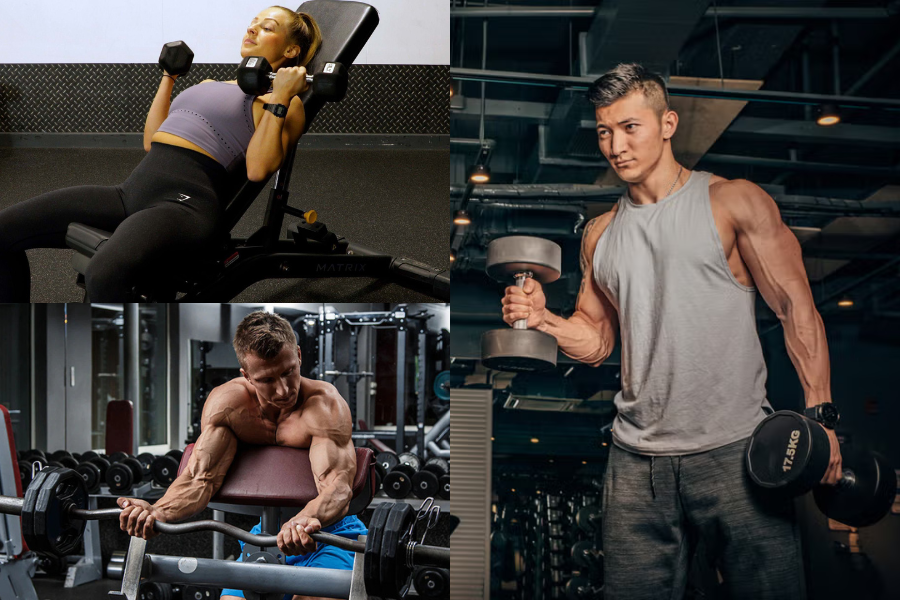
If you want bigger, stronger arms without spending hours in the gym, a focused bicep superset workout can help you get there faster. A superset simply means you perform two exercises back to back with little or no rest. When you apply this to your biceps, you increase training intensity, time under tension, and that familiar muscle pump that signals a hard session.
Research published in the Journal of Strength and Conditioning Research in 2017 found that bicep supersets can increase muscle activation by about 20% compared with regular sets, which makes them a powerful tool for muscle hypertrophy and strength gains. A 2019 review in Sports Medicine supports this by highlighting how supersets generate more metabolic stress and recruit more muscle fibers, both key drivers of muscle growth.
You will feel your biceps working harder in less time, and when you pair biceps with forearms you can train your whole arm effectively in a short workout.
Why supersets work so well for biceps
When you structure your bicep training as supersets, you get several advantages:
-
More muscle activation in less time
You pack more quality work into each minute, which is ideal if you have a busy schedule. -
Greater metabolic stress and pump
Moving straight from one curl variation to another keeps blood in the muscles and increases metabolic stress, which supports size gains. -
Better use of different angles and grips
You can combine exercises that hit the biceps from different angles and with different grips, which encourages more complete development of the muscle. -
Built‑in intensity without heavy weights
Because you reduce rest, you can often use slightly lighter loads while still getting a very challenging workout. That can be easier on your joints and shoulders.
Use these form tips for safer, smarter curls
Before you jump into any bicep superset workout, focus on how you move. Clean technique lets you target the biceps instead of swinging with your hips or shoulders. Several experienced coaches emphasize the same basics.
Lock in your body position
- Keep your elbows close to your sides and avoid letting them drift forward.
- Maintain a tall chest and neutral spine.
- Do not use momentum from your hips, legs, or lower back to move the weight.
Stan Kravchenko, celebrity coach and founder of OneFit.com, notes that using momentum and turning the curl into a full‑body movement takes the work away from the biceps and makes your sets less effective.
Use a full range of motion
Perform each rep from full elbow extension to full elbow flexion. Stopping short reduces the muscle building benefit you get from every set. Kravchenko recommends exercises like standing cable curls, dumbbell curls, barbell curls, and incline curls specifically because they allow a long range of motion when you use them correctly.
Control the tempo
There are two main tempo approaches you can use in your supersets.
- Slow and strict tempo
Jeff Cavaliere of Athlean‑X suggests using a very controlled style on some of your curls. He recommends taking about four seconds to lift and four seconds to lower the weight on certain biceps supersets. This slower tempo can
- Increase biceps activity
- Reduce help from your front delts and forearms
- Increase the time your biceps spend under tension
- Moderately controlled tempo
Kravchenko suggests a more traditional pace of about one to two seconds up and one to two seconds down, while still keeping everything smooth and controlled. He advises that you especially pay attention to the lowering phase, since emphasizing the eccentric part of the rep helps build strength and size.
You do not need to use a slow 4‑second tempo on every set, but mixing it in on some supersets can help you feel your biceps working more intensely.
Choose the right weight
For an effective bicep superset workout, pick a weight that lets you complete 8 to 15 reps with one or two good reps still in reserve. If you are cheating early in the set, the weight is too heavy. If you can easily do more than 15 reps and feel very little challenge, the weight is too light.
Your last two or three reps in each set should feel demanding but still controlled.
Start with beginner‑friendly bicep supersets
If you are new to supersets, begin with simple movement patterns and focus on building good form and mind‑muscle connection. These two beginner bicep supersets are straightforward to learn and still very effective.
For all of the workouts in this guide, a helpful starting framework is:
- Sets: 3 to 4 supersets per pair
- Reps: 8 to 12 per exercise
- Rest: 60 to 90 seconds between supersets
Adjust the numbers slightly to match your fitness level, but stay in that general range while you learn.
Superset 1: Barbell curl + hammer curl
This combination hits your biceps with a classic underhand grip, then follows up with a neutral grip to target the brachialis and forearms.
- Barbell curl
- Grip the bar just outside hip width with palms facing up.
- Curl the bar toward your shoulders without swinging.
- Lower under control to full elbow extension.
- Dumbbell hammer curl
- Hold dumbbells at your sides with palms facing in.
- Curl the weights while keeping that neutral grip.
- Lower smoothly and keep your elbows close to your body.
Perform all your barbell curl reps, then go straight into hammer curls. Rest after you finish both and that counts as one superset.
This setup matches recommendations in the research for beginners who want simple and effective bicep supersets that are easy to learn.
Superset 2: EZ bar curl + band curl
Pairing a free weight movement with a band exercise lets you keep tension high throughout the entire range of motion.
- EZ bar curl
- Use the angled grips that feel most comfortable for your wrists.
- Curl up to shoulder level, pause briefly, and lower under control.
- Band curl
- Stand on a resistance band and hold the handles or ends with a supinated grip.
- Curl against the increasing resistance as the band stretches.
- Focus on squeezing the biceps hard at the top.
Move from the EZ bar straight into the band for a strong pump. This pairing is also suggested in the research as a beginner‑friendly starting point.
Try these bicep superset workouts for maximum growth
Once you are comfortable with basic supersets, you can rotate through different bicep superset workouts to hit the muscle from multiple angles and keep your progress moving. You will notice that most of the recommended pairings fall into three broad categories:
- Isolation supersets that pair two curl variations
- Post‑exhaustion supersets that use a compound movement first, then an isolation curl
- Biceps plus forearms supersets that train your whole arm in less time
Isolation supersets for pure biceps focus
Isolation supersets are especially useful when you want a strong pump and focused work on smaller muscle groups like the biceps.
Workout A: Barbell curl + dumbbell hammer curl
You already saw this as a beginner option, but it remains one of the most effective supersets even as you advance.
- Barbell Curl
- Dumbbell Hammer Curl
Perform 3 to 4 supersets of 8 to 12 reps for each exercise and rest 60 to 90 seconds between rounds.
Workout B: Incline dumbbell curl + concentration curl
This pairing emphasizes stretch and strict contraction.
- Incline dumbbell curl
- Set an incline bench at roughly 45 to 60 degrees.
- Let your arms hang straight down.
- Curl the dumbbells without letting your shoulders roll forward.
- Concentration curl
- Sit on a bench and brace your working arm against your inner thigh.
- Curl the dumbbell up with a controlled squeeze.
This combination is one of the seven highly recommended bicep supersets for maximal growth and pump, as noted in the research. Use moderate weights and focus on form.
Workout C: Alternating dumbbell curl + purgatory reps
This option adds a high‑intensity twist.
- Alternating dumbbell curl
- Curl one arm at a time while the other arm rests.
- Use a supinated grip and full range of motion.
- Purgatory reps
- At the end of your set, hold one dumbbell at roughly 90 degrees while you perform curls with the other arm.
- Switch sides and repeat.
Cavaliere recommends these added isometric holds, often called purgatory reps, to increase intensity and further challenge the biceps during your superset.
Post‑exhaustion supersets for heavy and light work
Post‑exhaustion means you start with a compound exercise that includes the biceps, then move into an isolation curl while the muscle is already fatigued.
Workout D: Chin‑up + Zottman curl
- Chin‑up
- Use an underhand grip on a pull‑up bar.
- Pull your chest toward the bar while keeping your elbows in front of you.
- Lower slowly to full arm extension.
- Dumbbell Zottman curl
- Curl the dumbbells up with palms facing up.
- At the top, rotate your palms down.
- Lower the weights with a pronated grip.
This pairing is frequently recommended in the research as part of a set of seven top biceps supersets. It hits both biceps and forearms and is a good choice once you have some base strength.
Workout E: Row variation + cable curl
You can also apply the same idea with horizontal pulls.
- Underhand grip row
- Use a barbell or cable machine with palms facing up.
- Row toward your lower ribs.
- Focus on both back and biceps tension.
- Standing cable curl
- Use a straight or EZ bar attachment.
- Step back slightly to keep constant tension throughout the curl.
Keep the weight moderate on the rows so you can still perform the curls with good form.
Biceps and forearms supersets for full‑arm training
If you want larger, more detailed arms, pairing your biceps with your forearms can be especially productive. Fitness competitor Rob Riches found that dedicating even 15 to 20 minutes to forearm training in a superset with biceps significantly improved his overall arm thickness and hardness on stage.
Workout F: Bicep curl + wrist curl
This is a simple but tough whole‑arm combination.
- Barbell curl
- Perform a standard curl for 10 to 12 reps.
- Barbell wrist curl
- Sit on a bench and rest your forearms on your thighs, palms facing up, holding the barbell.
- Curl the bar with your wrists only, then lower slowly.
The research describes a version of this structure with rep ranges such as 15, 12, 10, and 8 for curls and 15, 15, 12, and 10 for wrist curls, which gives you both higher rep endurance work and some heavier sets toward the end.
Workout G: Single arm preacher curl + overhand preacher curl
This superset hits the biceps with two grip positions while keeping your upper arm locked in place.
- Single arm preacher curl
- Use a dumbbell or EZ bar and curl with a supinated grip.
- Overhand grip EZ‑bar preacher curl
- Use a pronated grip on the same bench.
- Curl through a controlled range for your desired reps.
Pairing these two, as described in the research, helps round out both biceps and forearms.
Explore different superset structures for variety
Changing how you combine movements can keep your progress moving and help you avoid plateaus. The research mentions several useful superset types that you can rotate through.
Isolation supersets
You already saw several examples. You perform two isolation exercises back to back, which is ideal for focusing on smaller muscle groups like the biceps.
Use these when you want:
- Maximum pump
- High time under tension
- A strong focus on biceps with minimal involvement from other muscles
Compound supersets for the same muscle
In this structure, you pair two compound moves that challenge the biceps. For example, a chin‑up followed by an underhand row. This can be very intense, so it is important to rest 60 to 90 seconds between supersets so that you can maintain form and avoid burnout.
Post‑exhaustion supersets
As covered above, you perform a compound movement first, then follow with an isolation curl. This approach maximizes muscle fatigue and can be especially effective for strength and size, as long as you keep your technique strict.
Mechanical drop sets
Mechanical drop sets are another way to increase intensity. A 2023 study supports using techniques that change angles or mechanics to push muscles beyond initial fatigue while staying time efficient. Instead of lowering the weight, you shift to a slightly easier variation when you can no longer perform strict reps on the first exercise. For biceps, that might mean:
- Starting with incline dumbbell curls
- Moving to standing dumbbell curls with the same weight
- Then finishing with hammer curls
You can build this approach into your bicep superset workout by linking two of these variations back to back, or by turning your second exercise into a more mechanically forgiving option.
Mix grips and angles for complete bicep development
Varying how you grip the weight and the angle at which you curl helps you train every part of the biceps and supporting muscles. Kravchenko notes that using different grips within your bicep superset workout spreads the work more evenly and supports better balanced arm development.
Here are grip patterns to rotate:
-
Supinated grip (palms up)
-
Classic curls like barbell curls, dumbbell curls, and preacher curls
-
Emphasizes the long and short heads of the biceps brachii
-
Neutral grip (hammer)
-
Hammer curls and rope hammer curls
-
Targets the brachialis and brachioradialis, adds thickness to the upper arm
-
Pronated grip (palms down)
-
Reverse curls and overhand preacher curls
-
Involves forearms strongly and contributes to a more complete arm look
Cavaliere also points out that the way you hold a dumbbell affects how hard your biceps work. He suggests gripping the dumbbell with your thumb and index finger pressed more against one end of the bell. This creates a seesaw effect that makes supination, or turning your palm up, more demanding and increases biceps contraction.
Try choosing one main grip focus for each workout, then layering in the others as secondary movements during the week.
Plan your weekly bicep superset training
Supersets are intense, so recovery is just as important as the workout itself. The research suggests several practical guidelines you can use to plan your week.
Frequency and recovery
- Train your biceps 1 to 2 times per week.
- Leave at least 48 hours of rest between hard bicep sessions.
- Expect visible arm growth in about 6 to 12 weeks of consistent training, assuming nutrition and sleep are also on track.
You can also rotate how you pair your biceps:
- One session with biceps plus forearms
- Another session with biceps plus triceps or back
On some days, you may choose to focus only on biceps and forearms, while on others you give forearms their own short session after another workout. This flexibility lets you manage fatigue more easily.
Sample weekly layout
Here is one way to set up your week:
-
Day 1: Back + biceps
-
Finish with an isolation bicep superset, such as Workout B or C.
-
Day 3: Chest + triceps
-
Light band curls or mobility work only, no heavy supersets.
-
Day 5: Biceps + forearms
-
Use Workout F or G for a focused arm session.
Adjust days and spacing as needed, as long as you keep at least two days between your hardest bicep workouts.
Common bicep superset mistakes to avoid
To get the most from any bicep superset workout, stay alert to a few frequent errors.
-
Using momentum instead of muscle
Swinging the weight with hips, shoulders, or lower back reduces biceps activation and increases risk of injury. Keep your form strict and your movements controlled. -
Cutting the range of motion short
Stopping halfway up or halfway down limits growth. Aim for full extension and full flexion on every rep, unless a specific exercise calls for partials. -
Picking the wrong weight
If you constantly fail far below your target rep range or your form breaks down early, the load is too heavy. If you finish sets easily with plenty of energy left, the load is too light to stimulate growth. -
Rushing rest periods
Supersets are designed with reduced rest, but you still need about 60 to 90 seconds between rounds for most of the workouts in this guide. Less rest might sound more intense, but it can quickly cause sloppier reps. -
Never changing exercises or angles
Progress often stalls when you repeat the exact same superset for too long. The research suggests changing one or two exercises, or layering in a different training principle every so often, to avoid plateaus.
Put it all together
If you want your arms to look and feel stronger, a well‑designed bicep superset workout lets you train smarter, not just longer. By pairing exercises back to back, using strict form, and rotating through different grips and angles, you can:
- Increase muscle activation and time under tension
- Build a stronger pump in less time
- Target both biceps and forearms for fuller arms
Pick one or two of the supersets from this guide for your next session. Focus on clean technique, appropriate weight, and consistent weekly training. Over the coming weeks, you will feel your biceps responding with more strength, more endurance, and a more solid flex every time you roll up your sleeves.
About the Author