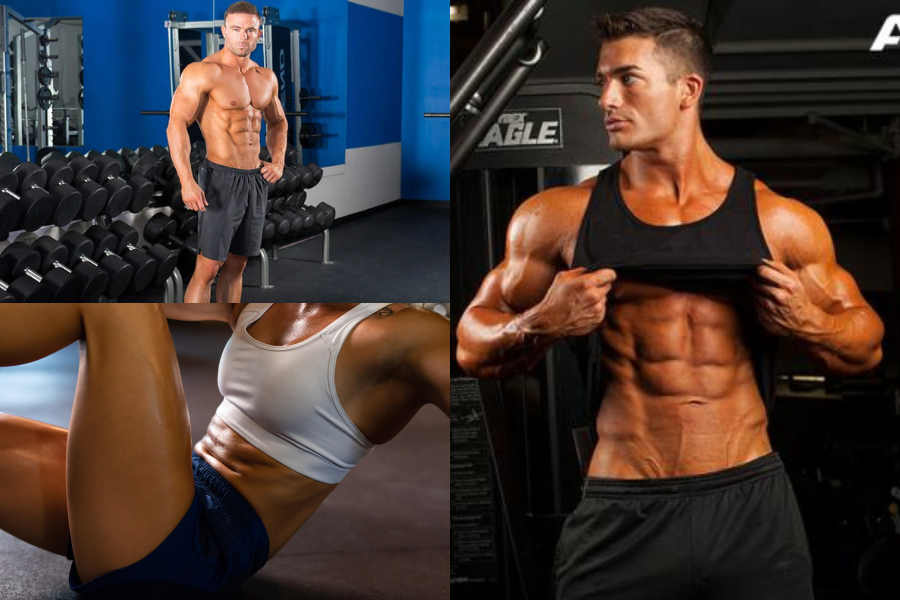
Why a no equipment ab workout works
A no equipment ab workout lets you train your core anywhere, anytime. You only need your body weight and maybe a mat or soft surface. That means you can build core strength at home, in a park, or even in a hotel room without buying ab gadgets that promise miracles but rarely deliver.
You can effectively work your entire core with moves like planks, dead bugs, bird dogs, and mountain climbers. When you focus on form and muscle engagement instead of fancy tools, you get a safer and more efficient workout that fits easily into your schedule.
Understand your core muscles
Your abs are part of a larger system of core muscles that stabilize your whole body. Before you jump into a no equipment ab workout, it helps to know what you are actually training.
Key muscles you target
-
Rectus abdominis
The front “six pack” muscle that flexes your spine and helps you crunch forward. -
Obliques (internal and external)
On the sides of your torso. They rotate and bend your trunk and help control twisting motions. -
Transverse abdominis
Deep abdominal muscle that acts like a natural weight belt. It stabilizes your spine and supports posture. -
Lower back muscles
These work with your abs to keep your spine aligned and protect it under load.
A good no equipment ab workout will hit all of these, not just the visible “six pack” area. Exercises like planks, bird dogs, and hollow holds challenge your abs as stabilizers, which is key for everyday movement and injury prevention.
Benefits of training abs without equipment
You do not need machines or infomercial gadgets to build strong abs. Bodyweight core training has several advantages:
Practical strength for daily life
Core workouts without equipment, such as bird dogs and plank variations, help build stability and engage multiple muscle groups around your spine. This support can ease back pain by taking pressure off the spine and helps with:
- Lifting groceries
- Carrying kids
- Standing or sitting for long periods
- Running, cycling, or playing sports
Accessibility and convenience
A no equipment ab workout:
- Fits into small spaces
- Requires minimal setup time
- Can be done in 5 to 30 minutes
- Works at any fitness level with simple modifications
You can keep your routine going even while traveling or on busy days, which makes it easier to stay consistent.
Cost effectiveness
According to fitness guidance, you do not need special ab gadgets to get results. A simple exercise ball can add variety and is usually much cheaper than specialized ab machines, and tools like resistance bands or dumbbells are more versatile for full body training. Investing in general strength equipment is typically more beneficial than buying ab-specific products that often overpromise and underdeliver.
How often to train your abs
You do not have to blast your core every day to see progress. In fact, more is not always better.
- Aim to train your abs 2 to 3 times per week
- Include 2 to 3 core exercises in each session
- Allow at least one day of rest between intense ab sessions
Since your core is engaged all day to support your posture, it can usually handle slightly more frequent training than some other muscles. You can add quick, focused no equipment ab workouts alongside your regular strength or cardio routine without overloading your body, as long as you respect rest and recovery.
Form tips for safe and effective abs
Proper form is more important than how many reps you do. It protects you from injury and makes every second of work count.
Keep these cues in mind during your no equipment ab workout:
-
Brace your core
Imagine you are gently preparing for a poke in the stomach. This helps you engage deeper muscles. -
Keep your spine neutral
Avoid aggressively rounding or arching your low back. You want a long, straight line from head to tailbone during planks and similar moves. -
Move with control
Core exercises should feel deliberate, not rushed. Fast, sloppy reps usually mean your hips and lower back are taking over instead of your abs. -
Breathe steadily
Do not hold your breath. Exhale through the hardest part of the movement and inhale on the easier part. -
Stop if your lower back hurts
Core work should feel challenging in your abs. If you feel sharp pain in your back, adjust the move or rest.
Beginner friendly no equipment ab workout (15 minutes)
If you are new to core training or coming back from a break, start with a simple routine that emphasizes control and proper positioning. This 15 minute no equipment ab workout is based on a beginner friendly routine recommended by certified personal trainer Kira Jones, CPT. It focuses on basic patterns you can do almost anywhere.
How this workout is structured
- Duration: About 15 minutes
- Equipment: Just a mat or soft surface
- Format: Circuit
- Perform each exercise for 30 to 45 seconds
- Rest for 15 to 30 seconds between exercises
- Complete 3 rounds of the full circuit
Pick a work and rest interval that allows you to maintain good form from start to finish. Quality matters more than speed.
The exercise circuit
- Dead bug
-
Lie on your back with arms reaching toward the ceiling, knees bent at 90 degrees above your hips.
-
Brace your core so your low back lightly presses into the floor.
-
Slowly extend your right arm overhead and your left leg forward, reaching long without arching your back.
-
Return to the starting position and switch sides.
-
Move slowly, keeping your ribs down and core engaged.
Modification:
Hold the starting position with arms and legs up and simply focus on bracing your core if moving your limbs feels too challenging.
- Plank
-
Set up on your forearms or hands with shoulders over wrists or elbows.
-
Step your feet back until your body forms a straight line from head to heels.
-
Squeeze your glutes, draw your belly button gently toward your spine, and keep your neck neutral.
-
Hold for time without letting your hips sag or pike up.
Modifications:
-
Plank on your knees instead of your toes.
-
Plank on your forearms if your wrists are uncomfortable.
- Seated straight leg lift
-
Sit tall with your legs extended in front of you.
-
Place your hands slightly behind your hips for support, fingers pointing forward or to the side.
-
Brace your core and gently lean back a few inches.
-
Keeping your legs straight, lift one or both heels a few inches off the floor.
-
Hold briefly, then lower with control and repeat.
Modification:
Keep one heel lightly touching the floor and lift the other, then switch. You can also bend your knees slightly if your hamstrings feel tight.
- Side plank
-
Lie on your side with your elbow under your shoulder and legs extended.
-
Stack your feet and press your bottom forearm into the floor to lift your hips.
-
Your body should form a straight line from head to feet.
-
Keep your chest open and avoid letting your hips roll forward or backward.
Modification:
Lower your bottom knee to the floor for more support while still keeping your hips lifted.
- Toe touch
-
Lie on your back with legs extended toward the ceiling, ankles over your hips.
-
Reach your arms straight up toward your toes.
-
Exhale and curl your shoulders off the mat, reaching fingers toward your feet.
-
Lower your shoulders back down with control.
-
Keep your low back in contact with the floor throughout.
Modification:
Bend your knees slightly or bring your legs closer toward your chest to make this more comfortable.
Repeat these five moves for a total of three rounds. Take longer rests if your form starts to slip.
Quick 10 minute no equipment ab workout
On days when you are short on time, a focused 10 minute no equipment ab workout can still challenge your core. This format uses a continuous circuit with dynamic moves and side variations.
How this workout is structured
- Duration: About 10 minutes
- Equipment: None
- Format: Circuit
- Perform each exercise for 30 seconds
- Move to the next exercise with minimal rest
- Repeat the full circuit twice
- Rest as needed between rounds
The exercise circuit
- Mountain climber twist
-
Start in a high plank position with your shoulders over your wrists.
-
Bring your right knee toward your left elbow, then quickly switch, bringing your left knee toward your right elbow.
-
Continue alternating while keeping your hips level and your upper body steady.
This move combines core contraction and stabilization, and it doubles as a conditioning exercise to increase work capacity.
- Side plank with leg lift, right side
- Set up in a right side plank on your right forearm or hand.
- Once stable, lift your top leg a few inches and lower with control.
- Focus on keeping your hips stacked and your torso steady.
- Side plank with leg lift, left side
- Repeat the same movement on your left side.
- Side plank hip dips, right side
- From a right side plank position, lower your hip toward the floor and then lift it back up to neutral.
- Move slowly so you feel your obliques working, not your lower back.
- Side plank hip dips, left side
- Repeat the same movement on your left side.
- Reverse crunch
- Lie on your back with your knees bent and lifted, shins parallel to the floor.
- Gently press your lower back into the mat.
- Exhale and curl your hips off the floor, bringing your knees slightly toward your chest.
- Lower with control without swinging your legs.
- Plank up (up-down plank)
-
Start in a forearm plank.
-
Press up onto your right hand, then your left, into a high plank.
-
Lower back down to your right forearm, then left.
-
Continue alternating which arm leads.
Keep your hips as stable as possible to increase core engagement, not shoulder rocking.
- Lying leg raises
-
Lie on your back with your legs extended and hands at your sides or under your hips for support.
-
Keep your lower back gently pressed into the floor.
-
Lift your legs together toward the ceiling, then lower them slowly until you feel your back start to want to arch.
-
Stop before your back lifts and raise your legs again.
This move specifically targets your lower abs and can be challenging but very effective when done with control.
- Bicycle crunch
- Lie on your back with your hands lightly supporting your head and your knees bent.
- Lift your shoulders off the floor.
- Bring your right elbow toward your left knee while extending your right leg.
- Switch sides in a pedaling motion, but keep the movement slow and controlled rather than rushed.
-
Inchworm push up
- Stand tall with feet hip width apart.
- Hinge at your hips and place your hands on the floor.
- Walk your hands forward into a plank.
- Perform a push up if you can, then walk your feet toward your hands and stand back up.
This move challenges core strength and flexibility at the same time.
Complete each exercise for 30 seconds, then repeat the entire list for a second round.
How long should your ab workout be
You do not need marathon ab sessions. A focused no equipment ab workout can be effective in a relatively short time:
- 5 minutes is enough for quick, targeted engagement, especially if you are adding abs at the end of another workout.
- 10 to 15 minutes works well for a stand alone core session that hits multiple muscles.
- Up to 30 minutes can be used for a more comprehensive ab and core workout with extra sets or variations.
Choose a duration that fits your schedule and current fitness level. Consistency is more important than doing a long session once in a while.
Do ab workouts make your abs visible
Ab exercises strengthen the muscles, but they do not automatically reveal a six pack on their own. To see more definition, you also need to reduce overall body fat through nutrition and full body training.
Guidance from fitness sources notes that you usually need to reach around 8 to 12 percent body fat for men and about 15 percent for women before the abs become clearly visible. This is a general range, not a strict rule, and it varies from person to person.
The key points to remember:
- A no equipment ab workout builds core strength and stability.
- Visible abs depend heavily on overall fat loss, which comes from a combination of diet, strength training, and cardio.
- You do not need to chase extreme leanness to benefit from a strong core.
Sample weekly ab and core schedule
Here is one way to plug these workouts into your week:
- Day 1: Full body strength + 10 minute no equipment ab workout
- Day 2: Light cardio or walking, optional 5 minute core finisher
- Day 3: Full body strength + 15 minute beginner friendly ab routine
- Day 4: Rest or gentle mobility
- Day 5: Cardio or sports + 5 to 10 minute quick ab circuit
- Day 6: Optional extra core and glute work, focus on form and stability
- Day 7: Rest
Adjust the volume based on how your body feels. If your core is very sore, give it more time to recover before your next session.
Simple modifications to make abs work for you
Whether you are a beginner or just having a low energy day, you can always scale your no equipment ab workout. Some easy changes include:
- Doing planks on your knees or forearms
- Holding the starting position of dead bugs instead of moving your arms and legs
- Placing your hands behind your hips during seated leg lifts for more support
- Lowering the bottom knee in side planks
- Reducing your work interval from 45 seconds to 20 or 30 seconds
Use modifications as tools, not crutches. As you get stronger, gradually progress toward the full versions.
Key takeaways
- You can build a strong, stable core with a no equipment ab workout using only your body weight.
- Focus on a mix of stabilization moves like planks and dynamic moves like dead bugs, reverse crunches, and leg raises.
- Train your abs 2 to 3 times per week for best results, paying close attention to form.
- Short sessions of 5 to 15 minutes can be very effective when done consistently.
- Visible abs depend largely on overall body fat levels, not ab exercises alone.
Start with one of the simple circuits above and try it twice this week. Notice how everyday movements, like standing up, climbing stairs, or carrying a bag, begin to feel more supported as your core strength improves.
About the Author