Why dumbbell chest exercises work so well
Dumbbell chest exercises give you a simple way to build size, strength, and better movement with very little equipment. With just a bench and a pair of dumbbells, you can hit all areas of your chest: upper, middle, and lower.
Compared with a barbell, dumbbells:
- Let each arm work on its own, which helps fix left and right strength imbalances
- Allow a larger range of motion so you get a deeper stretch and stronger contraction
- Make it easier to fine tune your grip and elbow position to keep your shoulders happy
Your chest is mainly made up of three muscles:
- Pectoralis major: the big, visible chest muscle that moves your upper arm
- Pectoralis minor: a smaller muscle under the pec major that helps stabilize your shoulder blade
- Serratus anterior: sits along your ribs and helps you raise your arm overhead
The dumbbell chest exercises below help you train all of them from different angles so you get full, balanced development.
How to use this guide
You can use these exercises in two ways:
- Pick 3 to 5 movements to build your own chest workout
- Follow the sample routines at the end for beginner, intermediate, or advanced training
For most people, this setup works well:
- Twice per week of dumbbell chest exercises
- 5 to 10 reps when your main goal is strength
- 10 to 30 reps when your main goal is muscle growth, as suggested by Gymreapers in their 2024 guide
Aim for 8 to 15 hard reps on most sets, where the last 2 or 3 feel challenging but your form is still solid.
Key form tips for any dumbbell chest exercise
Before you look at specific movements, a few universal rules will help you feel your chest more and protect your shoulders. Research from Built With Science highlights how small changes in arm path and shoulder position can make a big difference in chest activation.
Keep these in mind:
-
Set your shoulders
-
Pinch your shoulder blades gently together and down into the bench or floor
-
Keep your chest slightly lifted and your shoulders out of your ears
-
Use the right arm path
-
Avoid flaring your elbows straight out to the side
-
Let your elbows travel about 30 to 45 degrees away from your body
-
On presses, think about the dumbbells moving slightly toward your lower chest on the way down, then up toward your shoulders on the way up, which aligns well with your chest fibers
-
Keep your forearms vertical
-
At the bottom of each press, your wrist should be stacked directly above your elbow
-
If your hands drift inward, your triceps take over and your chest does less work
-
Control the range of motion
-
Go low enough to feel a stretch across your chest
-
Do not drop your elbows so far that your shoulders feel jammed or unstable
-
On flys, never let the dumbbells fall behind the line of your torso to avoid overstretching
-
Move with control, not momentum
-
Use a smooth 2 to 4 second lower and 1 to 2 second lift
-
Stop each rep when your form starts to slip, even if you had more in the tank
Best dumbbell chest presses
Pressing exercises are your main muscle and strength builders. They let you move the most weight and hit multiple muscles at once, including shoulders and triceps.
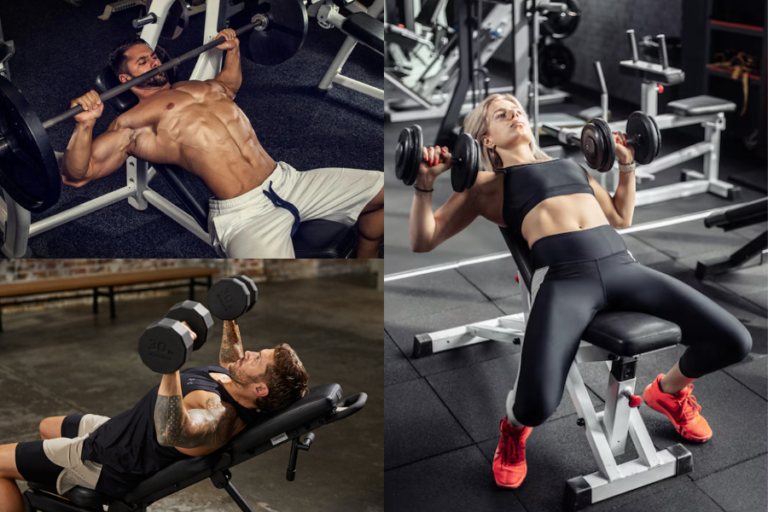
Dumbbell bench press
The dumbbell bench press is one of the most effective dumbbell chest exercises for overall size and strength. It offers more range of motion than the barbell bench and can better match the natural angle of your chest fibers, as explained by Built With Science in June 2024.
How to do it
- Lie on a flat bench with a dumbbell in each hand, feet planted on the floor.
- Press the dumbbells up so they are above your chest, palms facing forward.
- Set your shoulder blades by pulling them gently together and down into the bench.
- Lower the dumbbells toward the sides of your chest with your elbows at about 30 to 45 degrees from your body.
- Keep your forearms vertical under the weights throughout the movement.
- Stop when the dumbbells are roughly in line with your chest, then press back up and slightly toward your shoulders without locking your elbows.
Why it works
- Trains the middle portion of your chest very effectively
- Encourages each side to work equally, which can correct imbalances
- Lets you work reasonably heavy for strength and mass
Programming
- 3 to 4 sets of 6 to 8 reps for strength, as suggested in a 2023 guide by Men’s Health
- 3 sets of 8 to 12 reps if your focus is muscle growth
Incline dumbbell press
The incline dumbbell press shifts more of the load to your upper chest. Adjusting the bench to a low incline changes the angle of tension so you target the top part of the pecs, as highlighted by Men’s Health in 2023.
How to do it
- Set your bench to a slight incline, about 15 to 30 degrees. Higher than that tends to shift more work to your shoulders.
- Sit back with a dumbbell in each hand and press them above your upper chest, palms forward.
- Keep your shoulders pulled back into the bench.
- Lower the dumbbells toward the upper part of your chest, elbows at 30 to 45 degrees from your sides.
- Pause when your elbows reach about bench level, then press back up.
Why it works
- Prioritizes the upper portion of your pectoralis major
- Still works your front shoulders and triceps as supporting muscles
- Helps fill out your chest from clavicle to mid pec
Programming
- 3 to 4 sets of 8 to 10 reps, as recommended by Men’s Health
Decline dumbbell press
You can target the lower chest by using a slight decline. Even a small downward angle increases tension on the lower fibers of the pecs.
How to do it
- Set your bench to a mild decline and secure your feet.
- Lie back holding the dumbbells above your lower chest, palms forward.
- Keep your shoulder blades pulled into the bench.
- Lower the dumbbells toward the lower portion of your chest in a controlled arc.
- Press back up, thinking about squeezing the lower chest at the top.
Why it works
- Places more tension on the lower pecs
- Can feel more shoulder friendly for some lifters
- Adds fullness to the bottom of your chest
Programming
- 3 sets of 8 to 12 reps
Neutral grip dumbbell press
With a neutral grip, your palms face each other. This small adjustment can reduce shoulder strain and shift the feel slightly toward the inner chest.
How to do it
- Lie on a flat bench holding dumbbells with palms facing each other.
- Start with the dumbbells near the sides of your chest.
- Keep elbows close to your body, not flared out.
- Press straight up while keeping a neutral grip throughout.
- Lower back down under control.
Why it works
- Often more comfortable if you have sensitive shoulders
- Emphasizes stability and control
- Still delivers a strong stimulus to the chest, shoulders, and triceps
Programming
- 3 sets of 8 to 12 reps
Chest squeeze press
This variation combines pressing with an isometric squeeze to light up the inner chest fibers.
How to do it
- Lie on a flat bench with two light to moderate dumbbells.
- Press the dumbbells together above your chest with palms facing each other.
- Keep pressing the dumbbells in toward each other as you lower them together toward your chest.
- Pause briefly just above the chest, still squeezing them together.
- Press back up while maintaining that inward pressure.
Why it works
- Creates constant tension across the chest
- Great for finishing a workout or adding an intense pump
- Can be done with lighter weights while still feeling very challenging
Programming
- 2 to 3 sets of 10 to 15 reps
Dumbbell floor press
The floor press is a solid option if you do not have a bench or your shoulders do not love deep ranges of motion. Men’s Health recommends it as a joint friendly alternative without sacrificing chest strength work.
How to do it
- Lie on your back on the floor with knees bent and feet flat.
- Hold a dumbbell in each hand, upper arms resting on the floor, forearms vertical.
- Press the dumbbells straight up above your chest.
- Lower them until your upper arms gently touch the floor, pause, then press back up.
Why it works
- Protects your shoulders by limiting the bottom range
- Still hits the chest, shoulders, and triceps effectively
- Ideal for home workouts or for people easing back from shoulder issues
Programming
- 3 to 4 sets of 8 to 10 reps
Reverse grip dumbbell press
Turning your palms toward your face can shift a bit more emphasis to the upper chest and reduce strain on the front of your shoulders for some lifters.
How to do it
- Lie on a flat bench with palms facing your head, wrists straight.
- Lower the dumbbells toward your lower chest in a controlled path.
- Keep elbows tucked closer to your sides than in a traditional press.
- Press back up, focusing on driving your biceps toward your ears.
Why it works
- Changes the angle of your upper arm relative to your torso
- Can recruit the upper pecs differently
- Adds variety if your standard presses feel stale
Programming
- 2 to 3 sets of 8 to 12 reps
Best dumbbell chest fly variations
Flys focus on bringing your arms together, which is a primary function of the pecs. Because they place more stretch across the front of the shoulders, you should use lighter weights and extra caution.
According to Ironmaster, dumbbell flys are a staple chest exercise but common mistakes like locked elbows or lowering too deep can shift stress to the joints instead of the chest.
Flat dumbbell chest fly
How to do it
- Lie on a flat bench with a dumbbell in each hand, palms facing each other.
- Start with the weights above your chest, arms slightly bent.
- With a small bend in your elbows, open your arms out to the sides in a wide arc.
- Stop when your upper arms are roughly in line with your torso, not lower.
- Squeeze your chest to bring the dumbbells back together above your chest.
Why it works
- Stretches and shortens the pecs through a long arc of motion
- Helps you feel the chest working directly, not just pressing
- Can be used as a finishing move after heavier presses
Safety tips
- Keep a soft bend in your elbows, do not lock them out
- Do not let the dumbbells drop below the level of your torso
- Use moderate or light weights, especially when your chest is already tired
Programming
- 3 sets of 10 to 12 reps, with a focus on a strong squeeze at the top, as suggested by Men’s Health
Incline dumbbell fly
Incline flys bring more focus to the upper chest while still allowing a big stretch.
How to do it
- Set your bench to a low incline, about 15 to 30 degrees.
- Hold the dumbbells above your upper chest, palms facing each other.
- With elbows slightly bent, open your arms in a wide arc.
- Stop when you feel a stretch across the upper chest, not in the front of the shoulders.
- Bring the dumbbells back together above your upper chest.
Why it works
- Puts more emphasis on the upper chest fibers
- Compliments incline pressing for top to bottom development
Programming
- 2 to 3 sets of 10 to 15 reps
Dumbbell floor fly
If your shoulders feel vulnerable on a bench, floor flys help by limiting how far your arms can travel. Ironmaster notes that floor variations reduce the risk of overstretching because the ground stops your elbows from dropping too low.
How to do it
- Lie on the floor with knees bent and feet flat.
- Hold the dumbbells above your chest, palms facing each other, elbows slightly bent.
- Open your arms until your upper arms gently touch the floor.
- Pause, then squeeze the dumbbells back together above your chest.
Why it works
- Reduces the risk of hyperextending your shoulders
- Still provides a good stretch and squeeze in the pecs
- Great for beginners learning the movement pattern
Programming
- 2 to 3 sets of 10 to 15 reps
Dumbbell pullover
The dumbbell pullover can hit your chest and lats at the same time, depending on how you perform it.
How to do it
- Lie lengthwise on a bench, feet on the floor.
- Hold one dumbbell with both hands above your chest, arms slightly bent.
- Keeping that slight bend, slowly lower the dumbbell back and over your head in an arc.
- Stop when you feel a deep stretch in your chest and lats, not in your shoulders.
- Pull the dumbbell back to the starting position by driving your upper arms toward the ceiling.
Why it works
- Stretches and loads the chest from a different direction
- Also challenges your lats and core for stability
- Adds variety to your chest routine
Programming
- 2 to 3 sets of 8 to 12 reps
Sample dumbbell chest workouts
Use the workouts below as templates. You can adjust the sets, reps, and weight to match your experience and available equipment.
Beginner dumbbell chest workout
You will focus on learning good form and building a base.
- Dumbbell floor press
- 3 sets of 10 to 12 reps
- Flat dumbbell bench press
- 3 sets of 8 to 10 reps
- Dumbbell floor fly
- 2 sets of 10 to 15 reps
- Dumbbell pullover
- 2 sets of 8 to 10 reps
Rest about 60 to 90 seconds between sets. Start with weights that feel comfortable and increase slowly as your technique improves.
Intermediate dumbbell chest workout
Here you will use more variety and start to push intensity. Gymreapers notes that using multiple angles is key since no single move trains the entire chest evenly.
- Dumbbell bench press
- 4 sets of 6 to 8 reps
- Incline dumbbell press
- 3 sets of 8 to 10 reps
- Superset
- A. Flat dumbbell chest fly, 3 sets of 10 to 12 reps
- B. Neutral grip dumbbell press, 3 sets of 10 to 12 reps
- Perform A then B without resting, then rest 60 to 90 seconds before repeating
- Chest squeeze press
- 2 sets of 12 to 15 reps
Repeat this workout twice per week, leaving at least one rest day between sessions.
Advanced dumbbell chest workout
At this stage, you will rely on supersets and high effort to drive further growth. Some advanced programs, like those discussed by Gymreapers, even finish with bodyweight burnout sets to chase full muscular fatigue.
- Superset 1
- A. Dumbbell bench press, 4 sets of 6 to 8 reps
- B. Dumbbell floor press, 4 sets of 8 to 10 reps
- Superset 2
- A. Incline dumbbell press, 3 sets of 8 to 10 reps
- B. Incline dumbbell fly, 3 sets of 10 to 12 reps
- Superset 3
- A. Decline dumbbell press, 3 sets of 8 to 10 reps
- B. Chest squeeze press, 3 sets of 12 to 15 reps
- Bodyweight burnout
- Standard push ups
- 3 to 5 minutes total
- Perform as many controlled reps as you can, rest briefly, and repeat until time is up
Use this level of volume only if you recover well and have already built a solid foundation.
Warm up, safety, and recovery
Strong technique matters just as much as the exercise itself. A few habits will help you train hard and stay healthy.
Warm up before you press
- 3 to 5 minutes of light cardio to raise your heart rate
- Gentle dynamic moves for chest and shoulders, like arm circles and band pull aparts
- 1 or 2 lighter sets of your first dumbbell chest exercise before your working sets
Watch your shoulder comfort
Medical experts, including Edward R. Laskowski, M.D. from Mayo Clinic, note that proper form is key during dumbbell chest presses to protect your joints. When you press:
- Keep your head relaxed and neutral on the bench
- Do not lock out your elbows at the top
- Do not use your feet to thrust the weight up
- Avoid dropping your elbows far below the line of your body
If you feel pain in your shoulder, reduce the weight, shorten the range of motion, or switch to floor based variations.
The same care applies to flys. Health sources recommend:
- Starting with light weights, such as 3 to 5 pounds if you are new
- Increasing slowly by 2 to 3 pounds every week or two
- Avoiding flys entirely if you have current shoulder or upper arm injuries, unless a medical professional clears you
Balance your training
To support long term growth and joint health, pair your dumbbell chest exercises with:
- Back exercises, such as rows and pulldowns, to balance your shoulders
- Core work, such as planks, to keep your torso stable under load
Training your opposing muscle groups will help you maintain good posture and joint alignment over time.
Putting it all together
If you want a bigger, stronger chest with minimal equipment, dumbbell chest exercises are a practical place to start. With a handful of movements like the dumbbell bench press, incline press, floor press, and a few carefully chosen fly variations, you can:
- Target your upper, middle, and lower chest
- Fix left and right strength imbalances
- Train in a shoulder friendly way with more control over your range of motion
Pick one of the sample routines, commit to it twice a week, and track your weights and reps. If you focus on steady progress and clean form, you will feel and see the difference in how your chest looks and how strong your upper body feels in everyday life.
About the Author