Why elbow friendly tricep exercises matter
If you have ever felt a sharp twinge in your elbow during tricep workouts, you are not alone. Elbow friendly tricep exercises help you train your arms hard without grinding your joints. By choosing the right movements and adjusting your technique, you can build stronger triceps while keeping your elbows comfortable and stable.
Research from VAHVA Fitness explains that strengthening the medial head of your triceps plays a big role in reducing elbow pain and improving structural balance in the joint. When this part of the muscle is weak, the tendons and surrounding tissues have to pick up the slack, which can lead to discomfort during pressing and extension work.
In other words, you are not doomed to sore elbows. You likely just need smarter exercise choices and better technique.
Understand where elbow pain comes from
Before you change your tricep routine, it helps to know why your elbow might hurt in the first place.
How your triceps affect your elbow
Your triceps run along the back of your upper arm and attach just above your elbow. When you straighten your arm, they do most of the work. If one part of the triceps, especially the medial head, is undertrained, other parts and the tendons end up overloaded.
According to VAHVA Fitness, fully locking out your elbow during tricep work is important for properly engaging the medial head. When you always stop short, you shift more load to the long and lateral heads, which can create an imbalance over time.
Common training habits that irritate the elbow
Several simple habits can make otherwise good exercises feel painful:
- Using very heavy weights and relying on momentum instead of control
- Never locking the elbow, which underworks the medial head
- Allowing the elbows to flare on pressing movements
- Dropping too deep into dips so the shoulder and triceps tendons are overstretched
- Gripping bars or handles that are too thick or thin for your hand size, which strains the wrist and elbow
Wellness coach Nurudeen Tijani of TitaniumPhysique notes that elbow pain during triceps exercises usually comes from stiff or overworked tissues that cannot tolerate repeated pressing and extension, not from the exercise itself. That is actually good news, because you can change how you move.
Train with joint friendly technique
Small tweaks in form often make the biggest difference in how your elbows feel.
Use a controlled range of motion
For elbow friendly tricep exercises, think smooth and deliberate, not jerky and rushed.
- Use light to moderate weights, especially when you are learning a new movement
- Aim for sets of 10 to 20 reps, which lets you groove good form and build joint tolerance
- Move with a slow tempo, around two seconds up and two to three seconds down
- Focus on fully straightening the arm without snapping or hyperextending the elbow
VAHVA Fitness recommends this approach to get the most from each rep while protecting your tendons.
Lock out, but do not overextend
You want to gently lock the elbow so the medial head works fully. That lockout should feel firm, not forced.
- Think of “reaching long” through your forearm at the top
- Stop when your arm is straight and muscles feel tight, not when the joint feels jammed
- If lockout hurts, shorten the range slightly and rebuild strength over time
Consistent, comfortable lockouts help balance your triceps and gradually reduce strain on the joint.
Elbow friendly tricep exercises to prioritize
Below are tricep exercises that combine muscle building potential with elbow friendly mechanics. Start with one or two, then rotate others in as your elbows feel better.
Side lying triceps extensions
Side lying triceps extensions let you focus on the elbow without loading the shoulder too heavily. They also keep tension on the medial head throughout the movement.
How to do it
- Lie on your side and support your head with your lower arm or a pillow.
- Hold a light dumbbell in your top hand with your elbow bent and close to your side.
- Position your upper arm so it is roughly perpendicular to the floor.
- Slowly straighten your elbow until your arm is fully extended.
- Pause briefly in lockout, then lower under control.
Why your elbows may like it
- You can use light weights and still feel strong tension
- Your shoulder stays supported, reducing extra stress
- You control the angle so the elbow does not feel compressed
Cable side triceps extensions
Cable side extensions are similar in feel to side lying extensions, but you do them standing and with constant cable tension.
How to do it
- Stand sideways to a cable stack with the handle set at about shoulder height.
- Grab the handle with the arm farthest from the machine.
- Keep your elbow tucked close to your side throughout.
- Extend your arm by straightening the elbow until it is fully locked out.
- Return slowly to the start, keeping tension on the muscle.
Why your elbows may like it
- Continuous tension from the cable means you do not have to go heavy
- The standing position lets you find a comfortable elbow angle
- The path of the cable guides your motion and discourages jerky reps
Skullcrushers with light weight and control
Skullcrushers have a reputation for causing elbow pain, but the exercise itself is not the villain. Problems usually come from loading too heavy and dropping the weight too fast.
VAHVA Fitness points out that when you perform skullcrushers with lighter weights, a controlled tempo, and full lockout, they can actually help strengthen the medial head and reduce discomfort.
How to do it safely
- Lie on a bench with a light bar or pair of dumbbells.
- Start with your arms straight above your shoulders, wrists stacked over elbows.
- Bend your elbows and lower the weight toward your forehead or slightly behind it.
- Keep your upper arms mostly still and close to your body.
- Straighten the elbows fully with control, then pause for a moment at the top.
Elbow friendly tips
- Treat this as a precision exercise, not a max lift
- Stay in the 10 to 20 rep range
- Stop if you feel sharp pain instead of muscular fatigue
Triceps kickbacks with limited range
Kickbacks can bother some elbows when you force the arm too far behind the body. Limiting your range makes them much kinder to your joints.
According to the research, you want to extend your arm only until it is parallel with your body. You also want to avoid bending the elbow too deeply on the way down.
How to do it
- Place one knee and hand on a bench or sturdy surface.
- Hold a light dumbbell in the other hand with your upper arm close to your side and parallel to the floor.
- Straighten your elbow until your arm is in line with your torso, no higher.
- Pause briefly, then bend the elbow just far enough to feel a stretch, not a deep fold.
- Move slowly for the full set.
Why your elbows may like it
- You avoid overextending the joint behind your body
- The controlled bend protects the tendons from sudden stretch
- Light weights still give a strong burn due to the long lever
Big pressing movements that spare your elbows
You can still build serious tricep size with compound pressing. The key is to pick variations that naturally support better elbow tracking.
Close grip barbell bench press
The close grip bench press is one of the best elbow friendly tricep exercises when you set it up correctly. Bringing your hands closer together shifts more work to your triceps and can actually help your overall bench press form, especially if your shoulders are sensitive.
How to do it
- Lie on a flat bench and grab the bar with your hands about shoulder width apart, not touching.
- Keep your wrists stacked over your elbows and your elbows tucked near your sides.
- Lower the bar in a straight line toward your lower chest.
- Press back up to full lockout without letting your elbows flare out.
Maintaining a controlled, straight bar path lined up with your lower chest minimizes stress on the elbows and triceps tendon.
Why your elbows may like it
- The closer grip aligns the wrists and elbows under the bar
- A stable bar path reduces awkward sideways forces
- You can train heavy without needing extreme elbow angles
Crush grip bench press
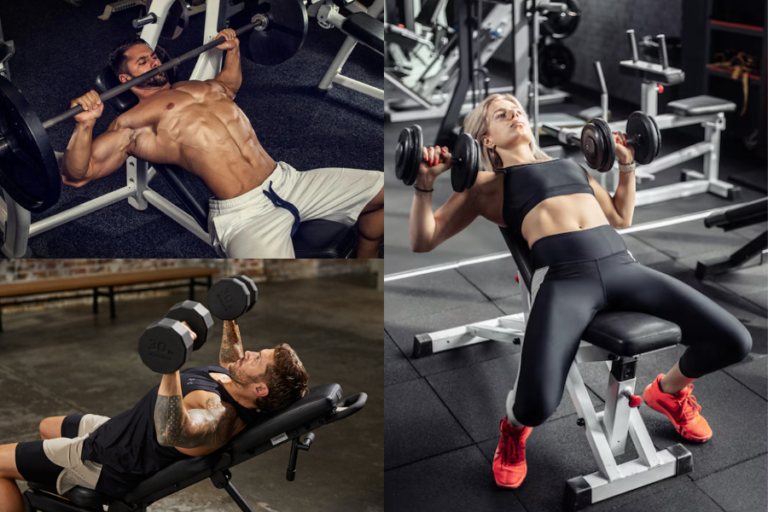
The crush grip bench press uses two dumbbells pressed together. You hold them close to your chest and focus on “crushing” them inward while you press.
This variation encourages good shoulder position and creates tension across your whole upper torso, which distributes the load and spares your joints.
How to do it
- Lie on a flat bench with two dumbbells pressed together at your chest.
- Squeeze the dumbbells toward each other firmly throughout the set.
- Press straight up while maintaining that inward squeeze.
- Lower with control until the dumbbells gently touch your chest.
Why your elbows may like it
- The inward squeeze activates your chest and upper back, which stabilizes the shoulders
- A neutral hand position often feels more natural on the wrists and elbows
- The extra time under tension lets you use moderate loads for strong growth
Crush grip incline bench press
The crush grip incline bench press is a simple tweak of the previous exercise. By raising the bench to an incline, you draw in more front delt and upper chest, which changes the stress on your elbow.
How to do it
- Set your bench to a moderate incline.
- Perform the crush grip bench press as described above.
- Keep your chest high and upper back engaged to support the movement.
Why your elbows may like it
- A slightly different pressing angle can relieve hot spots in the joint
- The same neutral grip and inward tension are friendly to the wrists and elbows
- You can emphasize the triceps at lockout without overloading the bottom position
Smarter dip variations for sensitive elbows
Traditional dips can be tough on both shoulders and elbows. Adjusting how you perform them and how you load them can make a big difference.
Bodyweight dips with limited depth
If you enjoy dips, you do not have to give them up completely. You can, however, be more careful with your range.
To reduce stress, avoid:
- Letting your elbows flare far out from your body
- Dropping so low that your shoulders feel pinched or stretched
- Bending the elbows far past 90 degrees
Instead, aim for a comfortable depth where your upper arms are roughly parallel to the floor, and keep your elbows closer to your torso.
Dips with chains for accommodating resistance
Using chains for dips is an elbow and shoulder friendly way to add load. Research notes that chains lighten the weight at the bottom of the dip, where your shoulders and elbows are most vulnerable, and increase resistance as you rise, where the joints are stronger and more stable.
Why your elbows may like it
- Less load at the weakest joint angle
- More load where your triceps can safely handle it
- A smoother strength curve that matches your natural leverage
If you do not have chains, you can apply the same idea by using assistance at the bottom portion of the dip, such as a band or machine, then focusing your effort on the mid to top range.
Choose the right equipment for your joints
Even perfect form can feel off if the equipment does not suit your body.
Match bar thickness to your hands
Using a properly sized bar for triceps extensions and pressing matters more than most people realize.
- Thicker bars tend to work better for larger hands because they offer a more natural grip and less strain on the tendons
- Thinner bars are often easier to control for smaller hands, which helps keep the wrist and elbow aligned
When your grip feels stable, your forearm muscles do not have to overwork, and your elbow tendons get a break.
Start lighter than you think
For elbow friendly tricep exercises, choose a weight that you know you can control for at least 12 to 15 reps with clean form. If in doubt, go lighter.
From the research, tricep training with:
- Light weights
- High repetitions, typically 10 to 20 per set
- A slow, conscious tempo
can be more effective for your elbows and still highly effective for muscle building.
Sample elbow friendly tricep workout
Use this as a starting point on upper body or arm days. Adjust sets and reps to your current fitness level and schedule.
- Close grip barbell bench press
- 3 sets of 8 to 12 reps
- Focus on a straight bar path to the lower chest and tucked elbows
- Side lying triceps extensions
- 3 sets of 12 to 20 reps per arm
- Move slowly and fully lock out without snapping the elbow
- Cable side triceps extensions
- 3 sets of 12 to 15 reps per arm
- Maintain continuous tension and a steady tempo
- Skullcrushers with light weight
- 2 to 3 sets of 12 to 15 reps
- Keep it light and prioritize control over load
- Triceps kickbacks (limited range)
- 2 sets of 15 to 20 reps per arm
- Stop when the arm is parallel to your body, no higher
Rest 60 to 90 seconds between sets. If any exercise causes sharp pain, stop, shorten the range of motion, or swap it for another from the list.
When to pull back and seek help
Mild muscular soreness is normal, but certain signs mean you should ease off and consider professional guidance:
- Sudden, sharp pain in the elbow during a rep
- Swelling, warmth, or visible redness around the joint
- Pain that lingers for days, even at rest
- Difficulty gripping or straightening the arm in daily life
In these cases, reduce volume, skip painful movements, and check in with a qualified healthcare provider or physical therapist before pushing on.
Key points to remember
- Elbow friendly tricep exercises focus on controlled lockout, light to moderate loads, and balanced triceps development.
- Strengthening the medial head of the triceps helps relieve strain on the elbow joint and tendons, as highlighted by VAHVA Fitness.
- Close grip bench press, crush grip presses, side lying extensions, and cable work are excellent options for building size without beating up your joints.
- Limiting range of motion on dips and kickbacks, and avoiding excessive depth or overextension, protects your shoulders and elbows.
- Proper bar thickness, grip, and a slower tempo all contribute to happier, more resilient elbows.
Try swapping one of your usual tricep moves for a more elbow friendly option in your next workout. Pay attention to how your joints feel during and after the session. Over time, these small changes can add up to stronger arms and much more comfortable elbows.
About the Author