A strong quad hypertrophy workout does more than build impressive thighs. When you train your quads intelligently, you support healthy knees, more powerful squats, and better performance in nearly every lower body movement you do.
Below, you will learn how to design a quad hypertrophy workout that actually grows muscle, not just leaves you sore. You will see which exercises matter most, how deep you should go, and how often to train so you can keep progressing without burning out.
Understand your quad muscles
Before you load up the bar, it helps to know what you are trying to grow. Your quadriceps are a group of four muscles on the front of your thighs:
- Rectus femoris
- Vastus lateralis
- Vastus medialis
- Vastus intermedius
Together they extend your knee and help flex your hip, which means they work hard in squats, lunges, leg presses, and leg extensions. A good quad hypertrophy workout targets all four muscles so you build balanced thighs and reduce your risk of knee issues in the long run.
Choose the best quad hypertrophy exercises
You do not need a long list of movements to grow your quads. A small group of carefully chosen exercises, done well, will give you more growth than a crowded routine.
Quad focused squat variations
Squats are still the king of quad training, as long as you perform versions that keep the emphasis on your knees rather than your hips.
Helpful options include:
- Barbell front squats
- Heel elevated goblet squats
- Hack squats
- Sissy squats
All of these increase knee flexion, keep your torso more upright, and reduce how much your hips dominate the lift. That combination increases quad activation and makes them ideal centerpieces for your quad hypertrophy workout, as explained in a Gymshark guide updated June 14, 2024.
Use leg press and leg extensions wisely
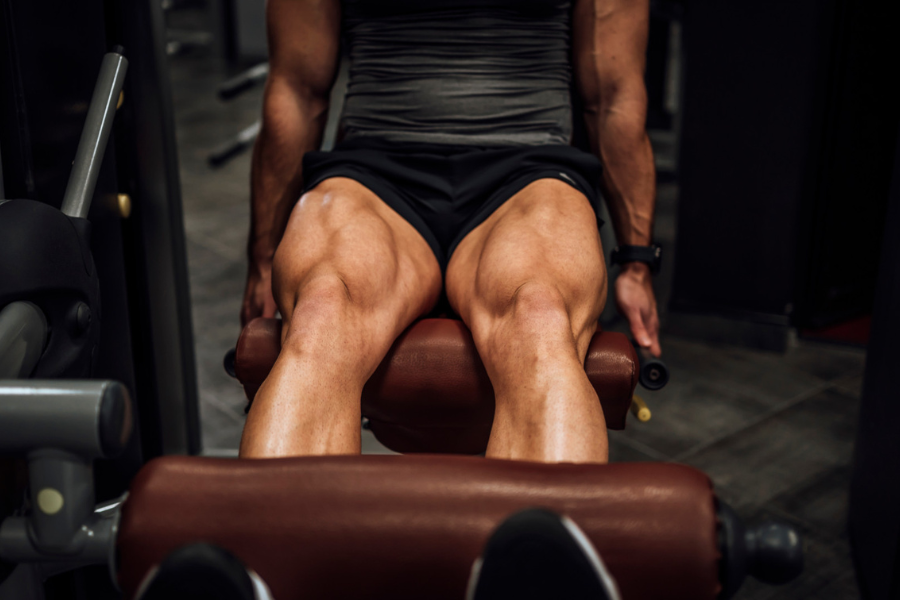
Leg presses and leg extensions are excellent tools because they let you load your quads hard while giving your back more support.
- Leg press lets you adjust foot placement to shift tension toward your quads.
- Leg extensions isolate the quads so you can push closer to failure in a more controlled way.
According to the same Gymshark guide, these exercises are highly effective for hypertrophy because they allow heavy, targeted loading with less demand on your core and lower back.
For more quad focus on leg press, keep your feet a little lower on the platform and think about driving your knees forward over your toes, not just pushing with your hips.
Do not skip unilateral movements
Single leg work helps correct imbalances and builds stability that carries over into every other lift. It also lets you get a deep stretch on each leg without needing as much weight.
Great options include:
- Lunges with the front foot on a small plate or step
- Bulgarian split squats with a short stance and upright torso
When you elevate your front foot on lunges, you can drop deeper and increase knee flexion. With Bulgarian split squats, a shorter stance and your knee tracking over your toes increases quad loading and improves balance and core strength. These unilateral movements are strongly recommended for symmetrical quad hypertrophy in 2024 programming advice from Gymshark and RP Strength.
Train through a full range of motion
If there is one “secret” that most people skip, it is how deep you go.
For maximal quad hypertrophy, research based guides emphasize deep range of motion, even though it is more uncomfortable. This means:
- Squats where your hips travel all the way down so your butt approaches or reaches your calves
- Leg presses where your knees come down to the sides of your chest in a controlled way
This stretch under load is a powerful independent driver of muscle growth. In other words, the hardest bottom part of the rep is where a lot of your gains come from, as highlighted by Gymshark and RP Strength summaries in June 2024.
You may need to start with lighter weights at first so you can control this deeper range. Over time, as your mobility and strength improve, you will be able to load these deep positions heavier and see your quads respond.
Think of depth as a long term investment. Slightly lighter but deeper reps now usually beat heavy, shallow reps for size in the months ahead.
Dial in sets, reps, and weight
Once you have your main exercises, the next step is setting up your training volume and intensity so you can grow steadily without stalling.
How many sets per week for quads
A useful target range for most lifters is at least 10 hard sets of quad work per week. That often looks like:
- 2 quad focused sessions per week
- 2 to 3 exercises per session
- 3 to 4 sets per exercise
This puts you in the ballpark of the Minimum Effective Volume and the Maximum Adaptive Volume ranges described in quad hypertrophy guides from RP Strength. Those concepts, known as MV, MEV, MAV, and MRV, help define how much training you need to maintain, start growing, grow optimally, and the most you can recover from.
You do not need to memorize every acronym. What matters is that you start on the lower end of that set range and add volume slowly only when you are recovering well and still progressing.
Rep ranges that build muscle
Quads respond well to several rep ranges if the sets are challenging:
- Heavy: 5 to 10 reps
- Moderate: 10 to 20 reps
- Light: 20 to 30 reps
Guides updated in 2024 suggest that about half of your sets should be in the moderate 10 to 20 rep range, with the rest split between heavy and light work, for a good balance of muscle growth and fatigue management.
A simple way to apply this is:
- Squats and leg presses in the 5 to 12 rep range
- Leg extensions and other isolation work in the 12 to 20 plus rep range to keep your joints happier
As long as you keep the load between about 30 to 85 percent of your one rep max, and you push close to failure with good form, you will be in the effective hypertrophy zone.
Rest periods between sets
You do not have to time rests perfectly, but you should rest long enough to perform quality sets.
- For heavy compound lifts, rest 2 to 3 minutes.
- For lighter isolation work, 60 to 90 seconds is usually enough.
Guides on quad training volume recommend aiming for “very good” but not perfect recovery between sets so you can maintain performance without dragging out your sessions unnecessarily.
Plan your weekly quad training
Your quad hypertrophy workout does not live in isolation. It needs to fit into your week in a way that you can recover from.
How often should you train quads
Most people grow well training quads 2 to 3 times per week, as long as you spread the volume out and allow roughly 48 hours of recovery between hard sessions.
Quad programming guides suggest that frequency can range from 2 to 5 sessions per week depending on your recovery ability, but the majority of lifters do best around 2 or 3 sessions, especially if you are also training hamstrings and glutes hard.
You can adjust frequency based on:
- How sore you feel going into the next session
- Whether your strength is stable or progressing
- How mentally ready you feel to push hard sets again
If you are constantly dragging or your joints ache, you might be bumping into your Maximum Recoverable Volume and you probably need to reduce sets or frequency.
Sample weekly quad setup
Here is a simple but effective way to arrange your training for growth:
Day 1, Heavy emphasis
- Front squat, 3 to 4 sets of 5 to 8 reps
- Leg press, 3 sets of 8 to 12 reps
- Bulgarian split squat, 2 to 3 sets of 8 to 10 reps per leg
Day 2, Moderate to high rep emphasis
- Heel elevated goblet squat or hack squat, 3 sets of 10 to 15 reps
- Leg press (feet lower on platform), 3 sets of 12 to 15 reps
- Leg extension, 3 sets of 15 to 20 reps
This gives you a mix of heavy and moderate work, hits your quads through a full range of motion, and fits comfortably within that 10 plus set per week guideline.
Pay attention to foot placement and form
Small adjustments in technique can dramatically increase how much your quads do compared to your hips and glutes.
Foot and knee positioning
To maximize quad recruitment, current 2024 guides recommend:
- Elevating your heels with a small plate or slant board in squats and lunges to increase knee travel
- Keeping your feet slightly lower on leg press or hack squat platforms so your knees bend more
- Letting your knees track over your toes instead of forcing them to stay behind them
This forward knee travel, combined with an upright torso, places more tension on the quads and less on your hips. Done with control and gradually increasing loads, it can be safe and very effective for hypertrophy, as emphasized in Gymshark and RP Strength resources.
Control the eccentric and avoid rushing
Muscles grow from tension and mechanical stress, not from how fast you can finish your workout.
On each rep:
- Lower the weight under control for about 2 to 3 seconds
- Pause briefly in the bottom so you are not bouncing
- Drive up with intent while maintaining your form
This is especially important when training deep ranges of motion. Controlled eccentrics reduce joint irritation and make it easier to hit that valuable stretch under load.
Adjust as you progress
Your ideal quad hypertrophy workout will change over time. The plan that works well for your first three months will probably need tweaks by month six.
You might need to:
- Add a set or two per week if your progress stalls and you are recovering well
- Swap out an exercise that starts to bother your knees or hips
- Rotate exercises every mesocycle to avoid staleness and target slightly different regions
Guides from RP Strength recommend using 2 to 5 different quad exercises per week and rotating them periodically, rather than constantly adding more. This gives you variety without overwhelming your program.
Pay attention to trends. If your loads and reps are moving up over time and your quads feel fuller and stronger, you are on the right track. If you feel beat up and stuck, take a deload week or reduce your volume for a short period before ramping back up.
Bringing it all together
A smart quad hypertrophy workout follows a few key principles:
- Train with quad focused compounds like front squats, heel elevated squats, and leg presses.
- Include isolation and unilateral work so you can push close to failure safely and fix imbalances.
- Use a deep, controlled range of motion to take advantage of stretch under load.
- Aim for at least 10 challenging sets of quads per week across 2 or more sessions.
- Mix heavy, moderate, and light rep ranges, with most of your work in the 10 to 20 rep zone.
- Adjust your foot placement and technique to shift more work to your quads.
Start by improving just one part of your current routine, for example, squatting a little deeper with lighter weight or adding a second quad focused day. As you refine the rest of these elements over time, you will see your quads respond with more size, strength, and stability in everything you do.
About the Author