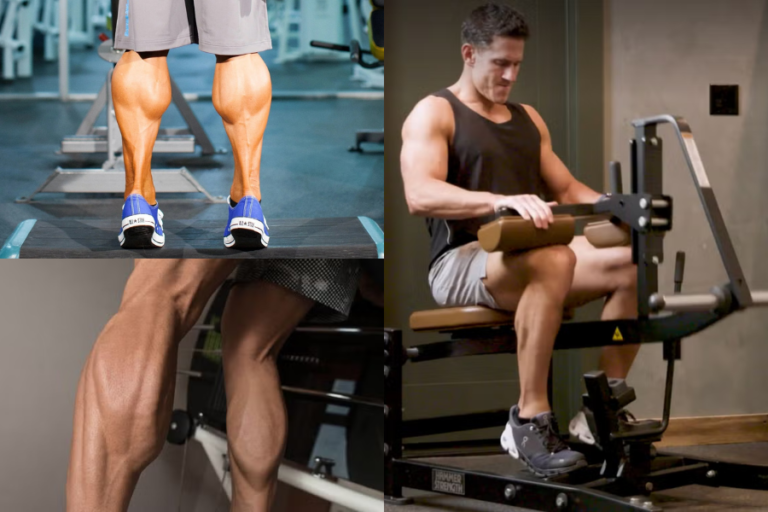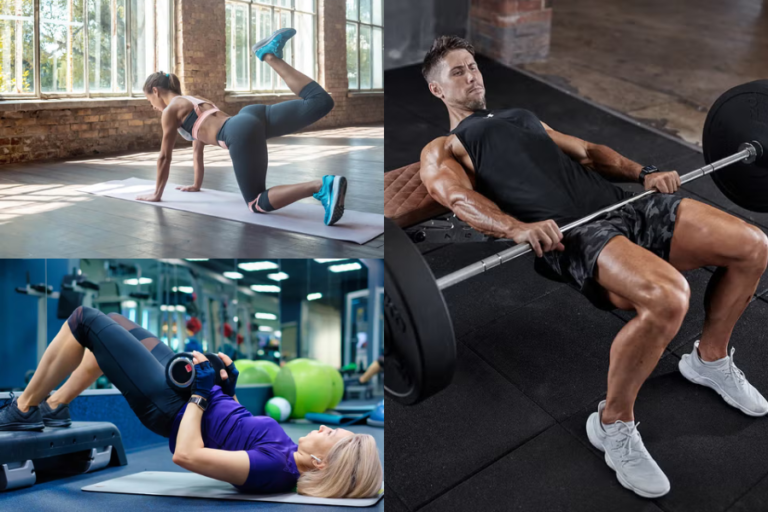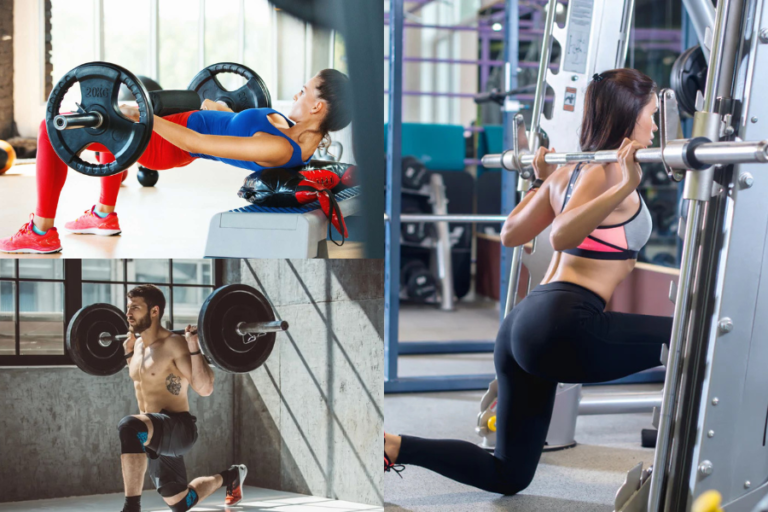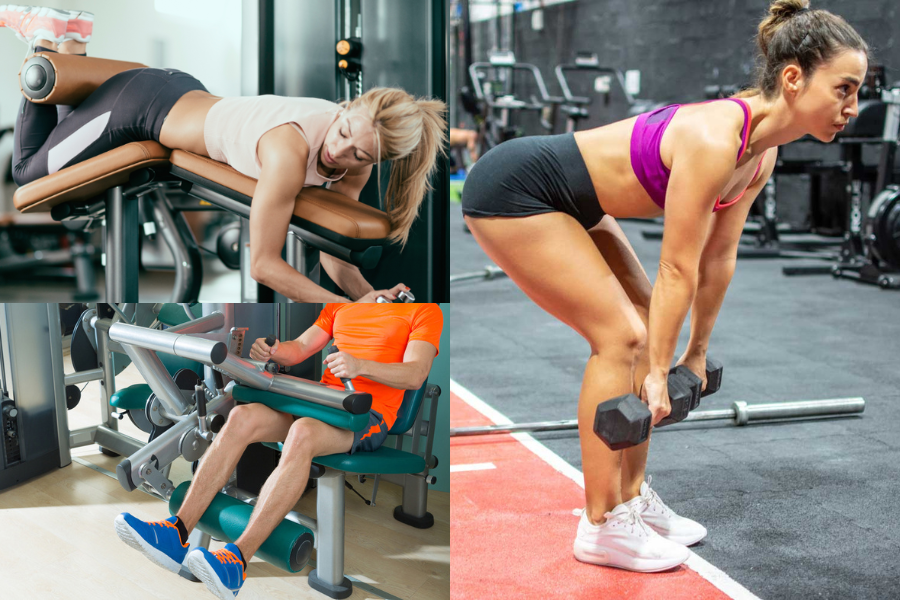
A strong hamstring workout with a barbell builds power, protects your back, and makes everyday movement feel easier. By focusing on hip hinge patterns like deadlifts, Romanian deadlifts, and good mornings, you can train your hamstrings for strength, size, and injury resistance without needing a lot of equipment.
Below, you will learn exactly how to structure a barbell hamstring session, how to perform the key lifts with safe form, and how to adjust the workout for your experience level.
Understand why hamstrings matter
Your hamstrings are more than “back of the leg” muscles. They help bend your knees, extend your hips, and stabilize your pelvis when you walk, run, or lift. The three main muscles are the biceps femoris, semitendinosus, and semimembranosus, and each contributes slightly differently to hip and knee movement, so you want your training to hit them from multiple angles as recommended in a 2026 Muscle & Fitness article.
Strong hamstrings support your glutes and lower back during any hip hinge movement. Barbell exercises are especially effective because they let you load these muscles heavily and progressively, which is key for strength and hypertrophy.
Key benefits of a hamstring workout with barbell
When you center your lower body day around a hamstring workout with barbell, you get several advantages in one session:
- Heavy compound lifts like deadlifts and Romanian deadlifts recruit your hamstrings, glutes, back, and core together, which is efficient for strength and muscle gain.
- Hip hinge training improves your stride, jump, and acceleration, which translates to better athletic performance and more powerful daily movement, as discussed by Dumbbells Direct in 2026.
- Eccentric-focused work, such as slow Romanian deadlifts, builds resilience in the hamstring tissue, which can lower your risk of strains and pulls.
- Barbell setups are easy to adjust in small weight increments, so you can track progress week to week and steadily increase load.
You will still want some knee flexion work like leg curls or Nordic curls for complete development, but barbell movements should form the backbone of your hamstring training.
Learn the main barbell hamstring exercises
In this section, you will walk through the major lifts you can use in your hamstring workout with barbell, along with simple technique cues.
Conventional deadlift
The barbell deadlift is a cornerstone lift. It trains your hamstrings, glutes, and entire posterior chain while also challenging your grip and core. Because you can move heavy loads, it is one of the fastest ways to build overall lower body strength.
How to perform it:
- Stand with your midfoot under the bar so it is roughly over your shoelaces.
- Grip the bar just outside your knees, keep your chest up, and brace your core.
- Push your hips back slightly, then drive through your feet to stand up, keeping the bar close to your shins and thighs.
- Lock out by squeezing your glutes, then reverse under control and set the bar down with a neutral spine.
The conventional deadlift recruits quadriceps, glutes, adductor magnus, and hamstrings together. Research notes the bar is typically about 225 mm off the ground when using standard 45 pound plates, so if you are a beginner you can start with lighter plates but still replicate this bar height by using blocks or mats.
Romanian deadlift (RDL)
The Romanian deadlift is often considered the star barbell hamstring exercise. It emphasizes the hip hinge with a soft knee bend and targets your hamstrings and glutes more directly than the conventional deadlift by focusing on the lowering phase.
How to perform it:
- Start standing tall with the bar in your hands at hip level.
- Slightly bend your knees and lock that angle in place.
- Push your hips back as if you are closing a door with your glutes, while keeping the bar very close to your legs.
- Lower the bar over 2 to 3 seconds until you feel a strong stretch in your hamstrings or just before your lower back wants to round.
- Drive your hips forward to stand back up, squeezing your glutes at the top.
According to the Journal of Strength and Conditioning Research, RDLs produce high EMG activation in the semitendinosus and biceps femoris, which makes them a top choice for hamstring growth. Other training advice in 2024 suggests you focus on that eccentric, or lowering, phase to build a stretch reflex in the hamstrings and to keep the movement clearly different from a squat pattern.
For muscle growth, aim for sets of 8 to 10 reps with a controlled tempo rather than chasing your absolute max weight.
Stiff leg deadlift
The stiff leg deadlift is similar to the RDL but with even less knee bend. This increases the stretch and tension on your hamstrings and can be especially useful if you are aiming to increase hamstring mass and flexibility.
Key distinctions:
- Your knees are only slightly unlocked, and you keep them nearly fixed.
- You hinge deeply at the hips, which lengthens the hamstrings more than a conventional deadlift.
- The bar still stays close to your legs to protect your lower back.
Because the stretch is more intense, you will likely use less weight than your RDL, and you should move slowly to avoid pulling the muscle.
Barbell good morning
The good morning is a classic barbell hamstring move that looks like a bow. You place the bar on your upper back, then hinge forward, which trains your hamstrings and glutes in a lengthened position while also improving core stability.
How to perform it:
- Set the bar across your upper back like a back squat, and step out from the rack.
- Place your feet about hip width apart and brace your core.
- With a slight bend in your knees, push your hips back and lean your torso forward while keeping your spine neutral.
- Stop when you feel a strong hamstring stretch or when your torso reaches roughly parallel to the floor.
- Drive your hips forward to return to standing.
Using moderate weights here is usually more effective than going heavy, because you want time under tension without compromising your lower back. As noted in recent training guidance, good mornings provide a significant stretch and can be beginner friendly when you build up gradually.
Barbell hip thrust
While the hip thrust is often labeled a glute exercise, it also activates your hamstrings significantly and belongs in a well rounded hamstring workout with barbell.
How to perform it:
- Sit on the floor with your upper back against a bench and roll the bar over your hips.
- Plant your feet flat with knees bent about 90 degrees.
- Drive through your heels to lift your hips until your body forms a straight line from knees to shoulders.
- Squeeze your glutes and hamstrings at the top, then lower under control.
A 2021 PLoS One study found that barbell hip thrusts can load the hamstrings and glutes effectively while placing less stress on the lower back compared to traditional lifts like deadlifts and back squats. That makes them a good option if you are careful with your back.
Nail your technique and safety cues
Proper form protects your joints and also ensures your hamstrings, not your lower back, do most of the work.
Focus on these principles across all barbell hamstring exercises:
- Maintain a neutral spine from head to tailbone. Avoid rounding or excessive arching.
- Engage your lats by lightly pulling the bar toward you, which stabilizes your upper back.
- Keep the bar as close to your body as possible on deadlifts and RDLs, almost “dragging” it along your legs.
- Control both descent and ascent. Fast, uncontrolled reps reduce muscle activation and raise injury risk.
- Build your hip hinge pattern first. Beginners can practice with a PVC pipe along their spine or use wall assisted single leg RDLs before loading a bar, as suggested in 2024 coaching advice.
Grip strength can limit how much you can load your RDLs and deadlifts. You can improve grip with chalk, a double overhand hook grip, or straps. Just keep in mind that straps help you lift more weight but do not train grip strength itself.
Build an effective barbell hamstring workout
You can tailor your hamstring workout with barbell to your experience level and goals, but a simple structure works for most people:
- Start with a heavy compound barbell movement.
- Add a secondary hip hinge variation.
- Finish with a knee flexion exercise for complete development.
Here are three sample templates based on the research, which you can adapt to your needs.
Always warm up before you start heavy sets. Spend at least 5 to 10 minutes on light cardio, dynamic leg swings, and bodyweight hinges or light RDLs to prepare your hamstrings and hips.
Beginner friendly routine
If you are new to barbell training, this routine focuses on learning the hinge pattern and building a base.
- Romanian deadlift: 3 sets of 8 to 10 reps
- Barbell good morning: 3 sets of 10 to 12 reps
- Seated leg curl or lying leg curl: 3 sets of 12 to 15 reps
Begin with light to moderate weights that let you maintain form. Concentrate on slow lowering phases, especially on the RDL, to groove the movement and feel the hamstrings working.
Strength focused routine
Once you have solid technique, you can prioritize strength and size with heavier loads.
- Conventional deadlift: 4 sets of 4 to 6 reps
- Stiff leg deadlift: 3 sets of 6 to 8 reps
- Glute ham raise or Nordic curl: 3 sets of 6 to 10 reps
This structure, which is consistent with strength programs described in the research, lets you push heavy on the deadlift while the stiff leg deadlift and knee flexion move emphasize your hamstrings under stretch and through full range of motion.
Athletic performance routine
If you care about speed, balance, and unilateral strength, you can add single leg work.
- Romanian deadlift: 3 sets of 6 to 8 reps
- Single leg RDL (with barbell or dumbbell): 3 sets of 8 to 10 reps per leg
- Nordic hamstring curl: 3 sets of 4 to 6 reps
The International Journal of Exercise Science has noted that Romanian deadlifts and single leg deadlifts are highly effective for activating the biceps femoris and gluteus medius, which are important for running and cutting.
Program your volume and progression
Many lifters unintentionally undertrain their hamstrings. Advice from Muscle & Fitness in 2026 suggests aiming for at least 10 dedicated hamstring sets per week, not counting quad focused work like squats.
You can apply that guideline by:
- Training hamstrings 1 to 2 times per week.
- Accumulating 3 to 5 working sets per main exercise in the 6 to 12 rep range for most barbell lifts.
- Gradually adding weight or reps each week, as long as your form remains consistent.
You can also introduce intensity techniques sparingly, such as drop sets or rest pause sets on your final set of RDLs or leg curls, to push closer to muscular failure. The key is to keep your technique controlled so that the hamstrings, not your lower back, take the load.
Add finishing touches for complete development
Barbell movements mainly train the hamstrings in their hip hinge function, which is crucial but not the whole picture. To fully cover knee flexion and reduce injury risk, combine your barbell work with:
- Seated leg curls
- Lying leg curls
- Nordic hamstring curls
- Glute ham raises
Research notes that neglecting knee flexion means you may miss parts of hamstring function, especially if you only hinge. Slowing your reps and using a full range of motion on these curls further increases their effectiveness, as highlighted in the 2026 guidance.
Putting your barbell hamstring plan into action
If you are ready to upgrade your lower body training, pick one of the sample routines and run it for 6 to 8 weeks. Focus on mastering the hip hinge, using slow controlled reps, and steadily increasing the load while keeping your form tight.
With a consistent hamstring workout with barbell, you will build stronger, more powerful legs, support your back, and make your entire training program feel more stable and explosive.
About the Author