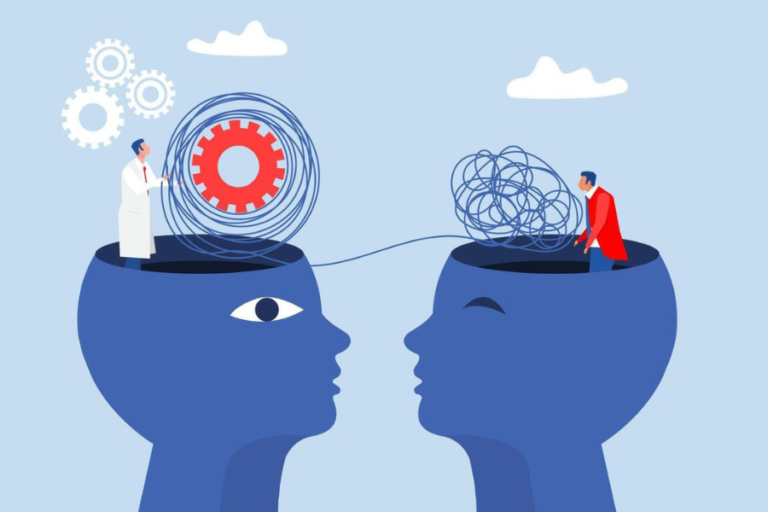
Understand what emotional resilience really is
If you are working on improving your mental health, building emotional resilience may be one of the most effective steps you can take. Emotional resilience is not about never feeling stressed or upset. It is about how you respond when life gets hard and how quickly you can find your footing again.
Researchers describe resilience as your ability to adapt to adversity, trauma, or major stress and still keep going in a healthy way (Indian Journal of Psychiatry). The World Health Organization also includes resilience as part of positive mental health, which it defines as a state where you can cope with ordinary life stresses, work productively, and contribute to your community (Industrial Psychiatry Journal).
Emotional resilience means you can:
- Feel difficult emotions without being completely overwhelmed
- Find a way to keep functioning, even when things are tough
- Recover, learn, and grow from setbacks instead of staying stuck
You still feel sadness, frustration, fear, or grief. The difference is that you trust you can handle those feelings and you believe that the pain is temporary, not permanent (PositivePsychology.com).
See why resilience is so good for your mental health
Building emotional resilience is one of the best mental health moves you can make because it supports almost every part of your well-being.
You handle stress more effectively
Resilience gives you tools to cope instead of collapse. When something stressful happens, you are less likely to:
- Spiral into worst-case thinking
- Turn to unhealthy coping like substance use or risky behavior (Mayo Clinic)
- Feel stuck on the problem with no way forward
Instead, you can step back, calm your body and mind, and look for realistic next steps.
You lower your risk of mental health problems
Stronger resilience can help protect you from conditions such as depression and anxiety and can also help you manage them if you already live with these challenges (Mayo Clinic). Research has found that resilience is linked to:
- Better emotional regulation
- Healthier coping in the face of trauma, bullying, or loss
- Fewer psychological symptoms in school and community programs that focus on resilience skills (Indian Journal of Psychiatry)
You increase your overall life satisfaction
Resilience is closely tied to optimism, self-esteem, and a sense of purpose (Industrial Psychiatry Journal). These qualities help you:
- Feel more confident in your ability to navigate life
- Notice what is going well, not only what is going wrong
- Make choices that line up with your values and long-term goals
Over time, this supports better physical health, stronger relationships, and more satisfaction with your work and personal life (Industrial Psychiatry Journal).
Know the key ingredients of emotional resilience
When you think about building emotional resilience, it helps to understand what you are actually strengthening. Researchers describe three main foundations: body, mind, and relationships.
Physical foundation: Your body
Your physical health supports your emotional stamina. According to PositivePsychology.com, one layer of resilience is your physical strength and vitality, which include your energy level, sleep, and overall health behaviors (PositivePsychology.com). When your body is run down, everyday stress can feel much harder to manage.
Mental foundation: Your thoughts and emotions
A second layer involves how you think and feel. This includes:
- Self-esteem and self-acceptance
- Your ability to calm yourself when you are upset
- Flexible thinking instead of rigid, all-or-nothing beliefs
- Optimism and a hopeful outlook (Industrial Psychiatry Journal)
Emotional intelligence, including how you perceive and manage emotions, is also strongly tied to resilience. People who understand their feelings tend to see themselves as more resilient (Indian Journal of Psychiatry).
Social foundation: Your connections
The third layer is your relationships. Supportive connections and cooperation with others are crucial for resilience (PositivePsychology.com). You are more resilient when you:
- Have at least one person you can be honest with
- Feel you can ask for help without shame
- Offer support to others, not just receive it
Mayo Clinic also highlights that reaching out for support is a key part of resilience, not a sign that you are failing to cope on your own (Mayo Clinic).
Learn why resilience is a skill, not a fixed trait
If you sometimes feel easily overwhelmed, you might assume you are just “not resilient.” Research shows that is not true.
Studies describe resilience as a dynamic process that changes throughout your life and can be strengthened at any age (Indian Journal of Psychiatry; Harvard University Center on the Developing Child). While some people may have natural tendencies that help, your environment and your daily practices play a big role.
Here is what the research suggests:
- Resilience grows in supportive, nurturing environments that encourage skills like social competence, self-reflection, and autonomy (Industrial Psychiatry Journal).
- Learning to cope with manageable stress, sometimes called “positive stress,” helps children and adults build resilience muscles over time (Harvard University Center on the Developing Child).
- Structured programs that teach resilience skills in schools and communities show moderate success in reducing anxiety, depression, and distress in young people (Indian Journal of Psychiatry).
This means you are not stuck with your current level of resilience. You can actively train it, just like you would train your body.
Use mindfulness as a core resilience tool
One of the most researched ways to start building emotional resilience is mindfulness. Mindfulness means paying attention, on purpose, to the present moment with curiosity rather than judgment.
How mindfulness strengthens resilience
Several studies highlight mindfulness as a powerful way to improve resilience:
- Mindfulness helps you stay in the present instead of being pulled into worries about the future or regrets about the past. This supports emotional balance and quicker recovery from difficult events (Psych Central).
- A 4-day intensive mindfulness meditation program led to improved resilience that lasted up to three months for participants (Psych Central).
- For millennials, a 4-week supervised mindfulness program improved both resilience and psychological well-being, and reduced distress at work, especially around heavy workloads and time pressure (Frontiers in Psychology).
Mindfulness seems to act as a bridge between feeling better and becoming more resilient. As you grow more mindful, you often become more aware, more accepting, and more able to regulate emotions, which all support resilience (Frontiers in Psychology).
Simple mindfulness practices you can try
You do not need long retreats or complicated routines to get started. You can build mindfulness into your day with small, practical exercises.
1. The 5-4-3-2-1 grounding technique
This is a quick way to come back to the present when you feel overwhelmed or anxious (Psych Central).
Look around and notice:
- Five things you can see
- Four things you can touch
- Three things you can hear
- Two things you can smell
- One thing you can taste
Move slowly through each step, really paying attention. You are teaching your brain that you can shift out of racing thoughts and into the here and now.
2. Progressive muscle relaxation (PMR)
PMR helps you release tension in your body, which often builds up when you are stressed. Research shows it can reduce stress and improve well-being (Psych Central).
Try this:
- Sit or lie down comfortably.
- Starting with your feet, gently tense the muscles for 5 seconds, then release.
- Move up through your body: calves, thighs, stomach, hands, arms, shoulders, face.
As you practice, you become more aware of subtle tension and more skilled at letting it go.
3. Short daily mindfulness moments
You can also weave brief mindfulness pauses into your existing routine:
- Before opening your email, take three slow breaths and feel your feet on the floor.
- While drinking water, notice the temperature, taste, and sensation of swallowing.
- During a walk, pay attention to the movement of your body and the sounds around you.
Even a few minutes of intentional attention each day can slowly build your resilience over time.
Practice small daily habits that build resilience
Beyond mindfulness, several simple habits can support you in building emotional resilience. You do not need to do everything at once. Start with one or two that feel manageable.
Challenge unhelpful thoughts
Emotional resilience training often focuses on replacing negative thoughts with more balanced ones (PositivePsychology.com). When you notice a thought like “I always fail,” try to:
- Pause and name it as a thought, not a fact.
- Ask yourself, “Is this completely true?”
- Look for a more accurate, kinder version, such as “Sometimes things do not go how I want, but I have handled challenges before.”
This does not mean forcing fake positivity. Instead, you are aiming for realistic, compassionate thinking that keeps you open to possibilities.
Keep a brief gratitude or wins list
A simple gratitude or “small wins” journal can gently train your brain to notice what is going right, not only what is wrong. PositivePsychology.com suggests gratitude as one of several practical resilience exercises (PositivePsychology.com).
You can try:
- Writing down three things you are grateful for each night.
- Or listing one thing you handled well each day, even if it is tiny.
This can help shift your focus from constant threat to moments of safety and success, which strengthens hope.
Track your patterns with A-B-C
Another useful tool is the A-B-C method, which helps you build self-awareness (PositivePsychology.com):
- A: Antecedent, what happened right before you reacted
- B: Behavior, what you did or how you responded
- C: Consequence, what happened next, including how you felt
For example:
- A: Your friend canceled plans.
- B: You immediately thought “Nobody really likes me” and withdrew.
- C: You felt lonely and hurt for the rest of the evening.
Once you see the pattern, you can start experimenting with different thoughts or responses next time, which is the heart of resilience building.
Strengthen your support network
Research from the Harvard Center on the Developing Child describes supportive relationships plus active skill-building as the core of resilience (Harvard University Center on the Developing Child). Even as an adult, connection matters.
You can:
- Reach out to one person you trust and let them know you are trying to take better care of your mental health.
- Join a community group, class, or online forum where you can share experiences and feel less alone.
- Practice being there for others. Offering support can strengthen your own sense of purpose and connection.
Remember, asking for help is part of resilience, not a failure of it.
Consider structured support and therapy
If you are dealing with intense stress, trauma, or ongoing mental health symptoms, you do not have to build emotional resilience on your own. Certain therapies are specifically designed to strengthen resilience and emotional intelligence.
The Indian Journal of Psychiatry notes that several psychotherapeutic approaches draw on resilience principles (Indian Journal of Psychiatry):
- Cognitive Behavioral Therapy (CBT) helps you identify and change unhelpful thought patterns and behaviors.
- Mindfulness-based therapies combine mindfulness practices with psychological tools to reduce stress and improve emotional balance.
- Problem-solving therapy teaches you step-by-step skills for tackling real-life challenges.
- Acceptance and Commitment Therapy (ACT) helps you accept difficult feelings while moving toward your values.
Resilience-based interventions are often most effective when tailored to your individual needs. A mental health professional can help you identify your strengths, your current coping style, and specific skills worth practicing (Indian Journal of Psychiatry).
Help children and teens build resilience early
If you care for kids or teens, supporting their resilience is one of the best long-term gifts you can offer for their mental health.
The Harvard Center on the Developing Child explains that:
- Resilience helps reduce the impact of serious adversity or toxic stress on development.
- Not all children exposed to hardship develop resilience, which is why support and understanding are so important.
- Learning to cope with manageable stress is necessary for resilience to grow.
- The abilities that underlie resilience can be strengthened at any age (Harvard University Center on the Developing Child).
You can support younger people by:
- Providing stable, caring relationships where they feel heard and safe.
- Allowing them to face age-appropriate challenges, instead of removing every difficulty.
- Helping them name their feelings and practice problem-solving.
Teacher-led and school-based resilience programs have shown moderate success in improving resilience and reducing emotional symptoms in children and adolescents (Indian Journal of Psychiatry). If you have the option, you might explore whether such programs are available in your community.
Put it all together in a simple starter plan
To make building emotional resilience feel less abstract, you can turn it into a short weekly experiment. Here is one way to start:
Daily
- Practice 5 minutes of mindfulness or the 5-4-3-2-1 grounding technique.
- Write down one thing you are grateful for or one small win.
A few times a week
- Use the A-B-C method to reflect on one stressful moment.
- Reach out to someone you trust, even with a brief message or call.
Once a week
- Notice one unhelpful recurring thought and gently challenge it.
- Ask yourself, “What helped me cope this week?” and “What could I try differently next week?”
If symptoms are heavy or you feel stuck, consider talking with a mental health professional about resilience-focused therapies.
Key takeaways
- Emotional resilience is your ability to adapt to hardship and recover from stress in a healthy way, not a promise that you will never struggle.
- Building emotional resilience supports your mental health, reduces the risk of conditions like depression and anxiety, and improves your overall quality of life (Mayo Clinic; Industrial Psychiatry Journal).
- Resilience rests on three main foundations: physical vitality, mental and emotional skills, and supportive relationships (PositivePsychology.com).
- Mindfulness practices like grounding, meditation, and progressive muscle relaxation have strong research support for improving resilience and psychological well-being (Psych Central; Frontiers in Psychology).
- Resilience is learnable at any age. With small daily habits, meaningful connections, and professional support when you need it, you can steadily strengthen your capacity to face life’s challenges.
You do not have to transform your life overnight. Choose one practice that feels doable today, try it for a week, and notice how your ability to meet stress begins to shift. Each small step is part of building emotional resilience and taking care of your mental health.
About the Author