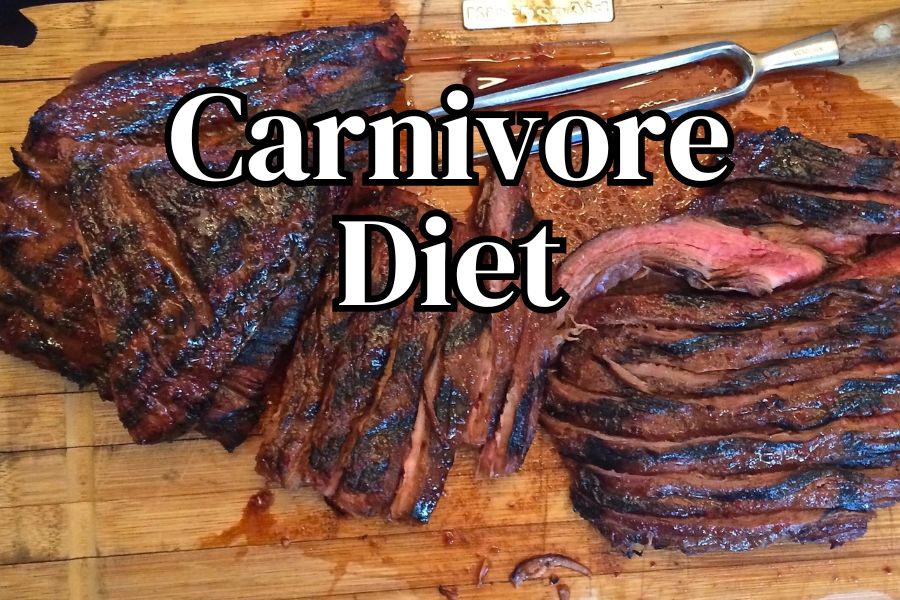
A carnivore diet can feel refreshingly simple. Meat, eggs, maybe some dairy, and you are done. Then you start reading about vitamin C, electrolytes, and long term nutrient gaps, and suddenly it is not so simple anymore.
This guide walks you through carnivore diet supplements in a friendly, practical way so you can support your health while keeping your plate meat focused. You will see where the diet shines, where it tends to fall short, and how to choose supplements that fill real gaps instead of cluttering your cabinet.
Understand what the carnivore diet provides
Before you decide which carnivore diet supplements you need, it helps to understand what you are already getting in abundance.
When you eat only animal foods like meat, fish, and eggs, you typically take in plenty of:
- Protein and essential amino acids
- B vitamins, especially B12 and niacin
- Iron and zinc
- Vitamin A (especially from liver)
- Selenium and phosphorus
A 2024 analysis of theoretical carnivore meal plans for adults in Australia found that several nutrients met or exceeded national nutrient reference values, including riboflavin, niacin, vitamin B6, vitamin B12, phosphorus, zinc, selenium, and vitamin A (PubMed). A similar 2025 review reported the same pattern of strengths (News-Medical).
So you are not starting from zero. Your diet already covers many essentials, especially if you include a mix of red meat, poultry, eggs, and some seafood.
The challenge is that you are also removing entire food groups. That is where the gaps appear.
Know the common nutrient gaps on carnivore
Because the carnivore diet excludes fruits, vegetables, and whole grains, several vitamins and minerals become harder to get from food alone.
Across multiple analyses, carnivore style meal plans repeatedly fell short of recommended intakes for:
- Vitamin C
- Magnesium
- Calcium
- Potassium
- Folate and iodine in some cases
- Dietary fiber
The 2024 Australian modeling study found that all four carnivore meal plans were below national reference values for thiamin, magnesium, calcium, and vitamin C and sometimes for iron, folate, iodine, and potassium as well (PubMed). A 2025 study echoed these shortfalls and noted that even when dairy was included, calcium still did not quite reach the 1000 mg per day target (News-Medical).
You also lose essentially all dietary fiber, which the same research flagged as a major limitation of an all meat diet (PubMed).
Experts who work with carnivore eaters generally agree that the diet is rich in protein and certain vitamins, but often lacks vitamin C, magnesium, potassium, calcium if you do not eat dairy, and beneficial plant compounds (Carnivore Snax, Country Life Vitamins).
You do not need to solve every possible gap at once. Instead, start with the nutrients that matter most for daily energy, recovery, and long term health.
Prioritize your essential supplements
Think of your supplement plan in layers. First, cover the non negotiables that are very hard to get from an all animal diet. Then, add extras based on your symptoms, goals, and lab work.
Vitamin C: Your top priority
If you only choose one carnivore diet supplement, vitamin C is the strongest candidate.
Animal foods contain very little vitamin C. Multiple expert reviews state that you simply cannot meet the adult recommendation of around 70 to 90 mg per day from meat and eggs alone (Country Life Vitamins). Yet vitamin C is central for:
- Immune support
- Collagen production for skin, joints, and blood vessels
- Iron absorption
- Wound healing
On a diet that already gives you plenty of iron, supporting absorption with enough vitamin C is especially helpful. A basic vitamin C supplement, taken daily and split into 2 doses if your stomach is sensitive, is usually a simple fix.
Vitamin D and K2: Support bones and immunity
Vitamin D is tricky on any diet. The most potent source is sunlight, not food, and deficiency is common even in people who eat a wide variety of foods (Country Life Vitamins).
On carnivore, you do get some vitamin D from egg yolks and fatty fish, but for many people that is not enough. Nutrition experts typically suggest 600 to 800 IU per day for adults, although your needs may be higher or lower based on blood tests and sun exposure (Country Life Vitamins).
Pairing vitamin D with vitamin K2 is often recommended to help direct calcium to your bones instead of soft tissues. For people who spend a lot of time indoors or live in low sunlight regions, a combined vitamin D3 and K2 supplement is a practical daily baseline (Carnivore Snax).
Magnesium and potassium: Calm muscles, steady energy
Magnesium is one of the most consistently low nutrients on a carnivore diet. It is abundant in plant foods, and meat alone often does not meet the 310 to 420 mg per day adults typically need (Country Life Vitamins).
Magnesium is involved in over 300 enzymatic reactions, including muscle relaxation, sleep quality, nerve function, and blood sugar regulation. People who switch to carnivore often notice:
- Muscle cramps
- Trouble falling asleep
- Irritability or restlessness
A moderate dose magnesium supplement in a bioavailable form, such as citrate, glycinate, or malate, can ease many of these symptoms (Carnivore Snax).
Potassium is another mineral that frequently drops when you cut carbohydrates. Starchy vegetables and fruits are major potassium sources, so your intake usually falls on carnivore. Experts suggest 2600 mg per day for women and 3600 mg per day for men (Country Life Vitamins).
Symptoms of low potassium can include fatigue, heart palpitations, and muscle weakness. Because high dose potassium supplements are not appropriate for everyone, it is wise to discuss options with your healthcare provider before you add them.
Balance your electrolytes the smart way
Early on in a carnivore or low carb transition, you lose more water and electrolytes as insulin levels drop. That is why you may feel lightheaded, headachy, or generally off during the first couple of weeks.
Electrolyte formulas tailored for low carb or carnivore can make this phase smoother. Well designed products usually include:
- Sodium, to maintain blood pressure and nerve and muscle function
- Potassium, to support heart rhythm and cellular fluid balance
- Magnesium, to assist over 300 body processes and ease cramps
Experts recommend choosing sugar free products that use well absorbed mineral forms like citrates or chelates, instead of cheap, poorly absorbed salts (Carnivore Snax).
One important caution is sodium. In the 2025 Nutrients modeling study, theoretical carnivore meal plans contained sodium levels 15 to 20 times higher than national recommendations because of generous added salt (News-Medical). That does not mean you must fear salt, but it is a reminder to be intentional.
If you already salt your food heavily, you may not need extra sodium in your electrolyte mix. In that case, look for products that prioritize potassium and magnesium instead, and always talk with your doctor if you have high blood pressure or kidney issues.
Support heart and brain health with omega 3s
Carnivore diets are often rich in fat, but the types of fat matter. If you lean heavily on conventionally raised red meat, you may be getting more omega 6 and saturated fat and not enough omega 3.
Omega 3 fatty acids, especially EPA and DHA, support:
- Brain health and mood
- Heart health
- Joint comfort
- Inflammation control
You can get omega 3s from fatty fish like salmon, sardines, and mackerel. If those are rare on your menu, fish oil or krill oil supplements are a straightforward way to fill the gap. Nutrition experts note that a good omega 3 supplement can help balance more proinflammatory fats and support cardiovascular health (Country Life Vitamins, Carnivore Snax).
Krill oil is often highlighted for its phospholipids and the antioxidant astaxanthin, which may enhance absorption and add extra oxidative stress protection (Carnivore Snax).
Consider a multivitamin as a safety net
If you prefer a simple approach, a well formulated multivitamin designed for active adults can cover many smaller gaps at once.
Multivitamins recommended for carnivore eaters usually include:
- Vitamin C and D
- A mix of B vitamins
- Magnesium, zinc, and other trace minerals
- Sometimes omega 3s, if it is a more comprehensive pack
Several guides suggest that a multivitamin can serve as a “backstop” for nutrients like magnesium, certain electrolytes, and vitamins that are hard to obtain from meat alone (Uncle Gym, Fastic).
You can think of a multivitamin as:
A daily baseline that supports your nutrient status while you fine tune individual supplements based on labs and how you feel.
It is still worth reading labels carefully. Make sure your multivitamin does not rely solely on calcium carbonate if you are trying to improve bone health, and check that it includes meaningful amounts of magnesium and vitamin D, not just token doses.
Use supportive extras when you need them
Once you have your essentials in place, you can look at “nice to have” supplements that address digestion, joints, or performance.
Bone broth and collagen for joints and gut
Bone broth, especially if it is made from grass fed, pasture raised animals and simmered slowly, provides:
- Collagen and gelatin
- Amino acids like glycine and proline
- Minerals and electrolytes
A 2023 article on carnivore diet supplements highlighted bone broth as a natural, nutrient dense option to support gut lining, skin elasticity, and joint comfort (Carnivore Snax). If you do not enjoy sipping broth, powdered collagen is an easy alternative to mix into warm drinks.
Digestive enzymes during transition
When you first move to a high fat, high protein diet, your digestion may need time to adapt. Some people experience bloating, gas, or a heavy feeling after meals.
Digestive enzymes that include support for protein and fat breakdown can ease that process. Country Life Vitamins, for example, notes that betaine hydrochloride and papaya based enzymes can be helpful during the transition to carnivore, especially if you notice discomfort after eating (Country Life Vitamins).
You may not need these long term, but they can be a temporary bridge as your body adjusts.
Tailor supplements to your body and labs
No two carnivore diets look exactly the same. You might eat ribeye for most meals, while someone else relies on ground beef, eggs, and cheddar. You may include dairy and organ meats, or you may not tolerate them.
That is why personalized guidance matters. Recent research on carnivore style meal plans concludes that while the diet can help manage some chronic conditions, it works best alongside tailored nutritional advice and targeted supplementation to prevent micronutrient deficiencies (PubMed, News-Medical).
Here is a simple way to approach personalization:
- Get baseline blood work, including vitamin D, iron studies, B12, and basic electrolytes.
- Note any symptoms that showed up after switching to carnivore, such as cramps, fatigue, brain fog, or hair shedding.
- Start with foundational supplements like vitamin C, vitamin D and K2, magnesium, and omega 3s.
- Recheck labs after a few months and adjust doses or add potassium and a multivitamin if needed.
- Reassess your supplement list once or twice a year so it stays aligned with your actual needs.
A registered dietitian or knowledgeable healthcare provider can help you interpret your results and keep an eye on long term risks, especially if you plan to stay carnivore for years rather than months.
Putting it all together
Choosing carnivore diet supplements does not have to be overwhelming. When you focus on the nutrients that are consistently low on an all meat plan, you can keep your routine simple and effective:
- Use vitamin C daily to cover an unavoidable gap.
- Add vitamin D and K2 to support bones, immunity, and calcium balance.
- Rely on magnesium, and sometimes potassium, to steady your energy and muscles.
- Include an omega 3 source if you rarely eat fatty fish.
- Consider a quality multivitamin as a safety net, plus bone broth or enzymes as needed.
From there, the goal is not perfection. It is about feeling well, staying strong, and making your version of carnivore sustainable. Start with one or two supplements that address your most obvious gaps, then build from there as you learn how your body responds.
About the Author