A strong set of hamstring exercises belongs in every workout routine, whether you are just getting comfortable in the gym or you already log serious miles and heavy lifts. Your hamstrings help you walk, run, climb stairs, squat, and stabilize your pelvis every time you move. When they are weak or tight, you feel it in your knees, hips, and lower back.
Below, you will find a simple guide to hamstring exercises that work for beginners and pros. You will learn what the hamstrings do, how to warm up, and how to choose the right moves for your current level without putting yourself at risk for a pulled muscle.
Understand what your hamstrings actually do
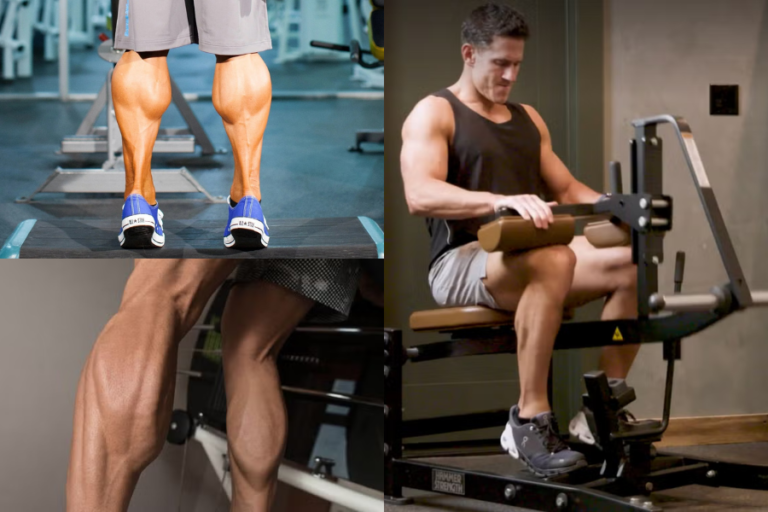
Your hamstrings are a group of three muscles on the back of your thighs, running from your hip to just below your knee. They are called the semimembranosus, semitendinosus, and biceps femoris. Together, they bend your knees and extend your hips, which is what lets you walk, run, squat, and tilt your pelvis comfortably.
Because your hamstrings cross both the hip and knee joints, they also help rotate the knee and slow down your lower leg when you kick forward. This braking action is important for protecting your knees from injury.
If your quads are much stronger than your hamstrings, or if you sit for long hours, your hamstrings can end up both weak and tight at the same time. Peloton instructor Matty Maggiacomo notes that this type of muscle imbalance is especially common in women and can change the way you move and run, often showing up as knee pain or recurring strains.
Warm up before hamstring exercises
You will get more from your hamstring exercises and lower your injury risk if you start with a short warmup. Tight hip flexors and elongated hamstrings from prolonged sitting are a common setup for pulled muscles and even low back issues, so it pays to wake everything up first.
Spend 5 to 8 minutes on a gentle sequence like this:
- Brisk walking or easy cycling for 3 minutes to increase blood flow.
- Dynamic leg swings, front to back and side to side, holding a wall or chair for balance.
- Bodyweight good mornings. Stand tall, soften your knees, and hinge at the hips with your hands on your hips or across your chest.
- A few slow standing marches, lifting your knees toward your chest to get your hip flexors and hamstrings moving together.
For many people, daily movement like this does more for hamstring flexibility than occasionally forcing a deep static stretch.
Start with beginner friendly hamstring exercises
If you are new to strength training, returning from a break, or recovering from a mild hamstring or knee injury, choose simple hamstring exercises that keep the resistance low and the movement controlled.
Seated hamstring squeeze
This is a gentle way to remind your hamstrings how to work without making them angry.
- Sit on a sturdy chair with your feet flat and knees bent.
- Place a rolled towel or small ball behind one heel.
- Press your heel back into the towel as if you are trying to bend your knee more, but do not let the foot move.
- Hold for 5 to 10 seconds, then relax.
Alternate sides and repeat for 8 to 10 total squeezes per leg. This is especially useful if you have had a recent strain or an acute knee injury, because it works the hamstrings without big joint movement.
Simple hamstring curl (standing or prone)
For a standing version:
- Hold the back of a chair or a wall for balance.
- Shift your weight onto one leg.
- Slowly bend the opposite knee and bring your heel toward your glutes.
- Pause, then lower with control.
Aim for 2 sets of 10 repetitions per leg. If standing feels too challenging, you can also do hamstring curls lying on your stomach by bending one knee at a time.
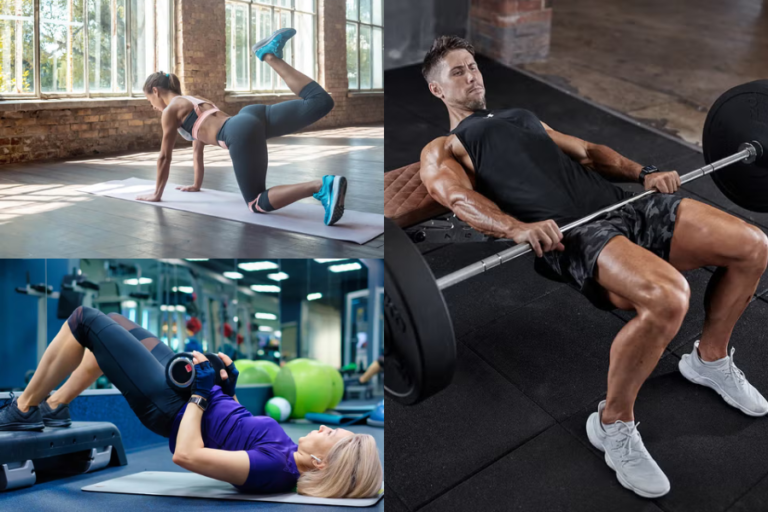
Glute bridge
Glute bridges target your hamstrings and glutes while keeping your back supported.
- Lie on your back with knees bent and feet flat, hip width apart.
- Brace your core and press your heels into the floor.
- Lift your hips until your body forms a straight line from shoulders to knees.
- Squeeze at the top for a second or two, then lower slowly.
You can start with 2 sets of 10 to 12 reps. As this gets easier, move your feet a little farther away from your hips, which places more load on the hamstrings.
Tip: If you notice the back of your thighs working more than your glutes, you may also need to improve hip flexor flexibility so your hamstrings do not have to compensate.
Progress to intermediate hamstring strength moves
Once basic hamstring exercises feel comfortable and you can bridge, curl, and squeeze without pain, you can add more challenging movements that involve hip hinging and greater time under tension.
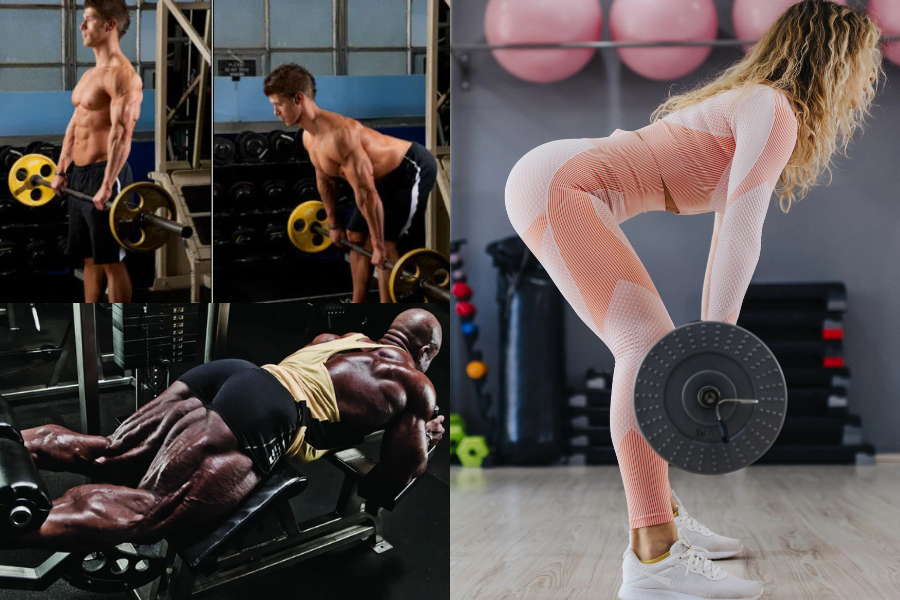
Romanian deadlift with light weights
The Romanian deadlift (often called an RDL) is one of the most popular hamstring exercises because it trains your entire posterior chain: hamstrings, glutes, and back.
- Stand with your feet hip width apart and hold a pair of light dumbbells in front of your thighs with straight but not locked knees.
- Keep your chest open and shoulders back.
- Hinge at the hips, sending them back as you slide the weights down your thighs. Think of closing a car door with your hips.
- Stop when you feel a strong but comfortable stretch in your hamstrings, then push your feet into the ground and return to standing.
Start with 2 sets of 10 reps using very light weights and focus on perfect form. According to the American Council on Exercise, Romanian deadlifts, including single arm or single leg variations, are among the most effective movements for activating your hamstrings in young adults.
Physio ball leg curl
This move challenges your hamstrings, glutes, and lower back, and the unstable surface adds a balance component.
- Lie on your back and place your heels on top of a physioball.
- Brace your core and squeeze your glutes to lift your hips off the floor.
- From this bridge position, slowly curl your heels toward your glutes by pulling the ball toward you.
- Extend your legs again with control without dropping your hips.
A good starting point is 2 sets of 10 reps. If this is too much at first, you can keep your hips lower and just practice bending and straightening your knees.
Good mornings with bodyweight
Good mornings are another hip hinge exercise that teaches you to move from your hips rather than your spine.
- Stand with your feet about hip width apart and hands crossed lightly over your chest.
- Soften your knees slightly.
- Hinge at your hips, keeping your back flat and your eyes on a spot on the floor in front of you.
- When you feel a stretch in the back of your thighs, push through your feet to return to standing.
Start with bodyweight only, then gradually add a light bar or dowel across your upper back if you feel stable.
Try single leg hamstring exercises for balance and control
Single leg hamstring exercises help you address strength differences between your left and right sides. This matters because a significant imbalance is one of the risk factors for hamstring strains, especially in runners and field sport athletes.
Single leg Romanian deadlift
The single leg RDL is a step up from the basic RDL. It strengthens the hamstrings as they shorten and also challenges your hip muscles and balance.
- Stand on your right leg with a soft bend in the knee.
- Hinge forward at the hips while you extend your left leg straight back.
- Keep your torso and lifted leg moving together like a straight line, as if you are tipping over a seesaw.
- Go as low as you can while keeping your back flat, then drive your right foot into the floor to return to standing.
Begin with no weights and aim for 2 sets of 8 to 10 reps per leg. Over time, you can hold a dumbbell or kettlebell in the opposite hand. This exercise also mimics what your hamstring does during the stance phase of running, when it shortens to help you push off the ground.
Kickstand Romanian deadlift
If balancing on one leg is too challenging, the kickstand RDL gives you some support but still emphasizes one side.
- Stand with your feet hip width apart.
- Step your left foot slightly back and place the toes lightly on the floor, heel lifted.
- Shift most of your weight into your right leg.
- Hinge at the hips as you would in a regular RDL, then stand tall again.
Your back leg is there only for balance. Switch sides and repeat. This is a great bridge between two leg and single leg deadlifts.
Single leg deadlift hold
You can also use static holds to build position sense and strength.
- Get into the single leg deadlift position.
- Once you feel your hamstring working, hold the pose for 10 seconds.
- Return to standing and repeat up to 10 times per leg.
This type of isometric training helps your nervous system learn what a strong, stable hip hinge feels like in real time.
Add advanced hamstring exercises when you are ready
If you already lift regularly or play a sport that demands sprinting, cutting, or kicking, you will benefit from more advanced hamstring exercises that emphasize eccentric strength. Eccentric training means your muscles are working while they lengthen, and it is currently seen as one of the most effective ways to prevent hamstring injuries in athletes.
Eccentric isometric Romanian deadlifts
This is a more demanding twist on the standard RDL.
- Use a light to moderate weight that you can control.
- Take 3 to 7 seconds to lower the weight as you hinge at the hips.
- Pause at the bottom of your range for 2 to 5 seconds while you feel a strong stretch in your hamstrings.
- Stand back up at a normal, controlled speed.
This slow, stretched position builds mobility, strength, and muscle size at the same time. It also improves your control at the exact range where many people tend to get injured.
Nordic hamstring curl
Nordic curls are famous for being tough and effective. They train your hamstrings while they lengthen, which is exactly what happens during the late swing phase of sprinting.
- Kneel on a soft surface.
- Have a partner hold your ankles, or anchor your heels under a sturdy surface.
- Keep your hips straight and your core tight.
- Slowly lower your body forward for about five seconds, using your hamstrings to resist gravity as long as you can.
- When you can no longer control the descent, catch yourself with your hands and push back up.
Aim for 3 sets of 5 to 6 reps. Research and field experience show that consistent Nordic curls significantly cut hamstring injury rates in runners and field sport athletes, although you should expect some soreness when you first add them.
Eccentric bridge variations
If Nordic curls are too intense right now, you can start with eccentric bridge work as a more approachable option.
- Lie on your back with feet on a bench or step.
- Lift your hips into a bridge using both legs.
- Shift your weight onto one leg.
- Slowly lower your hips to the floor on that single leg.
- Use both legs to lift again, then repeat the slow lowering on the same side.
Alternate legs and build to 3 sets of 8 to 10 reps per leg. This pattern gives you eccentric training without asking your hamstrings to support your full body weight from the start.
Improve hamstring flexibility safely
Strong hamstrings are only part of the picture. If your muscles are very tight, you will feel stiff and you might be more prone to strains, especially when you suddenly sprint or change direction.
Daily movement is your first tool. Short, frequent sessions often beat infrequent, aggressive stretching. In addition to the dynamic warmup you saw earlier, you can use a few simple stretches.
Common hamstring stretches include:
- A simple seated hamstring stretch with one leg extended and the other bent
- A hurdler style stretch with one leg out to the side
- Standing hamstring stretches for one or both legs, for example placing one heel on a step and hinging forward slightly
- A towel hamstring stretch lying on your back, gently pulling your leg toward you
Static stretches like these are usually held without bouncing. Dynamic stretches move in and out of the position for 60 to 90 seconds with smooth control.
Foam rolling your hamstrings for 2 sets of about 20 seconds can also help relieve muscle spasms and provide some of the benefits of massage, especially when you follow it up with active exercises.
If you have low back pain or sciatica, pay attention to how your body responds. Forward folds and some simple hamstring stretches can aggravate symptoms for certain people. In that case, ease off, choose gentler angles, and talk with a healthcare provider or physical therapist before pushing further.
Know when to get help
Occasional tightness or mild soreness after hamstring exercises is normal, especially if you are trying new movements. However, sharp pain, bruising, or a sudden popping sensation can signal a strain or tear. If pain or tightness does not improve with rest, gentle stretching, and basic strengthening, it is wise to consult a medical professional or physical therapist so you can get a clear diagnosis and a plan that fits your situation.
Hamstring injuries are known to have a relatively high re injury rate, particularly in the first few weeks after returning to sport. A long term approach that combines eccentric strength work, balanced flexibility, and good core and hip control can help keep you moving well for the long run.
By choosing hamstring exercises that match your current level and progressing them gradually, you support everything from your daily walks and gardening sessions to your personal bests in the gym or on the track. Start with two or three of the movements above, practice them consistently for a few weeks, and notice how much steadier and stronger your legs feel.
About the Author