Why bicep training matters
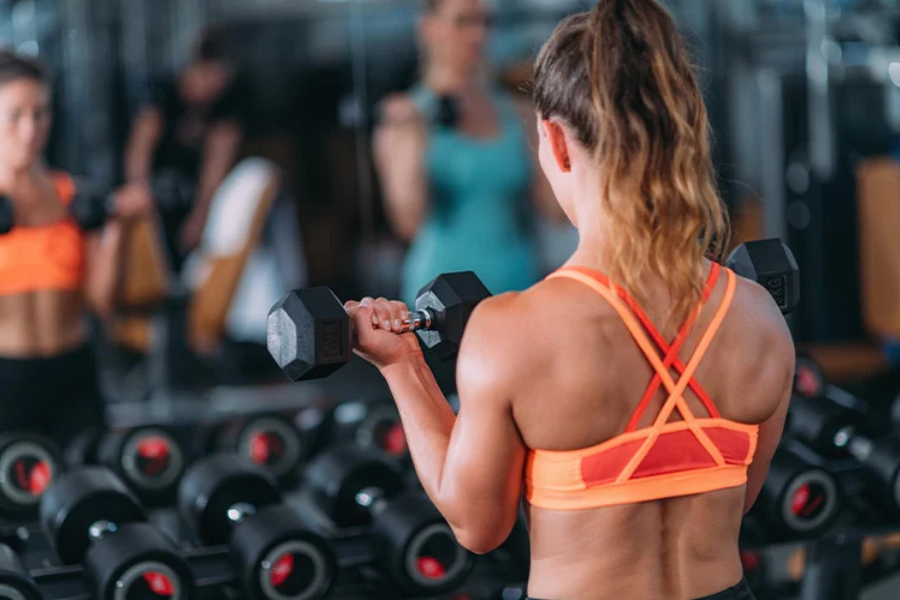
If you want bigger, stronger arms, focusing on the best bicep exercises will give you better results than just curling a random dumbbell now and then. The most effective bicep workouts target both the long head and short head of the biceps, plus supporting muscles like the brachialis and brachioradialis. That combination leads to fuller arm shape, better pulling strength, and more balanced development, as highlighted in recent guides from Gymshark and Bodybuilding.com.
Instead of guessing, you can use a small group of proven exercises, organize them into a simple plan, and train your biceps two to three times per week for steady progress.
Understand your bicep muscles
Before you choose exercises, it helps to know what you are trying to build.
The main muscles that shape your arms
Your “biceps” look simple on the surface but a few key muscles are involved in arm size and strength:
- Biceps brachii long head
Runs along the outside of your upper arm and contributes to the peak when you flex. - Biceps brachii short head
Sits more on the inner side of your upper arm and adds thickness from the front. - Brachialis
Lies underneath the biceps. When it grows, it pushes the biceps up and makes your arm look bigger. - Brachioradialis
A forearm muscle that helps with elbow flexion and makes your forearms look more muscular.
According to Gymshark’s 2024 overview of bicep training, the best bicep exercises for mass are the ones that challenge all of these muscles together and from slightly different angles.
How often you should train biceps
You do not need to hammer your arms every day to see growth. In fact, that can slow you down.
Ideal bicep training frequency
Research summarized by Gymshark in February 2024 found that training your biceps two to three times per week led to about 3.1% more hypertrophy compared with only once per week. That frequency gives you:
- Enough total work for growth
- Enough rest between sessions for recovery
Daily bicep training is discouraged, because your muscles and tendons need time to repair and adapt between workouts.
A simple starting point:
- Beginners: 2 bicep sessions per week
- Intermediate lifters: 2 to 3 bicep sessions per week, often combined with back days
Warm up your biceps safely
Jumping straight into heavy curls with cold muscles is an easy way to irritate your elbows and shoulders. A short warm-up improves blood flow and helps you feel your biceps working from the very first set.
Sample bicep warm-up routine
You can complete this in about 5 to 10 minutes before your main workout:
- Banded chin-ups
Use a resistance band to assist your bodyweight. Focus on pulling with your arms and squeezing at the top. - Rotational dumbbell curls
Use light weights and rotate from a neutral grip to a palms-up position as you curl. This helps prepare your elbows and wrists. - Inverted plank
Hold your body in a straight line with hands behind you on a bench or box. This opens up your shoulders and upper arms. - Straight-arm behind-the-back bicep stretch
With your hands clasped or on a wall behind you, gently stretch your biceps and the front of your shoulders.
These movements, recommended in recent warm-up guidance, raise your heart rate, activate the supporting muscles around your elbows and shoulders, and get you mentally ready to train.
Best compound bicep exercises
Compound movements involve more than one joint, so you can generally lift heavier and place a big growth stimulus on your muscles. They are a solid starting point in your bicep workouts.
Standing barbell or EZ bar curl
Bodybuilding.com’s 2024 guide recommends the barbell or EZ bar curl as the single most effective biceps exercise, because it:
- Engages both the long and short heads of the biceps
- Allows you to handle relatively heavy weight
- Lets you change grip width to slightly shift emphasis
Using an EZ bar lets you use a semi-supinated grip that can reduce wrist strain while still strongly activating the biceps, brachialis, and brachioradialis.
How to do it
- Stand tall with the bar in your hands and arms fully extended.
- Keep your elbows close to your sides and your chest lifted.
- Curl the bar toward your shoulders without swinging.
- Squeeze your biceps at the top.
- Lower the bar under control.
You can use a wider grip to slightly emphasize the short head or a narrower grip to shift more toward the long head, as described in the Bodybuilding.com recommendations.
Suggested sets and reps
- At the start of your workout: 3 to 5 sets of 5 to 8 reps with challenging weight.
Chin-ups (underhand grip)
Chin-ups with an underhand grip are another powerful compound movement. The 2024 Bodybuilding.com article notes that chin-ups activate the biceps more than pull-ups, while also challenging your back.
How to do it
- Grab a bar with your palms facing you, about shoulder width apart.
- Start from a dead hang with straight arms.
- Pull your chest toward the bar, leading with your elbows.
- Pause briefly at the top and squeeze your biceps.
- Lower yourself slowly until your arms are straight again.
You can adjust difficulty in a few ways:
- Add weight with a belt or vest.
- Use an assistance band or machine if you are still building strength.
Suggested sets and reps
- 3 to 4 sets of 8 to 12 reps, or as many as you can manage with good form.
Weighted chin-ups
If regular chin-ups feel easy, you can move on to weighted chin-ups, as recommended by Surrey Physio in 2024.
- Use a dip belt, weight vest, or hold a dumbbell between your legs.
- Aim for 3 sets of 6 to 8 reps to focus on strength and size.
Best isolation bicep exercises
Isolation exercises let you really feel and fatigue your biceps without as much help from other muscles. They are perfect after your main compound lift.
Concentration curls
Concentration curls are widely praised in both Gymshark’s February 2024 guide and other research as one of the best short head bicep isolating exercises. Studies have rated them highly because they improve mind-muscle connection and reduce momentum.
How to do it
- Sit on a bench with your legs apart.
- Rest your working arm’s elbow against the inside of your thigh.
- Hold a dumbbell with your arm extended toward the floor.
- Curl the weight up slowly, keeping your upper arm still.
- Pause and squeeze at the top, then lower under control.
Suggested sets and reps
- 3 sets of 10 to 12 reps with lighter weight, ideally after your heavier compound moves.
Single arm preacher curls
Single arm preacher curls focus strongly on the short head and help even out strength differences between arms.
How to do it
- Position your upper arm on a preacher bench or an incline bench set at an angle.
- Start with your arm almost straight and the dumbbell or EZ bar in your hand.
- Curl the weight up to shoulder level without lifting your arm off the pad.
- Lower it slowly through the full range of motion.
These encourage strict form and a deep stretch, which is helpful for hypertrophy.
Suggested sets and reps
- 3 sets of 8 to 12 reps per arm.
Seated dumbbell curls
Seated dumbbell curls are beginner friendly and limit your ability to swing the weight, which keeps tension where you want it: on your biceps.
How to do it
- Sit upright on a bench, dumbbells at your sides.
- Keep your back against the bench and your elbows near your torso.
- Curl both dumbbells at the same time or alternate arms.
- Lower them slowly without letting your shoulders roll forward.
Suggested sets and reps
- 3 sets of 10 to 12 reps.
Best bicep exercises for thickness and forearms
If you want your arms to look bigger from every angle, you need to train the brachialis and brachioradialis, not just the visible biceps.
Hammer curls
Hammer curls are one of the top choices here. Both Gymshark and Bodybuilding.com highlight that hammer curls:
- Emphasize the long head of the biceps
- Strongly recruit the brachialis and brachioradialis
- Contribute to a more balanced and powerful arm
How to do it
- Stand tall with a dumbbell in each hand, palms facing each other.
- Keep your elbows close to your sides.
- Curl the weights up in a straight line, maintaining the neutral grip.
- Pause at the top, then lower slowly.
Gymshark recommends strict control and avoiding momentum to get the most from this exercise.
Suggested sets and reps
- 3 sets of 8 to 12 reps, usually in the middle or later part of your workout.
Cable rope hammer curls
A cable rope version adds constant tension throughout the movement, which was highlighted as a benefit of cable training in Bodybuilding.com’s 2024 article.
How to do it
- Attach a rope to a low cable pulley.
- Hold one end in each hand with a neutral grip.
- Curl the rope toward your shoulders, separating the ends slightly at the top.
- Control the cable as you lower.
Suggested sets and reps
- 3 sets of 10 to 12 reps, focusing on slow eccentrics and a strong squeeze.
Best cable bicep exercises
Cable exercises keep tension on the muscle from start to finish, which can help you get more out of each rep, especially later in your workout.
Standard cable curls
According to Bodybuilding.com’s 2024 guide, cable curls are very effective because they prevent your biceps from “resting” at the top or bottom of the movement.
How to do it
- Attach a straight bar or EZ bar handle to a low cable.
- Stand facing the machine with your elbows by your sides.
- Curl the bar up toward your shoulders.
- Lower it back down in three to four controlled seconds.
You can go heavier with 6 to 10 reps near the start of a session or use 8 to 12 reps later on.
Low double hand cable curl
The low double hand cable curl specifically targets your biceps through a strong contraction up to about a 45 degree angle, as described by Surrey Physio in 2024.
How to do it
- Stand between two low cable pulleys, each set with a single handle, or use a central low pulley with one bar.
- Hold the handles and let your arms extend slightly behind your body.
- Curl the handles forward until your forearms reach roughly a 45 degree angle in front of you.
- Focus on squeezing your biceps at peak contraction.
Suggested sets and reps
- 3 sets of 10 to 15 reps.
Simple beginner bicep workout
If you are just getting started, you can follow a basic routine recommended by several 2024 guides that uses moderate loads and clear progression.
4 to 6 week starter plan
For each workout, do:
- Standing barbell or EZ bar curls
- 3 sets of 10 to 12 reps
- Use about 70 to 85 percent of the heaviest weight you could lift once.
- Seated dumbbell curls
- 3 sets of 10 to 12 reps
- Hammer curls
- 3 sets of 10 to 12 reps
Train this routine two times per week for 4 to 6 weeks. Each week, try to:
- Add a small amount of weight, or
- Add 1 extra rep to one or more sets
When you can perform the upper end of the rep range with good form on all sets, it is time to increase the load slightly.
Intermediate bicep workout for size
Once you are comfortable with the basics, you can add a little more variety and volume.
Push for mass and detail
Try this workout two or three times per week, with at least one rest day between sessions:
- Standing barbell or EZ bar curl
- 4 sets of 6 to 8 reps, heavier weight
- Weighted chin-ups
- 3 sets of 6 to 8 reps
- Hammer curls (dumbbells or cable rope)
- 3 sets of 8 to 12 reps
- Concentration curls or single arm preacher curls
- 3 sets of 10 to 12 reps per arm
- Cable curls or low double hand cable curl
- 2 to 3 sets of 10 to 15 reps to finish
This structure lets you lift heavy on your first two exercises, then accumulate volume with stricter isolation work.
Form tips to maximize growth
Small tweaks to your form can make a big difference in how much your biceps actually do.
Keep tension on your biceps
- Control the lowering (eccentric) phase
Bodybuilding.com’s 2024 guidance points out that emphasizing negatives, especially when you are tired, can produce higher force and potentially more growth. Aim for 2 to 4 seconds on the way down. - Limit swinging and momentum
If you need to rock your whole body to move the weight, it is too heavy. Reduce the load so your elbows stay mostly still. - Keep your wrists neutral
Avoid letting your wrists fold backward. This keeps strain off your joints and puts more work on your biceps and brachialis.
Choose the right weight
You should feel your biceps working hard in the target rep range without sharp pain in your elbows or shoulders. If your form breaks down early or you cannot control the negative, lighten the load.
What to do if your bicep hurts
Mild muscle soreness after training is normal, but sharp pain or a sudden “pop” is not. Some research based guidance offers a few ideas for managing a biceps strain, as long as you avoid pushing into strong pain.
Gentle rehab style movements
If you have a minor strain, you can use light, controlled exercises once daily:
- Eccentric shoulder flexion with light weights (3 to 5 pounds)
Raise your arm with help if needed, then slowly lower it to your side, focusing on the lowering phase only. - Wall stretches for the biceps
Place your arm in an L shape on a wall or corner and gently turn your body away to stretch the front of your shoulder and chest attachment. - Very light bicep curls
Use a small weight and bend and straighten the elbow through a pain free range. You should feel only mild discomfort at most.
The guidance suggests 3 sets of 10 reps for each of these, once per day, staying away from sharp pain.
If you notice a large bump near your elbow during a light curl or after an injury, this can indicate a more serious biceps tear. In that case, you should seek professional help from a qualified physical therapist or medical provider for proper diagnosis and treatment.
Putting it all together
To transform your arms with the best bicep exercises, you do not need a complicated routine. You need:
- 1 or 2 heavy compound movements like barbell curls and chin-ups
- 2 to 3 strict isolation exercises that hit different heads and angles
- Training frequency of 2 to 3 times per week with rest days between sessions
- Consistent progression, even if it is only one more rep or a small weight increase
- Respect for warm-up, form, and recovery
Pick a beginner or intermediate workout from this guide, commit to it for the next 4 to 6 weeks, and track your weights and reps. With steady effort and smart exercise choices, you will start to see and feel the difference every time you flex your arms.
About the Author