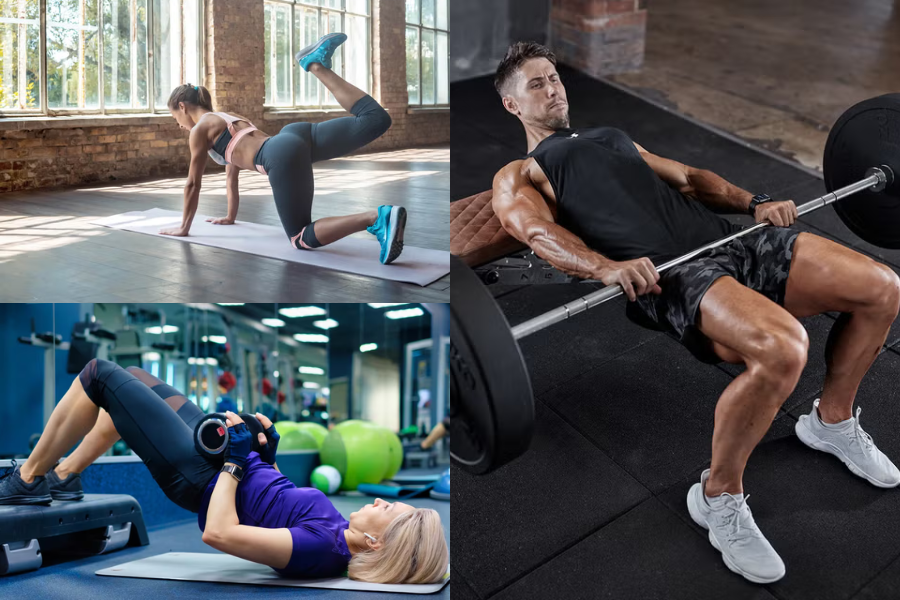
If you’re looking for an effective glute workout without squats, you’ve come to the right place. Strengthening your glutes has many benefits—improved posture, better balance, and more power in everyday movements—but not everyone enjoys or can perform squats. Luckily, there are plenty of alternatives. Below, you’ll find simple yet challenging exercises and helpful tips to lift, tone, and activate your glutes, no squatting required.
Understand why squat-free moves help
Skipping squats doesn’t mean skipping results. Whether you have knee concerns, back issues, or you’re just exploring new variations, squat-free exercises can still give you a strong and defined posterior chain.
- Reduces stress on knees and lower back
- Offers new ways to challenge muscles
- Accommodates different fitness levels
Focusing on squat-free moves can also keep your workouts fresh. By experimenting with different positions and angles, you engage neglected muscle fibers and promote better overall strength.
Warm up before you start
Any solid glute workout—even one without squats—should begin with a warm-up session. Taking a few minutes to get your body ready prevents injury and enhances muscle activation.
- Light cardio: A brisk walk or some jumping jacks can raise your heart rate.
- Dynamic stretches: Leg swings, hip circles, and lunges in place gently mobilize your lower body.
- Glute activation drills: Try a few gentle bridge lifts or donkey kicks at slow speed to “wake up” your glute muscles.
Try these five squat-free exercises
1. Glute bridges
Glute bridges are a classic way to isolate and target your posterior chain without putting your knees under heavy loads.
- Lie on your back, knees bent, feet flat on the floor, and arms at your sides.
- Press your heels firmly down, then lift your hips until your body forms a straight line from shoulders to knees.
- Squeeze your glutes for a second at the top, then lower back down.
- Tip: Position your feet so that your knees are directly above your ankles to maximize glute engagement.
- Variation: Single-leg bridges. Lift one foot off the floor, keeping your thighs level. Push up through the supporting heel for an extra challenge.
2. Step-ups
Step-ups are a functional, everyday movement that effectively build glute strength, especially in the upper area.
- Stand in front of a sturdy elevated surface like a bench or low chair.
- Place one foot on the step, push through your heel, and bring your other foot up to stand tall.
- Step back down slowly and repeat.
- Tip: Focus on keeping your torso upright and core tight. Leaning too far forward can shift the focus away from your glutes.
- Variation: Add light dumbbells for increased resistance once you master proper form.
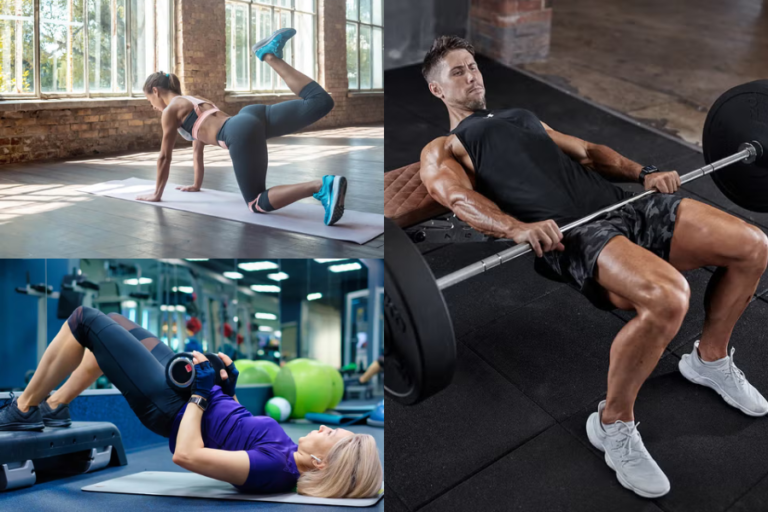
3. Hip thrusts
Hip thrusts let you zero in on your glutes by driving your hips upward against resistance. They resemble glute bridges but use an elevated back position to increase range of motion.
- Rest your upper back against a stable bench, knees bent, and feet rooted on the floor.
- Push your hips up by squeezing your glutes, keeping your neck in line with your body.
- Lower slowly, returning to the starting position.
- Tip: If you have access to a resistance band or light weights, place it across your hips for extra intensity.
- Variation: Pause for two seconds at the top to deepen the burn in your glutes.
4. Donkey kicks
This bodyweight exercise is a big favorite for tightening and shaping your backside without stressing your knees.
- Start on all fours, hands under shoulders, knees under hips.
- Keeping your knee bent, lift one leg upward until your thigh is parallel to the floor.
- Slowly lower it back down without touching your knee to the floor.
- Tip: Keep your core engaged to avoid arching your back.
- Variation: Place a light dumbbell behind your knee or wrap a mini resistance band around your thighs to amplify the movement.
5. Fire hydrants
Fire hydrants work your gluteus medius (the side of your booty), which helps stabilize your hips and improves overall lower-body strength.
- Stay on all fours, bracing your core.
- Lift one knee out to the side, keeping it bent at a 90-degree angle.
- Slowly lower your knee back to the starting position.
- Tip: Aim to keep your hips level as you lift your leg.
- Variation: Add ankle weights or a resistance band just above your knees to increase the challenge.
Use these tips for better results
A few small tweaks can help you get the most out of your no-squat routine.
- Prioritize form: Engage your core and avoid overextending your lower back in any lift.
- Progress gradually: Increase resistance, sets, or reps over time to keep challenging your muscles.
- Stay consistent: Regular glute sessions, at least two to three times per week, help you see steady improvements.
- Incorporate variety: Mix in upper-body and core movements on different days to develop balanced strength.
Key takeaways
- A glute workout without squats is totally possible and can yield serious benefits.
- Warm up properly and maintain good form to protect your body from injury.
- Concentrate on slow, controlled lifts and mind-muscle connection.
- Experiment with glute bridges, step-ups, hip thrusts, donkey kicks, and fire hydrants to target all angles of your glutes.
- Be patient, adjust resistance as you improve, and enjoy the results of a stronger, more supportive lower body.
Give these exercises a try, and you’ll quickly discover that squats aren’t the only way to build impressive glute strength. In fact, having different styles of training at your disposal might keep you motivated and help you reach your goals faster. So grab a mat, find a steady bench, and start lifting those hips—no squatting needed!
About the Author