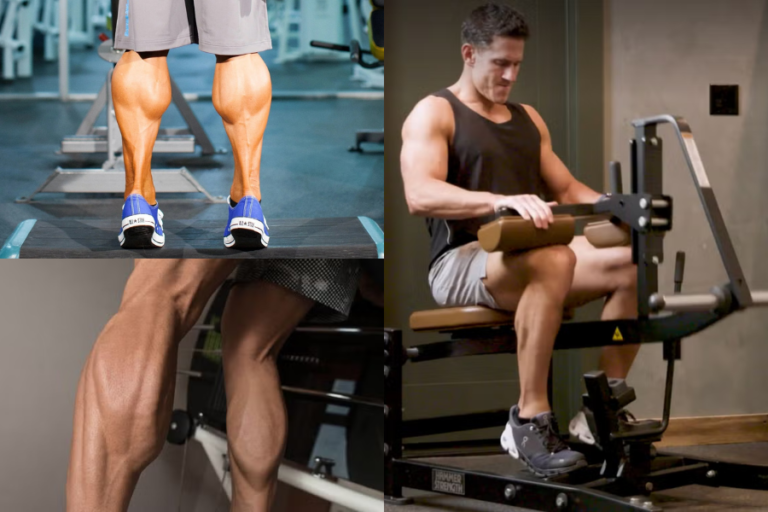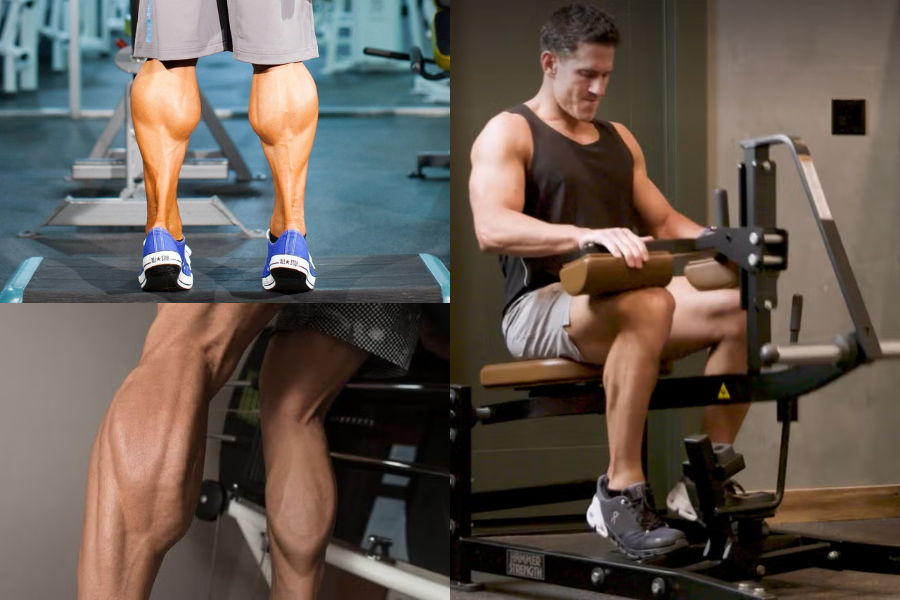
Single leg calf raises are one of the simplest ways to build stronger, more powerful lower legs at home or in the gym. When you do them correctly, they improve calf strength, ankle stability, balance, and even performance in running and jumping.
This guide walks you through how to perform single leg calf raises with proper form, how to progress them, and common mistakes to avoid so you actually see results.
Why single leg calf raises are worth your time
Single leg calf raises target both major calf muscles, the gastrocnemius and the soleus, as well as the smaller muscles and connective tissue around your feet and ankles. Training one leg at a time helps you correct muscle imbalances and build more stable, resilient lower legs.
Compared to regular two leg calf raises, the single leg variation challenges your balance and recruits more stabilizing muscles. That means better ankle control, improved proprioception, and a lower risk of injury during everyday activities and sports.
Because this is a low impact exercise, you can use it for:
- General strength and muscle growth
- Balance and stability work
- Running and jumping performance
- Long term ankle and foot health
If you want calves that are strong, balanced, and useful in real life, single leg calf raises deserve a permanent spot in your routine.
Muscles worked and why they matter
Understanding which muscles you are training helps you choose the right reps, tempo, and variations.
Gastrocnemius
The gastrocnemius is the larger, more visible calf muscle that creates the classic calf shape. It crosses both the knee and the ankle and plays a big role in explosive movements like sprinting and jumping. It tends to respond well to moderate and heavier loads with controlled reps, as highlighted in a guide from the Hevy app in 2026.
When you keep your knee straight during single leg standing calf raises, you emphasize the gastrocnemius. That is why a locked or softly straight knee is important if you are trying to build power and size.
Soleus
The soleus sits underneath the gastrocnemius and is packed with slow twitch muscle fibers. According to the same Hevy guide, it benefits from higher repetition training and longer time under tension.
You hit the soleus hard in bent knee calf variations, such as seated calf raises, and in high rep single leg standing variations performed with a slower tempo.
Supporting structures in the foot and ankle
Single leg calf raises also work the smaller muscles in your feet and around your ankles. These muscles and connective tissues are crucial for:
- Maintaining balance
- Absorbing impact
- Controlling foot placement when you walk or run
Research from Foot & Ankle Albury in Australia notes that the soleus can absorb roughly 6.5 to 8 times your bodyweight during running, while the gastrocnemius absorbs around 2 to 3 times bodyweight. Strong calves are not just about appearance, they are central to how you walk, jog, and run comfortably over time.
Step by step: how to do a single leg calf raise
You can perform single leg calf raises on flat ground or on a small step or weight plate to increase the range of motion. Here is a simple setup you can use almost anywhere.
-
Set up your support
Stand beside a wall, rail, or sturdy object you can lightly hold for balance. You should not be hanging on to it, just using it as a safety net. -
Position your foot
Place one foot on the floor or on a raised surface. If you use a step or plate, let your heel hang slightly off the edge so you can lower it below your toes for a gentle stretch. Your other leg hovers off the ground or rests lightly behind you for balance. -
Align your body
Stand tall, engage your core, and keep your knee straight but not locked out. Look straight ahead instead of down at your feet to help maintain balance. -
Lift into the calf raise
Push through the ball of your foot and drive your heel up as high as you can. Imagine lifting your heel straight toward the ceiling. Pause briefly at the top to fully contract your calf. -
Lower with control
Slowly lower your heel back down under control until you feel a gentle stretch in the calf. Avoid dropping quickly or bouncing. This eccentric part of the rep is especially important for strength and muscle growth. -
Repeat for reps
Maintain even pressure across your forefoot, from your big toe joint to your little toe joint, to promote proper loading. Keep your toes relaxed rather than clawing into the surface.
Performed this way, each rep combines a strong concentric action as you rise up with a controlled eccentric phase as you lower, which is ideal for building strength and control in the ankle joint.
Ideal reps, sets, and frequency
If you are new to single leg calf raises, start with bodyweight only and focus on stability and technique.
A beginner friendly starting point is:
- 3 sets of 10 to 12 repetitions per leg
- 2 to 3 times per week
As you get stronger, you can:
- Increase to 15 to 20 reps per set for endurance and soleus development
- Add weight to keep sets in the 8 to 12 rep range for muscle growth
- Mix rep ranges within the same week to target both calf muscles effectively
Since your calves are used to working all day, they can generally handle a bit more training volume, as long as you recover well and avoid sharp pain.
Common form mistakes to avoid
Small technique errors can make single leg calf raises less effective or even uncomfortable. Watch for these issues and correct them early.
Bouncing through the movement
Using momentum by bouncing at the bottom takes tension off the muscles you are trying to train and places extra stress on your tendons. It also robs you of time under tension, which is what actually drives progress.
Aim for smooth, controlled reps with a brief pause at the top and a full, deliberate lower to the bottom. If you cannot control the movement, reduce your range of motion or remove external weight until you can.
Cutting the range of motion short
Stopping halfway up or halfway down means you are not making full use of the exercise. Clinical practice notes that failing to reach full heel height often indicates limited calf capacity, which reduces the effectiveness of every rep.
Focus on fully extending through the ankle joint at the top and lowering until you feel a controlled stretch at the bottom, especially if you are standing on a step.
Letting your toes grip or claw
Curling your toes hard into the ground usually means the long toe flexors are trying to compensate for weak calves. Over time this can lead to poor loading patterns and discomfort.
One simple fix is to perform your raises with your toes hanging slightly over the edge of a step or plate. This encourages you to push from the ball of the foot and isolate the calf more effectively.
Bending the knee unintentionally
During a standing single leg calf raise, a bent knee often signals that your gastrocnemius is not doing its fair share of the work. Rehab protocols suggest that a straight knee is better for targeting the gastrocnemius, while a bent knee shifts emphasis toward the soleus.
Keep a gentle, straight knee for standing raises. If you want a bent knee variation for the soleus, use it intentionally with seated or bent knee calf raises instead of accidentally.
Progressions and variations for better results
Once you have mastered the basic single leg calf raise, you can increase the challenge and keep your progress moving.
Add external weight
Hold a dumbbell or kettlebell in the hand on the same side as your working leg, or use a weighted vest if you prefer hands free balance. Focus on:
- Keeping the weight steady
- Maintaining full range of motion
- Preserving the same slow, controlled tempo
Start with light weights, for example around 10 kg, and increase gradually as your strength improves.
Use a step for more range
Moving from the floor to a raised surface lets your heel drop slightly below your toes at the bottom of each rep. This increased range of motion helps:
- Stretch the calf gently under load
- Improve ankle mobility
- Promote more muscle activation throughout the rep
This variation is especially helpful for runners who want stronger calves and better push off power.
Eccentric focused calf raises
To emphasize the eccentric, or lowering phase, you can rise up with two legs and then slowly lower down on one leg. This is useful if you are rehabbing or if you cannot yet lift your full bodyweight on one leg through the entire range of motion.
Count 3 to 5 seconds on the way down and keep the movement smooth and quiet.
Isometric holds at the top
Holding the top position for 5 to 10 seconds at the end of a set adds extra challenge without extra equipment. Isometric holds help build both strength and endurance in the calf and can improve your ability to stay steady on one leg.
Combine these techniques across your training week to keep your calves progressing without overcomplicating your routine.
How single leg calf raises boost performance
Stronger calves pay off in more ways than just appearance. When you perform single leg calf raises consistently and with good form, you support many key movement patterns:
- Running, by improving push off, reducing fatigue, and supporting the forces absorbed by the soleus and gastrocnemius
- Plyometric work, such as hops, bounds, and jumps, where powerful ankle extension is critical
- Unilateral strength exercises, like lunges or Bulgarian split squats, where ankle stability helps keep your entire leg aligned
Because each leg works independently, you can spot and correct strength differences between sides. That means fewer compensations higher up the chain in the knees, hips, and lower back.
Single leg calf raises also reduce age related losses in balance and mobility when they are integrated into a regular strength routine. The combination of ankle stability and neuromuscular adaptation you gain carries over into everyday tasks like walking on uneven ground, climbing stairs, or standing on one leg to put on shoes.
Putting it all together in your routine
You do not need an elaborate program to see serious results from single leg calf raises. You just need consistent practice with solid form.
Use this simple framework as a starting point:
2 to 3 sessions per week, 3 sets of 10 to 15 controlled single leg calf raises per leg, progressing to added weight or more advanced variations as they become comfortable.
Prioritize quality over quantity. Focus on full heel height, even pressure across the forefoot, relaxed toes, and a calm, steady tempo on every rep. With a few weeks of patient practice, you will notice stronger calves, better balance, and more confident movement in everything from your workouts to your everyday routine.
About the Author