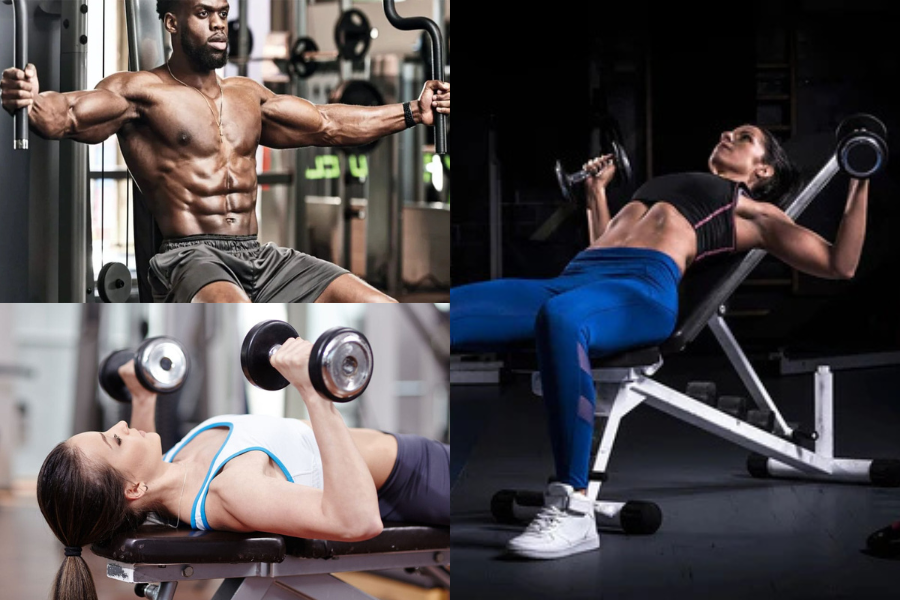
Why single arm dumbbell chest exercises matter
If you are trying to build a stronger chest and fix side‑to‑side imbalances, single arm dumbbell chest exercises are one of the most effective tools you can use. Training one side at a time forces each pec, shoulder, and tricep to carry its own load. It also asks more from your core and hips to keep you steady, so you build stability along with strength.
You can do these movements at home, in a small gym corner, or while traveling with just one or two dumbbells. With a few simple tweaks to your form, you can get more chest activation from lighter weights and reduce your risk of shoulder strain at the same time.
Below, you will learn how unilateral chest work helps, how to set up your presses correctly, and a complete sample workout that you can adapt to your current fitness level.
Understand how unilateral chest training helps
Before you add more exercises to your routine, it helps to understand why single arm pressing feels so different from a regular bench press.
Fix imbalances and build symmetry
Most people have one side that is a little stronger or more coordinated than the other. When you press with a barbell or two dumbbells at the same time, your stronger side can quietly take over. Single arm dumbbell chest exercises remove that shortcut.
Benefits include:
- Each side works independently so you cannot hide weak links
- You can notice and correct differences in strength or control
- Your bilateral presses often become smoother and more powerful over time
Guides from PureGym highlight this equal training effect as a key way to minimize muscular imbalances between sides and to improve overall chest press strength as of June 2024.
Train more than just your chest
Unilateral presses and flys are chest‑focused, but they also demand stability from the rest of your body.
You will feel:
- Pectorals doing most of the pushing
- Triceps straightening your elbow
- Front deltoids helping at the shoulder
- Core and obliques working to stop your torso from rolling or twisting
- Glutes and legs creating a solid base on the bench or floor
Because stability limits you before pure strength does, single arm work can also be easier on your joints than heavy bilateral pressing while still delivering a strong training effect.
Add range of motion and joint friendliness
Dumbbells usually allow you to move through a slightly bigger, more comfortable range of motion than a barbell. Variations like the offset single arm chest press and half‑bench press push this even further by letting your working shoulder drop slightly below bench height while your hips and core hold everything steady, as described in the ACE Fitness library.
This deeper range can increase muscle activation when you control the weight and avoid bouncing at the bottom.
Get your form right for safe pressing
Good technique turns single arm dumbbell chest exercises from awkward to effective. It also keeps the stress on your chest instead of your shoulders.
Set your base on the bench
Most single arm pressing follows the same setup:
- Lie on a flat, incline, or decline bench with your eyes under the dumbbell.
- Keep five points of contact: head, upper back, glutes, and both feet.
- Gently pinch your shoulder blades together to create a stable platform for your shoulders.
- Maintain a slight natural arch in your lower back while keeping your ribs down.
PureGym’s June 2024 guidance recommends pinning your shoulder blades to the bench and creating a small arch. This helps protect your shoulders and puts your chest in a stronger position to press.
Find the right arm path
Small changes in how your arm moves can significantly affect how much your chest works.
Keep these cues in mind, based on coaching explained by Jeremy Ethier in 2023:
- Tuck your elbow to about 45 to 60 degrees from your torso
- Keep your forearm vertical so the wrist stays directly over your elbow
- Let the dumbbell travel slightly toward your mid‑chest as you lower
- Press back up on a slight arc toward your shoulder rather than straight up and down
Avoid:
- Flaring your elbow out wide to the side
- Letting your forearm angle in toward your head, which loads your triceps more than your chest
- Touching dumbbells together at the top on bilateral sets, which removes tension from the pecs
If staying vertical with your forearm is difficult, reduce the weight until you can keep clean alignment.
Protect your shoulders
To keep your shoulders comfortable and your chest doing most of the work:
- Do not round your shoulders forward at the top of the press
- Keep your chest lifted and shoulder blades gently pulled back
- Stop lowering the weight if you feel pinching or sharp pain in the front of your shoulder
Ethier also suggests simple pre‑activation work like chest extensions over a foam roller or resistance band over‑and‑backs if your chest feels tight before pressing. This can help you find a better pressing path without forcing range of motion.
Key single arm dumbbell chest exercises
Now that your setup is solid, you can put it to use. These single arm dumbbell chest exercises cover a range of angles and stability challenges so you can build strength, balance, and control.
Single arm dumbbell flat bench press
The single arm dumbbell flat bench press is a classic unilateral chest builder that trains your pecs, triceps, and core at once.
How to do it:
- Lie on a flat bench with your feet planted and knees bent.
- Hold one dumbbell in your right hand directly over your shoulder, palm facing slightly in.
- Extend your left arm straight out or keep it on your hip for balance.
- Inhale as you lower the dumbbell toward the mid‑chest, keeping your elbow tucked.
- Stop when your forearm is vertical and your upper arm is just below bench level.
- Exhale as you press the dumbbell back up over your shoulder on a slight arc.
Programming:
- 3 sets of 8 to 10 reps per arm with controlled tempo
This move is often recommended for 3 sets of 8 reps per side in programs that focus on stability and strength, as of November 22, 2023.
Incline single arm dumbbell press
Changing the bench angle slightly helps you target the upper chest. You do not need a steep incline to feel the difference.
How to do it:
- Set your bench to about 15 to 30 degrees.
- Use the same setup cues as the flat press.
- Lower the dumbbell toward the upper portion of your chest.
- Press back up, keeping your forearm vertical and shoulders pinned back.
Coaching from Jeremy Ethier recommends including an incline dumbbell press on a bench angled between 15 and 30 degrees once a week alongside flat presses to better train your upper chest.
Programming:
- 3 sets of 8 to 12 reps per arm
Offset single arm chest press
The offset single arm chest press, described in the ACE Fitness exercise library, raises the stability demand even more. Your shoulder moves through a deeper range of motion while your hips and core work to stop you from tipping over.
How to do it:
- Sit sideways on a flat bench and then lie back so the top of your back is diagonal across it.
- Your working shoulder should be near the far edge of the bench so it is partly unsupported.
- Plant your feet flat on the floor and squeeze your glutes so your hips lift in line with your torso.
- Hold the bench near your head with your non‑working hand for support.
- Press the dumbbell up over the center of your chest.
- Slowly bend your elbow, allowing the dumbbell to drop just below bench level.
- Press back to the starting position without letting your hips drop or your torso rotate.
Programming:
- 3 sets of 8 to 10 reps per arm
This variation challenges your chest while heavily involving the core, hips, and shoulder stabilizers. It fits well later in your session once you are warm and already slightly fatigued.
Half‑bench single arm dumbbell press
The half‑bench single arm press is another unilateral option that aims to correct imbalances and build full‑body stability.
How to do it:
- Lie on a flat bench with only your upper back and head supported, or with half your body on the bench depending on the specific setup you prefer.
- Plant your feet wide for balance and squeeze your glutes.
- Hold a dumbbell in one hand over your chest with a slight inward grip.
- Lower it toward your chest with a tucked elbow and controlled tempo.
- Press it back up while keeping your hips steady and your torso square.
This movement encourages a greater range of motion than barbells and uses a joint‑friendly path. It is often programmed for 3 sets of 10 to 12 reps per side.
Single arm low dumbbell fly
The single arm low fly isolates your chest through a sweeping arc, especially the fibers that draw your arm in toward your midline.
How to do it:
- Stand tall holding a dumbbell in your right hand at your side, palm facing forward.
- Keep a small bend in your elbow and brace your core.
- Sweep your arm upward and across your body until the dumbbell is in front of your chest.
- Control the descent back to the starting position.
Programs from November 22, 2023 often recommend 3 sets of 8 reps per arm. Use a lighter weight than your presses because the lever is longer and the pec works hard through the entire range.
One dumbbell push‑up
The one dumbbell push‑up combines a bodyweight push‑up with a unilateral emphasis. It is a simple way to hit your chest without a bench.
How to do it:
- Place a dumbbell on the floor and grip the handle with your right hand.
- Set your left hand on the floor at normal push‑up width.
- Assume a plank position with your body in a straight line from head to heels.
- Lower your chest between your hands, keeping your elbows at about 45 degrees.
- Push back up, focusing on the chest on the dumbbell side.
March 2024 guidance suggests doing this movement to failure for maximum benefit while keeping good form.
Programming:
- 2 to 3 sets to technical failure per side
Single dumbbell squeeze press
The single dumbbell squeeze press can be done with both hands on one dumbbell or as a one‑handed variation. The constant inward squeeze increases chest activation even with modest weight.
Basic version with both hands:
- Lie on a bench or floor with knees bent.
- Hold one dumbbell vertically with both hands, palms pressed into the plates.
- Start with the dumbbell at chest height and elbows tucked.
- Constantly squeeze inward on the dumbbell as you press it up.
- Lower it slowly while keeping tension.
A sample one‑dumbbell chest routine from March 2024 recommends 3 sets of 12 to 15 reps for squeeze presses to build strength and muscle tone.
Build a balanced one‑dumbbell chest workout
You do not need a full rack of weights to train your chest well. A single dumbbell and some smart programming are enough.
Here is a sample routine that blends the research‑backed ideas above. Adjust the weight so your last 2 reps of each set are challenging but controlled.
Sample workout: Strength and balance focus
- Warm‑up
- 5 to 10 minutes of light cardio
- Gentle band pull‑aparts or over‑and‑backs if your shoulders feel tight
- Main strength block
- Single arm dumbbell flat bench press
- 3 sets of 8 to 10 reps per arm
- Incline single arm dumbbell press
- 3 sets of 8 to 12 reps per arm
- Stability and range block
- Offset single arm chest press or half‑bench single arm press
- 3 sets of 8 to 10 reps per arm
- Single arm low dumbbell fly
- 3 sets of 8 to 10 reps per arm
- Finisher
- One dumbbell push‑ups
- 2 to 3 sets to technical failure per side
- Single dumbbell squeeze press
- 2 to 3 sets of 12 to 15 reps
- Rest periods
- 45 to 75 seconds between sets, depending on how heavy you are lifting
Guides from March 13, 2024 suggest similar set and rep ranges for one‑dumbbell chest training. Short to moderate rest periods help you keep the workout efficient while maintaining intensity.
Progress your single arm chest training safely
To keep improving and avoid plateaus or aches, you will want to progress with care.
Increase difficulty gradually
You can make these exercises harder without big jumps in dumbbell weight by:
- Adding 1 or 2 reps per set up to the top of your target range
- Slowing the lowering phase to 3 or 4 seconds per rep
- Pausing for 1 second at the bottom of the press
- Reducing rest time slightly between sets
Once you can complete all sets at the top of your rep range with clean form, increase the dumbbell weight and drop reps back to the lower end.
Both the November 2023 and March 2024 guidance on one‑dumbbell chest workouts emphasize progressive overload with proper form as the safest path to strength and muscle gain.
Watch for warning signs
Stop and reassess if you notice:
- Sharp pain in the front of your shoulder during presses or flys
- Your torso twisting or your hips dropping on offset or half‑bench work
- Your elbow drifting too far out to the side or your forearm tilting inward
If you cannot correct form with a lighter weight, scale the exercise to an easier version, for example moving from offset presses back to a regular flat bench press until your stability improves.
Decide how often to train
You can slot single arm dumbbell chest exercises into your week in several ways:
- As your main chest work 1 to 2 times per week
- Paired with bilateral barbell or dumbbell presses for more complete coverage
- As a warm‑up using lighter weights and lower reps to groove your pressing path
Some coaches recommend 3 to 4 sets of 10 to 12 repetitions with moderate weight for stability and coordination, or lighter 6 to 8 rep sets as part of a warm‑up for heavier pressing sessions.
Putting it all together
Single arm dumbbell chest exercises help you:
- Fix strength and size imbalances between sides
- Build a more stable, resilient upper body
- Get solid chest training at home or with minimal equipment
Start by choosing two or three of the movements above and working them into your routine once or twice per week. Focus on smooth control, a comfortable range of motion, and consistent progression rather than rushing to the heaviest dumbbell.
Over time, you will likely notice your bilateral presses feel more even, your shoulders more stable, and your chest work more concentrated where you want it, not in your joints.
About the Author