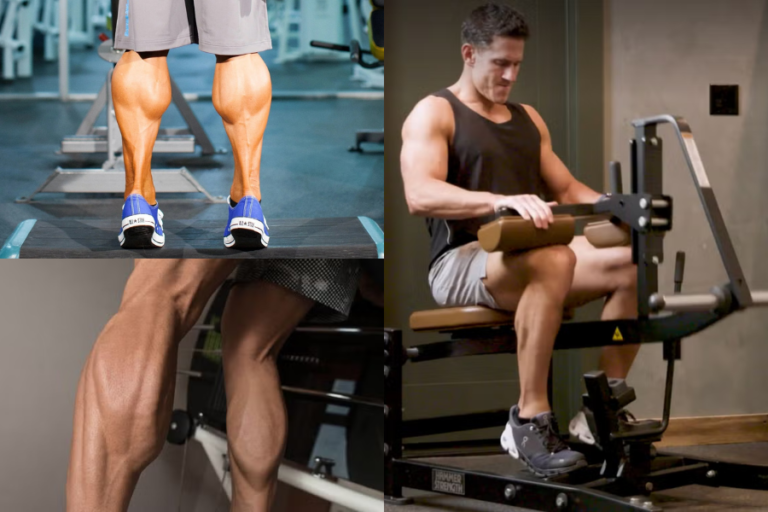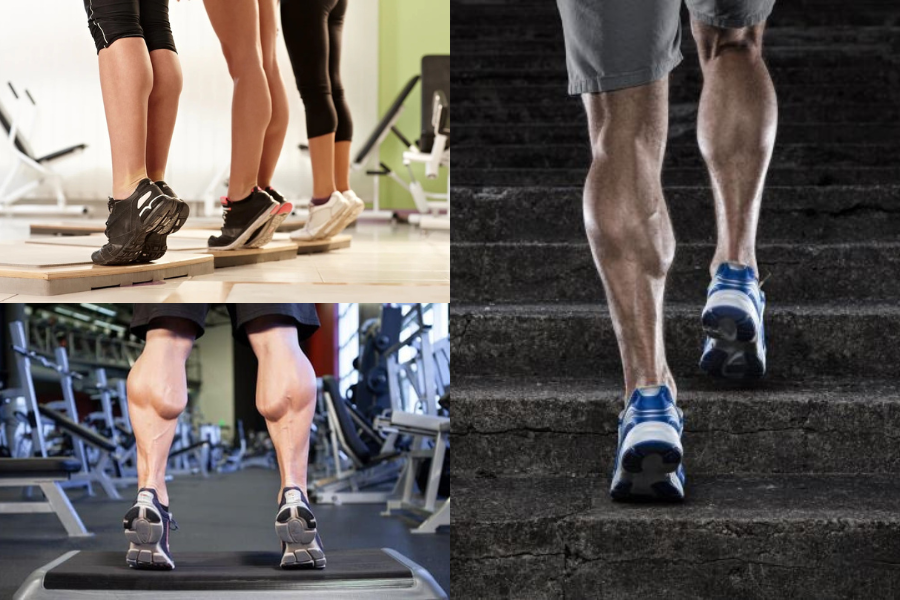
A solid pair of calves does more than fill out your jeans. Strong lower legs improve your balance, help protect your knees and Achilles, and boost your power in almost every sport. With the right approach to calf workouts in the gym, you can finally move past “stubborn calves” and start seeing real progress.
Below, you will learn how calf muscles work, the biggest training mistakes to avoid, and how to build an effective calf workout routine you can actually stick to.
Understand your calf muscles
Before you load up the calf raise machine, it helps to know what you are training. Calves are not just one muscle, and each part responds slightly differently to training.
The main calf muscles
You are mainly targeting three muscles during calf workouts in the gym:
- Gastrocnemius: The big, visible “diamond” on the back of your lower leg. It crosses both the knee and ankle and contributes a lot to how your calves look.
- Soleus: Sits underneath the gastrocnemius and is most active when your knee is bent. It adds thickness and endurance.
- Tibialis anterior: Runs along the front of your shin and helps lift your foot. If you ignore it, you increase the risk of shin splints and imbalances.
Calf size does have a genetic component. The shape and attachment points of your gastrocnemius influence how full your calves can look, and some people naturally have longer or shorter muscle bellies. A 2004 article on Simplyshredded notes that this can make calf muscle growth harder for some lifters compared to other body parts.
Genetics are not the full story though. Sports rehab specialist David Grey points out that many athletes have weak calves because they barely train them, especially after Achilles issues, not because they are doomed by their DNA. The way you train matters a lot.
Common mistakes in calf workouts
If your calves have not grown despite plenty of gym time, you are probably making at least one of these mistakes.
Treating calf raises like walking
Performing short, low intensity reps that look like mini bounces is one of the biggest errors. Your calves already handle thousands of light, partial reps every day when you walk. Doing the same thing in the gym does not give them a new reason to grow.
Effective calf workouts in the gym need a clearly different stimulus: deeper range, more tension, and enough load or volume to feel challenging.
Ignoring parts of the lower leg
Focusing only on standing calf raises means you miss key muscles. Research and coaching experience both suggest you should also train:
- Soleus, with bent knee movements like seated calf raises
- Tibialis anterior, with shin focused moves such as tibialis raises
Skipping these muscles can create imbalances and raise your risk of issues like shin splints and Achilles irritation.
Never changing reps or exercises
Calf muscles contain a mix of slow and fast twitch fibers. They adapt quickly when you repeat the same rep range over and over. If you always do 3 sets of 15, growth often stalls.
Varying rep ranges and workloads is crucial for ongoing calf development. That might mean one session with heavier sets of 8 to 12 and another with high rep sets of 20 to 30 plus.
Using weights that are too light
Many people choose a light weight so they can do a deep stretch and long range of motion. The range is helpful, but not if it comes at the cost of tension. David Grey argues that the bottom half of the calf raise is key for building pure strength and that most lifters would benefit from training much heavier, for example with a loaded Smith machine calf raise.
On the flip side, if you go too heavy and barely move, you will miss the growth stimulus from controlled motion and time under tension. Your goal is a weight that lets you move through a useful range while still feeling genuinely hard by the end of the set.
How often to train calves
Calves already work all day, so they handle frequent training well, but that does not mean you should do light calf raises every day.
Finding the right frequency
You have two main, evidence based options:
- Moderate frequency with heavier work: David Grey suggests focusing on quality and progressive overload instead of simply doing calves daily. In practice, you could train calves 2 to 3 times per week with challenging loads and enough rest to recover.
- Higher frequency with more volume: A piece in Muscle & Fitness recommends training calves at least 3 days a week using a full range of motion and enough intensity to create a strong burning sensation in the muscles. High volume routines can mean 18 to 24 sets of calf work spread across 3 to 4 weekly sessions, especially if you are chasing serious hypertrophy.
You can start in the middle. A focused 15 minute calf session, 3 to 4 times per week, can be plenty. Aim to mix heavy to moderate sets of 8 to 20 reps with some higher rep work up to 30 or more as you get stronger.
Best calf exercises to do at the gym
You do not need a long list of exotic moves. A handful of well executed exercises will cover all your bases.
Standing calf raises
Standing calf raises are the classic gym option for building the gastrocnemius and overall size. You can use a dedicated machine, Smith machine, or even a barbell or dumbbells.
- How to do them: Stand with the balls of your feet on a block or platform so your heels can drop. Lower slowly until you feel a stretch, pause briefly, then drive up onto your toes as high as you comfortably can.
- Suggested work: 3 to 4 sets of 20 to 25 reps. Many lifters and Reddit users in 2023 reported that high rep, full range standing calf raises gave them their best growth, especially when they included a deep stretch and a strong push to the top position.
Seated calf raises
Seated calf raises target your soleus, which is often overlooked. Because your knees are bent, the soleus takes more of the load.
- How to do them: Sit with your knees at about 90 degrees, the balls of your feet on a platform, and a pad or bar resting on your thighs. Drop your heels slowly until you feel a solid stretch, then push up as high as you can. Hold both the bottom and top positions for roughly 2 seconds to increase tension.
- Suggested work: 3 sets of 8 to 15 reps, using a weight that challenges you while still allowing controlled movement with those brief pauses.
Leg press calf raises
Leg press calf raises are a great way to add heavy load without stressing your spine.
- How to do them: Sit in the leg press, place the balls of your feet on the lower edge of the footplate, and unlock the sled. Keep your knees slightly bent, then lower the plate by letting your heels drop. Push through the balls of your feet to raise the plate back up.
- Why they help: They allow a deep stretch and a full range of motion while letting you go relatively heavy in a stable position. This makes them ideal for building strength and size together.
Donkey calf raises and squat raises
If your gym has a donkey calf raise machine, use it as another way to hit the calves through a large range and strong stretch at the bottom.
You can also use a safety squat bar to perform squat raises, where you hold the rack for balance and perform calf raises in a more upright squat position. This lets you go heavy while still working through a full range. A simple plan is 3 sets of 10 to 15 reps, but do not sacrifice motion for weight.
Tibialis raises and single leg work
To round out your lower leg training:
- Tibialis raises: Stand with your back against a wall and your heels a few inches away, then lift your toes toward your shins repeatedly. This strengthens the tibialis anterior and can reduce shin pain.
- Single leg calf raises on a leg press: Perform one leg at a time for 3 sets of 12 to 20 reps with lighter weight, focusing on full range and control. This helps fix side to side differences, which is especially valuable for athletes like basketball players.
How to use range of motion and foot position
Range of motion and foot angle are two simple levers you can adjust to make your calf workouts in the gym more effective.
Use a full, but controlled, range
Arnold Schwarzenegger famously stressed the importance of a full stretch at the bottom and a tall rise onto the toes at the top, like a ballerina en pointe. This long range of motion helps recruit more fibers and forces the muscle to work harder in positions it usually avoids.
Studies and practical experience highlight a few key points:
- Lower to a comfortable stretch without bouncing.
- Pause briefly at the bottom so you do not rely on elastic rebound.
- Rise as high as you can, trying to feel your calves fully contract.
However, David Grey notes that always insisting on maximal range can backfire. If going very low forces you to use tiny weights and lose strength from active insufficiency, try emphasizing just the bottom half of the movement with heavier loads sometimes, then mixing in full range sets on other days.
Adjust your foot angle
A 2020 study by Nunes and colleagues found that foot placement changes which part of the gastrocnemius you emphasize:
- Toes slightly out: More focus on the inner, or medial, head
- Toes slightly in: More focus on the outer, or lateral, head
- Toes forward: A balanced hit to both heads
Across a week, you can rotate between these positions to develop more complete calves and avoid overusing a single pattern.
Quick cue: If your calves feel “flat” from behind, spend more time with toes out to build the inner head. If they look narrow from the side, use more toes in work for the outer head.
Building a sample calf workout plan
Here is how you can put everything together into a simple, effective routine you can run 3 days per week on nonconsecutive days.
Day A: Strength and stretch focus
- Standing calf raise machine
- 4 sets of 8 to 12 reps
- Heavy enough that the last 2 reps are challenging but still controlled
- Leg press calf raise
- 3 sets of 12 to 15 reps
- Pause for 1 second at the bottom and top
- Tibialis raises
- 3 sets of 15 to 20 reps
Day B: Volume and burn focus
- Seated calf raise
- 3 sets of 15 to 20 reps
- 2 second holds at both ends of the movement
- Standing bodyweight or light dumbbell calf raise
- 3 sets of 25 to 30 reps
- Aim for a strong burning sensation in the muscle
- Jump rope
- 30 seconds on, 30 seconds off for 3 to 4 rounds
You can alternate Day A and Day B throughout the week. Over time, increase the weight on your heavy exercises or add reps to your higher rep sets. High volume and consistent progression, especially with controlled eccentrics, are both strongly linked with hypertrophy in the calf muscles according to recent training research by Brad Schoenfeld and others on slow twitch dominant muscles.
Putting it all into practice
To crush your calf workouts in the gym like a pro, you do not need complicated routines, but you do need intention:
- Train the whole lower leg, not just the visible part of the calf.
- Vary rep ranges and foot positions across the week.
- Use enough weight and volume to genuinely challenge the muscles.
- Respect both range of motion and control, instead of bouncing through easy reps.
Start with one focused 15 minute calf session this week using the exercises above. Track your weights and reps, and commit to small progress each time you train. Over the next few months, those small changes will add up to stronger, thicker, and more athletic calves that finally match the rest of your hard work in the gym.
About the Author