Understand your tricep machine workout
A smart tricep machine workout helps you build strong arms, support your main lifts, and protect your joints. Instead of guessing your way around the cable stack, you can use a few reliable machines to target all three heads of your triceps while staying safe and in control.
You will also see how tricep machines fit into a balanced routine, when to use them, and when to rely on free weights so you are not holding back your strength or muscle growth.
Know what your triceps actually do
Before you pick a machine, it helps to know what you are trying to train.
Your triceps have three heads:
- Long head
- Lateral head
- Medial head
Together, they straighten your elbow and help stabilize your shoulder in pressing movements. Strong triceps support exercises like the bench press and overhead press, and they add size to your upper arms, which many gym goers want for aesthetic reasons.
Machine tricep exercises are isolation movements. They limit momentum and stabilize your body so the work comes from your triceps instead of your shoulders or back. That is useful when you want focused muscle work and a lower learning curve.
Learn the main types of tricep machines
You will usually see a few common options in most gyms. Each one has a slightly different feel and emphasis.
Tricep extension machine
The tricep extension machine, sometimes called the seated triceps extension or arm extension machine, is designed to isolate your triceps by mimicking an overhead elbow extension.
Key points from a 2024 guide:
- It targets all three heads of the triceps, with particular emphasis on the lateral head because your upper arms are fixed against a pad.
- The guided path and seat adjustments make it beginner friendly and joint friendly, especially if you have shoulder or elbow concerns.
- It allows you to progressively add resistance with the weight stack while keeping the motion stable and controlled.
Because your upper arms stay in place, the movement comes almost entirely from your elbows, which helps you feel the tricep contraction throughout the range of motion.
Triceps press / tricep press down machine
Some gyms have a dedicated triceps press machine where you sit upright and push handles down. Others use a cable station with a bar or rope attachment for tricep pushdowns. The idea is similar: you extend your elbows by pressing down from a high pulley.
According to a 2023 guide from Garage Gym Reviews, cable tricep pushdowns:
- Provide constant tension on the lateral and medial heads of the triceps
- Allow different grips and attachments, such as rope or D handles, to change the feel
- Help develop the horseshoe look of the triceps by keeping steady resistance through the motion
Planet Fitness also highlights tricep pushdowns on a cable machine as a beginner friendly machine exercise, recommending them as a core part of a simple tricep routine in 2024.
Overhead style tricep machines
Some machines mimic an overhead tricep extension. You sit with your arms overhead and extend your elbows to lift a weight stack.
Overhead tricep movements are widely believed in the lifting community to place the long head of the triceps under a deep stretch. Community discussions suggest that skipping overhead work might reduce your potential gains only slightly, so overhead training is helpful, not absolutely mandatory. For many people overhead positions can feel awkward on the shoulders, so comfort and pain free motion matter more than forcing a specific angle.
Cable overhead tricep extensions, such as those recommended by Planet Fitness, also target your triceps and shoulders by lowering the cable behind your head with elbows pointing forward and close together.
Assisted dip and machine tricep dip
Machine tricep dips and assisted dips are compound exercises that still focus heavily on your triceps.
From recent guides:
- Machine tricep dips use a defined path and weight stack to help you build muscle and prepare for full bodyweight dips.
- Assisted dips use a counterweight so you can practice the movement pattern while focusing on form and balance.
Both machine variations are beginner friendly because they give you stability and a controllable load.
Smith machine close grip bench
You might not think of the Smith machine as a tricep tool, but the close grip bench press on a Smith machine is often recommended for tricep strength and muscle definition. The bar path is fixed, which lets you push heavier weight more safely while still training your chest and shoulders.
Set up each machine for safe form
Correct setup is what makes a tricep machine workout feel smooth instead of awkward. Take a minute before your first set to adjust the seat and handles.
Tricep extension machine setup
Use these steps as a checklist:
- Adjust the seat
- Sit so your upper arms line up with the machine’s pivot point.
- Your elbows should rest comfortably on the pad without shrugging your shoulders.
- Grip the handles
- Hold the handles firmly with your wrists straight.
- Keep your elbows tucked in, not flared wide.
- Perform the movement
- Press the handles forward or down until your arms are almost straight.
- Do not slam into a hard lockout. Stop just short to keep tension on your triceps and reduce stress on the joints.
- Slowly return to the starting position, resisting the weight all the way back.
Using your shoulders or swinging your body takes the focus away from your triceps and can irritate your joints over time. Stay grounded through the seat and let only your elbows move.
Cable tricep pushdown setup
Whether you use a rope or straight bar, the basics are the same:
- Set the pulley high and choose a weight you can control.
- Stand close to the stack with a slight forward lean and soft knees.
- Pin your elbows close to your sides and grab the attachment.
- Push the handle or rope down by straightening your arms.
- Avoid letting your shoulders roll forward or your elbows drift far from your ribs.
Certified trainer Shane McLean points out that tricep pushdowns are effective because they offer constant tension through the rep. That benefit only holds if you use a controlled range of motion, not half reps or bouncing.
Overhead cable extension setup
Planet Fitness recommends the cable overhead tricep extension as a useful machine workout for tricep strength. To keep it comfortable:
- Set the pulley low and face away from the stack.
- Step forward until there is gentle tension with your arms overhead.
- Keep your elbows close together and pointing forward, not flared out.
- Lower the cable behind your head by bending your elbows, then extend them back to the start.
If your shoulders feel pinched or strained, ease up on the range of motion or choose a different exercise. Overhead work should feel like a tricep stretch, not a shoulder fight.
Assisted dip or machine tricep dip setup
For assisted dips:
- Choose a counterweight that lets you complete the reps with control. More assistance equals less bodyweight to lift.
- Place knees or feet on the platform as directed by the machine instructions.
- Keep your torso slightly forward, elbows pointing back, and shoulders down.
- Lower until your upper arms are about parallel to the floor, then press up without locking your elbows hard at the top.
Machine tricep dips follow similar joint positions, but your body stays seated or supported on a fixed path, which makes it easier to focus on tricep tension.
Avoid common tricep machine mistakes
Machines can make training safer, but they are not foolproof. A 2025 guide from SquatWolf and other resources highlight several mistakes to watch for.
Using too much weight
If the stack is too heavy, your body finds a way to cheat:
- You swing your torso.
- Your shoulders take over.
- You cannot complete the full range of motion.
This reduces tricep activation and raises injury risk. Drop the weight, keep your reps smooth, and only increase load when you can maintain form across all sets.
Cutting the range of motion short
Half reps on tricep pushdowns or extensions mean you miss full contraction and stretch. Over time that limits muscle growth and strength. Let your elbows bend enough to feel a strong stretch, then extend until your arms are almost straight while maintaining control.
Locking out hard at the elbows
Several guides warn that aggressively snapping into a full lockout can stress your elbow joints. Aim for a soft lock at the top of the movement. You should feel tension stay in the muscle, not in the joint.
Letting shoulders and back take over
If your shoulders roll forward, elbows flare, or your back arches excessively, you pull emphasis away from your triceps and into your upper body and joints. To keep the focus where you want it:
- Keep your torso steady and braced.
- Move only at the elbow joint.
- Keep elbows close to your sides for pushdowns and in a comfortable narrow position for overhead work.
Overusing machines and cables
SquatWolf cautions that overdependence on machines and cables can slow tricep growth over time. Since machines restrict your movement path, your smaller stabilizing muscles do not engage as much and you cannot target the triceps from as many angles.
You do not need to avoid machines, but you will benefit from combining them with free weight tricep exercises that allow more natural movement and stability demands.
Balance machines with free weights
For a well rounded tricep routine, you want a mix of:
- Heavy compound lifts that train triceps plus other muscles
- Isolation work on cables or machines for focused tension
- Free weight variations that challenge stability and control
Expert recommendations in 2023 suggest a comprehensive tricep workout can include:
- Close grip bench press
- Parallel bar dips
- Cable machine tricep pushdowns
To complement your tricep machine workout, you can add:
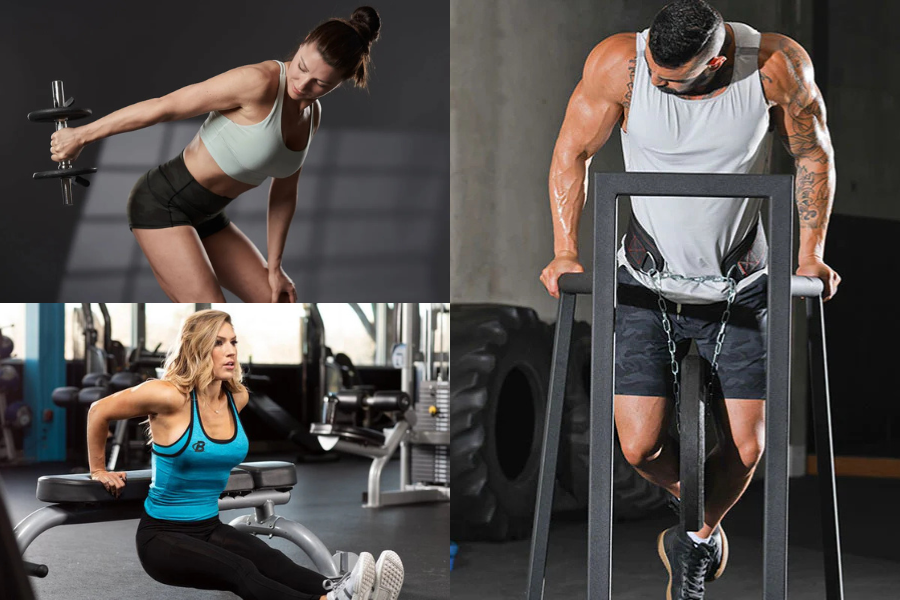
- Dumbbell skullcrushers
- EZ bar skullcrushers
- Dumbbell kickbacks
These isolation exercises still offer stability through benches or body position, but they allow more natural shoulder and elbow movement than a fixed machine path.
Try a beginner friendly tricep machine workout
If you are new to training your triceps, you can start with a machine focused session that teaches you the movement patterns without overwhelming your joints.
Borrowing from the approach Planet Fitness shares on its blog for beginners, use a simple structure:
Warm up
- 5 to 10 minutes of light cardio
- 1 or 2 easy sets of pushdowns or extensions with a very light weight
Main workout
Aim for 2 to 3 sets per exercise, resting 60 to 90 seconds between sets.
- Tricep pushdowns (cable machine)
- 10 to 12 reps per set
- Focus on smooth, full range of motion with elbows close to your sides.
- Tricep extension machine
- 10 to 12 reps per set
- Keep your upper arms firmly against the pad and avoid using your shoulders.
- Assisted dips or machine tricep dips
- 8 to 10 reps per set
- Use enough assistance to control the entire movement.
If that feels easy, you can add a fourth exercise like an overhead cable tricep extension, keeping the same rep range and conservative weight.
Cool down
- Light stretching for your triceps, shoulders, and chest
- Gentle arm circles or band pull aparts for blood flow
You can complete this workout 1 or 2 times per week. As it becomes comfortable, gradually increase weight, add a set, or swap one machine exercise for a free weight variation to challenge your triceps in a new way.
Adjust for comfort and long term progress
Not every tricep machine will feel good for your body. Some people find overhead movements awkward, even with light weight. Others do not feel strong activation from certain cable positions.
It is normal to experiment:
- Try different grips and attachments on pushdowns, such as ropes, straight bars, or single handles.
- Test both machine extensions and cable variations to see what you feel most in your triceps, not your joints.
- If a motion consistently causes discomfort, choose an alternative that lets you work hard without pain.
Community feedback suggests that skipping overhead tricep work might only cost you a small fraction of potential gains. So if a specific overhead machine does not suit you, you can prioritize other angles and still develop strong, well balanced triceps.
Put it all together
A safe and effective tricep machine workout comes down to a few simple habits:
- Choose machines that fit your body and feel natural.
- Set up the seat and pads so your elbows align with the pivot and stay stable.
- Use moderate weight, full and controlled range of motion, and avoid harsh lockouts.
- Keep the movement in your elbows, not your shoulders or spine.
- Combine machine work with free weight and bodyweight exercises for complete development.
Start with one or two of the machine exercises that appeal to you most, and focus on perfect form before you worry about heavier stacks. Over time, that attention to detail does more for your tricep strength and arm size than any single “perfect” exercise.
About the Author