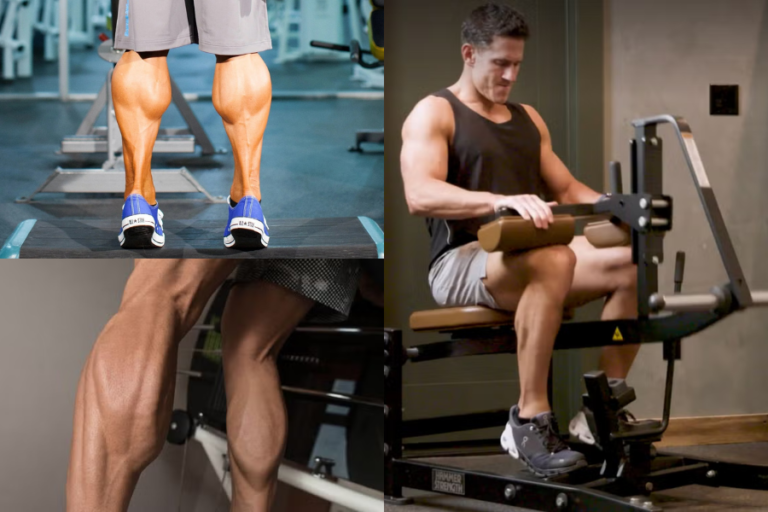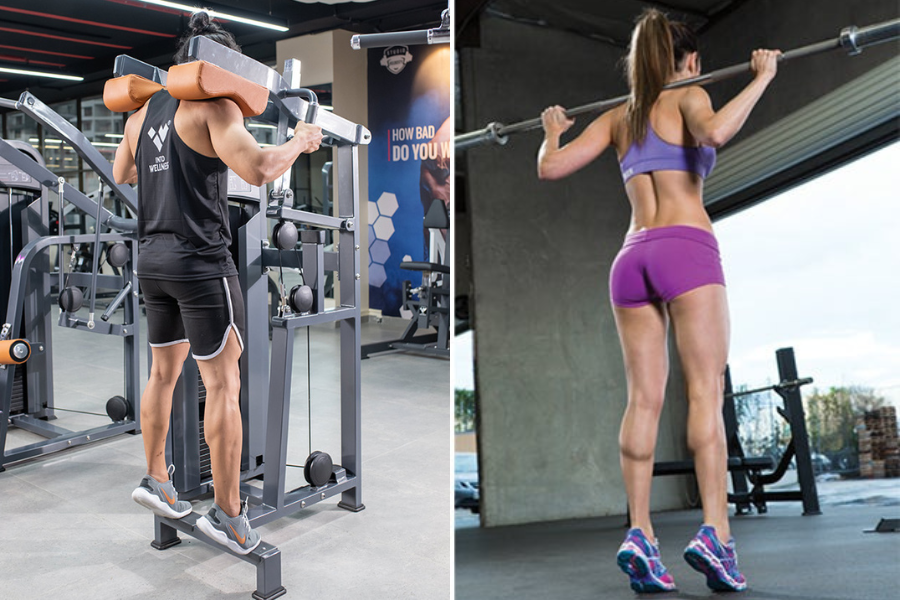
A simple move like standing calf raises can strengthen your lower legs, improve balance, and support better running and jumping. The problem is that a few common mistakes can turn this helpful exercise into something that is less effective or even uncomfortable for your knees, ankles, or feet.
Below, you will learn exactly how to do standing calf raises with good form, plus the key errors to avoid so you can build stronger calves safely and efficiently.
Why standing calf raises matter
Standing calf raises target the two main muscles in your lower leg, the gastrocnemius and the soleus, which work together to flex your ankle and help you walk, run, and jump. When these muscles are strong, they help stabilize your ankle joint and absorb impact, which lowers your risk of sprains and strains.
Regularly practicing standing calf raises can:
- Improve ankle stability by strengthening the muscles, tendons, and ligaments that surround the joint, which can reduce common ankle injuries
- Boost running and jumping performance by increasing power during the toe off phase
- Support better balance and coordination, especially as you age, by improving neuromuscular control in your lower legs
Guides from sources like Verywell Fit note that standing calf raises can be adapted easily with variations and added resistance to match different fitness levels.
When you understand what the movement should feel like, it becomes easier to spot and correct mistakes.
How to do a basic standing calf raise
Before you can fix problems, it helps to review the standard version of the exercise.
- Stand with your feet hip width apart on a flat, stable surface.
- Rest your fingertips lightly on a wall, chair, or counter if you need help with balance.
- Keep your knees straight but not locked, your core gently engaged, and your back upright.
- Press through the balls of your feet and lift your heels as high as you comfortably can.
- Pause at the top and squeeze your calf muscles.
- Slowly lower your heels back down under control until they reach the floor.
If you are new to standing calf raises, starting with 10 to 30 repetitions at body weight is usually enough. Over time you can increase reps, range of motion, or add resistance.
Once the basic pattern feels smooth, you can watch for and correct the following missteps.
Mistake 1: Rushing through the movement
Many people bounce up and down as quickly as possible, which limits muscle activation and reduces the benefits of the exercise. Rapid, jerky reps rely on momentum instead of your calves and increase the chance of straining the Achilles tendon.
Slowing down helps in two ways. First, your calves must work harder through the full range of motion. Second, your ankle joint has more time to adapt to the load, which supports long term resilience and may help prevent Achilles tendinopathy over time.
Aim for a smooth tempo such as:
- Two seconds up
- One second pause and squeeze at the top
- Two to three seconds on the way down
You should feel a controlled lift and an intentional stretch, not a bounce.
Mistake 2: Cutting the range of motion short
Another common issue is only lifting the heels a little off the floor and dropping back down before your calves fully contract. Over time, this habit can blunt progress in both strength and muscle definition.
To get more out of standing calf raises, you want:
- A deep but comfortable stretch at the bottom
- A strong contraction at the top where your heels are as high as you can manage with control
If your heels stop getting as high on later repetitions, that is usually a sign of fatigue. It is better to end the set there instead of continuing with half reps.
Once you are confident with the basic version on flat ground, you can increase range of motion by standing with the balls of your feet on a step or weight plate. Lower your heels slightly below the step to deepen the stretch, pause briefly, then drive back up. This is sometimes called a deficit calf raise and it can be very effective for building flexibility and strength through the full movement.
Mistake 3: Leaning forward or arching your back
If you feel calf raises in your lower back or hips, your posture is probably off. Leaning too far forward shifts the focus away from your calves and can create unnecessary stress on your spine and hips.
During each repetition, try to:
- Stand tall with your ears, shoulders, hips, and ankles roughly in line
- Keep a gentle brace in your core so your torso does not sway forward or backward
- Use a wall or chair for light support if balance is an issue, but do not lean your whole body weight into it
Good posture keeps the movement centered at your ankle joint, which is where you want the action to happen.
Mistake 4: Letting your knees bend too much
Standing calf raises are designed to emphasize the gastrocnemius, the larger and more visible portion of your calf that sits higher on the lower leg. This muscle crosses both your knee and ankle joints, so knee position affects how much it works.
If you bend your knees significantly during the exercise, you shift more of the load to the soleus muscle instead. The soleus is important, and it is targeted more directly by seated calf raises, but if your goal is a stronger and more defined upper calf, you want to keep your knees mostly straight.
Focus on:
- A soft, small bend to protect your joints
- No visible squatting motion as you lift and lower your heels
Rehabilitation specialists at Foot & Ankle Albury highlight that keeping the knee straight is important for effective gastrocnemius strengthening during a standing calf raise.
Mistake 5: Shifting weight to the inside or outside of your feet
During a proper standing calf raise, pressure through your forefoot should be evenly spread from your big toe joint across to your little toe. Rolling inward toward the big toe or outward toward the smaller toes can reduce stability and overload certain structures in your foot and ankle.
This is especially important if you are using the exercise for rehab or injury prevention. According to Foot & Ankle Albury, maintaining equal pressure across the forefoot helps with proper loading and better outcomes during calf strengthening work.
To correct this, pay attention to what you feel under your feet as you lift:
- At the bottom, feel all your toes gently touching the ground
- As you rise, keep the pressure spread evenly
- At the top, resist the urge to roll to one side
If you notice a strong tendency to collapse inward or outward, try doing the exercise barefoot on a firm surface so you can sense foot contact more clearly.
Mistake 6: Curling your toes for extra “help”
When your calves are weak or getting tired, your long toe flexor muscles often try to take over. You will see or feel this as clawing or curling of the toes while you lift your heels. The problem is that this compensation reduces the workload on the calves and can make the front and bottom of your foot feel tight.
A simple fix is to place the balls of your feet on a step or weight plate so your toes hang off the edge. With nothing under them to grip, it becomes easier to relax your toes and keep the focus on your calves. This small change is especially helpful if you are rehabbing from a lower leg injury or trying to correct long standing movement habits.
Watch your toes periodically during your set. If they start to curl, pause, reset, and shorten your set so that you stay in control.
Mistake 7: Skipping warm up and stretching
Going straight from sitting at a desk into heavy or fast calf raises is not ideal, particularly if you have a history of tendon issues. Cold, stiff muscles and tendons are more vulnerable to strain.
A short warm up can be as simple as:
- A few minutes of easy walking or marching in place
- Gentle ankle circles in both directions
- Light, controlled calf raises with a smaller range of motion
After your working sets, follow with a modest calf stretch. Stand facing a wall, step one foot back, press the heel down, and lean your torso forward until you feel a stretch through the back of the lower leg. Hold briefly, then switch sides. Resources such as Verywell Fit emphasize that not stretching, moving too quickly, or doing too few repetitions are common mistakes that can limit progress and comfort with standing calf raises.
Mistake 8: Using only very light or only very heavy loads
Calves respond well to a mix of moderate and higher rep work. If you always stay with very light weight and low reps, your muscles may not get enough stimulus to grow stronger. On the other hand, jumping straight to very heavy weights can compromise your form and make it hard to reach a full stretch or strong contraction.
A good starting approach is to pick a difficulty that allows you to complete roughly 8 to 15 controlled repetitions with:
- A full range of motion
- A brief squeeze at the top
- A smooth, slow lower at the bottom
As your strength improves, you can progress by:
- Holding dumbbells at your sides
- Wearing a backpack with books or plates
- Performing single leg calf raises to double the load on one side
Bodybuilding guides, such as those from MuscularStrength, often suggest training calves several times per week and combining standing and seated calf raises to target both the gastrocnemius and soleus effectively.
Mistake 9: Ignoring balance, coordination, and frequency
Calf raises are not only about strength. They are also a chance to practice balance and coordination. If you always hold on tightly to support and rarely do the exercise, you miss out on these benefits.
To get more from standing calf raises:
- Use light fingertip support when needed, but work toward doing some sets without holding on
- Include them regularly, for example 2 to 3 times per week, rather than doing a long, infrequent session
- Switch between two leg and single leg variations as your balance improves
Research summarized by Verywell Fit notes that consistently performing standing calf raises can enhance ankle joint flexibility, neuromuscular control, and help reduce age related mobility loss. Short, regular sessions tend to support these adaptations better than occasional, intense efforts.
How to safely progress your standing calf raises
Once your technique feels solid and you have addressed the common mistakes above, you can slowly increase difficulty.
You might move through this progression over several weeks:
- Two leg body weight calf raises on flat ground
- Two leg body weight calf raises on a step for greater range
- Two leg calf raises holding light dumbbells
- Single leg calf raises on flat ground
- Single leg calf raises on a step with or without added weight
At each stage, keep your focus on:
- Even pressure across your forefoot
- Straight, relaxed knees without bouncing
- A calm upper body with minimal leaning
- A strong squeeze at the top and a gentle stretch at the bottom
If you feel sharp pain around your Achilles tendon, ankle, or knee, stop and check your form. Persistent discomfort is a sign to ease back the intensity or talk with a healthcare or rehab professional before continuing.
Key takeaways
Standing calf raises are a simple, equipment free way to build stronger, more resilient lower legs. When you avoid common mistakes like rushing the movement, cutting the range of motion short, bending your knees too much, curling your toes, or leaning forward, you help your gastrocnemius and soleus work the way they are meant to.
Start with controlled, full range repetitions on a stable surface, then gradually progress to more challenging variations as your strength and balance improve. With consistent practice and mindful technique, you will support better ankle stability, more powerful walking and running strides, and healthier calves for the long term.
About the Author