A smart quad workout for athletes can build speed, power, and knee resilience, but small mistakes add up quickly. If your quads are always sore, your knees feel cranky, or your sprint times are stuck, there is a good chance your quad training is working against you instead of for you.
Below, you will learn the most common mistakes in a quad workout for athletes, why they matter, and what to do instead so you can build strong quadriceps that actually transfer to the field, court, or track.
Ignoring all four quad muscles
Your quadriceps are not just one big muscle. They are a group of four: the Rectus Femoris, Vastus Lateralis, Vastus Medialis, and Vastus Intermedius. If you only load one pattern, such as basic back squats, you are probably leaving size and strength on the table.
The Rectus Femoris crosses both the hip and the knee, so it works hard when you combine hip flexion and knee extension, for example in high-knee drives or sprinting out of the blocks. The Vastus Lateralis and Vastus Medialis sit on the outer and inner thigh, and they help keep your kneecap tracking properly. When these muscles are weak or imbalanced, you are more exposed to knee pain and strains.
To avoid this mistake, rotate through quad exercises that challenge your legs in slightly different angles and ranges. Barbell front squats, leg presses, heel-elevated goblet squats, and leg extensions each emphasize the quads in a unique way, which leads to better development across all four muscles.
Relying only on back squats
Back squats are a solid strength builder, but for many athletes they become a comfort zone. The problem is that a typical back squat often turns into a hip-dominant movement. You load your glutes and lower back heavily while your quads do less work than you think.
Quad-focused squat variations help you shift the emphasis forward, literally and figuratively. According to quad training guidance updated in June 2024, barbell front squats, heel-elevated goblet squats, hack squats, sissy squats, and leg presses allow you to increase knee flexion and knee extension demand without relying as much on the hips and lower back.
If you always default to back squats, start by swapping one of your weekly squat sessions for a front-loaded or heel-elevated variation. Keep your torso more upright, let your knees travel forward over your toes with control, and think about driving the floor away with your quads.
Skipping unilateral quad work
Another common mistake in a quad workout for athletes is training both legs together all the time. Bilateral squats and presses are efficient, but they can hide left or right side imbalances that later show up as overuse injuries or slower change of direction.
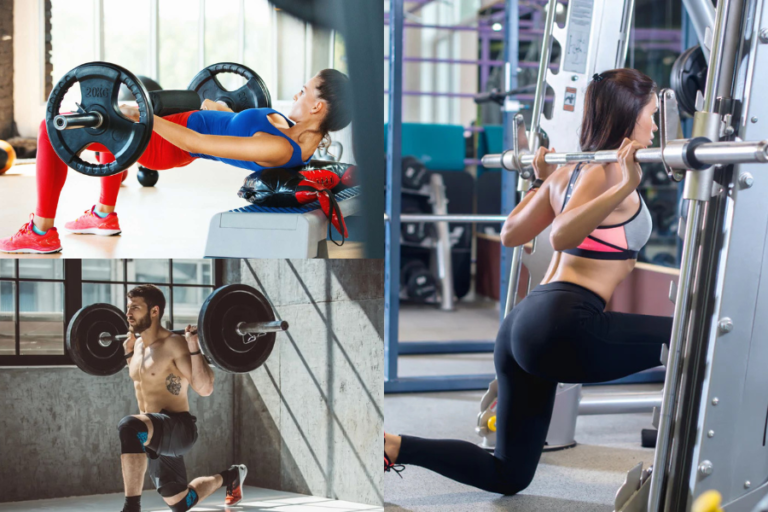
Unilateral exercises like lunges and Bulgarian split squats are especially useful here. When you elevate the front foot and keep your torso upright, you increase the demand on the quads while teaching your core and hips to stabilize each leg independently. Guidance from Gymshark’s 2024 quad workout recommendations highlights these as key moves for correcting imbalances and improving balance and core stability.
Try building in lunges with the front foot slightly raised on a plate, or Bulgarian split squats with a shorter stance. Focus on smooth, controlled reps and even weight distribution through the front foot. Over time, you will notice that your weaker leg catches up, and your cuts, jumps, and landings feel more controlled.
Neglecting isolation work like leg extensions
You might have heard that isolation exercises are not “functional” for athletes. That mindset is another mistake that can hold your quads back.
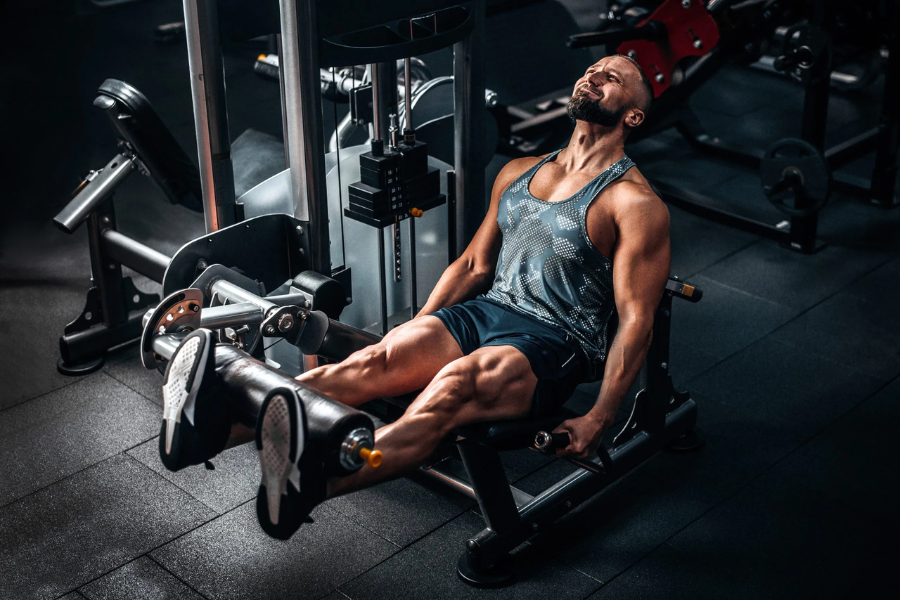
Leg extensions are one of the best tools you have for targeted quad activation. Because your body is supported by the machine, your quads can do almost all the work without your lower back or hips failing first. This makes leg extensions ideal for finishing a session with high tension and relatively low systemic fatigue.
Recent quad training advice suggests using leg extensions for higher volume and even advanced methods such as single-leg reps or brief isometric holds at the top position. These sets help build muscular endurance and definition, which supports your heavier compound lifts and sprint work.
You do not need to build your whole session around leg extensions, but skipping them entirely means you miss a safe way to push your quads close to failure.
Quick rule of thumb: use compound lifts to build primary strength and power, then use leg extensions to “fill in the gaps” and bring the quads to full fatigue without overloading your joints.
Training quads too infrequently or without enough volume
If you are only training quads once per week with a few casual sets, you are underusing a powerful engine for speed and stability. For athletes who want real quad growth and performance, total weekly volume matters.
Updated 2024 guidance suggests you train your quadriceps twice per week, with at least two quad-focused exercises per session and a minimum of 10 total sets every week. A practical way to do this is to choose 2 to 3 quad-dominant movements per workout and aim for 3 to 4 sets of 8 to 12 reps each.
Just as important as volume is recovery. Your quads are heavily involved in sprinting, decelerating, and jumping. Aim for at least 48 hours between hard quad sessions so that the muscles, tendons, and nervous system can adapt. More is not always better, especially if you feel constant tightness or achy knees.
Letting your knees collapse or drift out of control
Your form can make or break your quad workout. One of the most common technical mistakes is letting the knees cave inward or wobble during squats, lunges, and split squats. This not only reduces quad engagement, it can also stress the ligaments and contribute to knee pain.
You want your knees to track over your toes throughout the range of motion. In quad-focused squats, that often means allowing your knees to move forward more than you are used to, while keeping your heels connected to the ground or slightly elevated on a stable surface. Research-backed guidance also highlights that heel elevation and precise foot placement can increase quad loading while reducing unwanted hip dominance.
Pay close attention to how you align your feet. A comfortable shoulder-width stance with a slight toe out is a reliable starting point for many athletes. As you descend, think of spreading the floor gently with your feet while keeping your knees centered over the middle of each foot. Filming your sets can help you quickly spot breakdowns that you might not feel in the moment.
Ignoring speed and sprint transfer
A lot of athletes train quads as if they are bodybuilders, then wonder why their first step or acceleration does not improve. Strong quads are essential for explosiveness out of the blocks, drive phase power, and speed through the first 20 meters of a sprint, but only if you train them in patterns that resemble how you actually move in your sport.
Heavy sled pushes are one of the best examples of this. When you push a loaded sled with your heels slightly elevated and a forward lean, you are teaching your quads and glutes to drive the body forward with strong knee extension. Current guidance recommends three sets of 10 to 15 meters to build quad strength that directly supports speed.
Other sprint-supportive quad exercises include the dumbbell elevated split squat with the front foot on a slant board and the heel-elevated front squat. Both improve dynamic trunk control and range of motion so that you can maintain better posture and power output while running. The banded skater squat into hip lock also mimics the ankle and hip positions you need in max acceleration, with three sets of five reps per leg often recommended for focused power work.
If you want your quad workout for athletes to translate to faster sprints, pair your strength work with these more specific patterns instead of relying only on slow squats and machines.
Overlooking injury prevention and rehab needs
Strong quads do not just help you run faster, they also play a big role in protecting your knees and hips. Weakness or inflexibility in the quadriceps is linked to a higher risk of a variety of lower limb injuries. Tightness in the Rectus Femoris, which is part of your hip flexor group, can even cause your glutes to “switch off,” increasing stress at the hip, knee, and ankle.
Quadriceps strains commonly occur near the tendon just above the knee and are often triggered by sprinting, jumping, or kicking. To help prevent these issues, you need a mix of strength, flexibility, and soft tissue care. Foam rolling the quads and hip flexors from just above the knee up to the top of the thigh, combined with regular quad and hip flexor stretches, is a simple habit that pays off over time.
If you are returning from a knee injury such as an ACL reconstruction, quad strength becomes even more critical. Research in 2024 highlighted that quadriceps weakness is common after ACL surgery, especially with bone patellar tendon bone or quadriceps tendon grafts, and that it can slow functional recovery and contribute to knee osteoarthritis progression. Rehabilitation that combines open kinetic chain exercises such as carefully programmed leg extensions or straight leg raises with closed chain work such as squats is considered important for restoring quad size and strength.
You should always follow the guidance of your medical team, but it helps to understand why your program might include specific quad drills, blood flow restriction training at low loads, or eccentric-focused work. These strategies are not random, they are designed to safely load the quads and regain strength as efficiently as possible.
Building a smarter quad workout for athletes
Putting this all together, you can avoid the most common quad training mistakes by being intentional with your exercise selection, form, and weekly structure. A simple template could look like this:
- Two quad-focused sessions per week, separated by at least 48 hours
- Each session with 2 to 3 quad-dominant exercises
- At least one bilateral squat or press, one unilateral exercise, and one isolation or sprint-specific drill
For example, one day might feature heel-elevated front squats, Bulgarian split squats, and leg extensions. Later in the week, you could use barbell front squats, walking lunges, and heavy sled pushes.
As you adjust your quad training, pay attention to how your knees feel, how quickly you can accelerate, and how stable you are when you cut or land. Small technique improvements and smarter exercise choices compound over time, helping your quads do exactly what you need as an athlete: produce power, protect your joints, and keep you moving fast.
About the Author