Calves that look and feel strong do not happen by accident. Barbell calf raises are one of the simplest ways to load your calves heavily, build muscle, and improve lower body power for running, jumping, and everyday movement. With a few easy tweaks to your form and programming, you can turn this basic move into a serious growth driver for your legs.
Below, you will learn exactly how to do barbell calf raises, how much weight to aim for, and how to adjust reps, tempo, and stance so you finally see progress in a muscle group that is notoriously stubborn.
Why barbell calf raises work so well
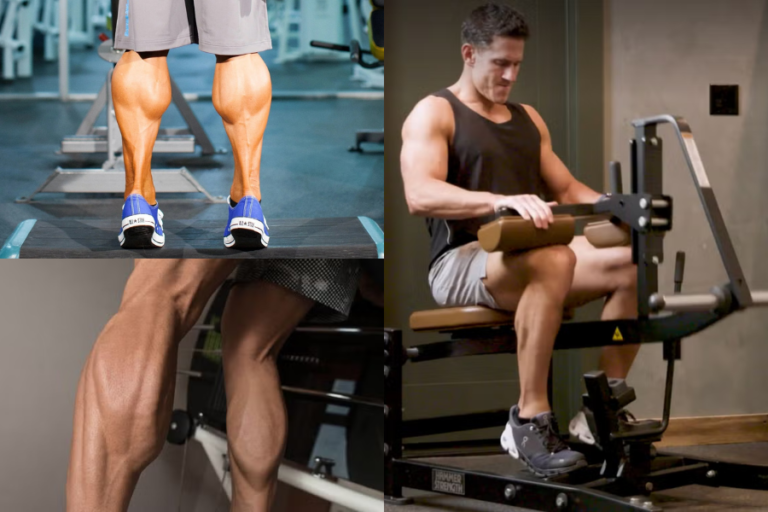
When you perform standing barbell calf raises, you target your gastrocnemius muscle, which is the larger, visible calf muscle that helps with explosive actions like sprinting and jumping. You also bring in the soleus, a deeper calf muscle that supports posture and endurance, as well as your quads, hamstrings, and glutes as stabilizers.
Calf raises are proven to be effective for calf growth when you train them through different joint angles, such as straight leg and bent knee variations, and with enough load and volume to challenge both the gastrocnemius and the soleus. Experts from the Cleveland Clinic and the University of South Carolina note that these variations help you hit the full calf complex for size and strength gains, especially when you combine them in a simple routine.
Barbell calf raises, in particular, let you add serious weight. If you have been doing only bodyweight raises or light machines, moving a barbell can be the next step that actually pushes your calves to grow.
How to do barbell calf raises with good form
You do not need a lot of equipment to get started. A barbell, some plates, and a stable surface are enough. You can also use a small block or weight plates under your toes to increase your range of motion once your balance improves.
Step by step setup
- Set a barbell in a squat rack at about shoulder height.
- Stand under the bar so it rests comfortably across your upper back, not on your neck.
- Grip the bar slightly wider than shoulder width and unrack it by standing up tall.
- Step back so your feet are shoulder width apart, with your toes pointing straight ahead.
- If you are using a block or plates, place the balls of your feet on the edge so your heels can drop below the level of your toes.
Performing each rep
From this starting position, focus on slow, controlled movement rather than bouncing.
- Inhale and let your heels lower toward the floor until you feel a comfortable stretch in your calves.
- Pause briefly at the bottom so you are not using the elastic bounce of your Achilles tendon.
- Exhale as you push through the balls of your feet and lift your heels as high as you can.
- At the top, squeeze your calves hard and hold for 1 to 2 seconds before lowering again.
Exercise specialists such as Jared Meacham, PhD, explain that pausing at both the bottom and the top, instead of rushing, improves muscle activation and hypertrophy, because it keeps the tension on your calf muscles and not just on the tendon. Fast, bouncy reps mostly train the tendon, which is not what you want if your goal is bigger calves.
If balance feels challenging at first, skip the block and stay flat on the floor. You can add the extra range of motion once you feel confident under the bar.
How much weight to use for barbell calf raises
You might be surprised by how strong your calves already are. Community strength standards can help you get a sense of where you stand and what to aim for.
According to Strength Level data as of 2026:
- The average one rep max (1RM) barbell calf raise for a male lifter is 262 lb, which falls into the Intermediate category.
- A good starting goal for male beginners is an 86 lb 1RM, which is already considered impressive compared to the general population.
- For female lifters, the average 1RM barbell calf raise is 165 lb, also at the Intermediate level.
- Female beginners can target a 37 lb 1RM, which is again strong relative to many non-lifters.
You do not need to chase a one rep max to grow your calves, but these numbers give you a benchmark. For muscle building, choose a weight that lets you complete 8 to 15 reps with good form. If you cannot reach 8 reps without cheating or bouncing, the weight is too heavy. If you can easily pass 15 reps and feel only a mild burn, it is too light.
Start on the conservative side and gradually add weight once you can hit the upper end of your rep range with full range of motion and solid pauses at the top and bottom.
Simple programming for bigger calves
Calves respond well to both heavy and lighter work, as long as you drive them close to fatigue. Research summarized by Shawn Arent, PhD, suggests that mixing different rep ranges is especially effective for the gastrocnemius and soleus, because these muscles handle a lot of low level work all day and need a varied stimulus to grow.
You can follow a basic weekly plan like this:
- 2 to 3 days per week for general strength and growth
- Up to 3 days per week if you are specifically targeting calf size
- Short, focused sessions that fit at the end of your leg or full body workouts
On each calf day, alternate between heavier and lighter sets:
- Heavier work: 3 sets of 8 to 12 reps with a challenging weight
- Lighter work: 2 to 3 sets of 15 to 20 reps with a slightly lighter load
Rest up to 45 seconds between sets. This short rest keeps the muscles under frequent tension and builds a deep burn that supports hypertrophy.
If you want a straightforward four week block, you can:
Train calves three times per week, do 3 sets of 10 to 12 standing barbell calf raises and pair them with seated raises in a similar rep range. Focus on strong flexes and full stretches, and you should notice visible changes in how your calves look and feel over a month.
Foot positions to target every part of the calf
A simple way to change the emphasis in your barbell calf raises is to adjust how your toes point. The gastrocnemius has two heads, medial and lateral, and you can shift focus slightly by turning your feet.
Here is how your stance affects the muscle:
- Toes pointed inward, you emphasize the outer or lateral head.
- Toes pointed outward, you emphasize the inner or medial head.
- Toes straight ahead, you hit both heads more evenly.
Research referenced by Shawn Arent, PhD, suggests that rotating foot position like this can help you build more complete calves, rather than having one area dominate. You can use one stance per set or change it from workout to workout.
Whichever stance you choose, keep your knees soft, your core braced, and your weight through the balls of your feet, not your toes alone. That way, you stay stable and avoid unnecessary stress on your ankles.
Tempo, range of motion, and mind muscle connection
The way you perform each rep matters as much as the total number of reps. If you rush, bounce, or only move through a partial range of motion, your calves will not get the full growth stimulus.
Aim for a controlled tempo such as:
- 2 seconds lowering into the stretch
- 1 second pause at the bottom
- 1 second lifting up
- 1 to 2 seconds squeezing at the top
Using a block or a pair of small plates under your toes lets your heel drop slightly below the forefoot. This extra stretch increases range of motion and, when paired with a strong contraction at the top, can drive more muscle growth. Fitness experts like Jared Meacham, PhD, note that combining stretch and contraction is especially effective for hypertrophy.
At the top of every rep, think about pulling your heel up as if you were trying to touch your calf with it. That mental cue helps improve your mind muscle connection, so you feel the calves do the work rather than relying on momentum.
If you sense that you are starting to bounce, shorten the set, lower the weight, or reset your stance. Quality beats quantity for calf training.
Adding variations for complete calf development
Standing barbell calf raises are a strong starting point, but you can add a few simple variations to cover the entire lower leg and avoid plateaus.
Seated and bent knee raises
When you bend your knees, you shift more load to the soleus muscle. Seated calf raises, either with a machine or with dumbbells placed on your thighs, are a good option if you struggle with balance during standing work. These are especially useful if you want fuller, thicker looking calves from the side.
Combining straight leg barbell raises and bent knee or seated raises in the same week ensures you do not neglect either the gastrocnemius or the soleus.
Single leg calf raises
Single leg raises increase the challenge without needing a lot of weight. They also improve your balance, ankle mobility, and body control. You can do them holding a dumbbell in one hand and a wall or rail with the other for support.
By working one side at a time, you quickly notice and correct strength differences between your left and right legs, which can carry over to more stable squats, lunges, and daily activities.
Safety tips and recovery basics
Barbell calf raises are relatively simple, but heavy weights on a small base of support always deserve respect. A few habits will keep you safe and progressing.
Start with a thorough warm up that includes ankle circles, light bodyweight calf raises, and a few easier sets before you move into your working weight. Pay attention to your alignment. Your knees should track over your toes and your hips should stay stacked over your ankles.
Increase load gradually. If you jump from very light to very heavy in one session, your Achilles tendon and calf muscles may not adapt fast enough, which raises your injury risk. Add a little weight every week or two instead.
Allow your calves time to recover, especially if you are training them three days per week. Mild soreness is normal, but sharp pain, swelling, or ongoing tightness are signs that you should back off, reduce volume, or reduce frequency.
When you combine proper form, smart progression, and enough rest, barbell calf raises can deliver a serious boost in leg size and strength. Over time, you may find that not only do your calves grow, but your running, jumping, and overall stability improve too.
About the Author