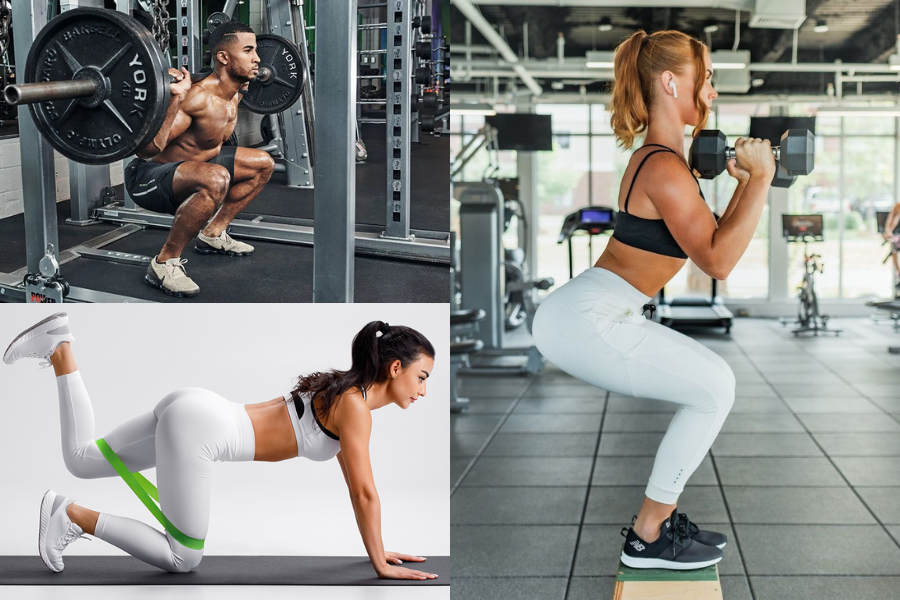
Starting a beginner glute workout is a great way to shape and strengthen your lower body without overwhelming your schedule. Your glutes help stabilize your hips, support your posture, and power everyday movements like walking and climbing stairs. By focusing on targeted exercises and proper technique, you’ll establish a solid foundation for more advanced strength training routines down the road.
Understand why glute strength matters
Your glutes aren’t just a single muscle; they’re a group of three muscles (gluteus maximus, medius, and minimus) that all play pivotal roles in your body’s stability. When you strengthen them, you can:
- Reduce lower back discomfort by improving posture.
- Boost athletic performance, whether you run, cycle, or lift weights.
- Lower injury risk, especially in knees and hips, by enhancing stability and alignment.
Warm up before your workout
Before diving into your beginner glute workout, take a few minutes to get your muscles ready. A thorough warm-up gradually raises your heart rate and improves blood flow to your lower body, which helps prevent strains and soreness.
- Start with light aerobic activities like marching in place or brisk walking for two to three minutes.
- Follow with dynamic stretches such as leg swings or hip circles to loosen up your hips.
- Prioritize controlled movements instead of rushing through the motions.
Master three key exercises
Below are three core exercises for your glutes. They require minimal equipment, making them easy to complete at home or at the gym. Focus on proper form and controlled repetition rather than speed.
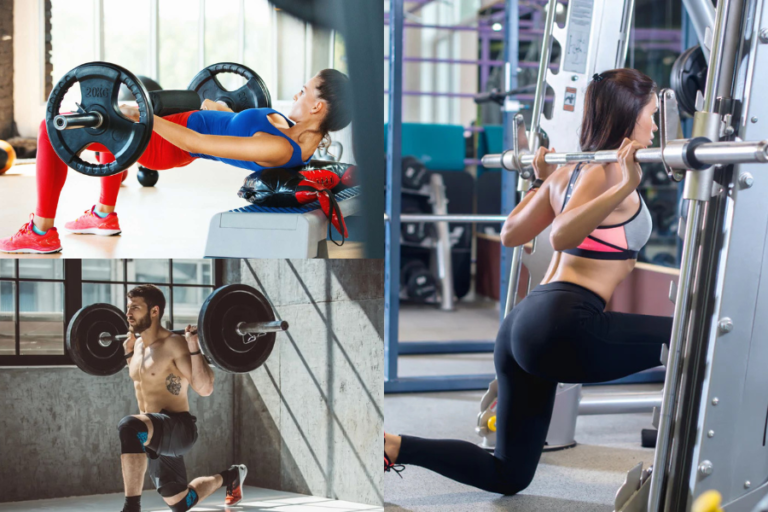
Squats
Squats are a foundational lower-body move that targets your glutes, quads, and core.
- Stand with your feet slightly wider than hip-width.
- Keep your chest lifted and your core tight.
- Bend your knees and lower your hips, as if you’re about to sit on a chair.
- Push through your heels to come back up to standing.
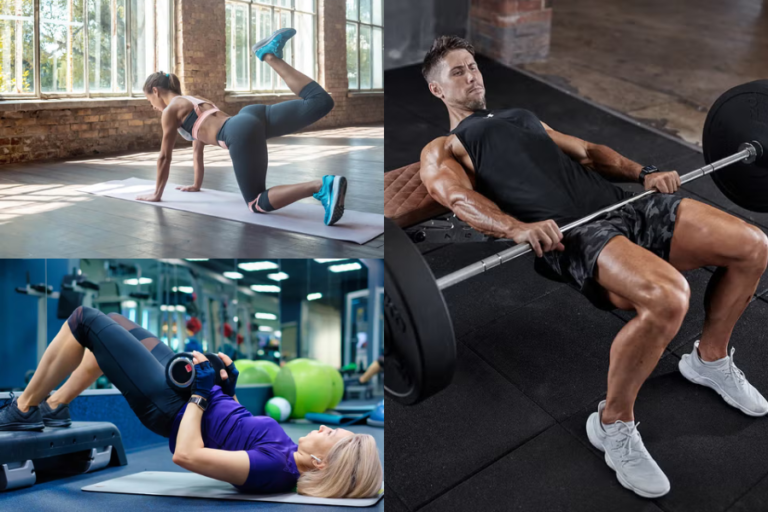
Glute bridge
Glute bridges isolate your glutes and can also help stabilize your lower back.
- Lie on your back with your knees bent and feet shoulder-width apart on the ground.
- Place your arms at your sides, palms down for balance.
- Squeeze your glutes and lift your hips until your knees, hips, and shoulders form a straight line.
- Lower your hips back down slowly and repeat.
Donkey kicks
Donkey kicks target the gluteus maximus while also engaging your core for balance.
- Get on all fours with your knees under your hips and your hands under your shoulders.
- Keep your back straight as you lift one leg behind you, knee bent at a 90-degree angle.
- Drive your foot upward toward the ceiling in a controlled motion.
- Return your knee to the starting position and repeat before switching legs.
Cool down for better recovery
Taking time to cool down helps your body transition back to a resting state. Cooling down also reduces muscle tension, which is especially important after working your glutes.
- Gently stretch your hips, quads, and hamstrings for 10 to 20 seconds per stretch.
- Walk in place or pace around the room for another minute or two to regulate your breathing.
- Hydrate well to support muscle recovery.
Key takeaways
- Strong glutes provide essential support and stability for your entire lower body.
- Always start your beginner glute workout with a proper warm-up to prepare your muscles.
- Squats, glute bridges, and donkey kicks are simple yet effective exercises to build a strong foundation.
- A short cool-down with gentle stretching eases post-workout soreness.
By consistently practicing these fundamental moves, you’ll see and feel real differences in everything from your posture to your daily energy. Start at your own pace, track your progress, and enjoy the steady transformation of your lower body.
About the Author