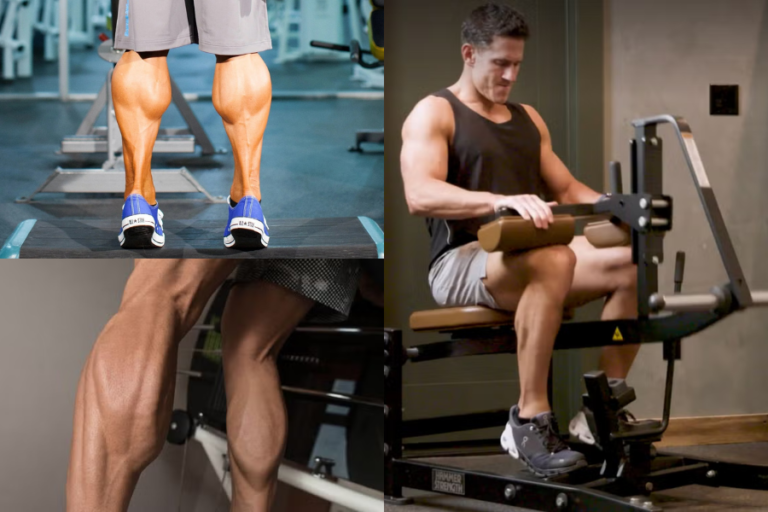
A strong lower body is not complete without powerful hamstrings. An advanced hamstring workout helps you build strength, protect your knees and lower back, and boost your performance in everything from running to lifting. When you train your hamstrings with intention, you are not just chasing muscle definition, you are investing in long-term joint health and resilience.
Below you will find a practical, research-backed guide to designing an advanced hamstring workout that fits into your routine, whether you are a lifter, runner, or field athlete.
Understand what makes hamstrings “advanced”
Your hamstrings are a group of three muscles that cross both your hip and knee joints. They help you extend your hips and bend your knees, which means you use them when you sprint, jump, hinge and even walk up stairs.
An advanced hamstring workout builds on basic movements like bodyweight hip hinges and light leg curls. You are ready to progress if you can already:
- Hinge with solid form using moderate weights
- Control your tempo through full ranges of motion
- Recover from leg workouts without excessive soreness or injury
At this stage, you focus less on simply “doing hamstring exercises” and more on how often you train them, the movement patterns you use and the way you apply load and fatigue.
Why focus on an advanced hamstring workout
Hamstrings are often neglected compared to quads and glutes, which creates imbalances. Modern sitting-heavy lifestyles tighten your hips and weaken your posterior chain. That combination sets you up for hamstring strains and lower back pain.
Eccentric-focused hamstring training, where the muscle works hardest as it lengthens, is especially powerful. A systematic review of 23 randomized controlled trials with 18,215 participants found that hamstring eccentric programs reduced lower extremity injuries by 28 percent and hamstring injuries by 46 percent in athletes, with knee injuries down by 34 percent. Those are meaningful numbers if you want to stay active and avoid time off.
The same body of research suggests:
- Training hamstrings eccentrically twice per week is significantly more protective than once per week
- Programs lasting 21 to 30 weeks reduce injury risk more than very short plans
You can use this information to guide how you structure your training blocks and how seriously you treat your hamstring days.
Key principles for advanced hamstring training
Before you jump into specific exercises, it helps to understand the structure of an effective advanced hamstring workout.
Train both movement patterns
Because the hamstrings cross both the hip and knee, you want to train them in two ways:
- Hip hinge movements, such as Romanian deadlifts or stiff-legged deadlifts, where your hips move back and your torso leans forward
- Knee flexion movements, such as leg curls, where you bend your knee against resistance
Guides like the 2024 RP Strength hamstring hypertrophy article by Dr. Mike Israetel emphasize that you need both patterns for full development. Relying only on one leaves strength and stability on the table.
Dial in your frequency and volume
For advanced lifters, training hamstrings 2 to 3 times per week usually strikes a good balance between stimulus and recovery. Instead of cramming all your sets into one brutal session, you spread the work so each workout stays productive.
Typical recommendations include:
- 2 to 3 total hamstring-focused exercises in a week
- At least one hip hinge and one curl variation included
- Low to moderate set volume per session so you still recover
You may respond best to one heavier, strength-oriented day and one slightly higher rep, hypertrophy day.
Use the right rep ranges and rest
Hip hinge exercises place big demands on your entire posterior chain. To train them safely and effectively, aim for heavier loads in the 5 to 10 rep range. This lets you challenge the hamstrings without letting fatigue from your lower back or grip ruin your form.
Knee flexion work such as lying or seated leg curls tends to respond better to higher rep ranges, often 10 to 20 or even up to 30 reps. You can push closer to muscular fatigue with less risk to your joints or spine.
Rest periods should match the movement:
- Heavy hinges: up to about 3 minutes between sets so you can maintain quality
- Leg curls: much shorter rest is fine, sometimes under 30 seconds if you are using techniques like down sets or myoreps
The goal is always the same: be ready to perform a focused, high-quality next set.
Progress deliberately, not randomly
Advanced hamstring training is not just about picking harder exercises. You want to build in progression over 4 to 6 week blocks so you continue to adapt instead of stalling.
Ways to progress include:
- Gradually adding weight while keeping your form tight
- Adding a set to one or two key exercises
- Slowing your eccentrics or including brief pauses in weak positions
- Introducing slightly more advanced variations once the basics feel strong
Techniques like controlled eccentrics, down sets with lighter weight, and occasional drop sets for curls all show up in evidence-based programming guides as safe ways to increase stimulus when used sparingly.
Best advanced hamstring exercises to include
You have plenty of options for building an advanced hamstring workout. The key is to choose movements that challenge you without overwhelming your recovery.
Romanian deadlift (RDL)
The Romanian deadlift is one of the most effective hamstring exercises because it trains the muscles in a lengthened position. You keep your knees slightly bent, hinge at the hips, and lower the bar or dumbbells down your thighs until you feel a strong stretch in the back of your legs.
Research-based training guides recommend 3 to 4 sets of 8 to 12 reps for hypertrophy-focused RDLs. You can use a barbell, dumbbells, or even kettlebells depending on what feels best on your lower back and grip.
To keep the tension on your hamstrings:
- Think about sliding your hips straight back instead of “bowing” forward
- Keep the weight close to your legs
- Stop just before your lower back starts to round
Barbell deadlift
The conventional barbell deadlift is often called one of the best tools for hamstring growth. It combines heavy loads, multiple joints and powerful hip extension. This is a good pick when your goal is strength and overall posterior chain size.
Typical advanced programming uses around 3 sets of 6 to 8 reps. You want each set to feel heavy but still controlled. If your form breaks down, scale the weight or consider pulling from blocks or using a trap bar.
Single-leg deadlift
Single-leg deadlifts challenge your balance and your ability to stabilize your hips. They also recruit more of the gluteus medius and core, which supports better movement in daily life and sport.
They work well at about 3 sets of 6 to 8 reps per leg. Start with bodyweight or light dumbbells and focus on:
- Keeping your hips square instead of letting one side open up
- Reaching your back leg long rather than rotating your torso
If your balance is shaky, lightly hold on to a wall or rack at first and gradually reduce support.
Bulgarian split squat
Bulgarian split squats, or rear-foot-elevated split squats, train one leg at a time and hit your hamstrings and glutes hard, especially if you lean your torso slightly forward. They help correct side-to-side imbalances that often contribute to strains.
A common prescription is 3 to 4 sets of 8 to 12 reps per leg. You can hold dumbbells at your sides or use bodyweight if that is already challenging. Focus on a long stride so you feel the back of your front thigh engage, not just your quad.
Leg curl variations
Even in an advanced hamstring workout, simple leg curls deserve a place. They let you directly target the hamstrings with minimal involvement from your lower back.
You might rotate between:
- Lying leg curls
- Seated leg curls
- Single-leg machine curls
Guides like the RP Strength hamstring article and older bodybuilding-focused content from Simplyshredded.com suggest 10 to 20 reps per set, sometimes up to 30, for 3 to 4 sets. Slowing your reps, especially on the way down, and using full range of motion can greatly increase how hard these sets feel.
Nordic hamstring exercise and single-leg deadlift combo
Eccentric-focused work such as the Nordic hamstring exercise is particularly powerful for both performance and injury prevention. A 2024 study on female dance students at Hebei Normal University found that a 6 week eccentric program combining Nordic hamstring exercises and single-leg deadlifts significantly improved both concentric and eccentric hamstring strength compared to stretching or a control group. It also improved flexibility on active straight leg raise tests more than static stretching.
The researchers concluded that this eccentric combo was superior to traditional stretching for increasing both strength and flexibility, and recommended it for performance and injury reduction in dancers. The same logic applies if you play sports that demand quick direction changes or sprinting.
If you include Nordics, start with low volume, such as 2 sets of 4 to 6 controlled reps twice per week, and build slowly.
Sample advanced hamstring workout you can try
Use the sample below as a template and adjust based on your experience, goals, and available equipment.
Day 1: Heavy hinge emphasis
- Romanian deadlift
- 4 sets of 6 to 8 reps
- Rest up to 2 to 3 minutes between sets
- Bulgarian split squat
- 3 sets of 8 to 10 reps per leg
- Rest 90 seconds
- Seated leg curl
- 3 sets of 12 to 15 reps
- Rest 45 to 60 seconds
- Nordic hamstring exercise
- 2 sets of 4 to 6 slow reps
- Rest 2 minutes
Day 2: Hypertrophy and eccentric focus
- Single-leg deadlift with dumbbells
- 3 sets of 8 to 10 reps per leg
- Rest 90 seconds
- Barbell deadlift or trap bar deadlift
- 3 sets of 5 to 6 reps
- Rest 2 to 3 minutes
- Lying leg curl
- 4 sets of 10 to 20 reps
- Optionally include a lighter “down set” at the end with slow tempo
- Rest 45 to 60 seconds
You can place these days 48 to 72 hours apart, such as Monday and Thursday, so your hamstrings recover between sessions. For most advanced lifters, a 4 to 6 week block with this structure works well before you change exercises, rep schemes, or intensity techniques.
Aim to increase either weight or total reps very slightly each week while keeping your form strict. Slow, steady progress adds up quickly for hamstring strength and size.
How to avoid common mistakes and injuries
Advanced training carries more benefit but also more risk if you rush. A few simple habits will keep your hamstrings safer:
- Warm up with light hip hinges, glute bridges and dynamic leg swings before heavy sets
- Respect the soreness from eccentric work, especially Nordics, since it can be intense in the beginning
- Stop your sets one to three reps before failure for big compound lifts so technique stays sharp
- If you feel sharp pain behind the knee or a sudden “grab” in the hamstring, stop and reassess instead of pushing through
Remember that research on eccentric hamstring programs shows the best injury reduction when you are consistent twice per week over many weeks. Short bursts of enthusiasm with long gaps will not give you the same payoff.
Putting your advanced hamstring workout into practice
You do not need to overhaul your whole routine overnight. Start by adding one hip hinge and one curl variation to your current program, then gradually build toward a dedicated advanced hamstring workout twice per week.
As you get stronger and more confident, you can layer in Nordic exercises, single-leg deadlifts and targeted intensity techniques on curls. The goal is to treat your hamstrings with the same focus you already give your chest, shoulders, or quads.
Over time, you will likely notice more stable knees, fewer pulls, stronger pulls from the floor and a more powerful stride. That is the real upgrade you get from taking your hamstring training seriously.
About the Author