A smart hamstring workout plan does more than build the back of your legs. It supports your hips, knees, and lower back, improves your flexibility, and helps you move with less pain and stiffness. With a little structure and consistency, you can train your hamstrings effectively at home or in the gym without spending hours on complicated routines.
Below you will find an easy-to-follow hamstring workout plan that blends strength, flexibility, and recovery so you feel looser and stronger over time, not just sore after one tough session.
Understand what your hamstrings actually do
Your hamstrings are a group of three muscles along the back of your thigh. They bend your knee, extend your hip, rotate your lower leg, and help stabilize your glutes and pelvis. That means they are involved in nearly every athletic movement, including running, jumping, and squatting.
According to physical therapists at Hinge Health, the hamstrings play a big role in both strength and mobility, because they help you bend your knees and extend your hips while also supporting healthy joint motion. When these muscles are weak or tight, you are more likely to feel:
- Tightness when you try to touch your toes
- Discomfort in your lower back or behind your knees
- Fatigue or soreness during runs or long walks
- Pulls or strains when you sprint or change direction quickly
Your hamstring workout plan should tackle all of that by improving strength, flexibility, and control, instead of focusing on one area in isolation.
Balance strength and flexibility in your plan
Many pulled hamstrings are tied to an imbalance between tight hip flexors from long hours of sitting and elongated, weaker hamstrings. This mismatch can throw off your pelvic alignment and put extra stress on your lower back and knees. Strength training helps correct that imbalance by improving hamstring endurance and power, while stretching and mobility work keep your range of motion comfortable.
Gymshark notes that your hamstrings make up roughly one-third of your leg mass, and that conditioning them with both compound and isolation exercises is crucial for reducing injuries and improving overall leg strength. At the same time, Dr. Joshua D. Harris emphasizes stretching not only your hamstrings but also your glutes and lower back to maintain a healthy range of motion around the hips and knees. Together, this means you want a program that includes:
- Strength exercises that load the hamstrings through hip extension and knee flexion
- Mobility drills that open up your hips and lengthen the back of your thighs
- Recovery habits that help your muscles adapt instead of staying tight and sore
Think of your hamstring workout plan as a cycle: warm up, strengthen, stretch, recover, repeat.
Start with a simple weekly schedule
If you are just getting started, you do not need to train hamstrings every day. Twice per week is enough for most people to build strength and flexibility, especially if you are consistent. Gymshark suggests at least two hamstring-focused sessions weekly, with gradual progression in weight and volume, for optimal strength gains.
Here is a beginner-friendly structure you can follow:
- Day 1: Strength + light mobility
- Day 2: Rest or low-intensity activity such as walking
- Day 3: Strength + mobility
- Day 4: Rest
- Day 5: Optional light mobility and foam rolling
- Days 6 and 7: Active rest, for example easy cycling or walking
You can slot this into most busy weeks without rearranging your entire routine.
If a movement causes sharp or sudden pain, stop immediately and consult a medical professional. Mild muscle fatigue or tightness is normal, but pain that spikes or lingers for days is not.
Warm up before each hamstring session
A short warmup prepares your muscles and joints so they can move through a fuller range of motion without strain. It should include gentle dynamic movements rather than long static stretches, which you can save for after your workout.
Try this simple 5 to 8 minute warmup before each hamstring workout:
-
Light cardio, 2 minutes
Walk briskly, march in place, or cycle gently to increase your heart rate. -
Leg swings, 1 minute per leg
Stand near a wall or chair for balance. Swing one leg forward and back in a controlled motion, then switch sides. -
Sumo squat to stand, 2 sets of 10 reps
Hinge at the hips and grab your toes or ankles. Drop your hips into a wide squat, then lift them again while keeping your hands on your feet. This dynamic move is recommended for beginners and helps improve hamstring flexibility and hip mobility.
A good warmup will make your first few strength exercises feel smoother and less “sticky” behind the knees.
Build strength with beginner hamstring exercises
Your main hamstring workout plan should revolve around movements that load the muscles through both hip extension and knee flexion. You can start with bodyweight and light resistance, then slowly add weight as you feel more stable and confident.
Below are beginner-friendly exercises and how to use them in a simple routine.
Single-leg Romanian deadlift
Single-leg Romanian deadlifts (RDLs) are one of the most effective hamstring exercises for beginners. They challenge your balance, teach a proper hip hinge, and strengthen each leg individually. Recover Athletics highlights single-leg RDLs as a key exercise for runners because they strengthen the hamstring during the stance phase of running and target the hip muscles that work closely with the hamstrings.
- Stand tall on one leg with a slight bend in the knee.
- Hinge at your hips, send the free leg back, and lower your torso until you feel a stretch in the standing leg’s hamstring.
- Keep your back flat and your hips square to the floor.
- Return slowly to standing.
For beginners, try 2 sets of 10 reps per leg with about 30 seconds of rest between sets.
Bridge and bridge curl
Bridges train your hamstrings along with your glutes and core. Adding a curl component increases difficulty and recruits both knee flexion and hip extension, deepening hamstring activation. Hinge Health physical therapist Dorian Logan notes that the bridge curl, which involves sliding the feet away and back while raising the hips, is a great way to engage the hamstrings more intensely.
-
Standard bridge
Lie on your back with your knees bent and feet flat. Press through your heels to lift your hips until your body forms a straight line from shoulders to knees. Pause briefly, then lower slowly. -
Bridge curl (with sliders or a towel)
Start in a bridge position with your heels on a small towel or sliders on a smooth floor. Lift your hips, slide your feet away to straighten your legs, then curl them back under you without dropping your hips.
Begin with 2 sets of 10 reps. If the curl is too hard at first, stick with regular bridges until you feel more confident.
Hamstring curls and donkey kicks
Simple hamstring curls and donkey kicks are excellent if you prefer exercises that feel more familiar or less technical.
-
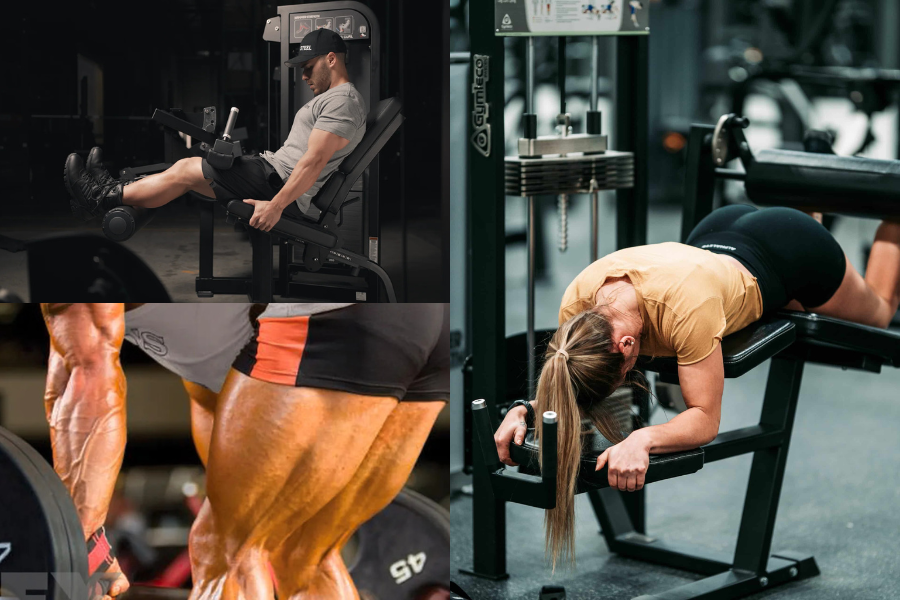
Hamstring curl (standing or prone)
Use a resistance band or machine if available. Bend your knee to bring your heel toward your glutes, pause, then lower with control. -
Donkey kick
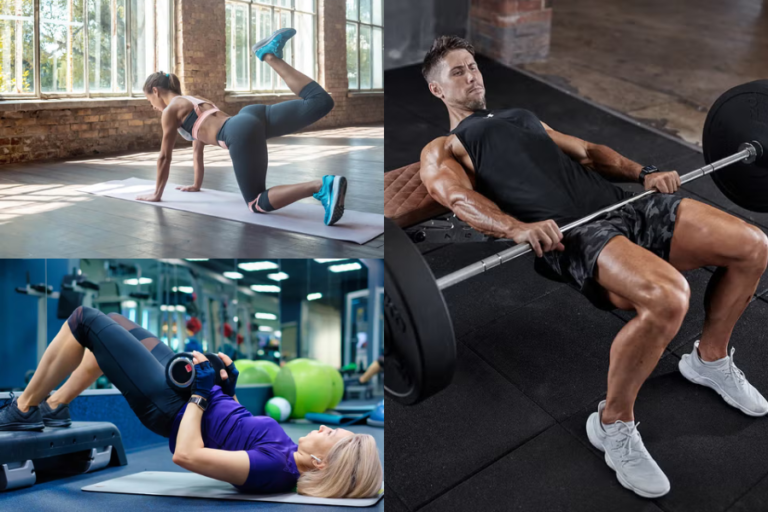
Start on hands and knees. Lift one leg behind you with a bent knee until your thigh is in line with your body, squeeze your glute and hamstring, then lower.
Hinge Health therapists recommend these as part of a well-rounded program to relieve pain and improve mobility, alongside more compound moves. Aim for 2 sets of 10 to 12 reps per leg.
Bringing it together: basic hamstring strength circuit
On your two hamstring days each week, you can follow this simple circuit:
- Single-leg Romanian deadlift, 2 sets of 10 reps per leg
- Bridge or bridge curl, 2 sets of 10 reps
- Hamstring curl or donkey kick, 2 sets of 10 to 12 reps per leg
Rest 30 to 60 seconds between sets. As the exercises start to feel easier, you can:
- Add light dumbbells to your single-leg RDL
- Move from regular bridges to bridge curls
- Increase to 3 sets instead of 2
Progress gradually so your body has time to adapt.
Add compound lifts when you are ready
Once you are comfortable with the basics, you can start layering in more demanding compound lifts. These movements work your hamstrings along with your glutes, core, and back, which is helpful for overall athletic performance and everyday strength.
Conventional deadlifts
Conventional deadlifts are a foundational hamstring workout movement because they emphasize hip extension while heavily loading the back of your body, including the hamstrings, glutes, and spinal erectors. When performed with good form, they build serious strength and resilience.
- Stand with your feet about hip-width apart and a barbell over your midfoot.
- Hinge at your hips and bend your knees enough to grip the bar.
- Keep your back flat, brace your core, and push the floor away as you stand.
- Lower the bar under control, keeping it close to your body.
Start light, focus on form, and consider working with a coach or experienced friend as you learn.
Romanian deadlifts and good mornings
Romanian deadlifts (RDLs) are often considered one of the best hamstring builders because they place most of the workload on the hamstrings rather than the lower back when performed correctly. Gymshark recommends RDLs along with good mornings as primary compound lifts for hamstring development.
- For RDLs, maintain a soft bend in your knees, hinge at your hips, and lower the bar or dumbbells along your thighs until you feel a deep stretch in your hamstrings.
- Keep your back neutral and your shins nearly vertical.
- Reverse the motion by driving your hips forward and squeezing your glutes and hamstrings.
Good mornings are similar but with the bar on your upper back. They demand more torso control, so move to them only when you are confident with RDLs.
Nordic curls and hip thrusts
Nordic hamstring curls have some of the strongest research behind them for injury prevention. They train the hamstrings as they lengthen, which is especially useful if you run or play sports. Recover Athletics highlights that consistent Nordic curls greatly reduce hamstring injury rates by strengthening the muscle in its stretched state.
Hip thrusts, usually seen as a glute exercise, also engage your hamstrings. When your feet are placed a bit farther in front of you, the hamstrings contribute more to lifting and stabilizing the hips.
You do not need to rush into all these movements. Introduce one at a time and treat each new lift as a mini skill you are learning, not just a way to move more weight.
Support your hamstrings with mobility and recovery
Training is only half of a good hamstring workout plan. Recovery and mobility work are what allow your muscles to adapt so you feel less tight and more capable over time.
Stretch for flexibility
After your strength work, include light stretching for your hamstrings, glutes, and lower back. Dr. Harris points out that stretching these areas together helps maintain a greater range of motion and supports better hamstring function.
You can try:
- A seated or lying hamstring stretch, holding 20 to 30 seconds
- A figure-four stretch for your glutes
- A gentle lower-back stretch, such as lying trunk rotations
You should feel a mild to moderate stretch, not sharp pain. Over time, these stretches will usually feel easier and your reach will naturally improve.
Use a physioball for added challenge
If you have access to a physioball, you can incorporate:
- Physio ball leg curls: Lying on your back with your heels on the ball, lift your hips and curl the ball toward you, then extend your legs again.
- Physio ball bridge: Similar starting position, but focus on raising and lowering your hips while stabilizing the ball.
These moves build hamstring strength, glute activation, and lower back stability. They also train your balance and control, which helps you move more confidently in day-to-day life.
Foam roll and rest
Foam rolling the back of your thighs can help release muscle tension and improve mobility. A simple approach is 2 sets of about 20 seconds per leg with 30 seconds of rest, rolling slowly and pausing on tight spots.
Equally important is rest. Dr. Harris notes that soreness is a signal that your muscles are fatigued and need time to recover. Pushing through significant soreness, especially in the early stages of a new routine, can increase your risk of strains or tears. Build at least one rest day between hard hamstring sessions, and use active recovery like walking or easy cycling on your off days.
If you ever experience a minor hamstring pull, the RICE method, which stands for rest, ice, compression, and elevation, is often recommended to support recovery and prevent further injury. Give yourself enough time to heal before resuming intense workouts.
Progress safely and listen to your body
The biggest mistake you can make with any hamstring workout plan is doing too much, too soon. Gradually increase your weights, sets, or reps so your muscles, tendons, and joints can adapt. Both Dr. Harris and physical therapists are clear that overexertion and rapid jumps in intensity are prime triggers for injury.
A few simple guidelines:
- Add volume or weight slowly, for example 5 to 10 percent at a time.
- Stick with an exercise for a few weeks before swapping it out.
- Pay attention to how your hamstrings feel during daily activities, not just during workouts.
If you want extra support, digital physical therapy programs like Hinge Health provide personalized hamstring exercise therapy at home and have reported significant pain reductions for many users within the first few months.
With a thoughtful mix of strength, flexibility, and recovery, your hamstring workout plan will help you move more freely, protect your knees and lower back, and feel stronger in everything from walking up stairs to running your fastest mile. Start with the basics, stay consistent, and build from there.
About the Author